This post contains affiliate links. If you buy through them, I may earn a small commission at no extra cost to you.
You bought “charcoal,” sat down to draw, and it either smeared into a gray cloud or refused to erase at all. Same word on the label. Completely different stuff in the box.
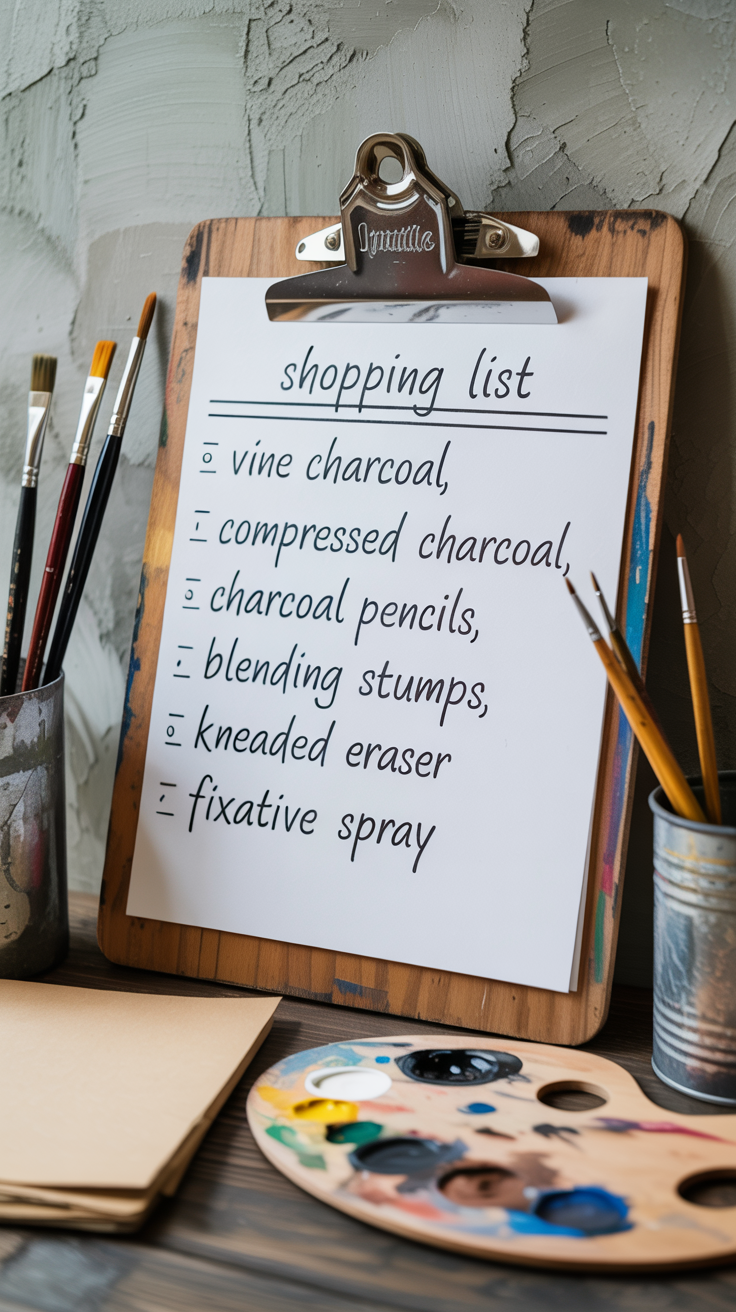
Here’s my take: there is no single best charcoal for drawing. There’s a best charcoal for each stage of a drawing. Soft vine for the loose start, compressed for the deep darks, pencils for the crisp edges at the end. Once you know what each type does, choosing gets easy and you stop wasting money on the wrong box.
If you’re brand new to charcoal, bookmark the complete charcoal drawing resource hub too. This post is the “which charcoal is which” explainer.
Quick answer: if you only buy three things
Start with a box of vine charcoal (soft), one compressed charcoal stick, and a charcoal pencil in a medium grade. Vine for blocking in shapes, compressed for your darkest darks, the pencil for details. Add a kneaded eraser and you can draw almost anything.
The 5 types of charcoal, explained
Vine charcoal
Vine charcoal is made by burning thin grapevine sticks. It’s light, airy and soft, and it sits on top of the paper instead of sinking in.
- Darkness: soft grays, never a true black
- Erasing: wipes away with a tissue or a few taps of a kneaded eraser
- Best for: the first 10 minutes of any drawing, when you’re still finding shapes
Because it lifts so easily, vine is the most forgiving charcoal there is. That also means it smudges if you breathe on it. Keep your hand off the page or rest it on a scrap sheet.
Willow charcoal
Willow is the close cousin of vine, made from willow twigs. In practice it behaves almost the same: soft, light, easy to erase. Some sticks feel slightly denser and darker than vine. If a store has willow and not vine, buy willow and don’t think twice.
Compressed charcoal
Compressed charcoal is charcoal powder pressed together with a binder into a stick or block. That binder is the whole story.
- Darkness: rich, velvety black
- Erasing: hard to fully remove once it’s pressed in
- Best for: final shadows, bold contrast, dramatic portraits
It usually comes in hardness grades, from soft (darkest, messiest) to hard (lighter, cleaner). Save it for the last third of the drawing, once you’re sure where the darks belong.
Charcoal pencils
A charcoal pencil is compressed charcoal wrapped in wood. You get the dark tone of compressed with the control of a pencil.
- Darkness: depends on the grade, from soft gray to deep black
- Erasing: better than sticks, harder than vine
- Best for: eyes, hair, edges, lettering, anything small
They’re also the cleanest option. If you draw at the kitchen table, start here. For a deeper look, see best charcoal pencils for beginners.
Powdered charcoal
Powdered charcoal is loose charcoal dust in a jar. You apply it with a soft brush, a cotton pad or a chamois to lay down big, smooth tones fast. Then you “draw” back into it with an eraser to pull out lights.
- Darkness: medium to dark, depending on how much you load
- Erasing: easy to lift for highlights
- Best for: large backgrounds, moody skies, toned grounds
It’s the messiest type by far. Work over newspaper, wear old clothes, and don’t blow the dust off your paper (tap it into a trash can instead). A dust mask is a smart idea if you use a lot of it.
Cheat sheet: charcoal types compared
| Type | Darkness | Erases? | Mess | Best for |
|---|---|---|---|---|
| Vine | Light to mid gray | Very easily | Medium | Sketching and layout |
| Willow | Light to mid gray | Very easily | Medium | Sketching and layout |
| Compressed | Deep black | Hard | High | Darks and contrast |
| Pencil | Gray to black | Fairly well | Low | Details and edges |
| Powder | Mid to dark | Lifts well | Very high | Big tonal areas |
My favorite charcoal brands by type
Best overall: General’s charcoal pencils
General’s charcoal pencils come in soft, medium and hard grades, so one small set covers light sketch lines to rich darks. They sharpen to a good point and are easy to find. If you only buy one brand, make it this one.

Best variety: Faber-Castell Pitt charcoal set
This set mixes charcoal pencils and sticks, so you can try several types without buying five separate boxes. It’s a smart first set for anyone still figuring out what they like.

Best deep tones: Nitram charcoal
Nitram is a premium charcoal that serious draftsmen love for its smooth, even darks. It’s less brittle than many sticks, so fewer pieces snap in half in your hand. It costs more, so I’d treat it as an upgrade once you know you love charcoal.

Best for color: Derwent Tinted Charcoal
Quick clarification so you know what you’re getting: Derwent Tinted Charcoal is charcoal blended with a touch of color pigment. The result is soft, earthy tints like warm browns, muted greens and dusky blues. It’s lovely for portraits, landscapes and anything where pure black feels too harsh.

Best for large work: charcoal powder
For big pieces on 18×24 paper or larger, a jar of powder covers ground fast and gives you that smoky, cinematic look.

Which charcoal for which paper
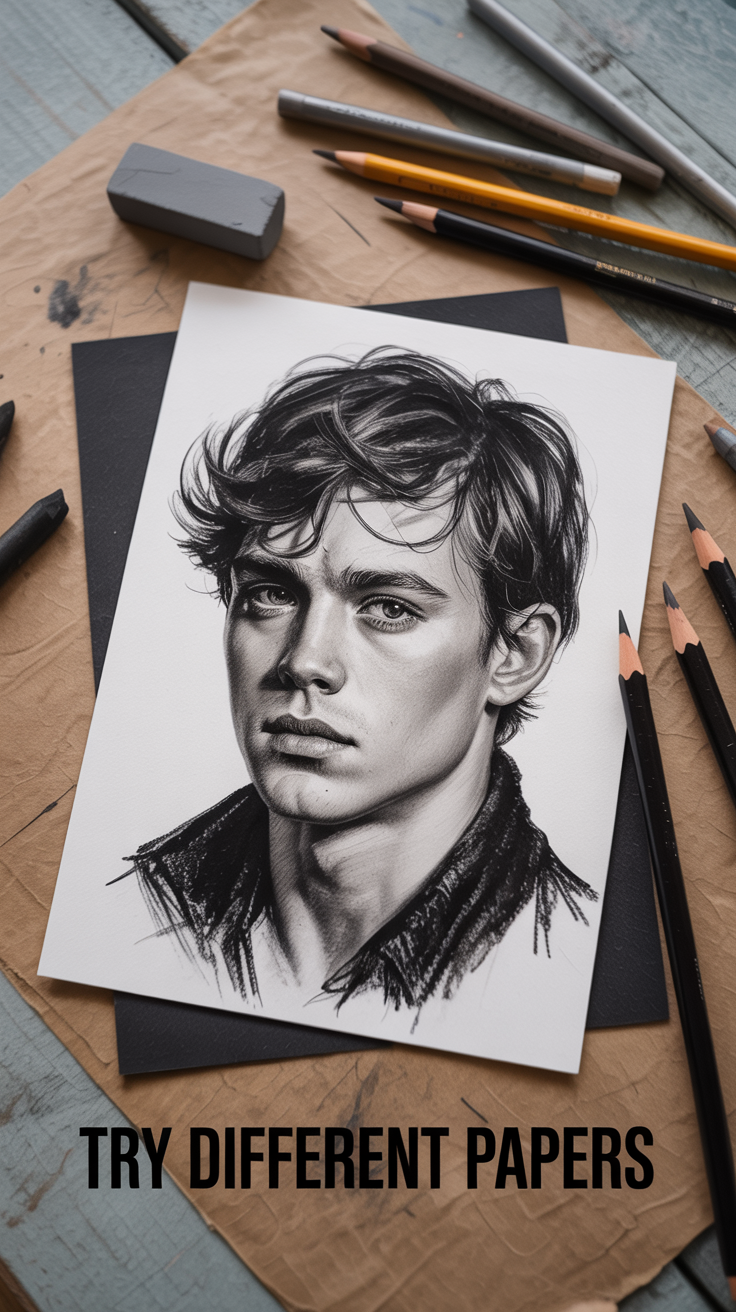
Charcoal is only half the equation. The paper’s tooth (its texture) decides how much charcoal it can hold. My full breakdown lives in the best paper for charcoal drawings, but here’s the short version.
| Charcoal | Paper to pair | Why |
|---|---|---|
| Vine or willow | Laid charcoal paper or newsprint | Tooth grabs the soft dust |
| Compressed | Heavy, toothy paper (90 lb+) | Holds layers without pilling |
| Pencils | Smooth drawing paper or Bristol | Crisp lines and fine detail |
| Powder | Heavy paper or toned paper | Survives brushing and erasing |
| Tinted charcoal | Toned paper (tan or gray) | Colors glow on a midtone |
Strathmore 400 Series and Canson Mi-Teintes are two easy, widely sold choices for most charcoal work.
Choosing by drawing style
- Loose gesture and figure drawing: vine or willow. Fast, light, erasable.
- Realistic portraits: charcoal pencils for features, compressed for the darkest shadows.
- Dramatic still life: powder for the background, compressed for the cast shadows, a kneaded eraser for the highlights.
- Sketchbook journaling: charcoal pencils. Least mess, easiest to carry.
- Warm, soft portraits: tinted charcoal on toned paper.
Try this: a 5-step value scale exercise
This 15-minute exercise teaches you more about your charcoal than any review can.
- Draw a row of 6 boxes, each about 1 inch square.
- Leave box 1 as white paper.
- Fill box 6 as dark as you can with compressed charcoal.
- Fill boxes 2 through 5 with gradual steps between white and black, using vine for the lightest steps and a pencil for the middle.
- Squint at the row. If two boxes look the same, adjust until every step reads as different.
Do it once with each type you own. You’ll see right away which charcoal reaches true black and which one tops out at gray.
Essential tools to go with your charcoal
- Blending stumps: tightly rolled paper for smooth blends without oily fingerprints.
- Kneaded eraser: shape it to a point to lift highlights. More in my guide to kneadable erasers.
- Precision eraser: for crisp white lines like whiskers or a highlight in an eye.
- Craft knife and sandpaper pad: sharpen sticks and pencils to a long point.
- Workable fixative: a light spray between layers so you can keep building without smearing. Spray outdoors or in a well-ventilated room and follow the can’s directions.
Want the full list? See the best charcoal drawing tools for artists.
Beginner tips that save drawings
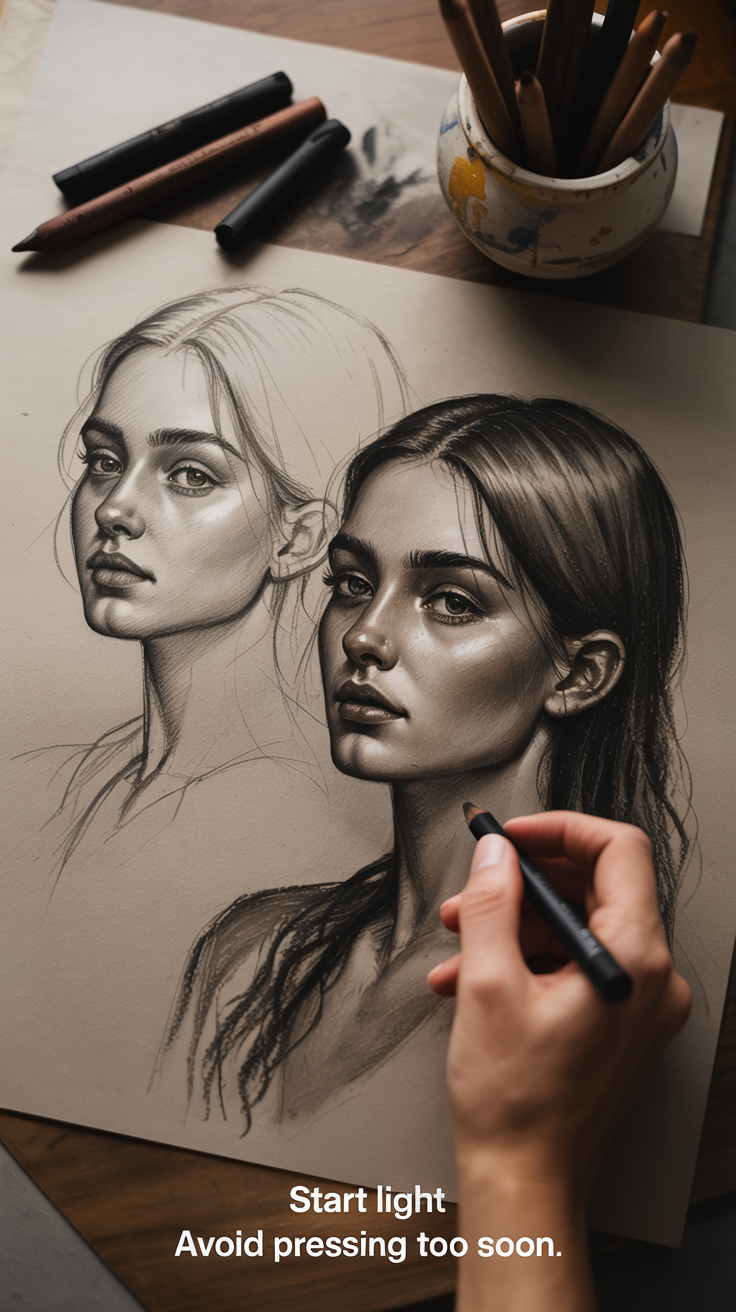
- Work light to dark. You can always add charcoal. Removing it is the hard part.
- Rest your hand on a scrap sheet so your palm doesn’t smear the page.
- Blend less than you think. Too much blending flattens everything. Leave some texture.
- Stand back often. Every 10 minutes, step 6 feet back and look.
- Spray fixative in thin passes. Two light coats beat one heavy one.
For blending techniques in depth, read how to blend charcoal like a pro.
Investment pieces worth it for charcoal artists
Once you’re drawing with charcoal every week, a few bigger pieces make the whole process cleaner and more comfortable.
An air purifier for charcoal dust
Vine, willow and powder all shed fine dust that floats and settles on every surface. A true HEPA purifier near your drawing spot catches a lot of it.
- Levoit Core 400S-P air purifier, about $190 at the time of writing.
Worth it for: anyone using sticks or powder several times a week, especially in a small room. $190 over 4 years of weekly sessions is about 90 cents a session. Skip it if: you mostly use charcoal pencils, which make far less dust.
A tilting drafting table
On a tilted surface, loose charcoal falls away from the paper instead of sitting on it and getting smeared. And your neck will thank you.
- Studio Designs Vintage Drafting Table, solid wood, about $270.
- Stand Up Desk Store adjustable height and angle drafting table, about $300, if you’d like to switch between sitting and standing.
Worth it for: anyone drawing at 18×24 or larger. Skip it if: you work small in sketchbooks. A tabletop easel gives you the same tilt for much less.
A sturdy H-frame easel
For really big charcoal drawings on a board, standing at an easel lets you use your whole arm and step back easily.
Worth it for: artists working large with vine and powder. Skip it if: you draw seated and small. Compare styles in H-frame vs A-frame easels.
The takeaway
The best charcoal for drawing is the one that matches the stage you’re in: vine or willow to start, compressed for deep darks, pencils for detail, powder for big tones. Buy the three-piece starter kit, do the value scale, and you’ll know exactly which type you love.
Which charcoal do you reach for first, vine or compressed? Tell me in the comments.
Save this cheat sheet for your next art supply run.