This post contains affiliate links. If you buy through them, I may earn a small commission at no extra cost to you.
Every beautiful collection begins with a mood board. Before you sketch a single silhouette or cut a piece of fabric, a mood board captures your inspiration, colors, textures, and story. Whether you are a beginner designer or an experienced stylist, it is the step that turns scattered ideas into a cohesive vision.
Why a Mood Board Matters
- It clarifies your vision: theme, palette, and fabrics.
- It sparks creativity and helps unify your designs.
- It guides you through sketching and sewing.
- It presents beautifully to clients and collaborators.
Creating Your Fashion Mood Board
1. Define Your Concept
- What inspires this collection? Vintage Parisian elegance, futuristic streetwear, soft romantic pastels?
- Who are you designing for?
- What story should the collection tell?
Tip: Pinterest, Instagram, and fashion archives are wonderful places to start.
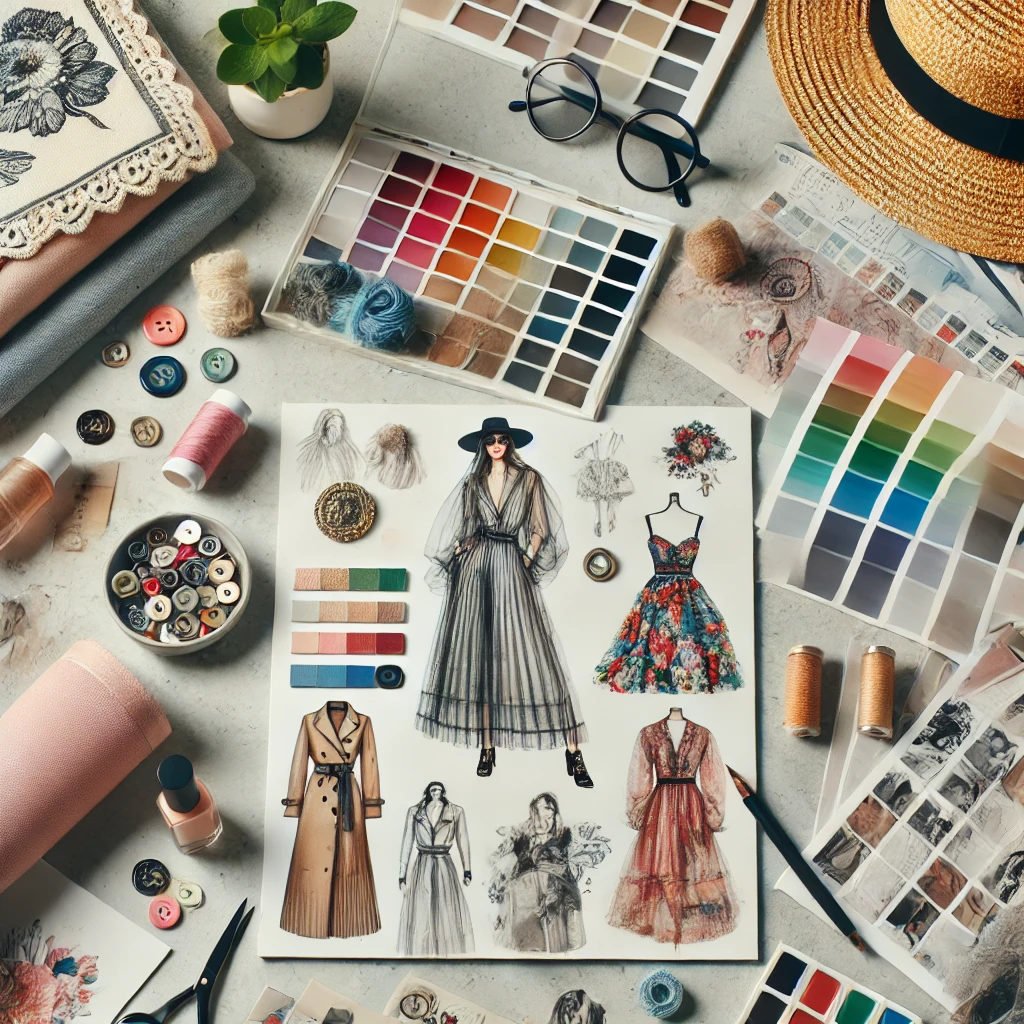
2. Gather Inspiration
- Magazine clippings from Vogue, Elle, or Harper’s Bazaar
- Fabric swatches for tactile inspiration
- Runway images to study silhouettes and details
- Color references such as Pantone trend palettes
- Details: buttons, embroidery, and beading
Books to inspire you: the Fashionary sketchbook, The Fashion Designer Survival Guide by Mary Gehlhar, and Colors for Modern Fashion by Nancy Riegelman.

3. Choose a Format
- Digital: Canva, Illustrator, or Pinterest. Easy to organize and share.
- Physical: a poster board or corkboard with printed images, fabric swatches, and pinned details.
Designer favorites: the Fashionary sketchbook, a Canson Artist Series sketchbook, the Fashion Angels design portfolio for beginners, Prismacolor Premier pencils, a Singer beginner sewing kit, and a compact travel sewing kit.
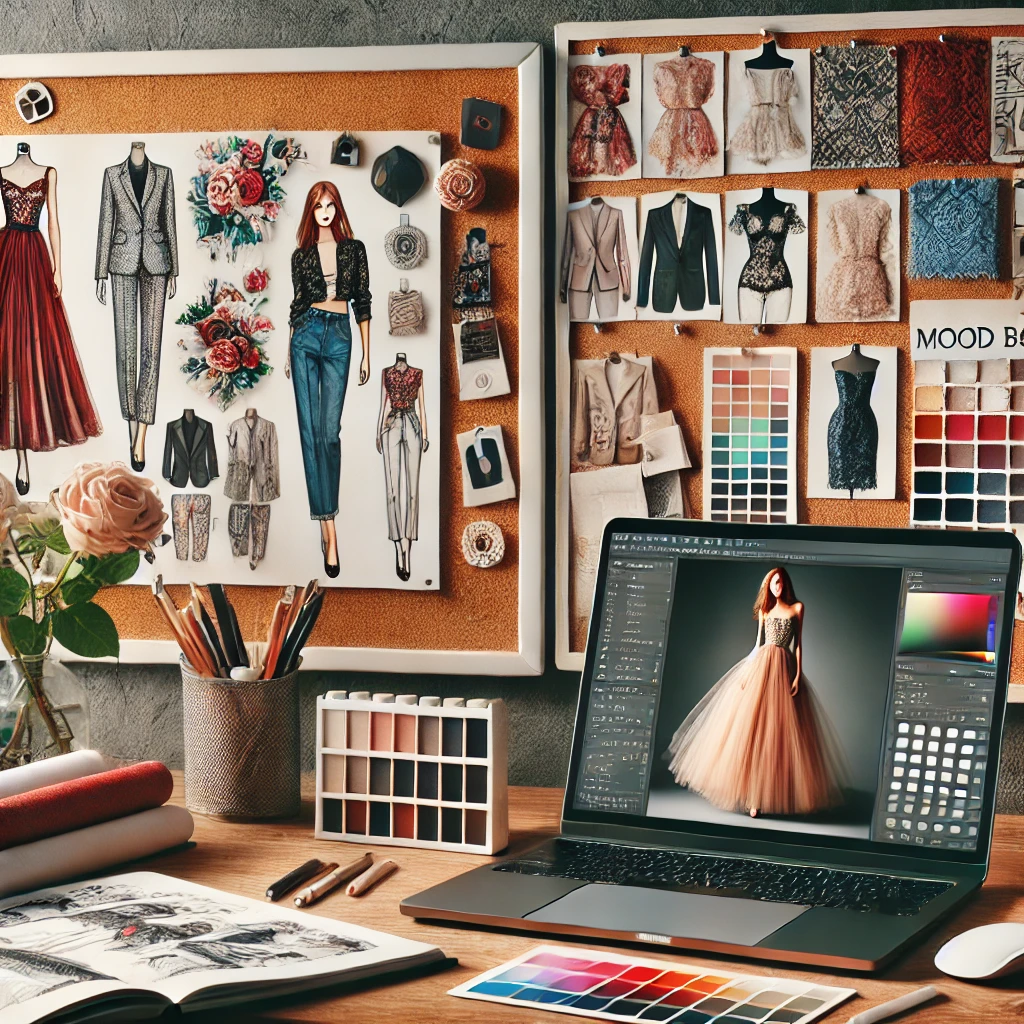
4. Arrange for Impact
- Place your main inspiration image at the center.
- Surround it with swatches and color palettes.
- Add silhouettes, patterns, and accessories for depth.
- Keep it clean and balanced.
Tip: think of your board as a fashion story told in a single frame.

5. Use It as Your Guide
Refer to your board as you refine sketches and patterns, shop for fabric and trims, and present your ideas to clients or collaborators.

Mood Board Ideas by Style
- Minimalist chic: neutral tones, clean lines, structured silhouettes.
- Boho romance: flowing fabric, earthy hues, lace, and florals.
- Edgy streetwear: bold color, graphic prints, oversized fits.
- Vintage glamour: soft pastels, retro prints, elegant draping.

Start Your Collection
A mood board is the perfect first step toward your next collection. Digital or physical, it will sharpen your ideas and give your designs a strong, cohesive identity.
Share your finished board and follow Artistic Blossom Studio on Pinterest. Next, learn How to Sketch a Fashion Collection.