This post contains affiliate links. If you buy through them, I may earn a small commission at no extra cost to you.
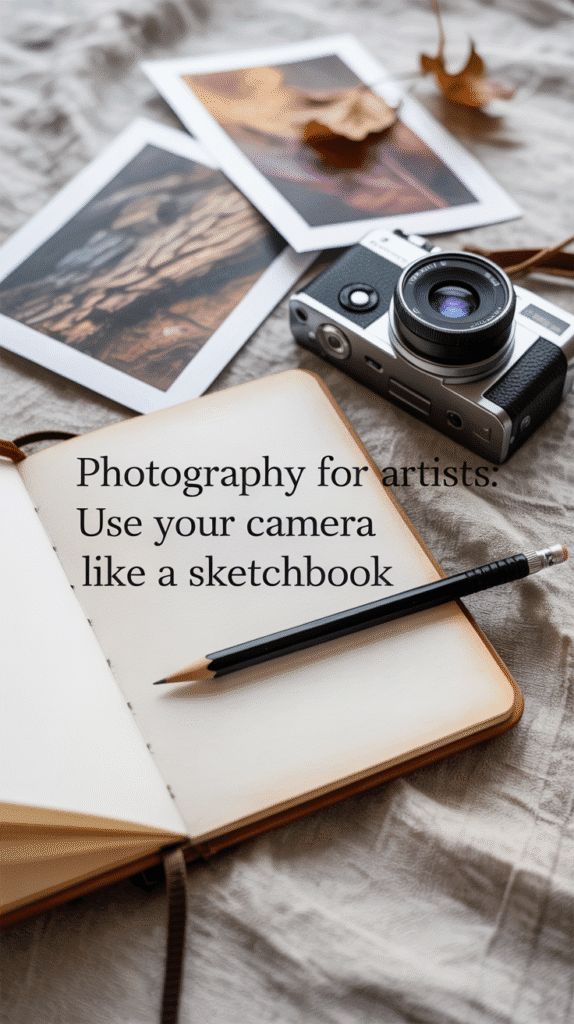
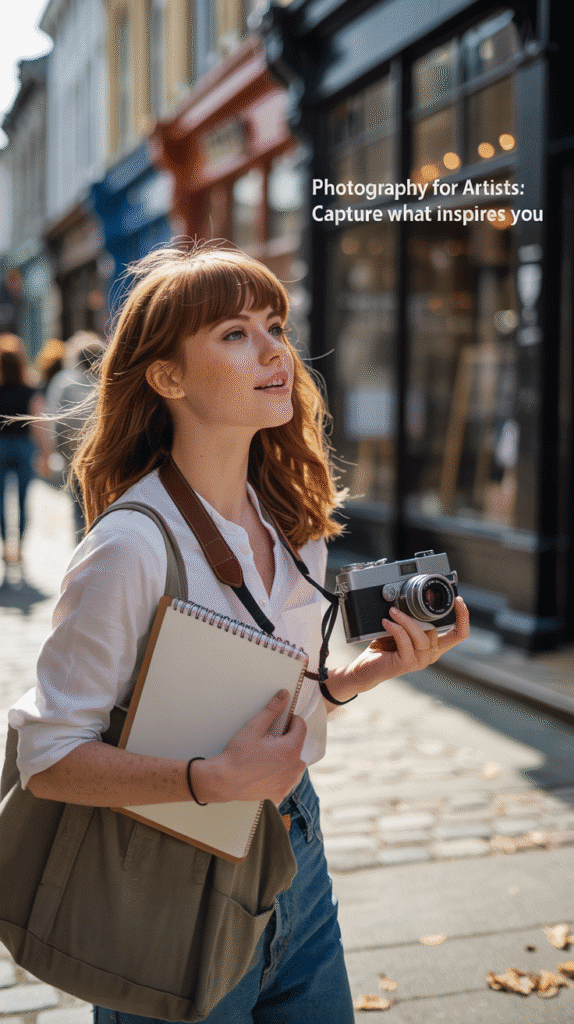
Your camera can be so much more than a way to document finished work. For painters, illustrators, and mixed-media artists, it can become a portable sketchbook: always ready to catch a golden-hour shadow, the curve of an old doorway, or a fleeting expression on a friend’s face.
Photography sharpens the same skills you use at the easel. It teaches you to see light, texture, color, and composition more clearly. Here is how to use your camera as a visual sketchbook, with practical ideas and a few tools to help.
Why Artists Should Embrace Photography
- Instant composition studies: explore angles, balance, and focal points in real time.
- Light and shadow practice: watch how natural light shifts throughout the day.
- Color inspiration: capture palettes and tonal relationships wherever you find them.
- A texture library: rusted metal, crumpled linen, peeling paint, all saved for future pieces.
Five Ways to Use Photography as a Sketchbook
1. Capture Everyday Inspiration
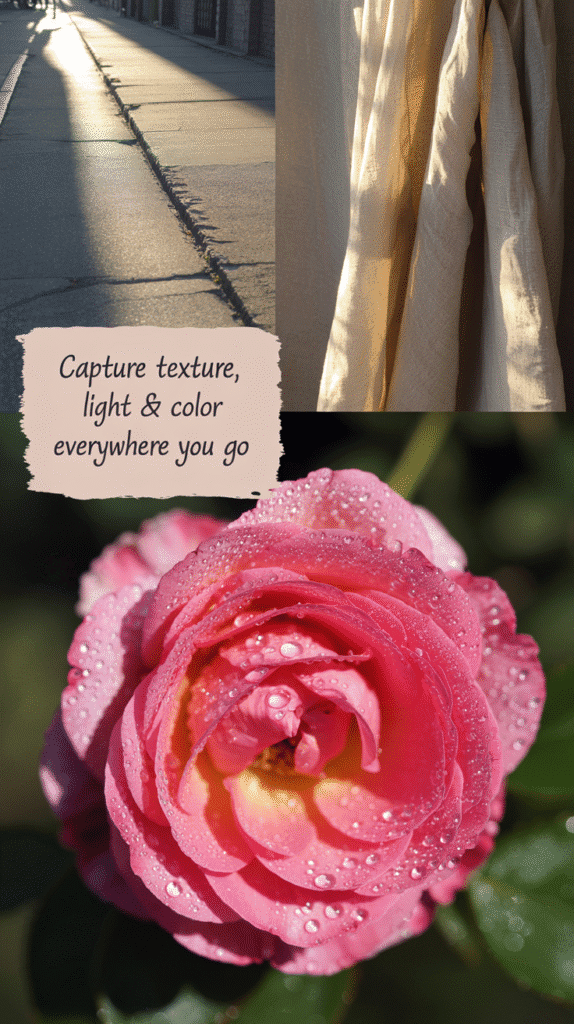
Train your eye to find beauty in ordinary places: an interesting shadow, a reflection in a window, an unexpected color pairing, the texture of a leaf.
Helpful gear: a compact camera with zoom and manual mode is light enough to carry every day, and a high-speed SD card gives you room for a month of exploring.

2. Build Themed Collections
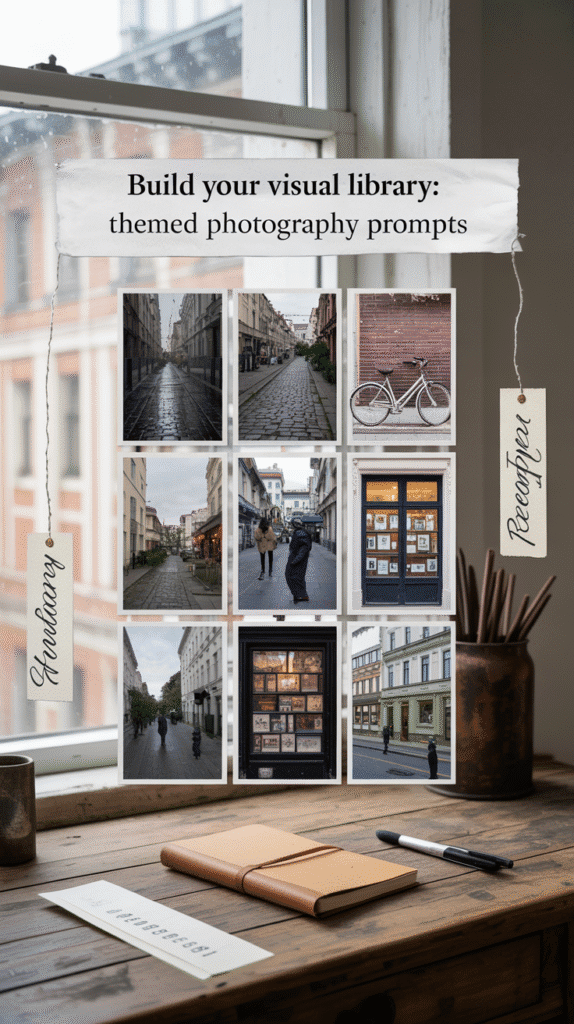
Choose a theme, such as “Hands in Motion” or “Urban Still Life,” and build a collection over time. You will begin to notice the subjects you return to again and again, and those patterns often spark new projects.
- Give yourself a short time limit, fifteen to thirty minutes.
- Choose one location or subject category.
- Challenge yourself to shoot from unusual perspectives.
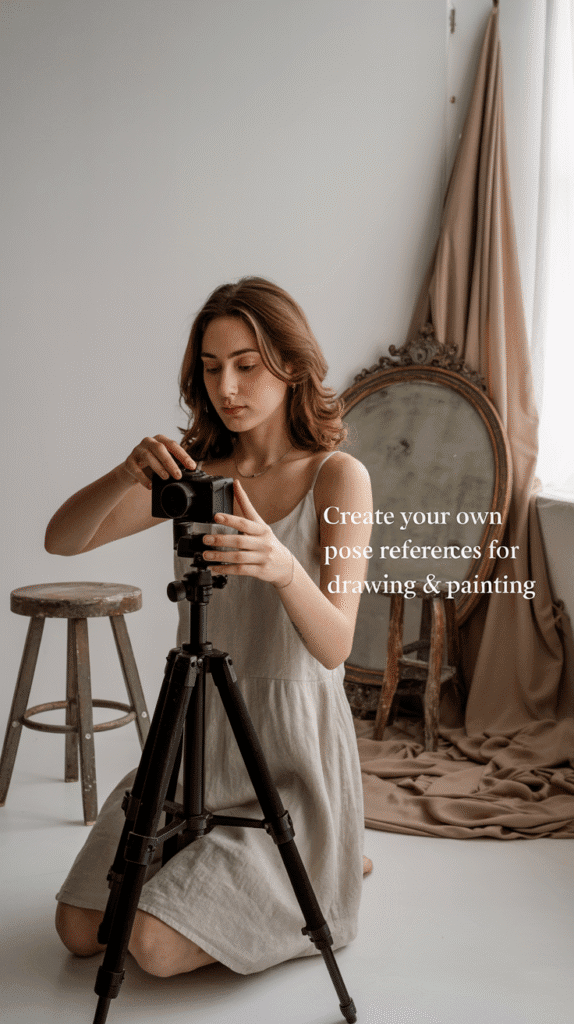
3. Create Your Own Figure References
Photograph friends, family, or yourself in dynamic poses for gesture drawing and portrait studies. Your own references are always the right pose and the right light.
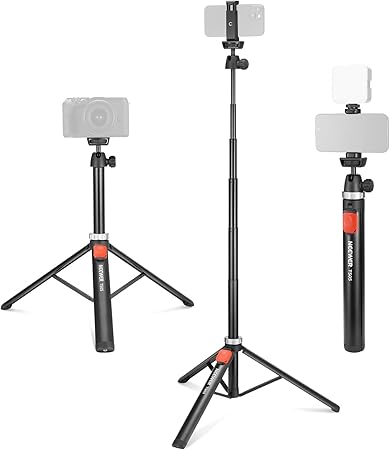
Helpful gear: a lightweight tripod with remote makes self-portraits easy, and a ring light gives you control over indoor lighting.

4. Edit to Enhance Mood and Composition
A little editing can refine your vision: adjust the light, remove distractions, or grade the color to echo the mood of a painting. Snapseed, Lightroom, and Canva are all beginner-friendly places to start.
Helpful gear: a touch-screen drawing glove and a precise stylus make editing and sketching on a tablet more comfortable.
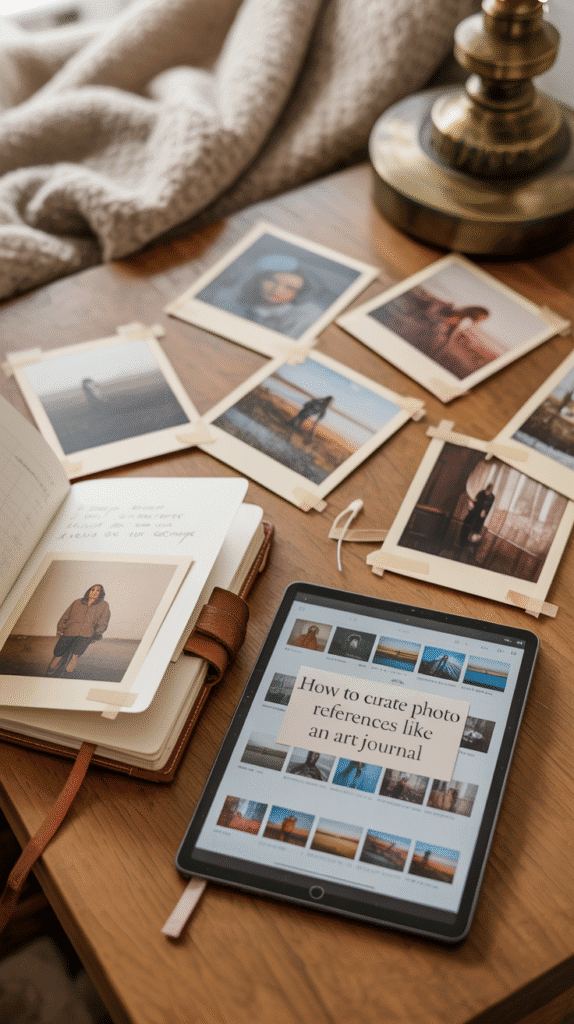
5. Organize Your Photos Like a Sketchbook
Do not let your best shots disappear into your camera roll. Sort them into albums such as “Textures,” “Color Palettes,” and “Pose Studies,” print favorites for an inspiration board, and revisit your collections each month for new ideas.
Helpful gear: an instant photo printer turns favorite shots into a visual diary, and an art portfolio binder with sleeves keeps prints and sketches side by side.
See Like an Artist
Using photography as a sketchbook helps you see like an artist, not only draw or paint like one. It deepens your understanding of light, form, and composition, and gives you a growing library of references that are uniquely yours.
Try this today: take a ten-minute photo walk with your camera or phone. Focus on shadows, movement, or unexpected textures. Save or print your favorites and bring them into your next piece of art.
Save and Share
Pin this guide to your art inspiration board and come back whenever you need a burst of creative energy. You can also follow Artistic Blossom Studio on Pinterest.