This post contains affiliate links. If you buy through them, I may earn a small commission at no extra cost to you.
Think your room is too small for a real studio? The good news: a working studio needs less floor than you’d guess, as long as you plan every inch of it.
Here’s my take: in a small room, floor space is the only thing you can’t buy more of, so every piece of furniture has to earn its footprint. Go vertical, put things on wheels, and pick pieces that fold, stack or do two jobs. A 5×7 foot corner can hold a desk, a cart, drawers and a wall of storage if you choose by the numbers.
So we’ll start with a quick measuring plan, then the ten pieces, then three layouts you can copy this weekend.
If you only do one thing: add a rolling cart. It holds your daily supplies, parks beside you while you work and rolls into a closet when you’re done. In a small room, it’s the single most useful piece you can own.
Measure Your Room in 5 Minutes
Grab a tape measure and a scrap of paper. This saves you from the “it looked smaller online” return.
- Measure the wall you’ll work against (width) and how far you can come out from it before you hit a door swing or bed (depth).
- Mark the window and outlets. Your desk wants side light from the window and an outlet within reach for a lamp.
- Measure the wall height above where your desk will go. That’s your shelf and pegboard zone.
- Check the closet. Width, depth and the door opening. A standard reach-in closet is about 24 inches deep, which is exactly enough for a desk.
- Subtract the clearances below, then shop for furniture that fits what’s left.
Clearance Rules for Small Studios
| Space you need | Minimum | Comfortable |
|---|---|---|
| Walkway past furniture | 30 in | 36 in |
| Behind a desk chair | 24 in | 30 in |
| Rolling cart parking | 16 x 12 in | 18 x 15 in |
| In front of a drawer unit | 24 in | 30 in |
| Standing at an easel | 30 in | 36 in |
These are the numbers that make a small room feel easy instead of cramped. If a piece of furniture forces you to squeeze past it sideways, it’s too big for that spot.
The Footprint Chart: 10 Small-Space Essentials
| Piece | Typical size (W x D) | Floor it uses |
|---|---|---|
| Compact desk | 30-40 x 20-24 in | about 5 sq ft |
| Wall-mounted folding desk | 30-36 x 16-24 in | 0 when folded |
| Rolling cart | 16-18 x 12-15 in | about 1.5 sq ft |
| Narrow drawer unit | 10-13 x 14-16 in | about 1.3 sq ft |
| Floating shelves | 24-36 x 6-10 in | 0 |
| Pegboard | 24-36 in wide | 0 |
| Counter-height table | 36-48 x 24 in | about 6-8 sq ft |
| Ladder shelf | 20-24 x 12-15 in | about 2 sq ft |
10 Art Furniture Essentials for Small Spaces
1. A Compact Desk (30 to 40 Inches Wide)
A 32 to 40 inch desk fits a 9×12 sketchbook, a lamp and a water jar with room to spare. Look for at least 20 inches of depth and a built-in drawer or two, so pencils and erasers have a home off the desktop.
32 Inch Home Office Desks with Fabric Storage Drawer and Bag, Study Writing Vanity Table for Small Spaces, White
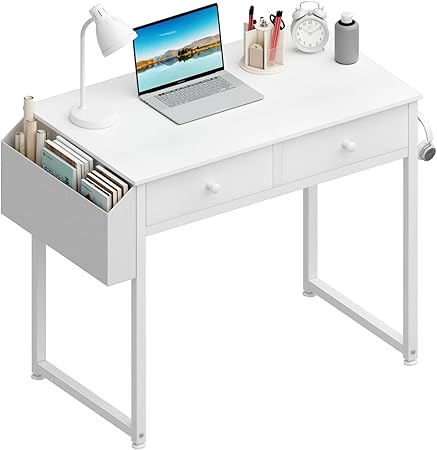
Zipcode Design Edwin No-Tools Writing Desk with Shelves adds shelves right on the desk, so storage goes up instead of out.
2. A Wall-Mounted or Folding Desk
When the studio shares a room with a bed or a sofa, a desk that disappears is gold. A wall-mounted fold-down table uses zero floor space when it’s closed. A folding desk comes out for a session and slides behind a door after.

No Assembly Required Compact Desk for Home Office, Writing, and Study

3. A Rolling Cart (The One Piece to Add)
A 3-tier cart is about 16 by 12 inches and holds everything you use in a typical session. Top tier for what’s in your hand today, middle for backups, bottom for paper and rags. Slim carts can even slide between a desk and a wall.
Stable and Sturdy White Rolling Storage Carts with 2 Lockable Wheels for Bathroom, Kitchen, Snack, Craft, Makeup, Baby Essentials

Mobile Utility Cart Kitchen/Under Desk Cart with Caster Wheels - WHT (15.35" X 10.24" X 26.8"H)

Compare more carts in Best Rolling Art Carts.
4. A Narrow Drawer Unit (10 to 13 Inches Wide)
Narrow drawer towers tuck beside a desk or into a closet corner. Shallow drawers (2 to 3 inches) are best for pencils, tubes and pens because nothing hides underneath anything else. Clear drawers let you see what’s inside without opening them.
Narrow Plastic Dresser, Rolling Organizer Cart for Office Classroom Bedroom Bathroom Art Craft Supplies, Mobile Slim Utility Cart on Wheels (7.5"x16.5"x43&quo...

4 Pack Acrylic Plastic Organizers Bins for Makeup Palettes, Cosmetics, and Beauty Supplies,Ideal for Vanity, Bathroom,Cabinet,Desk Organizati...

For a tabletop option, the 7 Elements 6-Drawer Beechwood Art Supply Storage Box keeps paints and pencils sorted in a pretty wooden case that sits on the desk.
5. Floating Shelves
Floating shelves add storage on the wall without touching the floor. Hang the lowest one 15 to 18 inches above your desk so it clears your lamp. Keep them 6 to 8 inches deep for jars, and screw into studs.
High End Solid Real Wood 24inch Small Floating Shelves for Wall Mounted, Oak Wooden 24in Floating Shelves, Heavy Duty Bracket, 24 X 6.5 X 1.75 in, Set of 2

6. A Pegboard Wall
A 24 by 36 inch pegboard holds scissors, rulers, tape, brush cups and small baskets in the space right above your desk. It’s the most storage per square foot you can hang.
Wall Mounted Storage Set with 4 Pegboards & 14 Accessories Hanging, White Peg Boards Organizer for Walls Display, Crafts Organization, Kitchen Organizer, 22"...

7. A Counter-Height Worktable
Standing work suits small rooms surprisingly well. A 36-inch-high table lets you step back to see a painting, and a stool can slide underneath when you want to sit. A bar-height table only 24 inches deep fits along a wall without blocking the walkway.
Rectangular Pub Table, 47.2 Counter Height Bar Table, Industrial Bar Height Table, Dining Table for Kitchen, Living Room, Easy to Assemble, Rustic Brown BF50BT01

8. A Ladder Shelf
A ladder shelf is wide at the bottom and slim at the top, so it takes only about 2 square feet of floor. Heavier bins go low, sketchbooks and plants go up high. Secure the top to the wall.
Ladder Bookshelf with Removable Drawer, Mordern Bookcase Storage Rack Organizer, Wood Metal Freestanding Storage Shelves for Living Room, Home Office, Bedroom

9. Under-Desk Storage
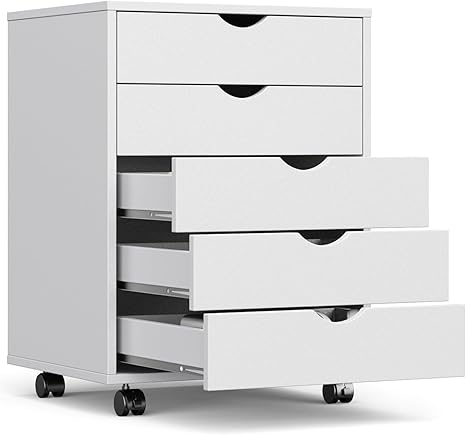
The space under your desk is free real estate. A rolling file cabinet holds paper pads flat, gives you a drawer for tools and rolls out when you need legroom.
Under Desk Storage Organization with Wheels Vertical Filing Chest Rolling Wood Small Desk Printer Stand for Home Office, 15.75"D x 18.74"W x 25.39"H,...
10. Multi-Purpose Furniture
The best small-room pieces do two jobs. A nightstand with drawers can store pastels by the bed nook. A storage ottoman holds paper and seats a guest. A dresser in a bedroom can hide a whole drawing kit in its top drawer.
Three Small-Room Layouts to Copy
The 5×7 Foot Corner
- A 36-inch desk against the wall that has the window beside it.
- A narrow drawer unit on your non-dominant side.
- A rolling cart on your dominant side.
- Pegboard above the desk, one floating shelf above that.
That’s a full studio in about 35 square feet, with a 30-inch path behind the chair.
The Closet Studio
A reach-in closet about 24 inches deep holds a desk with room to spare. Remove the rod, mount a desk surface at 29 to 30 inches high, add shelves above, and stick an LED strip under the top shelf. Close the doors and the whole studio vanishes.
The Bedroom Nook
- A wall-mounted folding desk next to the window.
- A slim cart that parks inside the closet at night.
- A ladder shelf for sketchbooks and a plant or two.
Fold, roll, done. The room is a bedroom again in five minutes.
Make a Small Studio Feel Bigger
- Pick light woods and white. Pale finishes reflect light and look lighter on the floor.
- Put the desk near the window. Natural light makes a small room feel open, and it’s the best light for color.
- Draw the eye upward. Tall shelves and wall storage make ceilings feel higher.
- Keep the desktop clear. One lamp, one jar of tools, and the work.
- Match your containers. Identical jars and bins calm a busy wall.
- Layer soft light. A warm lamp for evening plus a daylight bulb for work.
Need more ideas? See Small Art Studio Organization Ideas.
Investment Pieces Worth It
If your small studio is here to stay, these three pieces pay you back in space every single day.
Sauder Craft & Sewing Armoire (around $420 in Glacier White, around $525 in Mystic Oak). A whole studio behind two doors: a fold-out work surface, shelves, drawers and door storage. Close it and your living room or bedroom looks like a living room or bedroom again. Used three times a week for three years, that’s under $1 a session. Worth it for anyone sharing a room with their art. Skip it if you have a dedicated studio room already.
Bisley 6-Drawer Steel MultiDrawer Cabinet (around $245). A classic design-studio drawer cabinet, about 11 inches wide, with smooth steel drawers that hold paper, pens and paints for decades. Worth it if you want one tidy drawer unit that looks great on a desk or under it. Skip it if you need deep drawers for bulky supplies.
MEEDEN Rolling Art Supply Cart (around $158). A solid beech, taboret-style cart with three tiers. Sturdier and prettier than a metal utility cart, so it can stay out in a shared room. Worth it if the cart lives beside you every session. Skip it if you need something narrow enough to slide between furniture.
The Takeaway
In a small room, measure first, protect your walkway, and let every piece earn its footprint. Go up the walls, put supplies on wheels and pick furniture that folds or closes. A tiny studio that works beats a big one that doesn’t, every time.
Which small-room layout fits your home: the corner, the closet or the bedroom nook? Tell me in the comments, and save this pin for the day you finally claim that corner.
Keep going: