This post contains affiliate links. If you buy through them, I may earn a small commission at no extra cost to you.
You bought the desk with all the drawers. Three months later the drawers are full, the desktop is buried, and you’re drawing on a clipboard on the couch. Sound familiar?
Here’s what I believe: most storage desks fail artists because the drawers are the wrong depth for what we own. Paint tubes rattle around in a 6-inch drawer and get buried. Sketchbooks won’t fit in a 3-inch drawer at all. The desk was fine; the match was off.
So this guide works in a different order. First you count your supplies. Then you pick the desk. It takes about ten minutes and it’ll save you from buying the wrong one.
Quick answer: If you draw and paint on paper, look for a desk with at least two shallow drawers (2-3 inches deep) for pencils and tubes, one deep drawer or open shelf for bottles and jars, and 45+ inches of clear top. The Sauder Harbor View Corner Desk and a modular build with steel drawer cabinets are my top two routes.
Step 1: The 10-Minute Drawer-Depth Audit
Pull out everything you use at your desk and sort it into these four piles. Then count roughly how much space each pile takes.
| Pile | What’s in it | Drawer depth it needs |
|---|---|---|
| Flat & small | pencils, pens, erasers, paint tubes, pastels, brushes | 2-3 inches |
| Tall & bottled | ink bottles, mediums, water jars, markers in cases | 5-7 inches, or an open shelf |
| Books & pads | sketchbooks, pads, reference books | a shelf 10-12 inches tall, stored upright like books |
| Loose paper | sheets, prints, finished work | a flat drawer wider than the paper |
Now look at your piles. Whichever pile is biggest decides your desk type.
- Mostly flat & small? You need a drawer-heavy desk.
- Lots of bottles and jars? You need deep drawers or open side shelves.
- Lots of sketchbooks? You need a hutch or a shelf beside the desk.
- Lots of loose paper? You need flat storage; a desk drawer won’t cut it past 11×14.
Loose sheets larger than about 11×14 belong in a flat file or a portfolio, not a desk drawer. Curled corners are a sign your paper has outgrown its home. See How to Store Canvas, Paper and Sketchbooks for the full system.
Step 2: Use the 70/30 Rule
About 70 percent of your supplies should live out of sight, in drawers or behind doors. About 30 percent, the tools you touch every session, should be visible and within forearm reach.
Forearm reach is roughly 16 to 20 inches from your seated position. If you have to stand up or twist to grab your favorite pencil, it’s in the wrong spot.
This rule keeps the desktop clear and makes cleanup fast. It also means you don’t need a desk with twelve drawers. You need the right four.
What to Look For in a Storage Desk
- Drawers that match your audit. Check the listing for inside drawer height, not outside. If it isn’t listed, assume 1 inch less than the drawer front.
- Full-extension slides on deeper drawers, so nothing hides in the back.
- 45 inches of clear surface or more after you account for any hutch or monitor.
- A top that wipes clean. Laminate, sealed wood and bamboo handle the occasional ink spill.
- Weight-bearing shelves. A shelf of sketchbooks gets heavy fast.
8 Types of Storage Desks (and Who Each One Fits)
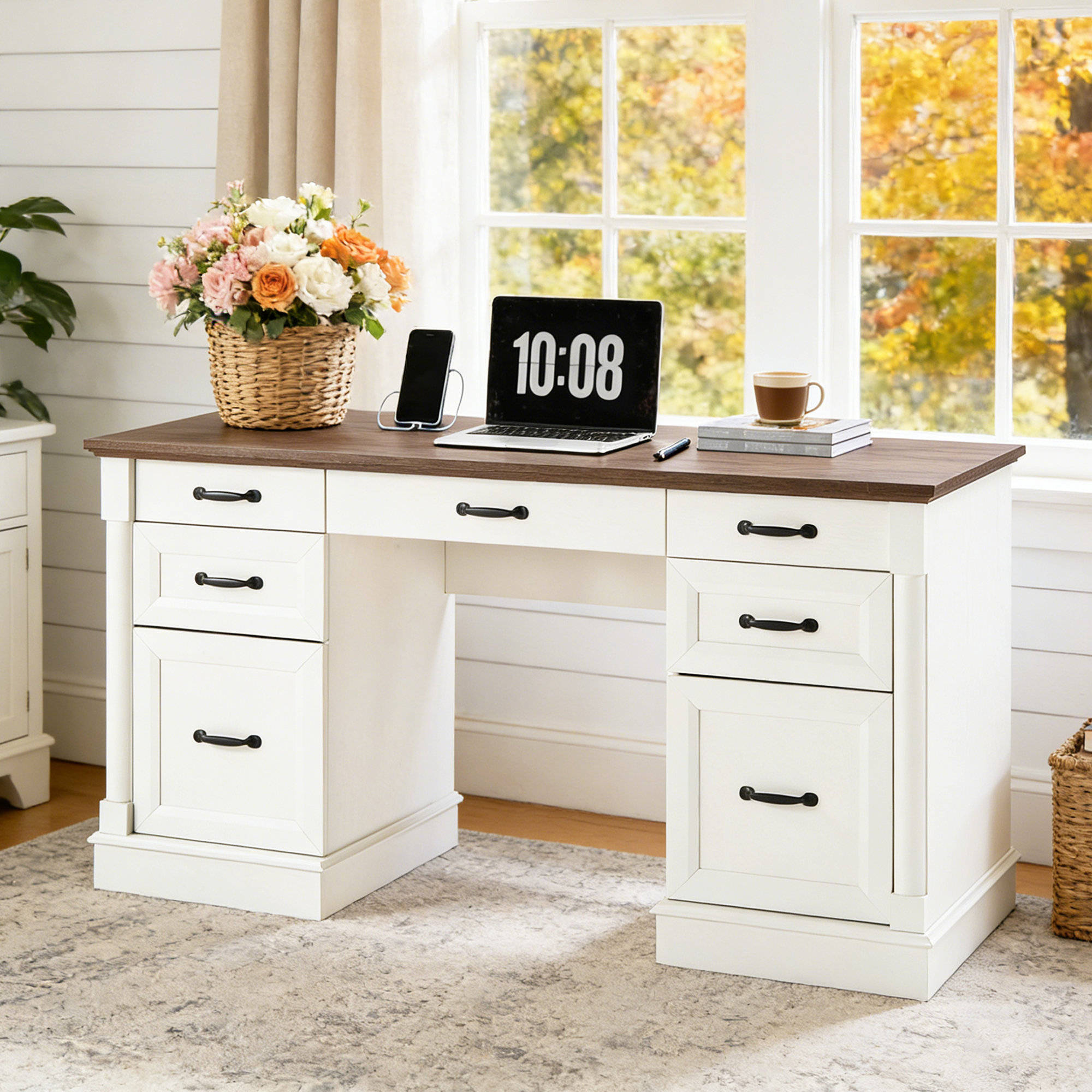
1. The Drawer-Heavy Desk
Best for: pencil, pen and colored pencil artists. Three to five drawers let you sort by medium, one drawer each. A farmhouse desk with wide drawers also looks warm and settled in a studio.
Farmhouse Executive Desk with Drawers, Wood Home Office Desk w/Charging Station, Keyboard Tray, File Drawer, Storage Cabinet & Reviews | Wayfair
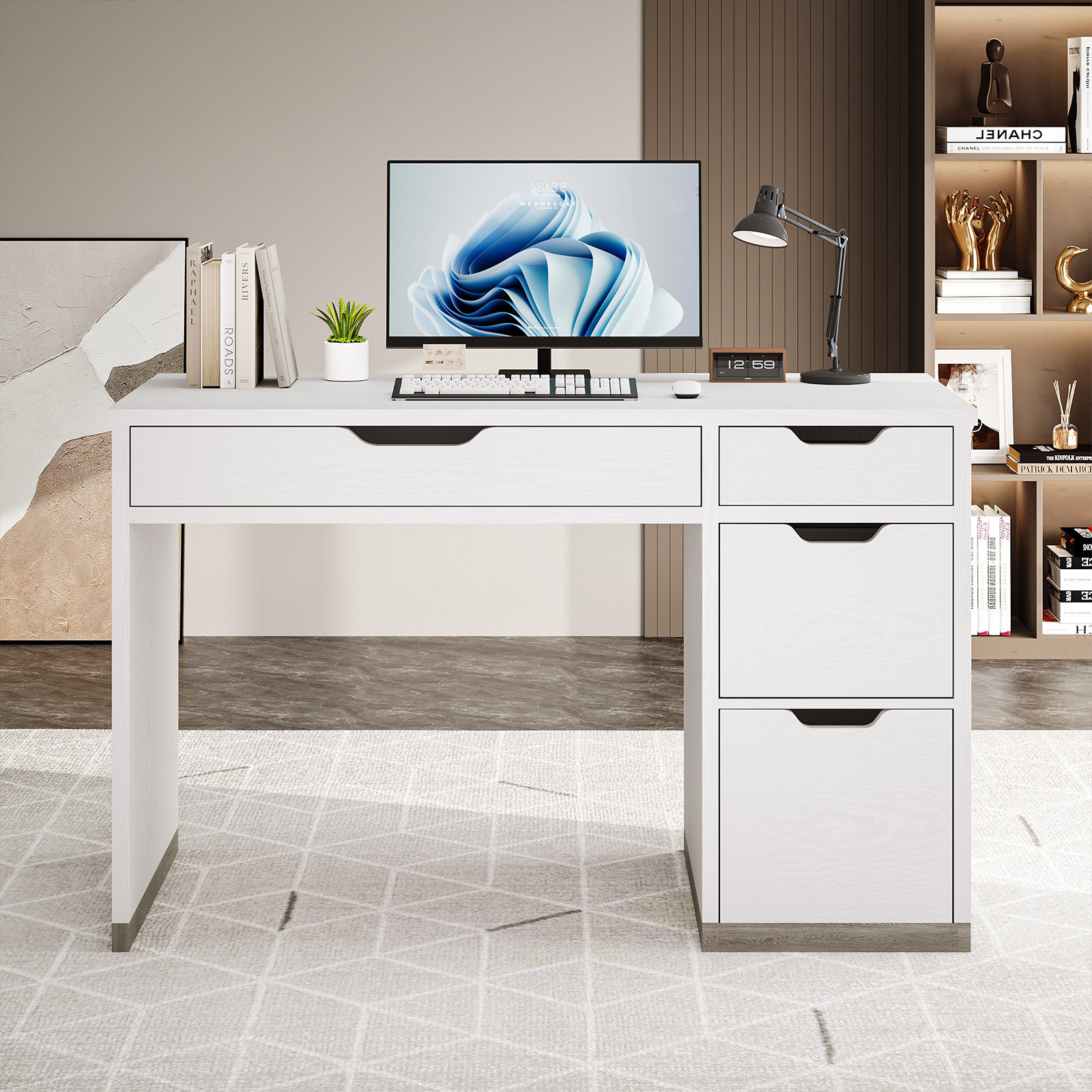
The Ebern Designs Santrell Desk is another good drawer pick with a clean, modern look.
2. The Desk with Side Shelves
Best for: artists who forget what they own when it’s hidden. Open side shelves keep jars, bins and books visible, which is perfect for your 30 percent.
The Zipcode Design Edwin No Tools Writing Desk has shelves built into the frame and sets up without tools.
3. The Hutch-Top Desk
Best for: sketchbook collectors and small rooms. A hutch uses wall height instead of floor space. Store sketchbooks upright, spine out, so you can read every label.
Many Gifts,Metal Desktop Bookcase with pegboard, Desk Shelf, Countertop Storage Organizer Rack for Dorm or Office,Desktop Shelves (White, 37.4" Lx9.9 Wx39 H)

Keep the hutch shelves 12 inches apart or more so standard sketchbooks and pads stand upright with room for your fingers.
4. The Deep-Drawer Desk
Best for: acrylic and oil painters, marker artists with big sets, and anyone with bottled mediums. Look for one or two drawers at least 5 inches deep inside. The George Oliver Clyte Desk is worth a look for this.
5. The Corner L-Shaped Desk
Best for: artists who work across mediums. One wing holds the art, the other holds the laptop, scanner or supply bins. Corners are usually wasted space, so an L-desk gives you more storage without eating the room.
Farmhouse Wood Computer Corner Desk, Featuring Charging Station,File Drawer, Storage Cabinet,for Home Office Work and Study (Antique White)

Work from Home Office Desk with Power Outlet, Reversible Computer Desk with Storage Shelves, Gaming Desk with Monitor Shelf, Corner WFM Table, Vintage
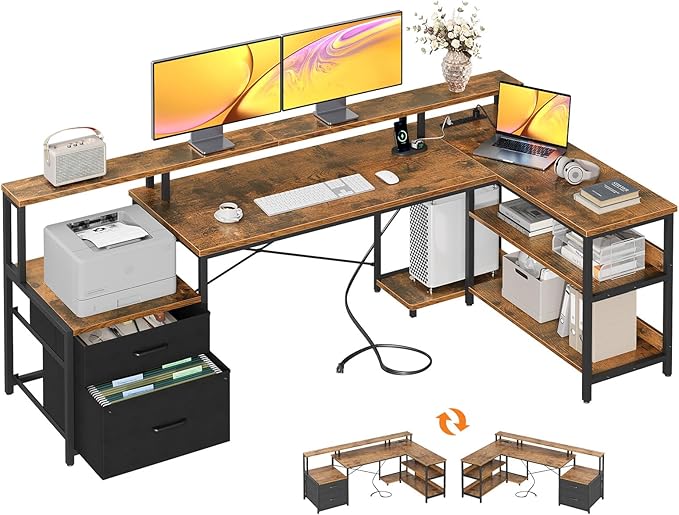
Comparing corner desks? My full roundup is in Best L-Shaped Desks for Creative Work.
6. The Desk + Rolling Cart Combo
Best for: anyone who owns more than any desk can hold. Choose a simpler desk and add a rolling cart for the overflow. The cart parks beside you while you work and slides into a closet after.

The Rebrilliant 20-Drawer Rolling Storage Cart gives small supplies twenty separate homes.
7. The Modular Build
Best for: people who know exactly what they own. Put two drawer cabinets about 40 to 48 inches apart and lay a solid top across them. You choose every drawer depth yourself, which makes this the best match for your audit.
Steel cabinets like the Bisley 6-Drawer MultiDrawer Cabinet have shallow drawers sized for letter and A4 paper, perfect for pencils, tubes and small sheets. Check the cabinet height plus your top thickness; you want the total near 28-30 inches for seated work.

For cabinet ideas to build with, see Best Drawer Units for Artists.
8. The Standing Storage Desk
Best for: artists who alternate between sketching and computer work. Built-in drawers keep tools close as the desk moves up and down.
Height Adjustable Stand Up Table, Sit Stand Home Office Desk with Storage Shelf, White Frame/Light Rustic Brown Top
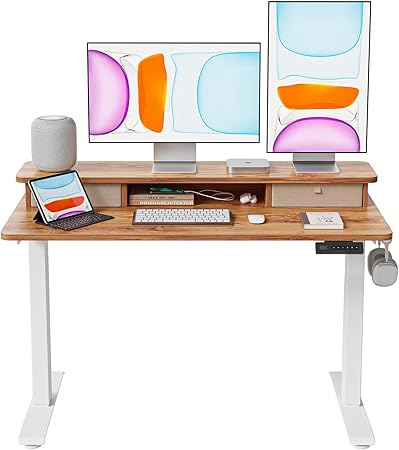
The Agilestic Electric Standing Desk with Drawers adds a storage shelf too. More picks in Best Standing Desks for Artists.
Best Storage Desk by Medium
- Graphite and charcoal: shallow drawers, plus a lidded box for charcoal so the dust stays put. A drawer-heavy desk fits.
- Colored pencil: shallow drawers with dividers, or tins stacked in a hutch. Store pencils flat so the cores don’t take impacts.
- Watercolor: a shallow drawer for pans and brushes, an open shelf for water jars, and flat storage nearby for paper.
- Acrylic and oil: deep drawers or a cart for tubes and mediums, far from your sketchbooks.
- Markers: store alcohol markers horizontally so both nibs stay inked; a shallow, wide drawer does this nicely.
- Digital plus traditional: an L-desk, so the tablet and sketchbook each get a wing.
Investment Pieces Worth It
These cost more. Here’s who should buy them and who shouldn’t.
Sauder Harbor View Corner Desk, Salt Oak (around $460). A corner desk with storage built in and a soft, light finish. Over 4 years of 4 sessions a week, that’s about $0.55 a session. Worth it if you want one piece that holds your 30 percent on display and hides the rest. Skip it if your room has no free corner.
Two Bisley drawer cabinets plus a tabletop (around $490 for two 6-drawer units, plus your top). The modular build at its most beautiful. Steel drawers glide smoothly and outlast most furniture. Worth it if your supplies are mostly flat and small. Skip it if you store lots of tall bottles; the drawers are shallow by design. The Bisley 8-Drawer (around $275) gives even more slots.
Bush Business Furniture Vista L-Shaped Desk. Low storage cabinets plus a wardrobe-style cabinet for bulky supplies. Worth it for a dedicated studio with lots of mixed media. Skip it if you’re in a shared room; it’s a big footprint.
Sauder Craft Pro Series Work Table (around $520). Counter height with storage underneath. Worth it if you stand to work or cut paper a lot. Skip it if you draw seated for long stretches.
5 Ways to Add Storage to the Desk You Already Have
Not ready to buy? These cost less than $50 each.
- Acrylic drawer organizers. Split one deep drawer into two shallow layers.
- Brushes upright in jars, bristles up, so they dry in shape and free up drawer space.
- A monitor riser with a shelf underneath for sketchbooks.
- Pegboard on the side wall. A Wall Control metal pegboard holds rulers, scissors and tape at eye level.
- A floating shelf above the desk. The Loon Peak Ilkan Solid Wood Floating Shelf is a warm, sturdy option.
Paint Rack Organizer with MDF Material, Brush/Screwdriver Storage, Craft Supplies Storage, Suitable for Tamiya Gundam Model Tools, GK10

The Takeaway
Count your supplies before you shop. Match drawer depth to your biggest pile, keep 30 percent of your tools in plain sight, and the right storage desk becomes obvious. A desk that fits what you own is a desk that stays clear enough to use.
What’s your biggest pile: pencils, bottles, sketchbooks or loose paper? Tell me in the comments and I’ll point you toward the right desk type.
Keep going:
[…] Best Storage Desks for Artists➡ Best L-Shaped Desks for Creative Work➡ Best Standing Desks for Artists➡ Best Rolling Art […]