This post contains affiliate links. If you buy through them, I may earn a small commission at no extra cost to you.
You’ve saved a hundred calm, white, light-filled studio photos. Then you look at your own table, buried under jars and half-finished sketches, and wonder what those artists know that you don’t.
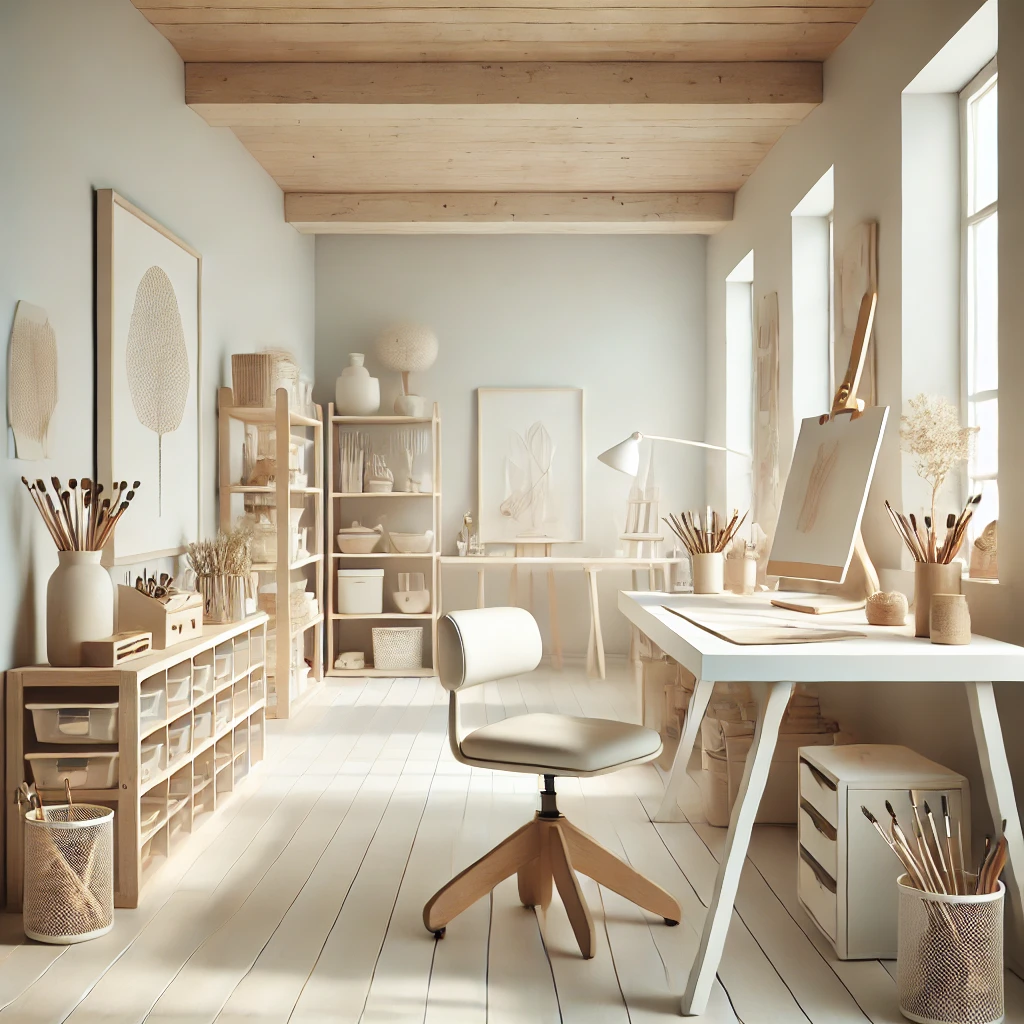
Here’s what they know: a minimalist studio is a storage plan with good lighting. Owning less helps, sure, but the calm in those photos comes from every supply having a closed home and every surface having a limit. Get those two things right and the white walls and oak shelves are just the pretty part. I’ll walk you through both, step by step.
If you only do one thing: adopt the 3-item desk rule. Only three things live on your work surface between sessions, like a lamp, one jar of pencils and your current sketchbook. Everything else goes back to its home.
Quick Answer: The Minimalist Studio Formula
- Color: 60 percent soft white, 30 percent light wood, 10 percent matte black
- Surfaces: the 3-item rule on your desk, one clear shelf per category
- Storage: closed, matching fronts for the messy stuff, open display for the pretty stuff
- Light: warm 2700K to 3000K for the room, crisp 5000K at the easel or desk
- Decor: a few pieces with meaning, chosen slowly
Want a softer, more decorative take? See my aesthetic art studio decor ideas.
What Makes a Studio “Modern Minimalist”
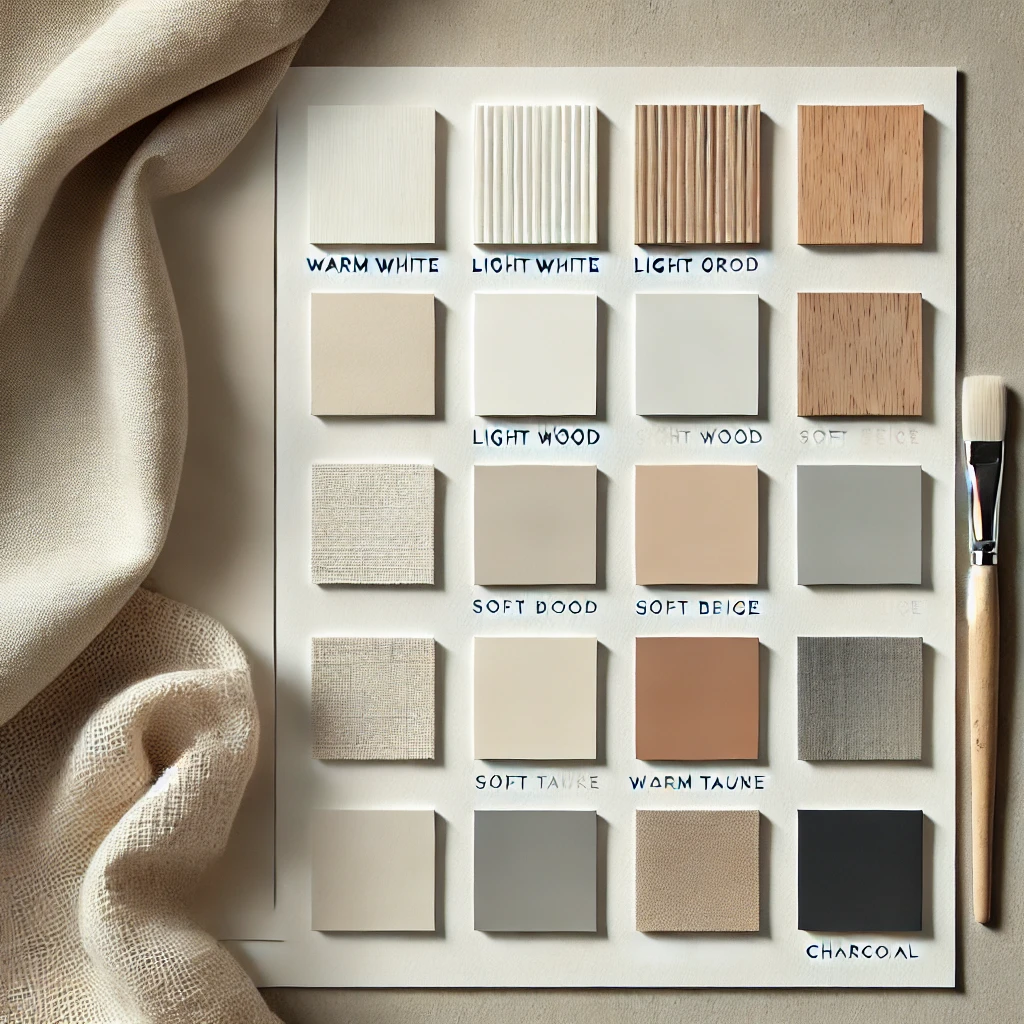
You’ll recognize it right away:
- Clean lines on furniture, with slim legs and flat fronts
- Open floor and wall space around the work area
- A neutral palette of two or three core colors
- Storage that hides clutter or makes it look orderly
- Restrained decor, where each piece earns its spot
The best part? Minimalism is very forgiving for artists. A calm room makes your colors on the canvas look brighter.
1. Start With a Light Neutral Base
Walls are the biggest color decision in the room, so make it a quiet one. Soft white, cream or greige reflects light and keeps your eyes from fighting a wall color while you mix paint.
Three warm whites I love for studios:
- Benjamin Moore Swiss Coffee: a creamy white that stays soft without looking yellow
- Benjamin Moore White Dove: a slightly warmer, gentle white
- Sherwin-Williams Alabaster: soft and warm, beautiful with light oak
Try before you paint. Peel and stick samples let you move a swatch around the room and watch it at 9 a.m., noon and 6 p.m.

Use the 60-30-10 Rule
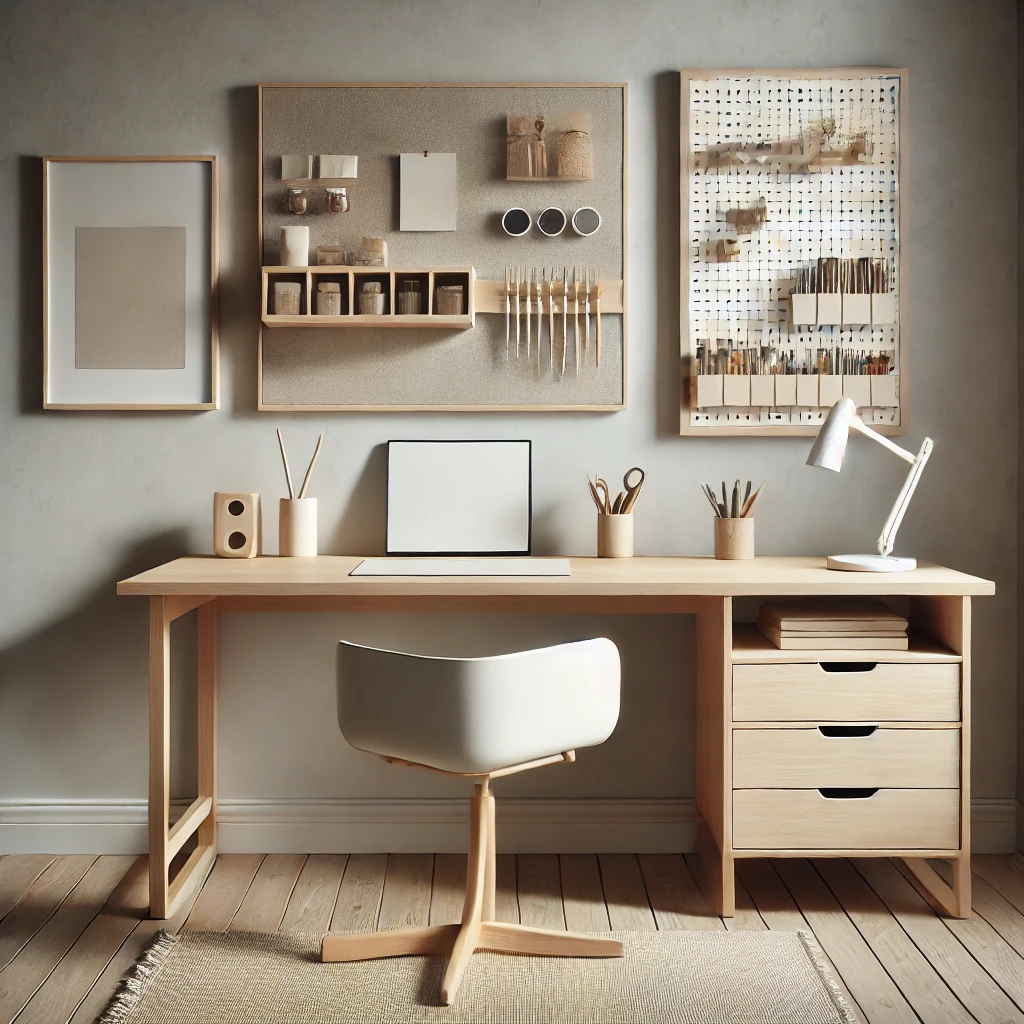
- 60 percent: your wall color, soft white
- 30 percent: your furniture tone, like light oak or natural wood
- 10 percent: your accent, like matte black on lamps, frames and hardware
White, light oak and matte black is a classic for a reason. It looks crisp in photos and never fights your artwork.
2. Choose Streamlined Furniture
Look for slim legs, flat surfaces and no fussy trim. Furniture with visible floor underneath makes a small room feel bigger.
- A slim desk in white or light wood for drawing and sketching
- A light oak drafting table if you love working at an angle
- Floating shelves in place of a bulky bookcase
This simple 47 inch desk has the clean lines minimalism loves, in a warm light walnut.

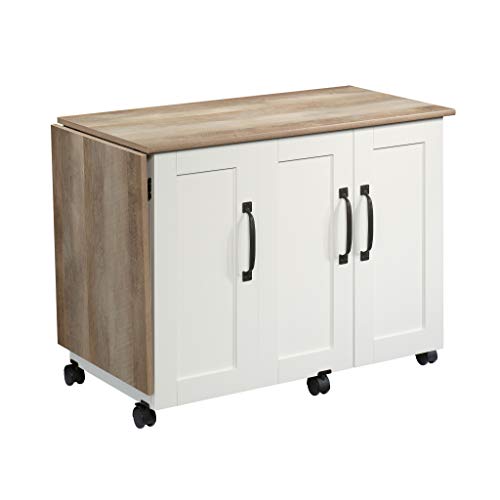
A drop-leaf craft table folds small when you’re done and opens wide for big projects.
Comparing desks? My guide to the best art desks for every budget covers every price point.
3. Hide the Mess, Show the Joy
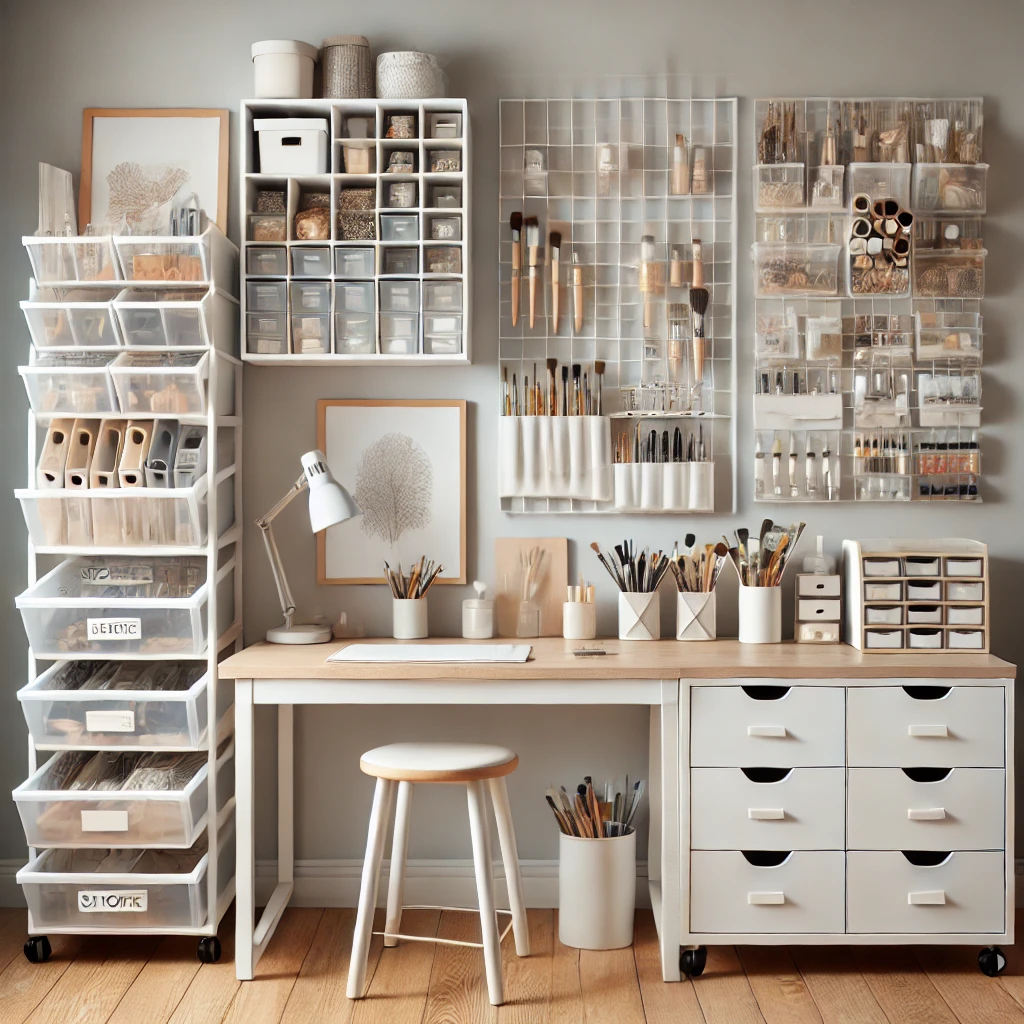
This is the step that makes or breaks a minimalist studio. The rule: messy supplies go behind closed fronts, beautiful supplies go on display.
- Behind closed fronts: paint tubes, mediums, tape, refills, odd tools
- On display: a jar of brushes, a row of sketchbooks spine-out, one beautiful pencil set
Matching Drawers and Bins
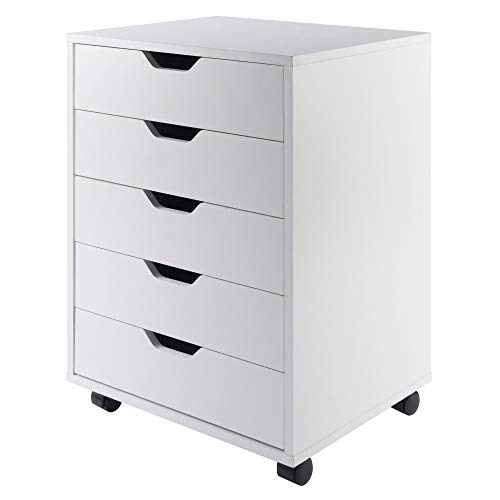
Clean, flat drawer fronts read as calm even when they’re full. This 5-drawer cabinet in white keeps tubes and pencils hidden in a footprint that slides under a desk or beside a shelf.
For paper, flat clear cases keep 12 x 12 sheets crisp and stack neatly on a shelf.
3-Tier Desk Top Storage Unit with Organizer Top, for Office Art & Craft Supplies, Pens Pencils Sticky Notes Paper Clips, 3 Clear Cases w/ Built in Handle -...

A Cube Grid With Matching Bins
A white cube organizer with identical fabric bins is minimalist storage at its easiest. Mix a few open cubes for books and a plant with closed bins for everything else.

One Slim Cart
A slim rolling cart holds your daily tools and rolls out of sight between sessions.
4 Tier Rolling Cart with Wheels, Narrow Storage Cabinet for Bathroom, Laundry Shelves for Room Organization, Small Organizer for Kitchen, Office and Dorm (White)

Find the right cart for your space in my roundup of the best rolling art carts.
4. Protect Your Negative Space
Empty space is a design element. Give it a job.
- Leave at least one wall mostly bare, with one large piece or nothing at all
- Keep 36 inches of clear floor in front of your easel or desk so you can step back
- Fill shelves to about two-thirds. The last third is breathing room
When something new comes in, something old goes out. That one-in, one-out habit keeps a minimalist studio from drifting back to clutter.
5. Add Subtle Texture So It Feels Warm
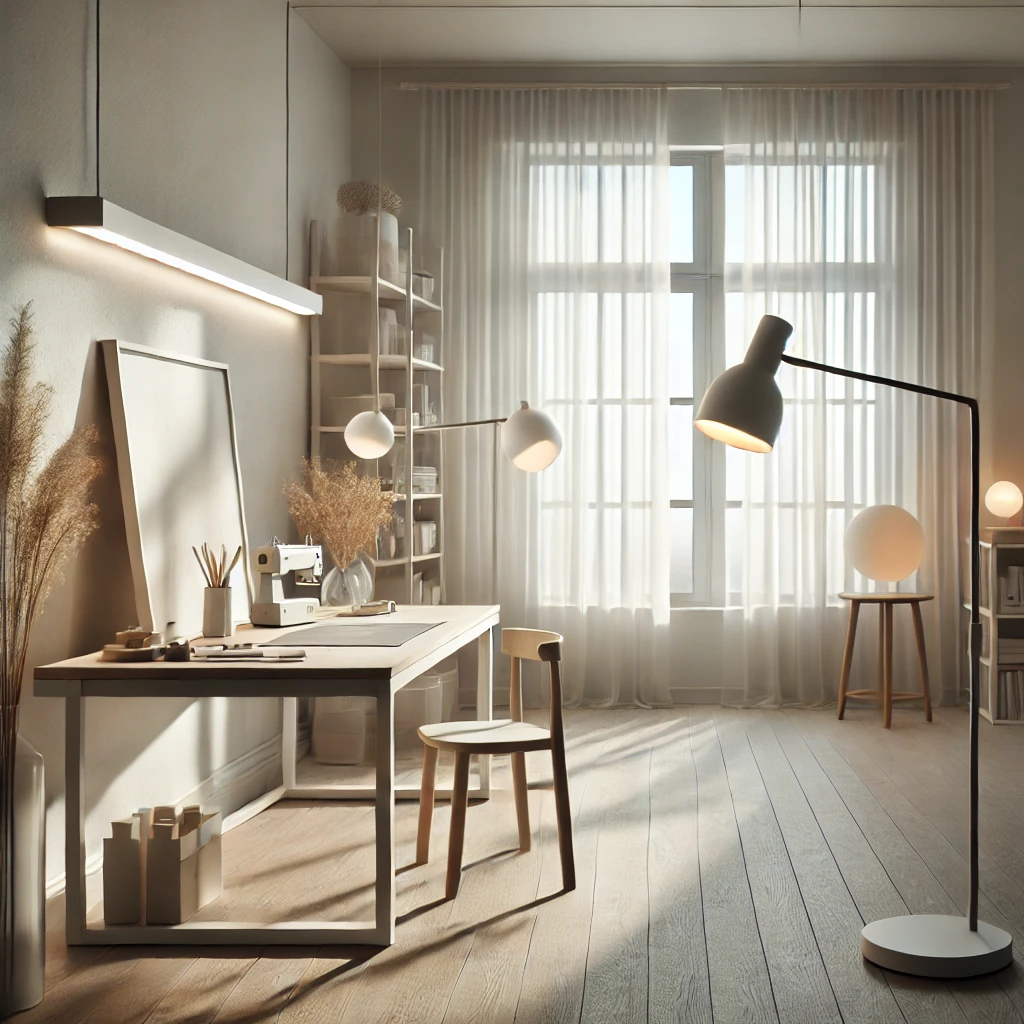
All-white and all-smooth can feel cold. Texture brings the warmth back without adding color.
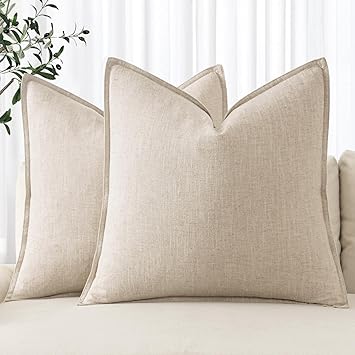
- Linen: pillow covers on a reading chair or a linen curtain
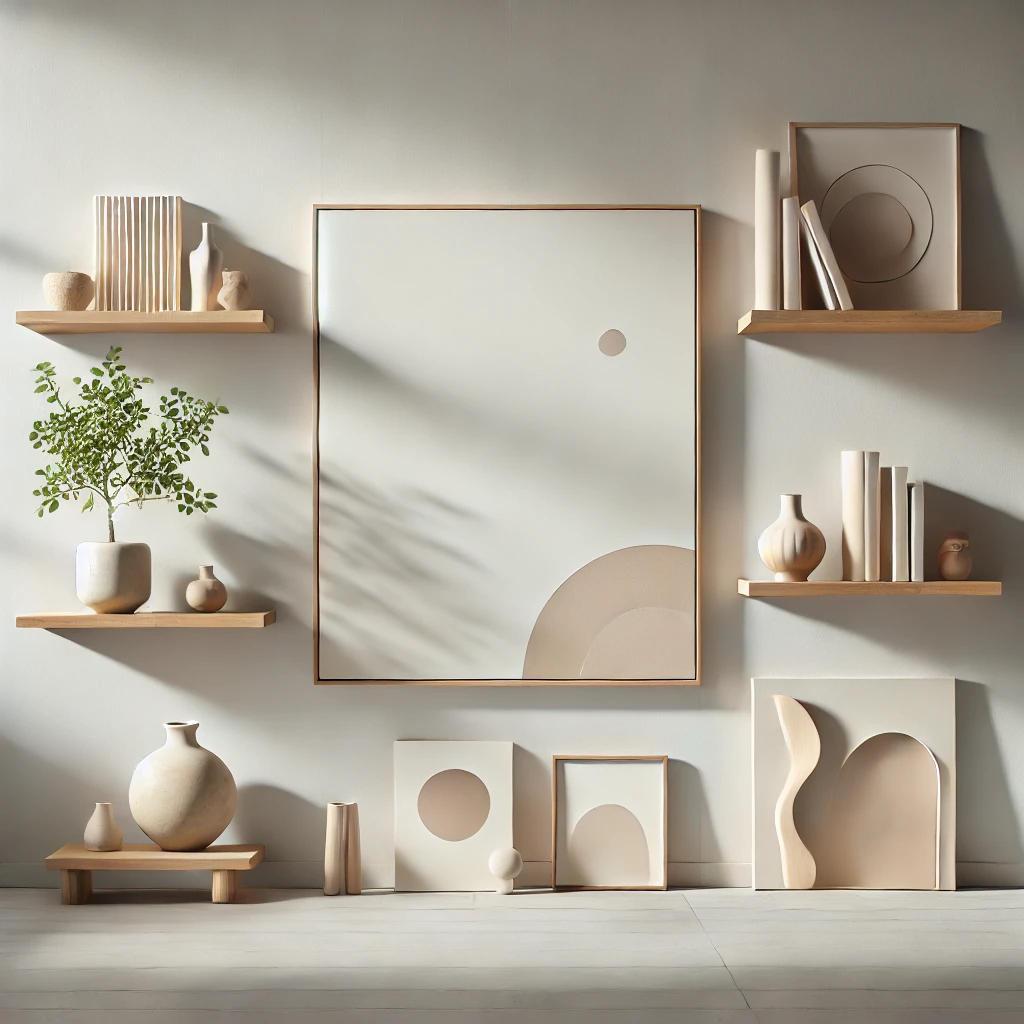
- Pale wood: shelves, frames, a stool
- Matte ceramics: a vase, a brush jar, a planter
- A neutral rug: braided or woven, to soften sound and feet
20x20 Inch Natural Beige Boho Farmhouse Neutral Couch Throw Pillows for Bed Pack of 2 Accent Modern Pillowcase Sofa Livingroom Home Decor
Flower Vase Set of 3 Living Room Kitchen Decorations Farmhouse Modern Rustic Vases Decorative Centerpiece for Shelf Bedroom Office Bathroom Dining Coffee Desk

A textured planter set adds sculpture and life at the same time.
15 , 11 , 7.8 Dia Round Indoor Outdoor Plant Pots & Reviews | Wayfair

A big braided rug is a splurge at around $700, but it grounds an open studio like nothing else. If you work in wet media, keep it outside the splash zone or put a washable mat at the easel.
Pet-Friendly, High Traffic, Weather Resistant, for Patio, Balcony, Bedroom, Living, Dining Room, Wynn Tan

6. Get the Lighting Right (Two Temperatures)
Here’s the detail most minimalist studio photos don’t tell you. You need two kinds of light.
- Room light, 2700K to 3000K: warm and cozy, for the overall glow
- Task light, 5000K with 90+ CRI: crisp daylight at your desk or easel, so colors look true
Sheer curtains soften harsh sun without blocking it. A matte black task lamp adds your 10 percent accent and points light exactly where you need it.
Adjustable Goose Neck Architect Table Lamp with On/Off Switch, Swing Arm Desk Lamp with Clamp, Eye-Caring Reading Lamp for Bedroom, Study Room &Office (Black)

A slim floor lamp lights a corner without taking up a surface.
Torchiere Super Bright Floor Lamp for Living Room Decor & Office - Dimmable, Tall Standing Lamp with Warm Light for Bedroom & Reading - White

Swap in daylight bulbs for your task fixtures.

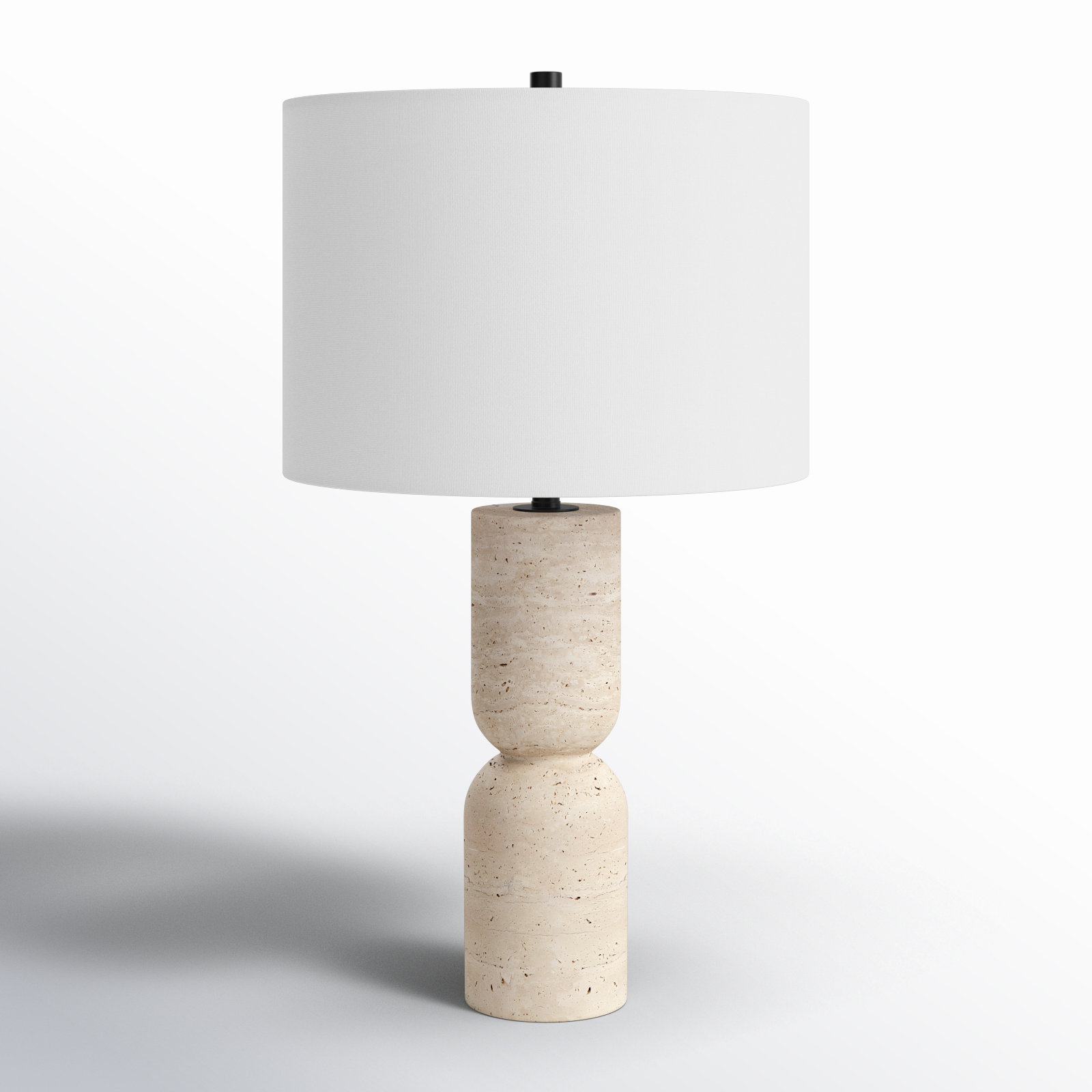
For a warm, sculptural light on a side table, a stone lamp is lovely and very minimalist.
More on bulbs, CRI and placement in my guide to the best lighting for art studios.
7. Choose Decor With Purpose
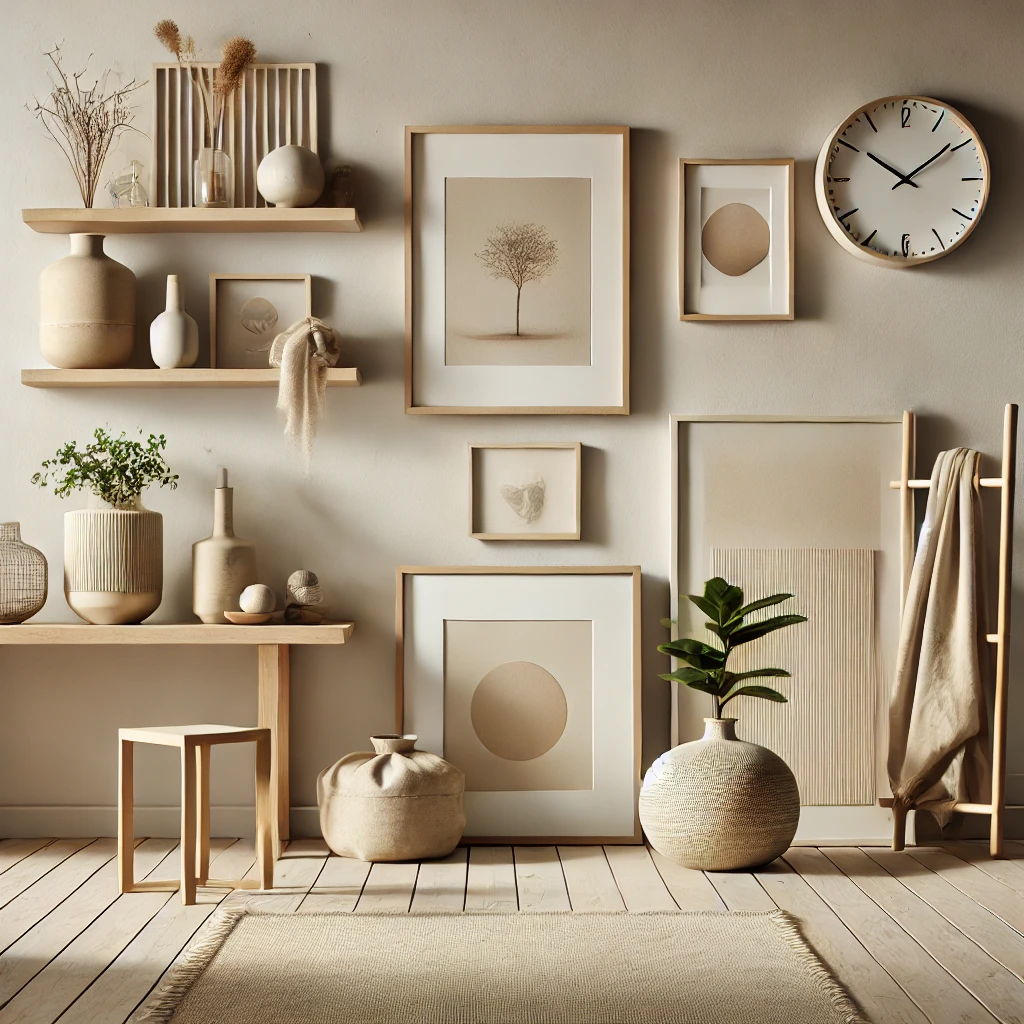
Minimalist decor is a short list of things you love.
- Your own art, framed simply in matching frames
- One plant that thrives in your light
- One inspiration piece, like a print or a postcard from a favorite artist
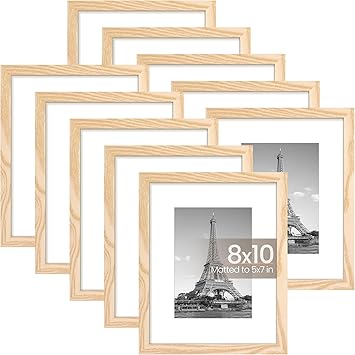
A matching frame set makes a gallery wall look calm and planned. Stick with three to five frames in one finish.
Display Pictures 5x7 with Mat or 8x10 Without, Multi Photo Frames Collage for Wall or Tabletop Display, Natural
Investment Pieces Worth It
Minimalism rewards buying fewer, better things. These are the pieces I’d save for.
Bisley 6-Drawer Steel MultiDrawer Cabinet (around $245). A design-studio classic for decades, with clean steel fronts and shallow drawers that keep pencils, tubes and tools in tidy layers. It looks like a piece of modern design because it is one. Worth it for: artists who want closed storage that’s also beautiful, and who’ll keep it for years. Skip it if: you need to store paper larger than about letter size. See the Bisley 6-drawer on Amazon.
Homeforia 60″ Solid Oak Floating Shelf (around $230). One long, thick oak shelf does more for a minimalist wall than three short ones. Line it with sketchbooks, one plant and a framed piece. Worth it for: a feature wall you see every day. Skip it if: a 48 inch version fits your wall better. See the 60 inch oak shelf on Amazon.
High End Solid Real Wood 48inch Small Floating Shelves for Wall Mounted, Oak Wooden 48in Floating Shelves, Heavy Duty Bracket, 48 X 6.5 X 1.75 in, Set of 2

Daylight Company Anita Floor Lamp, 95+ CRI (around $245). True-color light on a slim stand, so your easel gets studio-quality light without a bulky fixture. Painting three evenings a week for two years works out to about 80 cents a session. Worth it for: evening painters and anyone matching colors. Skip it if: you work mostly by a big window in daylight hours. See the Anita floor lamp on Amazon.
Diversified Spaces Large Format File Cabinet, light hardwood (around $1,340). The dream piece for a paper-heavy artist: a wood flat file with wide, shallow drawers that keep drawings and prints perfectly flat, and a top that works as a layout table. Worth it for: printmakers, illustrators and anyone with a real archive of large work. Skip it if: your paper fits in a portfolio or two. See the wood flat file on Amazon.
Minimalism in a Small Space
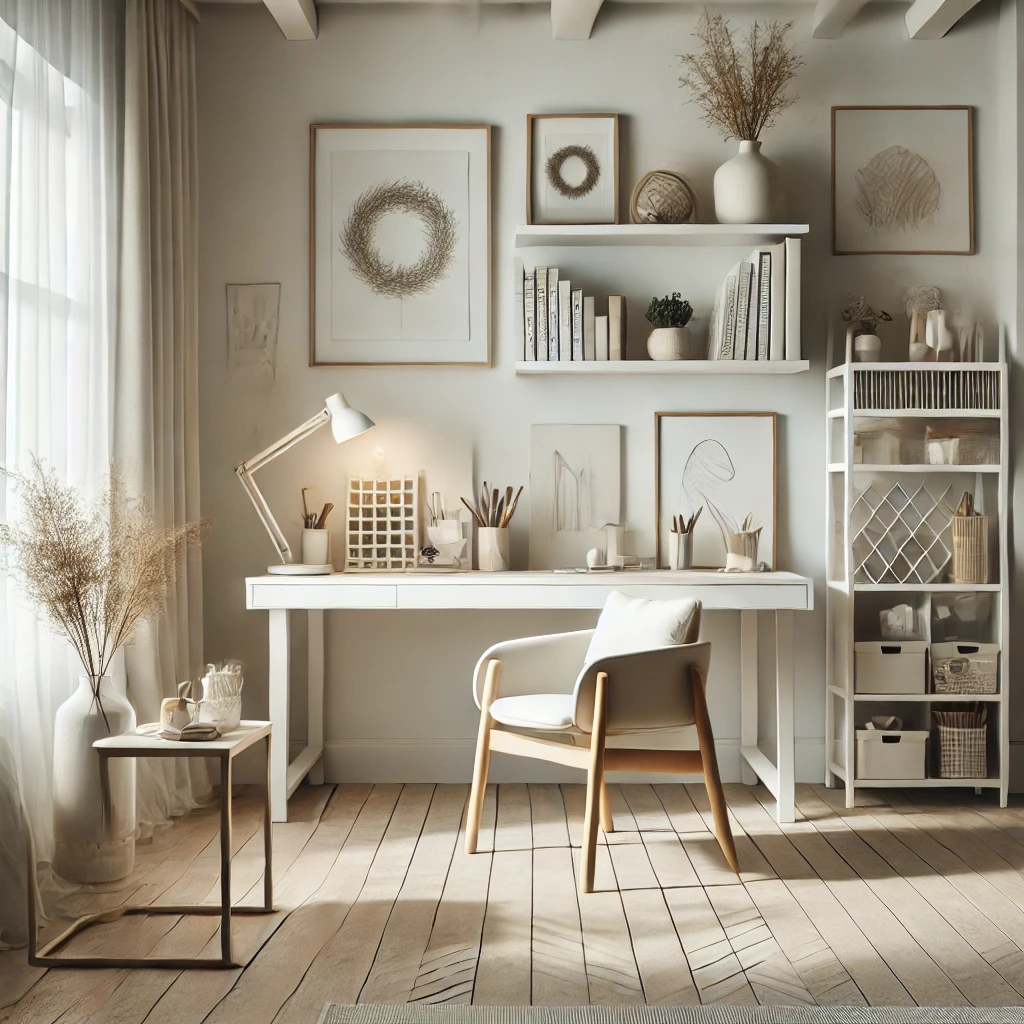
A small studio is the perfect place for minimalism, because every item has to earn its spot.
- Fold-down workbench: mounts to the wall, folds flat when you’re done
- Floating shelves: storage that keeps the floor clear
- One slim cart: your daily tools, rolled away between sessions
Space-Saving Collapsible Wall Table/Desk for Garage Workshop, Holds Up to 550 lbs(Board Size: 47.25 x 22.75 in)

More small-room ideas: small studio decor on a budget.
Keep It Warm, Not Cold
If your studio starts to feel like a waiting room, add one of these:
- A warm wood tone in place of one white piece
- A textured throw on your chair
- Your own work-in-progress on the wall
- A 2700K lamp turned on in the evening
And keep the one-in, one-out rule. Calm is something you keep up, a little every week.
FAQ
What colors work best in a modern minimalist art studio? Soft white, cream or greige on the walls, light wood for furniture, and a matte black accent. Keep it to two or three core colors.
Can a minimalist studio still feel creative? Yes. A quiet room makes your artwork the most colorful thing in it, which is exactly where you want the attention.
How do I keep supplies from piling up? Give every supply a closed home, use the 3-item desk rule, and do a 5 minute reset at the end of each session.
Is minimalism expensive? It doesn’t have to be. Paint, matching bins and a slim cart cost very little. Save the bigger budget for one or two pieces you’ll keep for years.
The Takeaway
A modern minimalist art studio comes from three habits: a quiet 60-30-10 palette, closed homes for messy supplies, and a limit on what lives on each surface. Add warm texture and two temperatures of light, and the room will feel calm without ever feeling cold.
Which part would make the biggest difference in your studio right now: the colors, the storage or the lighting? Tell me in the comments.
Save this to your dream studio board for the next time your desk disappears under supplies.