This post contains affiliate links. If you buy through them, I may earn a small commission at no extra cost to you.
You mix the perfect sage green at night, then see it in the morning and it’s somehow turned muddy olive. Your paint didn’t change. Your light did.
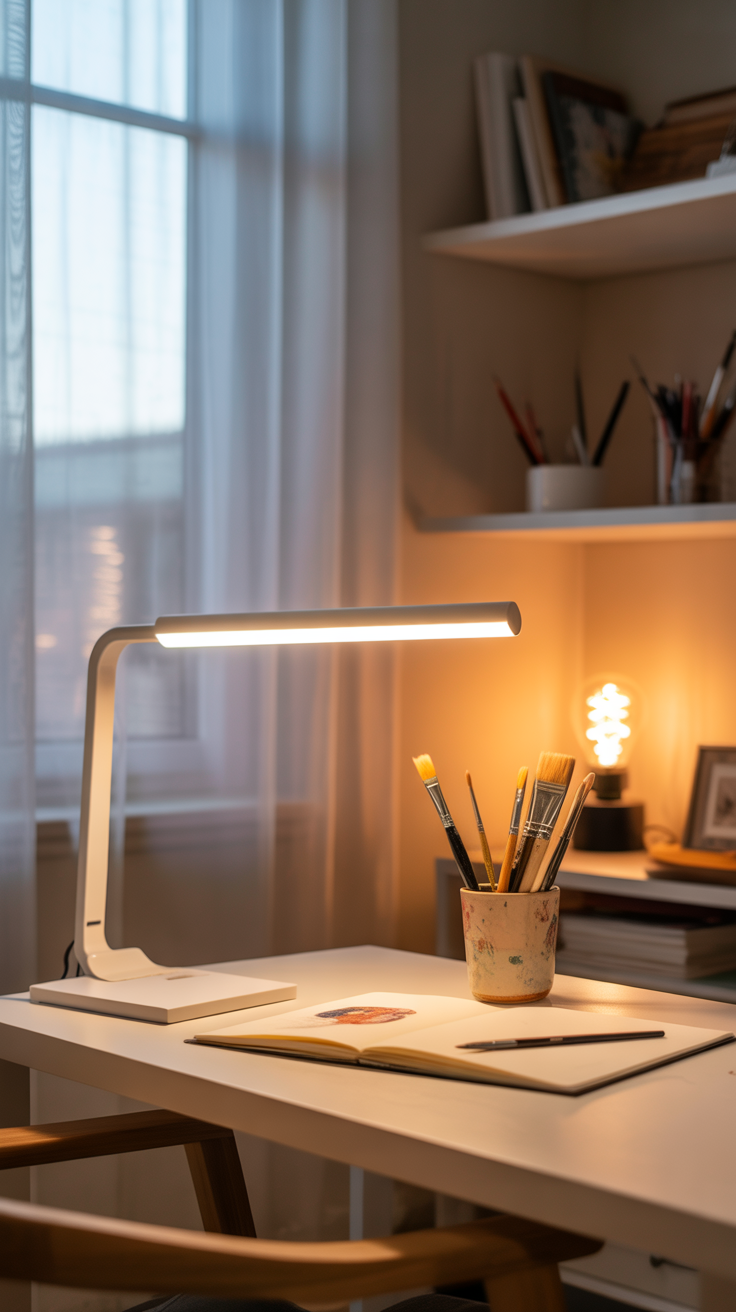
Here’s my take: studio lighting is a numbers problem, and most artists are shopping by looks. A pretty lamp with a low color rendering score will lie to you about every color you mix. Get three numbers right (color temperature, CRI and brightness), then pick the lamp you love.
Below: the numbers, a comparison table, where to put your lights, and the few pieces worth paying for.
Quick answer: if you only do one thing
Put one 5000K, 90+ CRI light source over your work surface, on the side opposite your drawing hand, angled at about 45 degrees. Turn off any warm bulbs in the same room while you judge color. That alone fixes most “my colors look different” problems.
The three numbers that matter
1. Color temperature (Kelvin)
Kelvin (K) describes how warm or cool a light looks. Lower numbers glow yellow, higher numbers look crisp and blue-white.
| Range | How it looks | Use it for |
|---|---|---|
| 2700-3500K (warm) | Cozy, golden, like a living room lamp | Reading corners, mood, accent lamps |
| 3500-4500K (neutral) | Clean and soft white | General room light, sketching |
| 5000-6500K (daylight) | Crisp, close to midday sun | Painting, color mixing, judging finished work |
My pick for most studios: 5000K. It’s close to natural daylight without the slightly blue cast that 6500K can add. Your work will look much the same on your easel as it does on a gallery wall or a phone screen in daylight.
2. CRI (Color Rendering Index)
CRI measures how accurately a light shows colors compared to natural light, on a scale up to 100.
- Under 80: common in cheap bulbs. Reds and skin tones look flat and dull.
- 90+: the minimum I recommend for anyone painting or using colored pencil.
- 95+: ideal if you sell work, match colors, or do portraits, where small shifts in warm tones show up fast.
If a lamp listing doesn’t mention CRI at all, assume it’s low.
3. Brightness (lux and lumens)
Lumens tell you how much light a bulb puts out. Lux tells you how much of it actually lands on your paper, which is the number that matters.
- About 500 lux for general studio light, enough to move around and work comfortably.
- 1,000 lux or more on the work surface for detail: fine linework, botanical drawing, small brushwork.
A free light meter app on your phone gives a rough reading. Lay the phone flat where your paper sits and check it.
Bonus: flicker-free
Some LEDs flicker faster than you can consciously see, and it tires your eyes over a long session. Look for “flicker-free” in the listing, especially for lamps you’ll sit under for hours or use near a screen.
Comparison table: lamps and bulbs worth a look
Prices are approximate at the time of writing. $ = under $30, $$ = $30-100, $$$ = $100-200, $$$$ = $200+.
| Pick | Color temp | CRI | Price | Best for |
|---|---|---|---|---|
| Daylight Artist Studio Lamp | Daylight | 95+ (up to 6,000 lux) | $$$$ | Serious painters, color-critical work |
| Daylight Lumi Task Lamp | Daylight | 95+ | $$$ | A precise desk lamp that lasts |
| Daylight Anita Floor Lamp | Daylight | 95+ | $$$$ | Lighting an easel from the side |
| Neatfi XL clamp lamp | Check listing | Check listing | $$$ | Wide desks, 2,200 lumens of spread |
| DuoPro Clamp LED Lamp | 6,000K | Check listing | $$ | Clamping to a drafting table or easel |
| Verilux SmartLight desk lamp | Full spectrum | Check listing | $$ | Adjustable brightness on a budget |
| OttLite LED Soft Touch | Check listing | Check listing | $$ | Sketching, reading, small desks |
| LE 5000K A19 bulbs, 6 pack | 5,000K | Look for 90+ | $ | Swapping out every ceiling bulb cheaply |
“Check listing” means the spec varies by version or isn’t published clearly, so confirm 90+ CRI before you buy.
The five layers of a well-lit studio
Good studios stack light in layers. Each layer has one job.
Natural light
North-facing windows (in the Northern Hemisphere) give the steadiest daylight, with no harsh sun patches crawling across your work all afternoon. South and west windows are brighter but change more through the day.
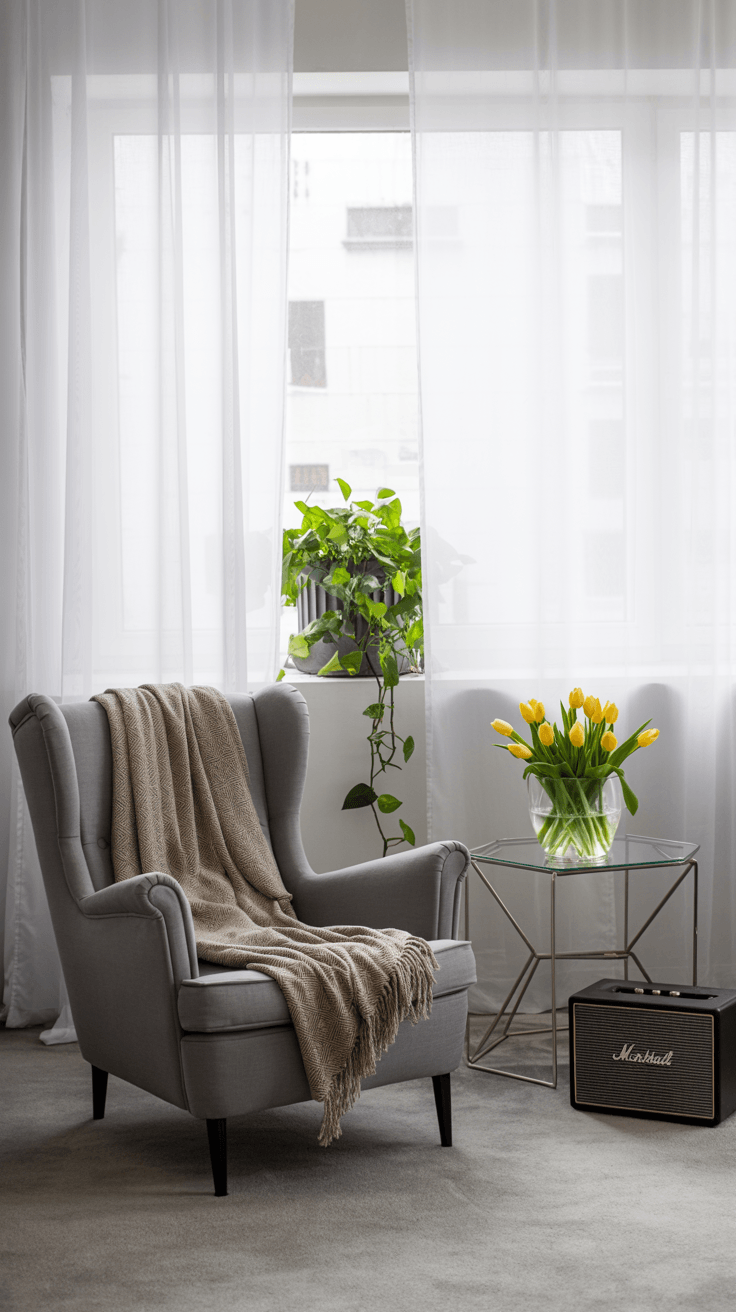
Diffuse direct sun with sheer curtains. They soften hard shadows and cut glare on wet paint.
84 inches Long 2 Panels Set, Sheer White Curtains for Living Room/Bedroom, Rod Pocket Voile Sheer Panel Drapes, 2pcs, Each 42″ W x 84″ L

A mirror opposite a window bounces daylight deeper into a dim room, and it doubles as a way to check your composition in reverse, an old painter’s trick for spotting wonky proportions.
Including Matte Black Squared Wall Brackets | Frameless Bathroom Mirror | Rectangular Adjustable & Tilting Vanity | Modern Farmhouse Wall-Mounted Mirror

Task lighting
This is the lamp aimed at your paper or canvas, and it’s where your money matters most.
Placement rule: put the lamp on the side opposite your drawing hand. Right-handed? Lamp on the left. Otherwise your own hand casts a shadow right where you’re working.
Angle rule: aim the light at about 45 degrees to the surface. Straight down or straight on bounces glare off wet paint, graphite and glossy paper.
2,100 Lux at 12", 4 Brightness Levels, Anti-Glare Shades, Adjustable Arm, Slim Design, Perfect for Sewing, Reading, Crafts, Beauty Treatments - Grey/White

Flexible Gooseneck and Integrated USB Charging Port - Reduces Eye Strain and Fatigue - Ideal for Readers, Artists, Crafters

3 Brightness Settings with Energy Efficient Natural Daylight LEDs - Adjustable Flexible Neck & Touch Controls for Tabletops, Home Office, Computer Desk, & Do...

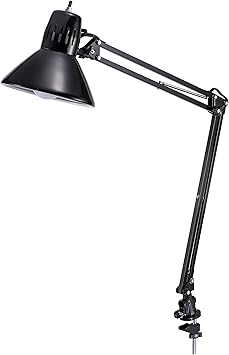
On a tight budget, a swing arm clamp lamp gets you reach and flexibility for under $20. Fit it with a 5000K, high-CRI bulb.
Ambient lighting
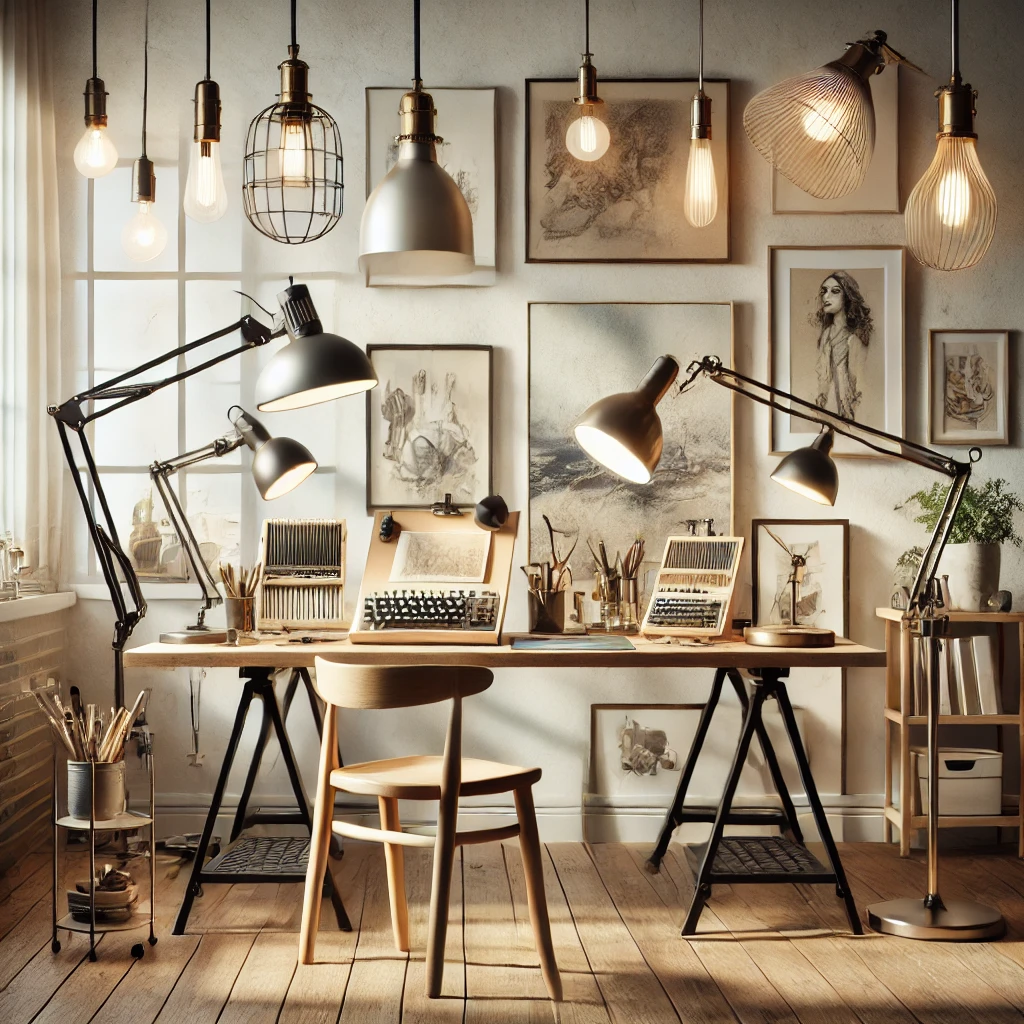
Ambient light fills the room so your eyes aren’t constantly adjusting between a bright page and a dark corner. Aim for even light around 500 lux.
A track kit is a smart choice because you can point each head at a wall, a shelf or your easel.
With Floating Canopy Feed and 4Ft Track with End Caps 5-CCT Selectable Heads Fully Dimmable in White

Daylight bulbs
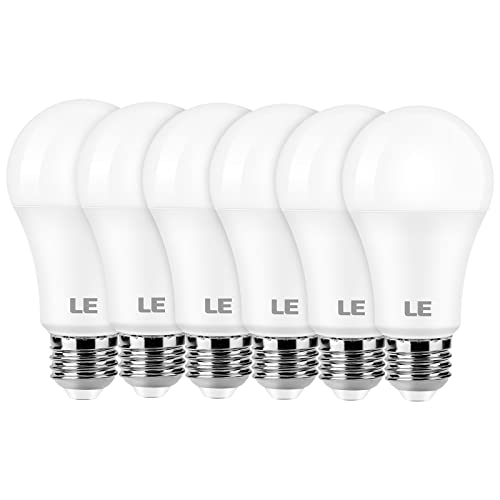
The cheapest upgrade in this whole post. Swap every bulb in your studio’s ceiling fixtures and lamps for the same 5000K bulb. Same color temperature everywhere means no warm and cool patches fighting each other.
Accent lighting
Accent lights make the room feel like yours: a warm table lamp on a reading shelf, LED strips under a cabinet. Keep them away from where you judge color, or switch them off when you’re mixing paint.
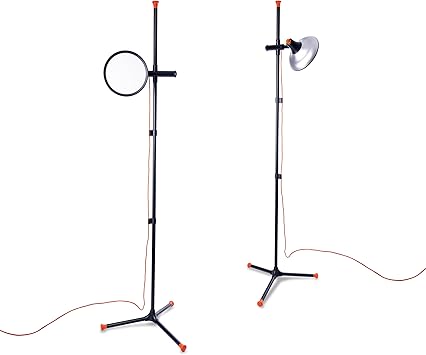
A floor lamp with adjustable brightness can do double duty as a side light for an easel.
Flexible Gooseneck and Easy Controls – Reduces Eye Strain and Fatigue – Ideal for Reading, Artists, Craft...

The white paper test (60 seconds)
Before you buy anything, try this.
- Turn on every light in your studio.
- Hold a plain sheet of white printer paper flat where you work.
- Look at it, then walk it around the room.
If it looks yellow, it’s too warm for color work. If it looks bluish, it’s on the cool side. If it changes color as you move it, you’re mixing color temperatures, and that’s the first thing to fix.
Lighting by medium
- Painting (oils, acrylics, watercolor): 5000K, 95+ CRI if you can. Angle light at 45 degrees to avoid glare on wet paint. Light your easel from the side, not straight on.
- Drawing and sketching: neutral to daylight (4000-5000K) with adjustable brightness. A clamp lamp you can swing close for detail and push away for gesture work is ideal.
- Colored pencil: 90+ CRI matters more than you’d think, because layered colors shift subtly.
- Digital art: flicker-free light, positioned behind or beside the screen so it doesn’t reflect. Keep room light close to your screen’s brightness to ease eye strain.
Setups by studio style
- Small or rented space: a clamp lamp plus daylight bulbs in the existing fixtures. No drilling. More ideas in small studio decor on a budget.
- Cozy studio: daylight task lamp on the desk, warm table lamp across the room for evenings off. See cozy artist room ideas.
- Modern minimalist: a track kit and one sleek floor lamp, nothing else. Browse modern minimalist art studio inspiration.
- Vintage: an industrial-style lamp for character, with a 5000K bulb inside. More in vintage art studio ideas.
Investment pieces worth it

You’ve got the free fixes. Here’s where spending more pays off.
Daylight Company Lumi Task Lamp
- Daylight Company Lumi Task Lamp, about $195. 95+ CRI in a compact desk lamp.
Worth it for: anyone who paints or uses colored pencil several times a week at a desk. $195 over 3 years of weekly sessions is about $1.25 a session. Skip it if: you mostly sketch in graphite, where color accuracy matters less. A swing arm lamp with a good bulb is plenty.
Daylight Company Anita Floor Lamp
- Daylight Company Anita Floor Lamp, about $245. 95+ CRI, and it stands beside an easel instead of clamping to a desk.
Worth it for: easel painters who work standing up or at night. Skip it if: you only work at a table. A clamp lamp gets closer to your paper anyway.
Neatfi XL clamp desk lamp
- Neatfi XL 2,200 lumen clamp desk lamp, about $110. A long, wide light bar that spreads across a big drafting table.
Worth it for: wide desks and large paper, where a small lamp leaves the far corner dim. Skip it if: your desk is under 36 inches wide. A standard task lamp covers it.
Common lighting mistakes
- Mixing warm and cool bulbs in one room. Your eyes keep adjusting, and colors look different depending on where you stand.
- One overhead light only. It leaves your head and hand casting shadows on the page.
- Lamp on the same side as your drawing hand. Shadow city.
- Colored or “smart mood” bulbs where you judge color. Fun in the hallway, trouble at the easel.
- Dark walls right behind your work. They swallow light. Light neutral walls bounce it back for free.
- Buying by lumens alone. A bright lamp with low CRI is just a bright lamp that gets colors wrong.
FAQ
What color temperature is best for an art studio? 5000K for painting and color work. 4000K is comfortable for sketching if 5000K feels too stark.
Is 6500K too blue? It can lean cool. Some artists like the crispness, but work mixed under 6500K may look a little warmer in regular daylight.
How bright should my studio be? Around 500 lux in the room and 1,000 lux or more on your work surface for detail.
Do I need a special “artist” lamp? No. You need 90+ CRI at around 5000K. Daylight bulbs in a lamp you already own can get you most of the way.
The takeaway
Pick 5000K and 90+ CRI, put your lamp opposite your drawing hand at about 45 degrees, and use one color temperature in the room. Spend on the lamp over your work surface first, and let everything else be pretty.
Where does your best light come from right now: a window, a desk lamp or the ceiling? Tell me in the comments.
Save this pin for the next time you’re standing in the bulb aisle.