This post contains affiliate links. If you buy through them, I may earn a small commission at no extra cost to you.
Why does a minimalist studio look so calm in photos, and so empty or so messy once you try it at home?
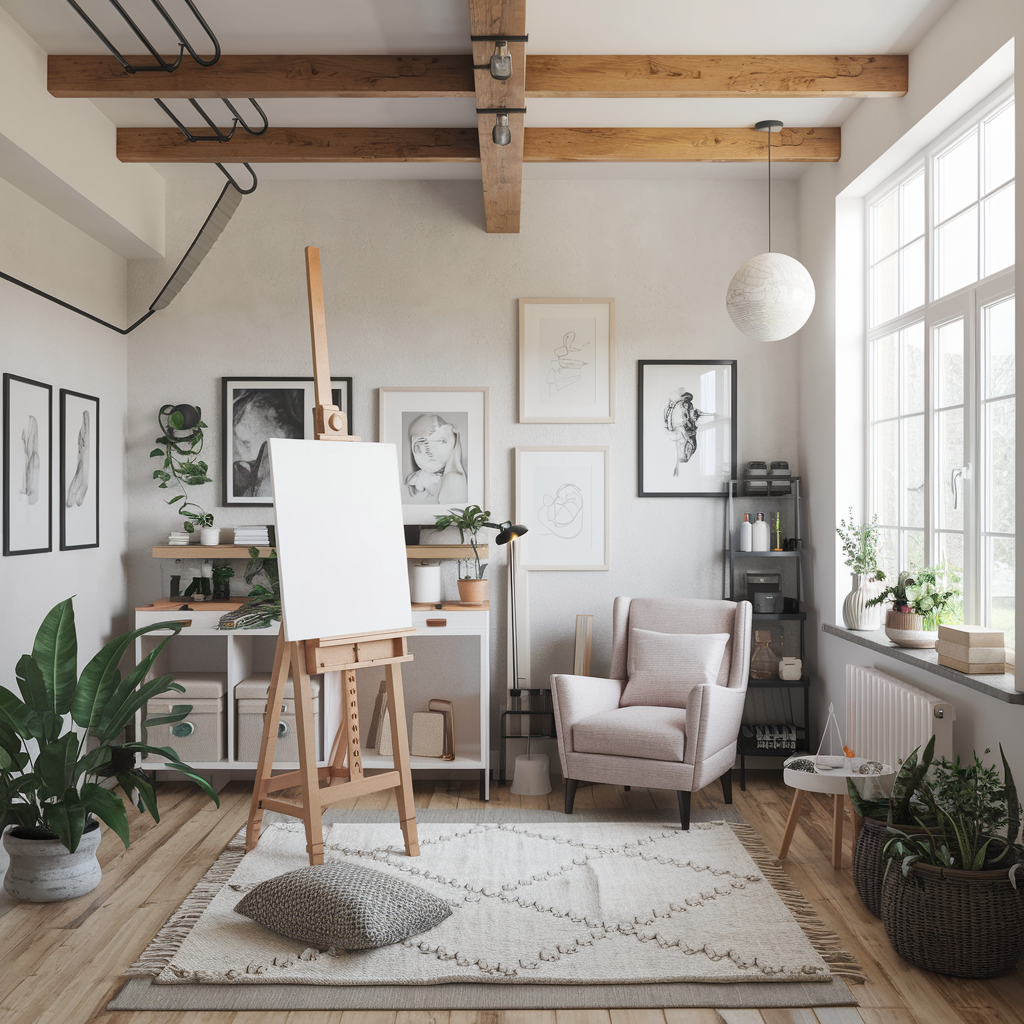
Here’s my take: a minimalist art loft is a storage plan first and a style second. The airy look in every photo comes from about 80% of the supplies living behind doors or in drawers, with only the best 20% on display. Get that ratio right and any of the five looks below will work, even in a small room.
Minimalism is also kind to the art itself. Fewer things competing for your eye means your work in progress becomes the most interesting object in the room.
If you only do one thing: clear everything off your main work surface except what you use every single session, and give the rest a closed home. One clear table does more for a minimal look than any furniture purchase.
Which Minimalist Loft Are You?
Each style below shares the same bones: a pale or neutral base, a short list of materials and a clear work surface. What changes is the mood.
| Style | Palette | Key materials | Statement piece | Budget |
|---|---|---|---|---|
| Serene | white, oak, oat | linen, light wood | wood H-frame easel | $$ |
| Industrial | charcoal, black, walnut | metal, concrete | factory pendant | $$ |
| Cozy Nook | cream, honey wood | wool, baskets | plush rug | $ |
| Monochrome | black, white | metal, matte paint | pegboard grid | $ |
| Nature | sage, wood, cream | jute, rattan, plants | big floor plant | $ |
1. The Serene Studio
The feel: soft morning light, white walls and nothing asking for your attention.
What makes it work:
- White or warm white walls with light oak floors or furniture
- Sheer linen curtains that turn harsh sun into an even glow
- A solid wood easel as the one sculptural piece
- Two or three floating shelves with a few books, one ceramic and one framed sketch
- A simple reading chair in a corner for planning and thumbnails
The serene loft lives or dies on empty wall space. Leave at least one wall completely bare so your eye has somewhere to rest.
Sheer linen panels are a quiet workhorse in a painting studio. They diffuse direct sunlight so you avoid hard shadows and hot spots across your canvas.
2. The Industrial Minimalist
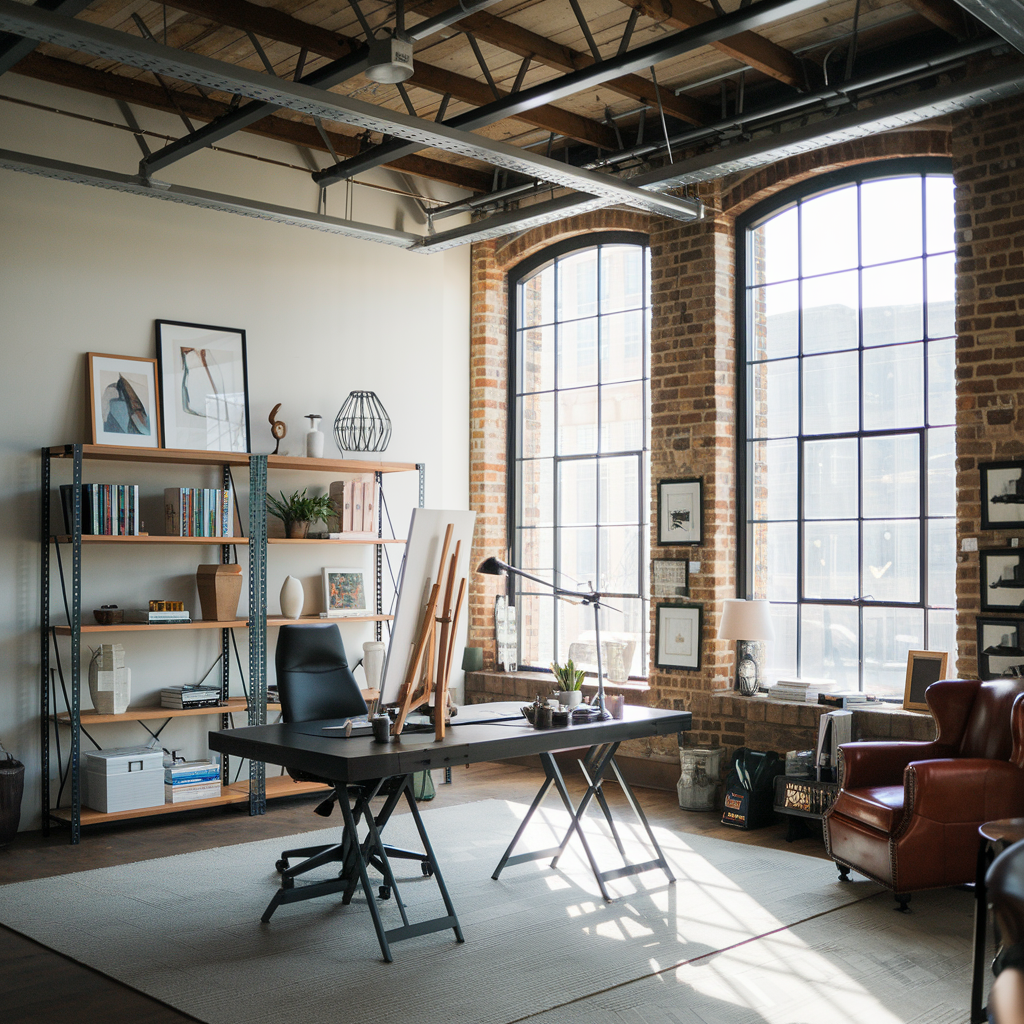
The feel: a converted warehouse, a little raw, very focused.
What makes it work:
- Concrete, exposed brick or a faux brick peel-and-stick wall
- A desk with a black metal frame and a solid wood top
- Factory-style pendants hung about 30 to 36 inches above the worktable
- Black metal floating shelves
- A metal or dark wood easel
Industrial spaces can feel cold, so add one warm material, usually wood, at the surface you touch the most. A wood desktop under your hands makes a big difference.
3. The Cozy Minimalist Nook
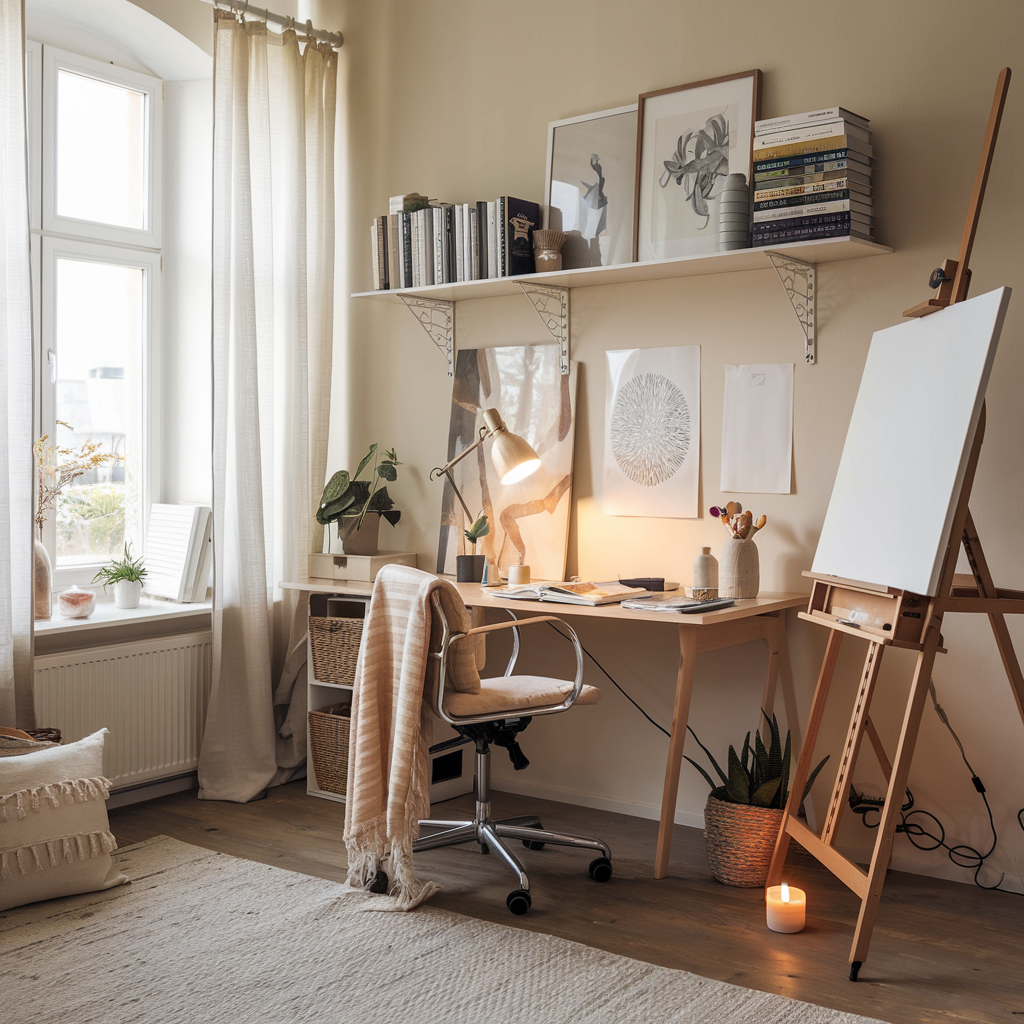
The feel: a tucked-away corner that still feels like yours. Great for a bedroom or a small loft landing.
What makes it work:
- A compact warm-wood desk around 40 to 48 inches wide
- A tabletop easel that stores flat when you’re done
- A plush rug to define the studio zone
- Woven baskets with lids for supplies
Cozy and minimal sound like opposites, but they meet in texture. You keep the object count low and let a soft rug and woven baskets add warmth instead of more decor.
Short on square footage? Art Furniture Essentials for Small Spaces covers pieces that fold, roll and stack.
4. The Monochrome Loft
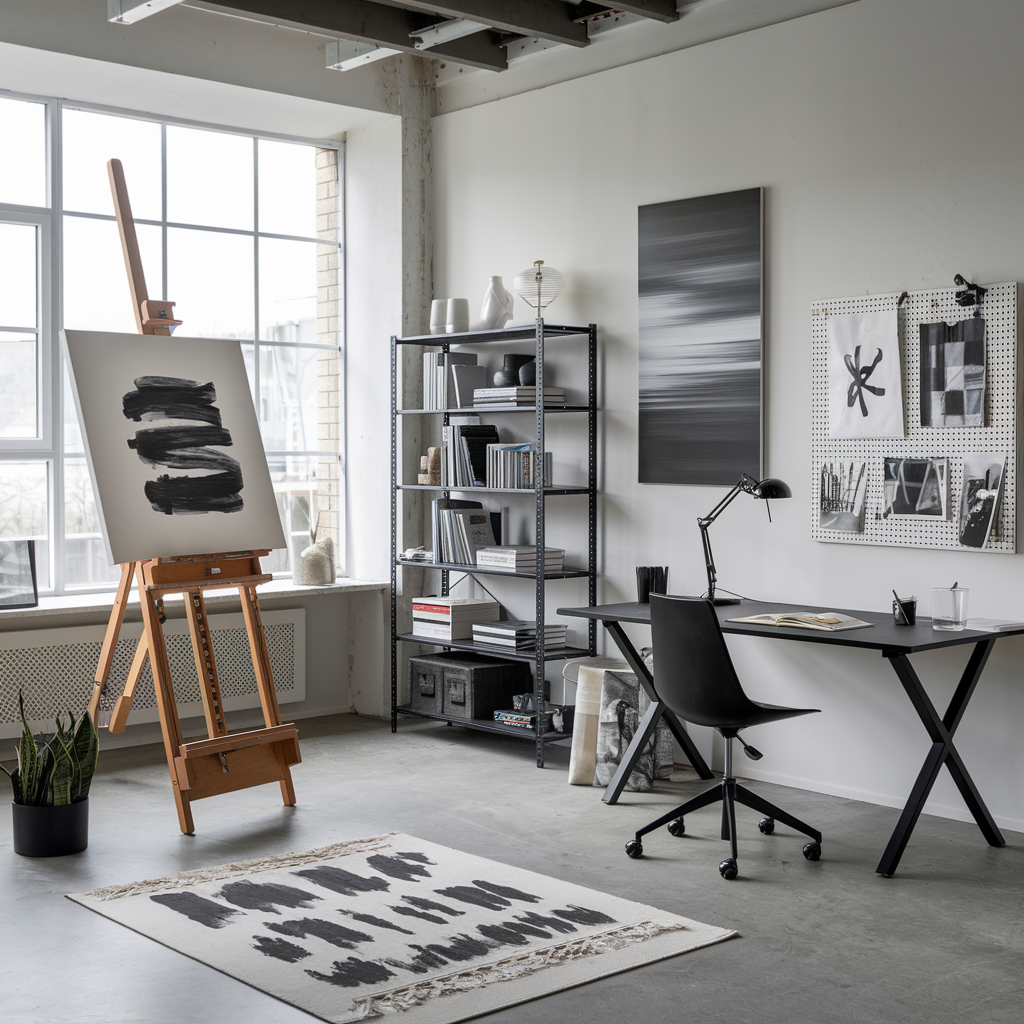
The feel: graphic, crisp and gallery-like. Strong contrast, zero fuss.
What makes it work:
- Black and white prints, or your own ink and charcoal studies
- A black metal easel and a white desk
- A black ergonomic chair
- A pegboard grid painted white or black for tools
- A matte black task lamp
Monochrome is the best loft style for charcoal and ink artists. Your work already matches the room. A Wall Control metal pegboard gives you a tidy grid that looks intentional, as long as you only hang what you use weekly.
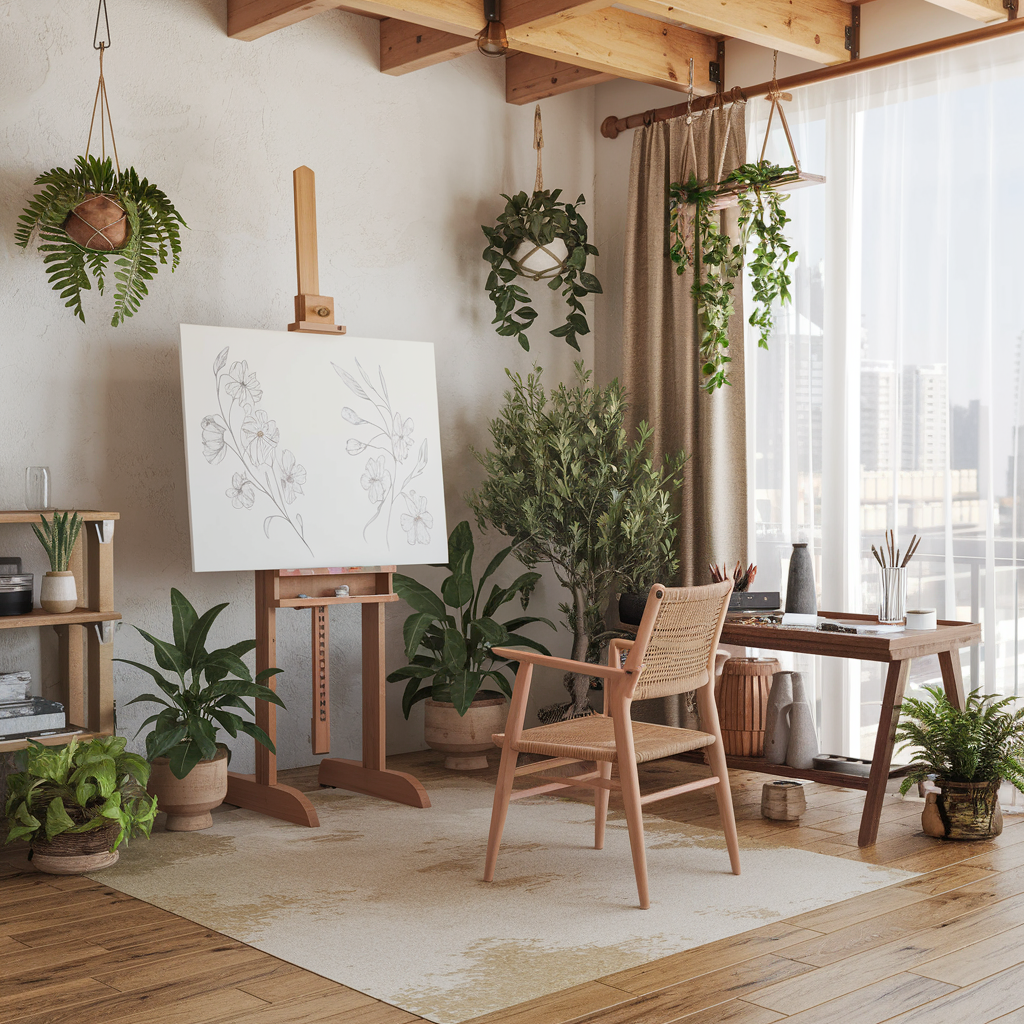
5. The Nature-Inspired Loft
The feel: calm and green, like painting in a greenhouse.
What makes it work:
- Warm wood furniture and a jute rug
- Botanical prints or your own leaf and flower studies
- Low-maintenance plants like snake plants and pothos
- Green linen cushions or curtains
- A rattan chair or rattan storage baskets
Plants are the decor here, so skip extra objects. Three larger plants look more intentional than ten tiny pots, and they’re easier to water. Keep them off your work surface and away from wet paintings.
The Minimalist Storage Rule: 80 Closed, 20 Open
This is the secret behind every loft above. Most of your supplies should be out of sight, and only your prettiest or most-used things stay out.
Closed storage doesn’t have to be big. A shallow wood box with 2 to 3 inch drawers holds pencils, pastels and tubes in one layer, like the 7 Elements 6-Drawer Beechwood Art Supply Storage Box. For more ideas, see wall-mounted organizers for art studios.
From Cluttered to Minimal in 5 Steps
You don’t need to empty the whole room in a weekend. Work through it in order and the look builds on its own.
A quick sorting cheat sheet helps when you get stuck on an item:
| How often you use it | Where it lives |
|---|---|
| Every session | on the desk or a cart |
| Weekly | open shelf or pegboard |
| Monthly | closed drawer or cabinet |
| Rarely or never | donate or deep storage |
Investment Pieces Worth It
Minimalism means fewer things, so each piece you keep gets used and seen every day. That’s a good reason to buy fewer, better pieces.
Homeforia 60-Inch Solid Oak Floating Shelf (around $230). One long, thick oak shelf looks like architecture instead of clutter, and it fits the serene, cozy and nature lofts. Worth it if you want a single display shelf to anchor a bare wall. Skip it if you rent and can’t anchor heavy shelves into studs. A lighter option is the Loon Peak Ilkan solid wood floating shelf.
Steelcase Series 1 Ergonomic Chair (around $500). Clean lines that suit the monochrome and industrial looks, with real adjustability for long drawing sessions. Worth it if you sit at a desk for 2+ hours most days. Over 5 years of near-daily use, that’s under 30 cents a day. Skip it if you mostly stand at an easel.
Daylight Artist Studio Lamp, 95+ CRI (around $275). Minimal rooms often have one big window and not much else, so a strong, color-accurate lamp keeps you working after sunset. Worth it if you paint in the evening or have a dim loft. Skip it if a clamp lamp already covers your desk and you mostly draw in graphite.
MEEDEN Heavy-Duty H-Frame Studio Easel, Solid Beech (around $220). In a minimalist loft, the easel is often the only sculptural piece in the room, so it’s worth choosing one that looks good. Worth it if you paint on canvas regularly. Skip it if you work small; a tabletop easel suits the cozy nook better. Compare options in the best multi-use easels.
Minimalist Art Loft FAQ
How do I make a minimalist studio feel less cold? Add one warm material where you touch the most, like a wood desktop, and one soft texture underfoot, like a wool or jute rug.
What color should the walls be? Warm white or a very soft neutral. Pale walls bounce light onto your work and won’t tint how you see color.
Can a small room be a minimalist loft? Yes. Smaller rooms benefit most, because the 80/20 storage rule frees up the floor and the work surface.
Where should I put art supplies I rarely use? In closed, labeled bins on a high shelf or in a closet. If you haven’t touched something in a year, it may be time to pass it on.
The Takeaway
A minimalist art loft starts with storage, not shopping. Hide about 80% of your supplies, keep one clear work surface and choose a short list of materials for the style you love. The calm look follows.
Which loft feels most like you: serene oak, industrial, cozy nook, monochrome or nature? Tell me in the comments, and save this to your studio inspiration board.