This post contains affiliate links. If you buy through them, I may earn a small commission at no extra cost to you.
Somewhere in your house there’s an easel that’s either wobbling, too short for your favorite canvas, or folded behind a door because setting it up is a whole production. Let’s find you one you’ll actually leave standing.
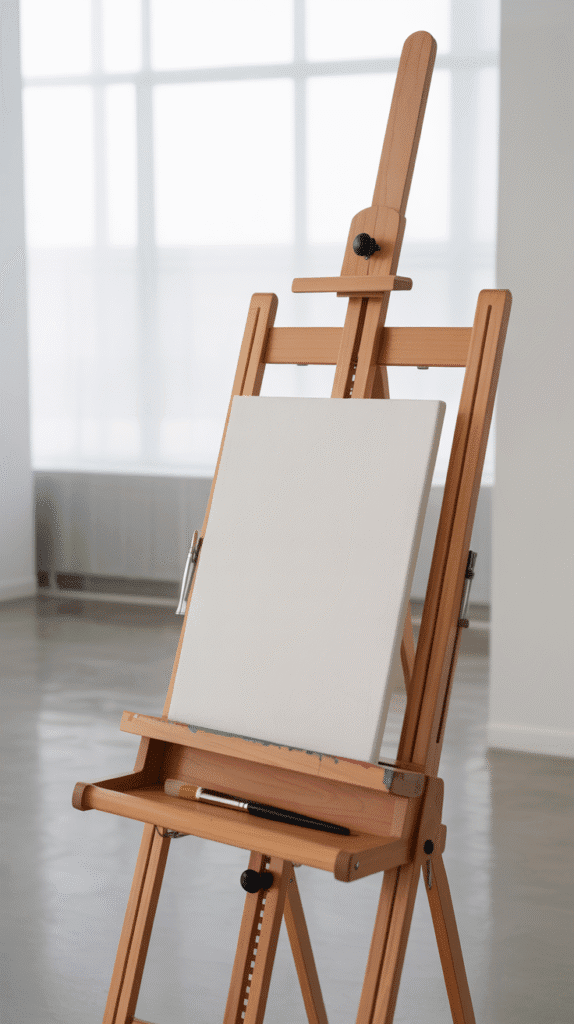
Here’s my take: the best easel is the one that matches the biggest canvas you paint most often, plus the space you have to leave it set up. Features come second. A gorgeous crank easel crammed into a hallway gets used less than a humble tabletop easel that lives on your desk, ready to go.
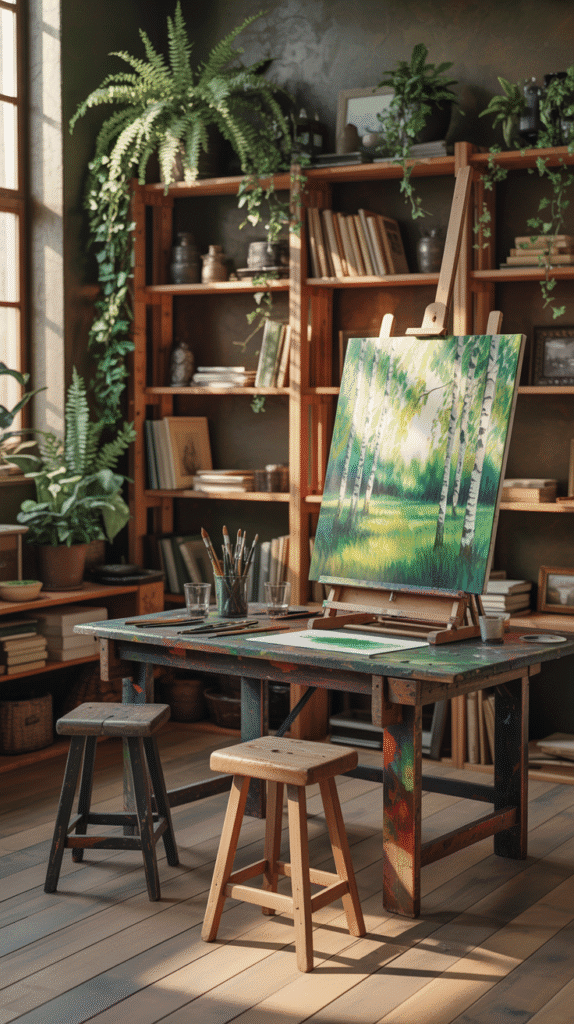
So this guide is organized by where the easel lives: on the floor, on the table, on the wall, or in your car. Pick your spot first, then your easel.
If you only do one thing: measure the tallest canvas you’ve painted in the last year, then check the easel listing’s maximum canvas height before you buy. That one number rules out half the options and saves you a return.
Easel types at a glance
| Type | Max canvas (approx.) | Footprint | Tilts flat? | Best for |
|---|---|---|---|---|
| H-frame floor | 48 to 80 in | Large | Some models | Oils, acrylics, big work |
| A-frame floor | 30 to 50 in | Medium | Rarely | Small rooms, mixed media |
| Tabletop | 12 to 25 in | Tiny | Often | Sketching, watercolor |
| Wall-mounted | Varies by model | None | No | Small studios, display |
| Tripod / field | 25 to 40 in | Small, folds | Some | Plein air, classes |
These ranges are approximate and vary a lot between models. Always check the listing for the exact maximum canvas height, because some brands measure to the top clamp and some to the mast.
Torn between the two big floor styles? My side-by-side guide on H-frame vs A-frame easels walks through stability, footprint, and which one suits your canvas size.
Standing studio easels
A floor easel is the classic choice for acrylics and oils. You stand, you step back, you see the whole piece. If you paint anything larger than about 16 x 20 inches, this is where I’d start looking.
Best overall: Mont Marte tilting studio easel
This is a solid wooden studio easel with a tilting mast, so you can angle the canvas forward to cut glare from a window or lamp. It’s sturdy enough for everyday painting without taking over the room.

Why I recommend it: tilt plus stability at a mid-range price, around $180 at the time of writing. A good fit for the painter who works on medium canvases most days.
Best for large canvases: Mabef M/04
Mabef is an Italian maker known for beechwood studio easels, and the M/04 is a crank-style model. A crank lets you raise and lower a heavy canvas without wrestling clamps, which matters a lot once your paintings get big.

Why I recommend it: smooth height changes and a reputation for lasting years. It’s the one I’d point to if you already know you’re a big-canvas painter.
Most versatile: MEEDEN Versatile Studio H-Frame
This H-frame converts from upright to flat, which is the magic trick for watercolor and pouring techniques where you need the paper level so the paint stays put. One easel covers oils on Monday and washes on Wednesday.
All Media Adjustable Beech Wood Studio Easel, Painting Floor Easel Stand, Movable and Tilting Flat Available, Holds Canvas Art up to 77

Why I recommend it: it’s the most “multi-use” floor easel here, at around $165. If you switch mediums, this is the one.
How to set your easel at the right height
The height setup is where most easels go wrong, and it’s free to fix.
- Canvas center at eye level keeps your neck neutral, so you’re not craning up or hunching down for hours. Your neck will thank you.
- A slight forward tilt (just a few degrees) reduces glare and helps paint drips fall away from the surface.
- Sitting to paint? Redo the steps from your chair. Many artists keep two marks on the mast, one for standing and one for seated.
Tabletop easels
Tabletop easels are the most underrated tools in a small studio. They live on your desk, take seconds to adjust, and they’re cheap enough to own two.
Best compact H-frame: U.S. Art Supply Venice
A mini H-frame with the same sturdy logic as the big ones, sized for the desk. Great for small canvases, panels, and reference photos you want propped up while you draw.

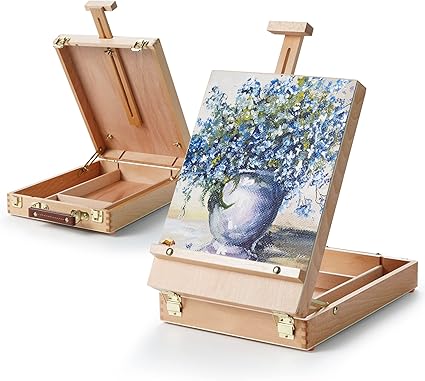
Best with storage: ARTIFY beechwood sketch box easel
A tabletop easel with a built-in drawer, so your pencils, kneaded eraser, and a few paint tubes ride along with it. Around $30, which makes it one of the friendliest buys in this whole post.
Keep a tabletop easel next to your sketchbook for propping up reference photos. Having the photo upright at the same angle as your page makes proportions much easier to judge.
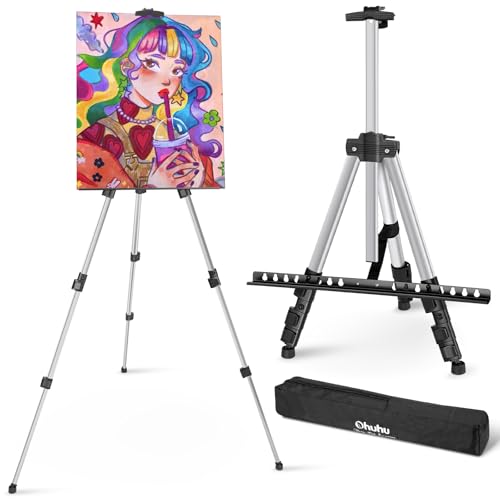
Best for travel: Ohuhu aluminum tripod easel
At 66 inches tall when extended, this lightweight aluminum tripod works as a floor easel in a pinch and folds into a carry bag for classes, parks, and plein air trips.
Wall-mounted and portable easels
No floor space? Go vertical. Wall easels are fantastic in small studios because there’s nothing to trip over and nothing to fold away.
Best wall easel: Rue Wall Display & Painting Easel
This one doubles as a display rail, so finished work hangs on it between painting sessions. The small version is about 24 inches wide. At around $324, it’s a splurge, and a beautiful one.

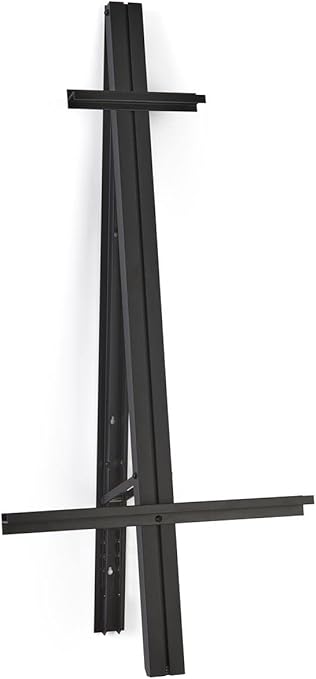
Best budget wall easel: Displays2go adjustable metal easel
An adjustable metal wall easel that holds canvases up to about 36 inches. Simple, sturdy, and much cheaper than the Rue, around $110 at the time of writing.
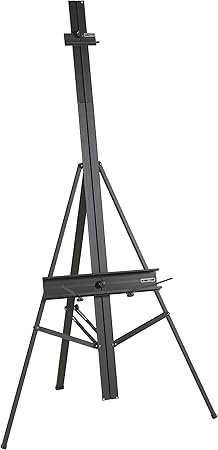
A portable aluminum easel: Martin Universal Torino
Quick correction to the old version of this post: the Torino is a lightweight aluminum floor easel, not a wall-mounted one. It’s light enough to carry, sets up quickly, and suits artists who paint in more than one room or take classes.
Before you mount any wall easel, find the studs or use anchors rated well above the weight of your largest canvas. A wet painting falling off the wall is a very sad sound.
How to choose the right multi-use easel
Three questions sort out almost every reader.
| Question | If you answer… | Look at |
|---|---|---|
| How much floor space? | Under 3 x 3 ft | Tabletop or wall |
| Biggest canvas you paint? | Over 36 in tall | H-frame or crank |
| Main medium? | Watercolor or pours | Tilts flat to horizontal |
| Do you paint away from home? | Yes, often | Tripod or field easel |
| Paint seated sometimes? | Yes | Tall height range |
A few more things worth checking on any listing:
- Locking knobs. Metal or large wooden knobs hold better than tiny plastic ones.
- Canvas tray depth. A deeper tray holds thicker gallery-wrapped canvases and a couple of brushes.
- Weight. Heavier wood is steadier. Lighter aluminum is easier to move. Decide which you care about more.
- Wood finish. Oiled or lacquered beech wipes clean. Raw wood stains, though plenty of painters love that look.
- very stable
- wide base
- holds big canvases
- often tilts
- slim footprint
- folds fast
- lighter
- lower price
Investment pieces worth it
You’ve got the free stuff: the height setup and the questions. Now for the easels I’d save up for, and who should skip them.
MEEDEN Extra Large Heavy-Duty H-Frame Studio Easel, solid beech (see it here), around $220. Worth it for painters who work on large canvases most weeks and want a rock-steady base. Skip it if your canvases rarely go over 24 inches.
MEEDEN Extra-Large H-Frame (see it here), around $275, listed as holding canvases up to about 79 inches. Worth it if you paint statement pieces or murals on panels. Check your ceiling height first, since a tall mast plus a tall canvas needs room. Skip it in a room under 8 feet.
Mabef M/04 crank studio easel (shown above), around $199. Worth it if you lift heavy canvases often, because the crank does the work for you. Skip it if you paint small and like to move your easel around.
Quick cost-per-use math: a $220 easel used twice a week for three years is about 300 sessions, or roughly 70 cents a session. A wobbly $40 easel you replace twice costs about the same and frustrates you the whole time.
Common easel mistakes
| Do this | Not that |
|---|---|
| Buy for your biggest regular canvas | Buy for the canvas you might paint someday |
| Center the canvas at eye level | Leave the tray at its lowest setting |
| Tilt slightly forward under lamps | Fight glare by squinting |
| Tighten knobs before you paint | Discover a loose clamp mid-stroke |
The takeaway
Choose your easel by where it will live and the biggest canvas you paint most often. Set the center of the canvas at eye level, and even a modest easel will feel like a better one.
What kind of easel are you painting on right now, and what would you change about it? Tell me in the comments.
Save this for the next time you’re standing in the art store aisle wondering which easel to bring home.