This post contains affiliate links. If you buy through them, I may earn a small commission at no extra cost to you.
That ache between your shoulder blades after an hour of drawing? It usually has less to do with how long you worked and more to do with the height of the surface you worked on.
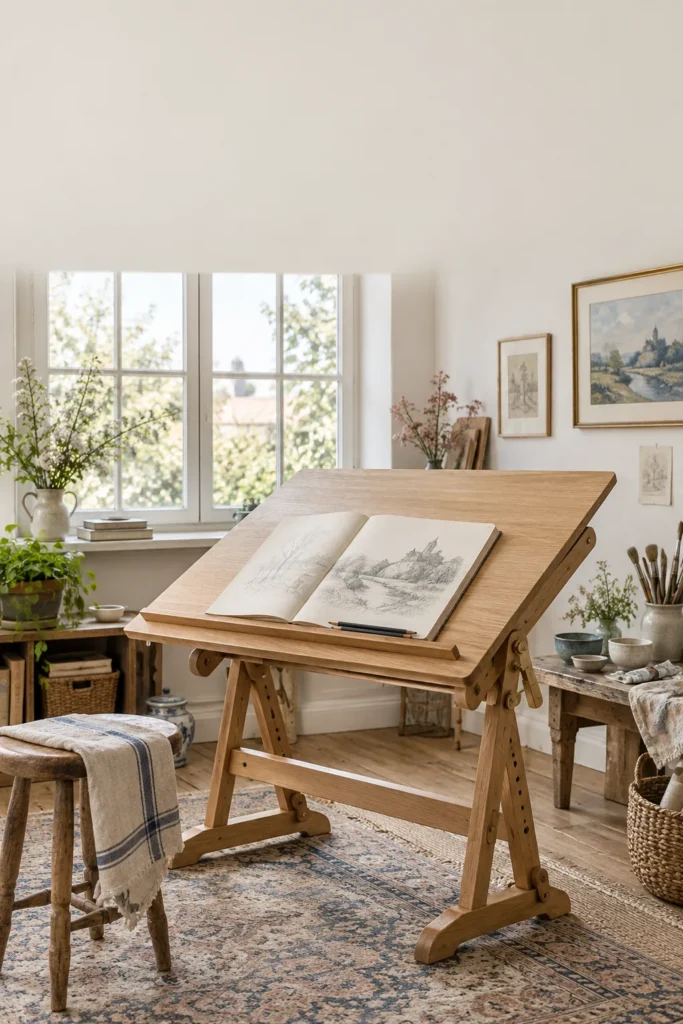
Here’s what I believe: a stiff neck, tight shoulders or a mid-afternoon headache usually trace back to a work surface a few inches too high or too low. Sometimes it’s the desk. Sometimes it’s the chair. Usually it’s the pair.
So here’s my take, plainly: the best art desk is the one that fits your body first and your style second. A gorgeous desk at the wrong height will cost you more in discomfort than it ever gave you in beauty. Below you’ll find a quick test to check your fit, then my picks at every price point, from about $70 to heirloom teak.
Quick answer: For most artists who draw or paint seated, I recommend a tilting drafting table like the Studio Designs Vintage Drafting Table paired with a chair that lets your feet rest flat. If you also work on a computer, a height-adjustable desk like the FlexiSpot E6 Bamboo covers both jobs.
The 30-Second Desk-Height Test
Do this before you buy anything. It takes less time than reading a product listing.
- Sit all the way back in your chair with your feet flat on the floor and your knees at roughly 90 degrees.
- Let your shoulders drop. Take a breath and let them fall away from your ears.
- Bend your elbows to about 90 degrees, upper arms hanging relaxed at your sides.
- Notice where your forearms land. The desk surface should meet your forearms right there, so they rest on it without your shoulders lifting or your back rounding forward.
If your shoulders creep up, the desk is too high (or the chair too low). If you’re hunching to reach the surface, it’s too low.
For reference, a typical seated desk is about 28-30 inches tall, which suits a lot of people of average height. If you’re petite or tall, that standard number may not be your number, and that’s exactly why the test matters more than the spec sheet.
Why drawing needs a tilt
A flat desk works for writing and laptop work. For drawing, it forces your head forward and down for hours. A drafting surface tilted somewhere around 15-45 degrees brings the paper up toward your eyes so your neck can stay closer to neutral.
- 15-20 degrees: good for sketching, ink work and watercolor where you don’t want puddles running.
- 30-45 degrees: good for detailed drawing, technical work and long graphite sessions.
Every few inches your head drifts forward adds load to the muscles at the back of your neck. A tilted surface is one of the simplest ways to keep your head stacked over your shoulders while you work.
What Makes a Great Art Desk
Before the picks, here’s what I look for, in order of importance:
- The right height, or adjustability. See the test above. If more than one person uses the desk, adjustability moves to the top of the list.
- Stability. A desk that wobbles when you erase is a desk you’ll stop using. Look for cross-bracing, a steel frame or solid wood legs.
- Surface size. Measure your largest paper or canvas and add at least 6 inches on each side for your elbow and supplies. A 24×36 inch surface is a comfortable minimum for most drawing.
- A wipe-clean top. Paint, ink and charcoal will find it. Sealed wood, laminate and bamboo all clean up well.
- Storage within arm’s reach. Shallow drawers or a side tray keep your daily tools close, so you aren’t twisting and reaching all session.
Quick Picks
- Best overall: Sauder Harbor View Corner Desk in Salt Oak, a roomy corner workspace with storage built in.

- Best budget: Zipcode Design Edwin No Tools Writing Desk, simple, shelved and easy to set up.
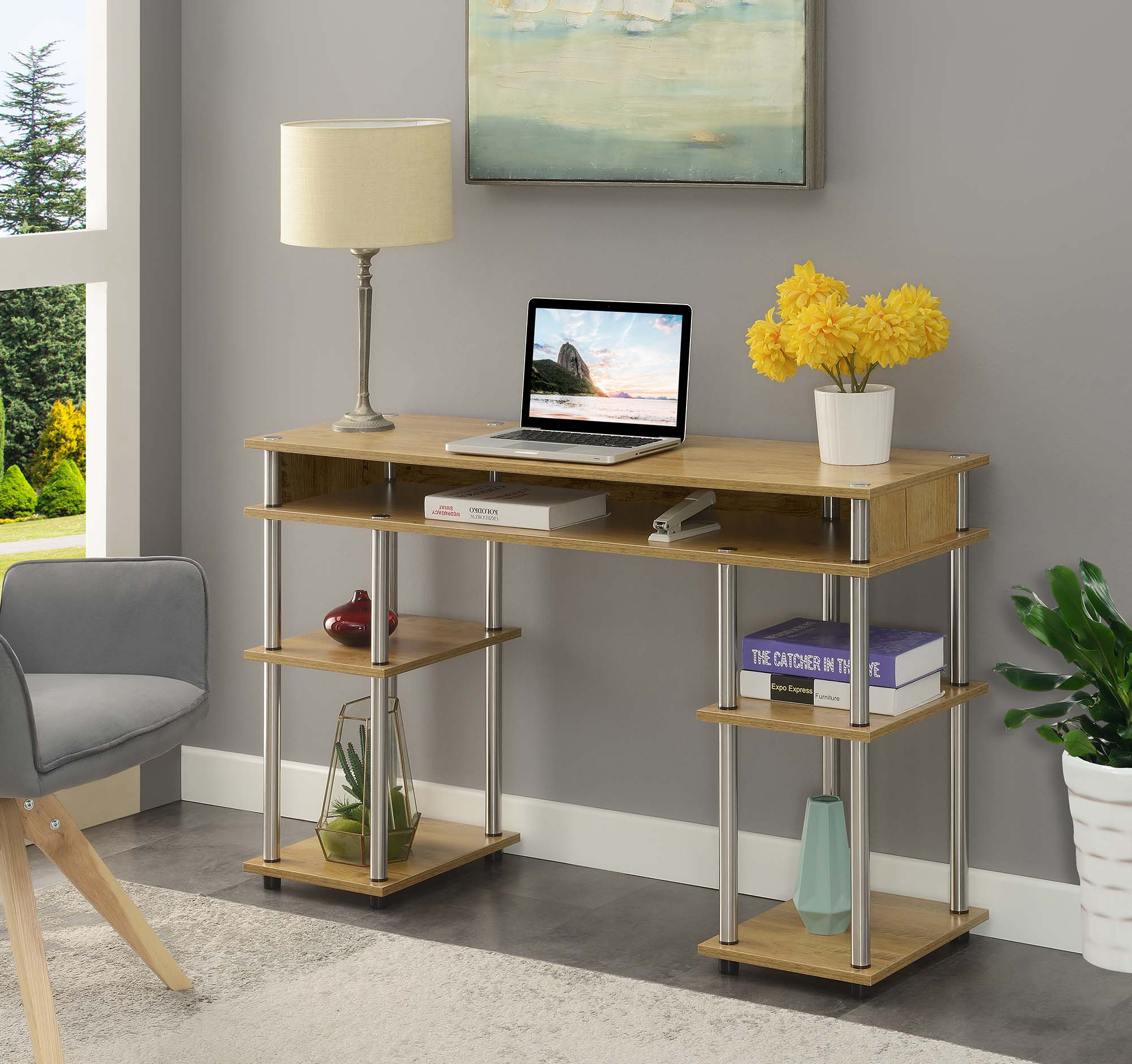
- Best for small spaces: a folding desk that tucks away when you’re done.
39.4 Inch Foldable Office Writing Work Study Kids Student Teacher Home Bedroom Table for Small Space, Teak & Black

- Best for drafting on a budget: Yaheetech Height Adjustable Drafting Table, with a tilting top for around $108.
Drawing Table Artist Desk Tilting Tabletop Art Craft Desk Watercolor Paintings Sketching Work Station w/2 Storage Drawers and Stool for Home Office

- Best for aesthetics: ODCVKRT Solid Wood Desk with Drawers, warm wood with hidden storage.

- Best for organization: the Bush Business Furniture Vista L-Shaped Desk, with low storage cabinets and room for two work zones.
$ Budget Art Desks (Under $150)
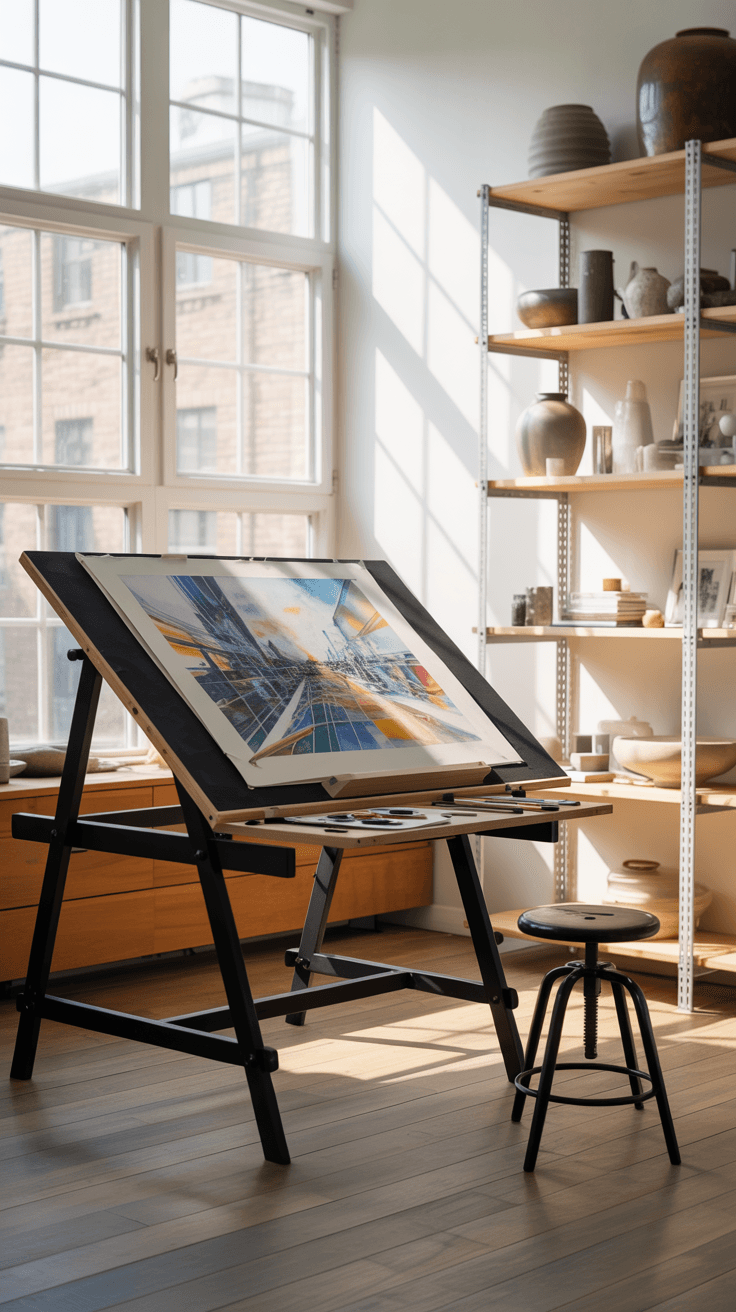
Good news: you don’t need to spend much to get a desk that fits you. At this price, prioritize stability and the right height over features.
Yaheetech Height Adjustable Drafting Table (around $108). A tilting top and adjustable height at a budget price. It’s my pick if you’re a beginner who mostly draws and wants to try a tilted surface before investing.
SHW Mission 40-Inch Home Office Desk, Rustic Brown (around $70). A plain, sturdy flat desk. Add a tabletop drawing board later if you want tilt.

Elephance Folding Desk (around $87). Folds flat against a wall or under a bed. Best for apartments, guest rooms and anyone who sets up and breaks down each session.

$$ Mid-Range Art Desks ($150-$350)
This is the sweet spot for most home artists. You can get solid wood, real adjustability and a tilting surface here.
Studio Designs Vintage Drafting Table, Rustic Oak (around $200). Classic drafting-table looks with an adjustable tilt and a warm oak finish. It’s a lovely fit if you want your studio to feel like a studio and you work mostly on paper at small to medium sizes.
MEEDEN Extra-Large Wood Drafting Table (around $230). The 42×30 inch top is the reason to buy this one. If you work on large sheets, watercolor blocks or multiple pieces at once, the extra room means fewer awkward reaches.
Studio Designs Vintage Drafting Table (around $270). Solid wood construction with an antique-style look and adjustable angle. This is my overall drafting pick for seated artists who want one desk that looks beautiful and works hard.
Solid Wood Drafting Table with Built-In Pencil Groove and Pencil Ledge Angle Adjustable Work Surface

Stand Up Desk Store Adjustable Height and Angle Drafting Table (around $300). Height and tilt both adjust, so you can sit, perch or stand. If you already know long seated sessions bother your back, this is the mid-range table I’d look at first.
Electric Drafting Table (around $270). Push-button height changes with a tilting top, helpful if you switch between sitting and standing often.
Extendable Top Craft Workstation w/Tilting Tabletop, Storage Drawer for Study, Office, Studio, Art, Adult & Kid, 47.2 …

FEZIBO Electric Standing Desk with Drawers (around $300). A 55×26 inch flat top, three wood drawers and a monitor shelf. Best for artists who split time between drawing and computer work.
Height Adjustable Computer Desk, Ergonomic Rising Home Office Desks, Sit Stand Up Workstation Table, Light Walnut

$$$ Premium Art Desks ($350-$700)
At this level you’re paying for durability, bigger work surfaces and smoother adjustment. Spend here if you work at your desk most days.
Sauder Harbor View Corner Desk, Salt Oak (around $460). A corner desk makes great use of a room’s least-used space and gives you two work zones in one footprint: drawing on one side, laptop or supplies on the other.
FlexiSpot E6 Bamboo Standing Desk (around $500). A three-stage electric frame with a bamboo top. It’s a strong choice if you share the desk, or if you want to change positions through the day. Standing for part of a session gives your back a break from one fixed posture.
Dual Motor 72 x 30 Electric Standing Desk Sit Stand Up Desk, Holds 220 lbs, Adjustable Height w/ Memory Presets, Solid Bamboo Desktop & Black Frame, Ships in 2 Boxes

63″ Standing Desk with File Cabinet (around $526). A wide adjustable surface plus built-in file storage for paper and reference.
Privacy Panel, AC/USB, 1.18" Desktop, Executive L Shaped Height Adjustable Desk, Electric Stand Up Table with 3 Drawers, White Rattan

$$$$ The Heirloom Pick ($700+)
Williston Forge Hackett Reclaimed Teak Wood Drafting Table. This is the one you buy once. Reclaimed teak brings warmth and character no laminate can copy, and a drafting table built this way can become the centerpiece of a room. It’s a showpiece for a dedicated studio, the kind of piece that gets handed down.
Craft Stations and Work Tables
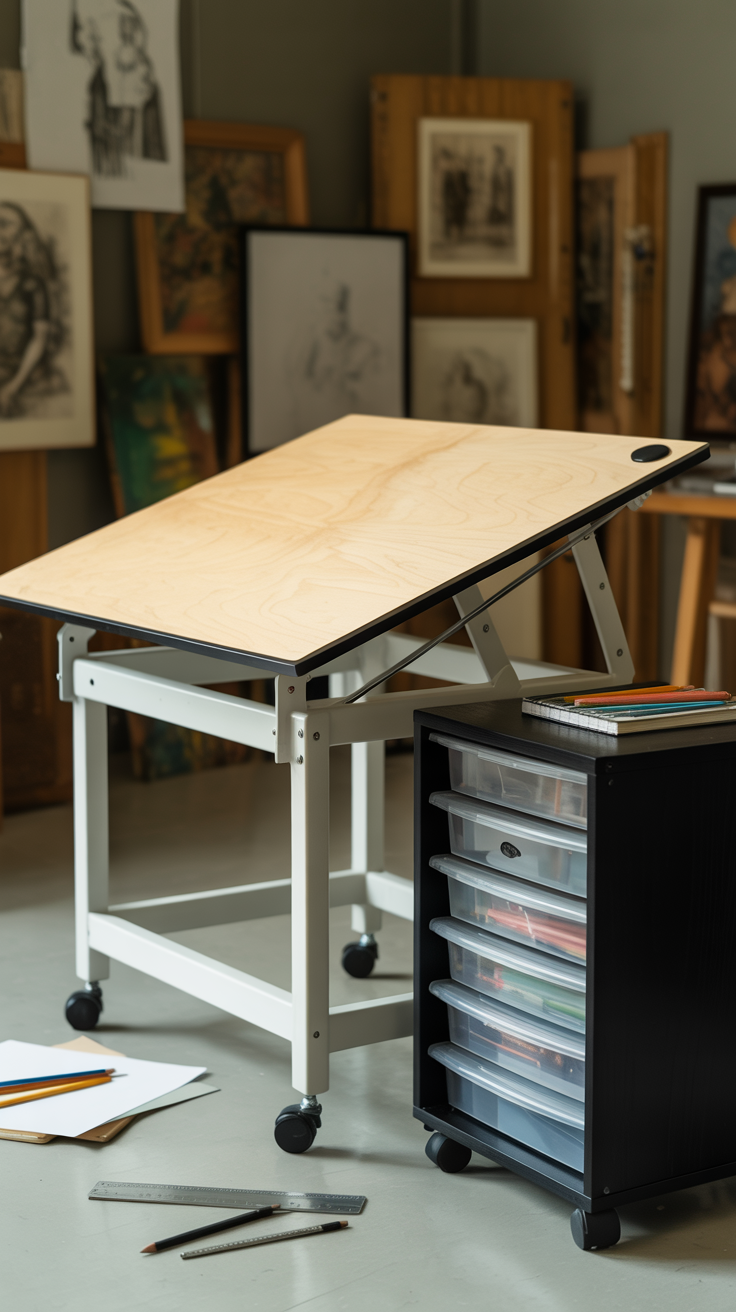
If you work across mediums, a craft station gives you a big surface plus built-in storage for the clutter that comes with mixed media. Here are my favorites, each with its own product box so you know exactly what you’re clicking.
Studio Designs Deluxe Craft Station (around $175). A tilting top with side shelves and storage bins. A smart all-in-one for drawing and paper crafts.
Top Adjustable Drafting Table Craft Table Drawing Desk Hobby Table Writing Desk Studio Desk with Drawers, 36”W x 24”D, White / Maple
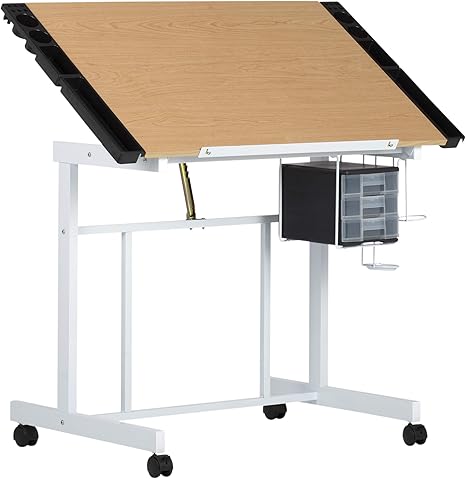
Sauder Craft Pro Series Work Table (around $520). Counter-height and generous, with storage underneath. Great for cutting, layout and standing work.

SD Studio Designs Comet (around $194). A compact drafting center with a tilting top and side tray. Good for smaller rooms.
2 Piece Comet Craft Table | Angle Adjustable Top and Stool | Blue/Spatter Gray

Tribesigns Drafting Table with Storage Drawers (around $128). A budget tilting table with drawers built right in.
Drawing Computer Desk Artist Craft Table Painting Desk Workstation with Shelves and Tiltable Tabletop for Students, Home Office

ZENY Drafting Table on Wheels with Storage Drawers (around $109). Rolls where you need it and locks in place. Handy if your studio shares space with another room’s job.
Adjustable Glass Tabletop, Craft Table Drawing Desk Artist Hobby Table for Painting, Drawing, Crafting

Desks for Specific Needs
Small spaces. A wall-mounted fold-down table gives you a full work surface that folds to a few inches deep when you’re done.

Digital artists. An L-shaped standing desk gives you room for a monitor, a tablet and a sketchbook side by side. Set your monitor so the top edge sits at or slightly below eye level.
Large Corner Stand Up Executive Desk for Home Office, Light Wood Grain Top+ White Frame

Mixed media and large work. Look for at least 60 inches of width, so wet and dry work can live on opposite ends.
Large Office Computer Desk with Double Pedestal, Modern Simple Workstations Writing Table Conference Table Business Furniture for Home Office, Light Brown

The Desk Is Only Half the Equation: Seating
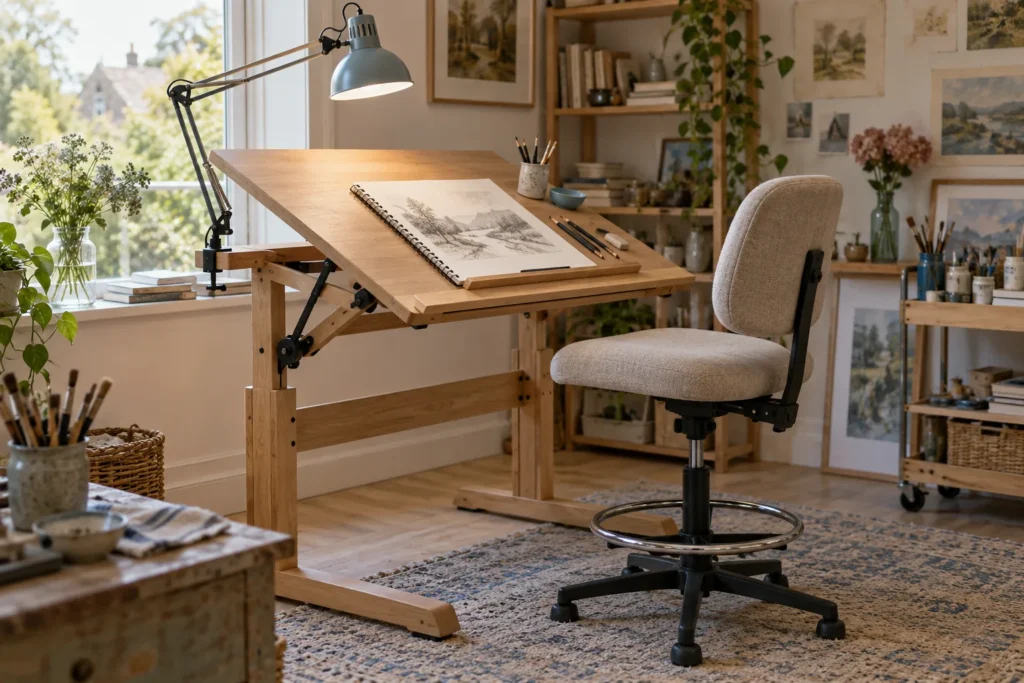
Here’s what most desk guides skip. Your desk height and your chair height work as a pair. A perfect desk with the wrong chair fails the 30-second test every time.
- Standard desks (28-30 inches) pair with a regular office chair.
- Drafting tables and counter-height surfaces (often 36 inches and up) need a taller drafting chair with a foot ring, so your feet are supported instead of dangling. Dangling feet pull on the low back over a long session.
BOLISS Ergonomic High-Back Drafting Chair (around $300). A tall drafting chair with a foot ring and high back support. Pair it with any of the drafting tables above, or the Sauder Craft Pro table.
Steelcase Series 1 (around $500). A well-built ergonomic chair with adjustable lumbar support and arms. Pair it with a standard-height desk or a standing desk in its seated position.
Ergonomic Mid-Back Drafting Chair with Foot Ring (around $200). A lower-cost option for counter-height surfaces.
Set your chair first, then your desk. Feet flat (or on the foot ring), knees around 90 degrees, then adjust the desk until your relaxed forearms rest on it.
Investment Pieces Worth It
These cost more, so here’s who they make sense for, and who should skip them.
Steelcase Series 1 (around $500). Worth it if you sit to make art or work most days of the week. Spread over 5 years of 4 sessions a week, that’s about $0.48 a session for a chair that adjusts to your body. Skip it if you mostly stand or draw at a counter-height table; a drafting chair with a foot ring will serve you better.
Stand Up Desk Store Adjustable Height and Angle Drafting Table (around $300). Worth it if you draw for long stretches and want to switch between sitting and standing without giving up the tilt. Over 3 years of weekly sessions, that’s about $1.90 a session. Skip it if you mostly do computer work; a standing desk like the FlexiSpot E6 is the better tool.
FlexiSpot E6 Bamboo (around $500). Worth it if your desk does double duty for art and computer work, or if two people of different heights share it. Skip it if you need a tilt for drawing and won’t add a tabletop drawing board.
Williston Forge Hackett Reclaimed Teak Drafting Table. Worth it if you have a dedicated studio, you’re settled in your craft, and you want a piece that lasts decades and looks better with age. Skip it if you’re still figuring out how you like to work, or if you move often. Start with a mid-range drafting table and come back to this one later.
How to Choose in 3 Steps
- Take the 30-second test and write down the surface height your forearms want.
- Decide flat or tilted. Mostly drawing? Tilted. Mostly computer or crafts? Flat, with a tabletop board if needed.
- Match the chair to the desk height before you check out. Buy them together if you can.
The Takeaway
Choose your art desk for your body first. A surface at the right height, a tilt for drawing and a chair that supports your feet will do more for your comfort and your output than any finish or feature. Take the 30-second test tonight, then shop the tier that fits your budget.
Which kind of surface do you draw on right now: a flat desk, a drafting table or the kitchen table? Tell me in the comments.
Keep going: