This post contains affiliate links. If you buy through them, I may earn a small commission at no extra cost to you.
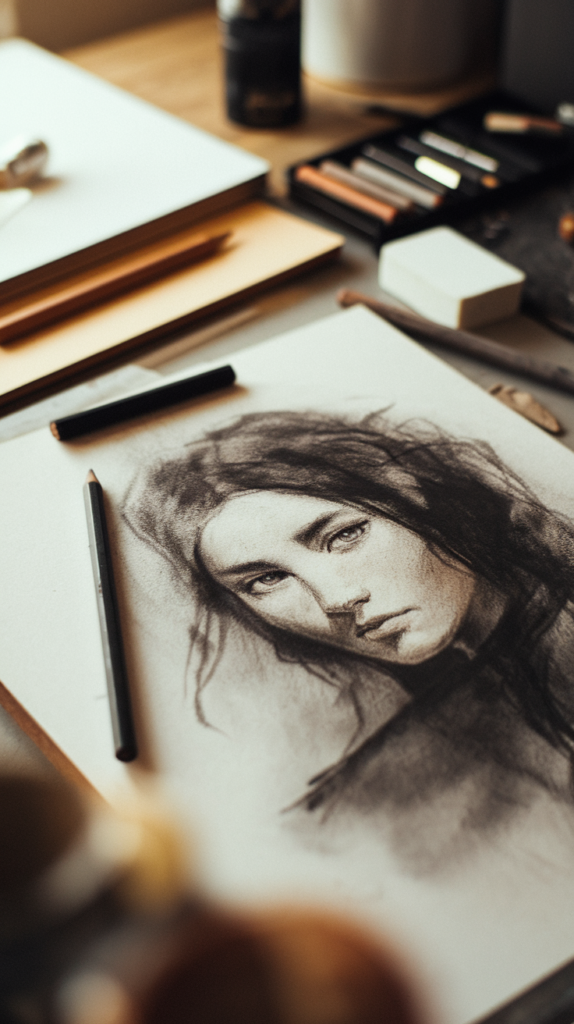
You can tell which charcoal pencil someone used from across the room. One drawing has blacks like velvet. The other looks gray, scratchy and a little tired.
My take: once you’re past the beginner stage, the brand matters less than how you combine them. Most artists do best with one dependable everyday pencil, one very soft pencil for the deepest darks, and one specialty pencil for a specific job. That’s three pencils doing three different jobs, and it beats a 40-piece tin every time.
Quick answer: For an everyday pencil, start with General’s. For the darkest darks, add Primo Euro Blend or Nitram. For smooth, controlled layering, Faber-Castell Pitt. If you want soft color in your charcoal work, Derwent Tinted Charcoal is the fun one.
This guide is for artists stepping up. If you’re brand new, start with the best charcoal pencils for beginners, which covers grades and first drawings. For sticks and vine charcoal, see the best charcoal for drawing.
What to look for in a charcoal pencil
Four qualities separate a pencil you’ll reach for daily from one that lives in the drawer.
- Softness. Softer cores give darker, richer marks but wear down faster. Harder cores hold a point for edges and fine hair.
- Blendability. Some charcoal glides into smooth gradients with a stump. Some stays put. Neither is wrong, but you want to know which you’re buying.
- Durability. Charcoal cores are brittle. A dropped pencil can be broken all the way up the barrel, even if the tip looks fine.
- Mess. Soft, buttery pencils shed dust. That dust is part of the beauty and part of the cleanup.
One more thing: grades are not standardized. A 2B from one brand can feel like a 4B from another, so compare by feel, not by the letter on the side.
The 7 pencils at a glance
| Pencil | Feel | Darkness | Best for | Price |
|---|---|---|---|---|
| General’s | Velvety | Rich | Everyday drawing | $ |
| Derwent Tinted | Smooth, firm | Soft color | Toned studies | $$$ |
| Faber-Castell Pitt | Smooth | Deep | Controlled layers | $$ |
| Conté à Paris 2B | Dense | Intense | Bold accents | $ |
| Primo Euro Blend | Buttery | Very deep | Dramatic darks | $$ |
| Derwent Charcoal | Even | Medium to deep | Portrait midtones | $$ |
| Nitram | Dense | Densest | Final darks | $ |
Here’s roughly how they compare from firmer to softer. Treat this as a general impression of how they tend to feel, not a lab measurement. Your paper, pressure and humidity all change it.
The top 5 picks
Best overall: General’s charcoal pencils
General’s is the pencil I’d hand to almost any artist first. The marks are velvety, the darks are rich, and they blend nicely without turning muddy. They’re also easy on the wallet, which matters when you go through charcoal quickly.
The catch: drop one and the core may snap inside the wood. Store them flat or in a case.

Best for colored charcoal work: Derwent Tinted Charcoal
These are a different animal. Derwent Tinted Charcoal pencils are charcoal blended with a touch of color, so you get soft earthy, cool and warm tints with that chalky charcoal texture. The 24-pencil tin gives you a wide spread of muted colors.
They’re wonderful for toned portraits, moody landscapes and sketches on mid-tone paper where a hint of warm or cool color brings things to life. They are not a substitute for black charcoal in deep shadows, so pair them with one of the darker picks here.

Best for smooth, controlled layering: Faber-Castell Pitt
Pitt charcoal is the tidy one. It feels smooth and a little less brittle than many soft charcoals, so it holds up to sharpening and layering. If you like building values slowly and precisely, this set fits that way of working.

Best for intense blacks on a budget: Conté à Paris 2B
Conté’s 2B is dense and bold, with strong darks for the price. Because it’s sold as a small pack, it’s an easy way to add a punchy dark pencil to the kit you already have.

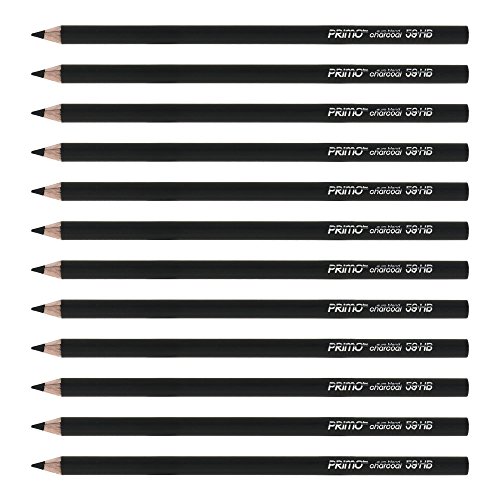
Best for dramatic darks: Primo Euro Blend
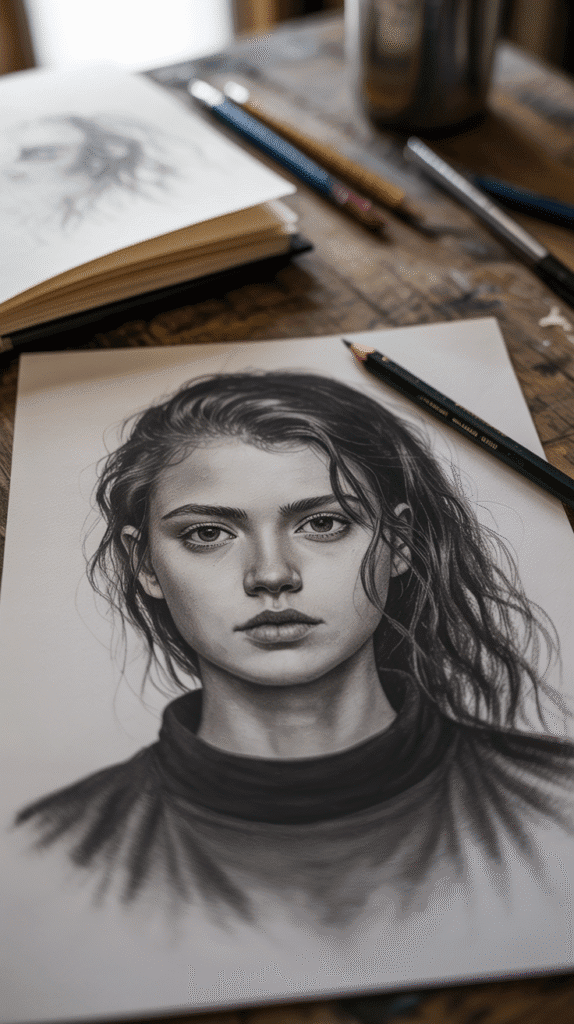
Primo Euro Blend is the buttery one. It lays down deep, rich darks quickly and blends into smooth shadows. It also makes the most mess of the group, so keep a scrap sheet under your hand and expect dusty fingers.
Two more worth a spot in your kit
Derwent Charcoal Collection for portraits
Derwent’s charcoal pencils are lovely for the middle of the value range, the skin tones and soft shadows that make or break a portrait. The collection gives you a mix of grades so you can move from light to dark in one family.

Nitram for the final darks
Nitram is known among charcoal artists for very dense, dark charcoal. Save it for the last pass: the pupils, the deepest hair shadows, the crease where an object meets the table. A little goes a long way.

Build your kit
Mixing brands is where charcoal gets fun. Each pencil handles a different part of the value range, so you’re not forcing one pencil to do everything.
| Level | Everyday | Darkest darks | Specialty |
|---|---|---|---|
| Stepping up | General’s | Conté 2B | None yet |
| Serious hobby | General’s + Pitt | Primo | Derwent Charcoal |
| Studio kit | Pitt + Derwent | Primo + Nitram | Derwent Tinted |
If you’re deciding where to spend first, follow this order:
Paper comes first because the best pencil in the world skates on slick paper. The best paper for charcoal drawings walks through the options.
How to sharpen charcoal pencils
Pencil sharpeners, especially electric ones, chew charcoal cores. A craft knife and a sandpaper block are the way to go.
Keep the knife strokes short and light. Soft pencils like Primo and Nitram need a shorter, blunter point than Pitt or Derwent, or the tip will crumble the first time you press.
Sharpen several pencils at the start of a session, not mid-drawing. You’ll keep the dust contained and stay in the flow once you start shading.
Keep the dust under control
Charcoal dust is part of the deal, but you don’t need it on every surface or in the air you breathe.
- Ventilate. Open a window or run a fan pointed away from your drawing.
- Damp wipe, don’t sweep. A damp cloth picks dust up. A dry brush or broom sends it airborne.
- Tap, don’t blow. Tilt your drawing and tap the back gently to drop loose dust onto a sheet of scrap paper.
- Spray fixative outside or in a very well-ventilated space, holding the can about 12 inches from the paper.
For blending stumps, kneaded erasers and fixatives, see the best charcoal drawing tools, and for smooth gradients, how to blend charcoal like a pro.
Investment pieces worth it
You don’t need any of these to draw beautifully. They’re for when charcoal has become a regular part of your week.
A tilting drafting table. Charcoal dust falls off an angled surface instead of settling into your drawing, and you see your proportions without the distortion of looking down at a flat sheet. The Studio Designs Vintage Drafting Table is solid wood, around $270 at the time of writing. Over three years of weekly sessions, that’s under $2 a session. Worth it if you draw at least weekly. Skip it if you mostly work in a sketchbook on your lap.
A daylight task lamp. Charcoal is all values, and dim, warm light makes it hard to judge them. The Daylight Company Lumi Task Lamp has a 95+ CRI and runs around $195. Worth it if you draw in the evening. Skip it if you have a big north-facing window and draw during the day.
An air purifier. If you draw with soft charcoal several times a week in a small room, a purifier helps with fine airborne dust. The Levoit Core 400S-P is around $190. Worth it for small or closed rooms. Skip it if you draw occasionally near an open window.
The takeaway
The best charcoal pencil for artists is really a small team: one everyday pencil, one for deep darks, and one specialty pencil that suits your style. Start with General’s, add a soft dark like Primo or Nitram, and let the rest earn its place.
Which charcoal pencil do you reach for first, and which one makes the biggest mess on your table? Tell me in the comments.
[…] 5. Charcoal (Optional for Deep Shadows) […]