This post contains affiliate links. If you buy through them, I may earn a small commission at no extra cost to you.
Some evenings you want to draw, but you don’t want to think. You want a cup of tea, a pencil, and a page that already knows what it wants to be.
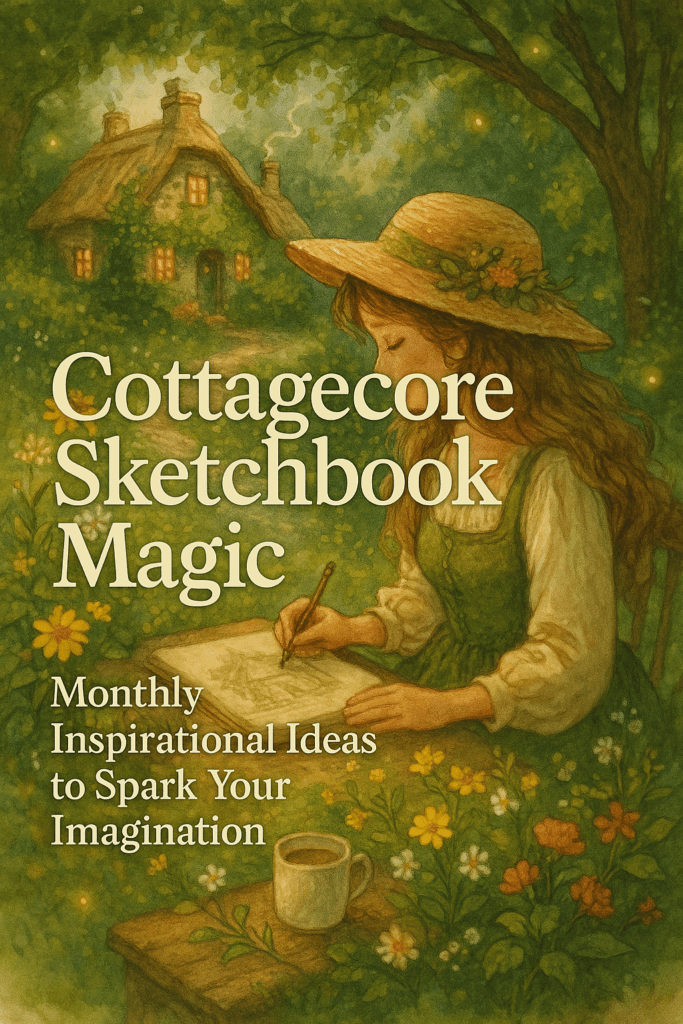
That’s what this post is for. My take: a cottagecore sketchbook stays alive when the season picks your subject for you. Instead of hunting for ideas, you look out the window, check the month, and draw what’s already there: frost on a windowpane, strawberries in a bowl, a lavender bundle drying by the door. Twelve months, twelve built-in prompts, and a palette for each one so your pages feel like they belong together.
If you only do one thing: draw one small cottagecore page a week using only the three or four colors listed for that month. A limited palette is the fastest way to make a sketchbook look cozy and cohesive.
Start Where We Are: October

It’s October right now, so don’t wait for January. Start with the October, November and December pages below, then roll into the new year with the habit already built. Twelve weeks of small pages is plenty to fill a 48-page sketchbook halfway.
The Year at a Glance
Here’s the whole year as a palette board. Each swatch is the “anchor color” for that month, the one shade that shows up on every page.
And here’s the cheat sheet you can screenshot and keep in the front of your sketchbook.
| Month | Subject | Medium | Palette |
|---|---|---|---|
| Jan | snowy cottage | graphite + white gel | gray, cream, frost blue |
| Feb | love letters | colored pencil | blush, cream, rose |
| Mar | wildflowers in rain | watercolor | sage, pale yellow, gray |
| Apr | garden gate | ink + pastel pencil | lilac, moss, cream |
| May | picnic basket | watercolor pencil | red, wicker tan, green |
| Jun | secret garden | Japanese watercolor | deep green, gold |
| Jul | lavender bike | brush pen | lavender, wheat, sky |
| Aug | herbs and wash line | gouache | ochre, olive, linen |
| Sep | cozy library | fountain pen ink | brown, rust, cream |
| Oct | autumn bakes | India ink + wash | pumpkin, black, cream |
| Nov | woodland cabin | colored pencil | bark, cinnamon, moss |
| Dec | window garlands | alcohol marker | pine, berry red, snow |
A Cozy 30-Minute Cottagecore Page
Every month below uses the same simple routine. It keeps a page small enough to finish in one sitting, which is the whole secret to a full sketchbook.
Want more themes beyond cottagecore? My dreamy sketchbook ideas post has ten moody, magical themes with a first-page prompt for each.
January: Snowy Cottages and Candlelight
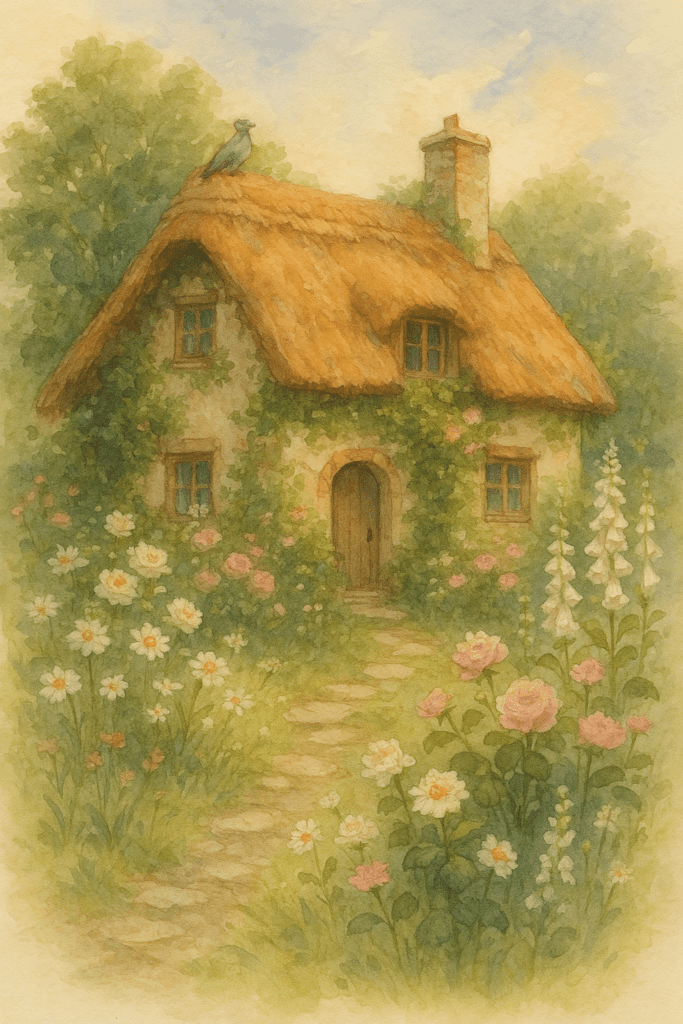
January is all about contrast: dark windows, white snow, one warm glowing candle. Draw a small cottage with a snow-heavy roof and a single lit window.
Sketching tip: Work on toned tan or gray paper. You draw the shadows with graphite and the snow with white, so the paper itself becomes your middle value. It feels like cheating, and it looks wonderful.
- Faber-Castell graphite pencils in 2B and 4B cover the whole value range.
- A Sakura Gelly Roll white pen adds falling snow and the glint on a candle flame.
February: Love Letters and Blush Florals
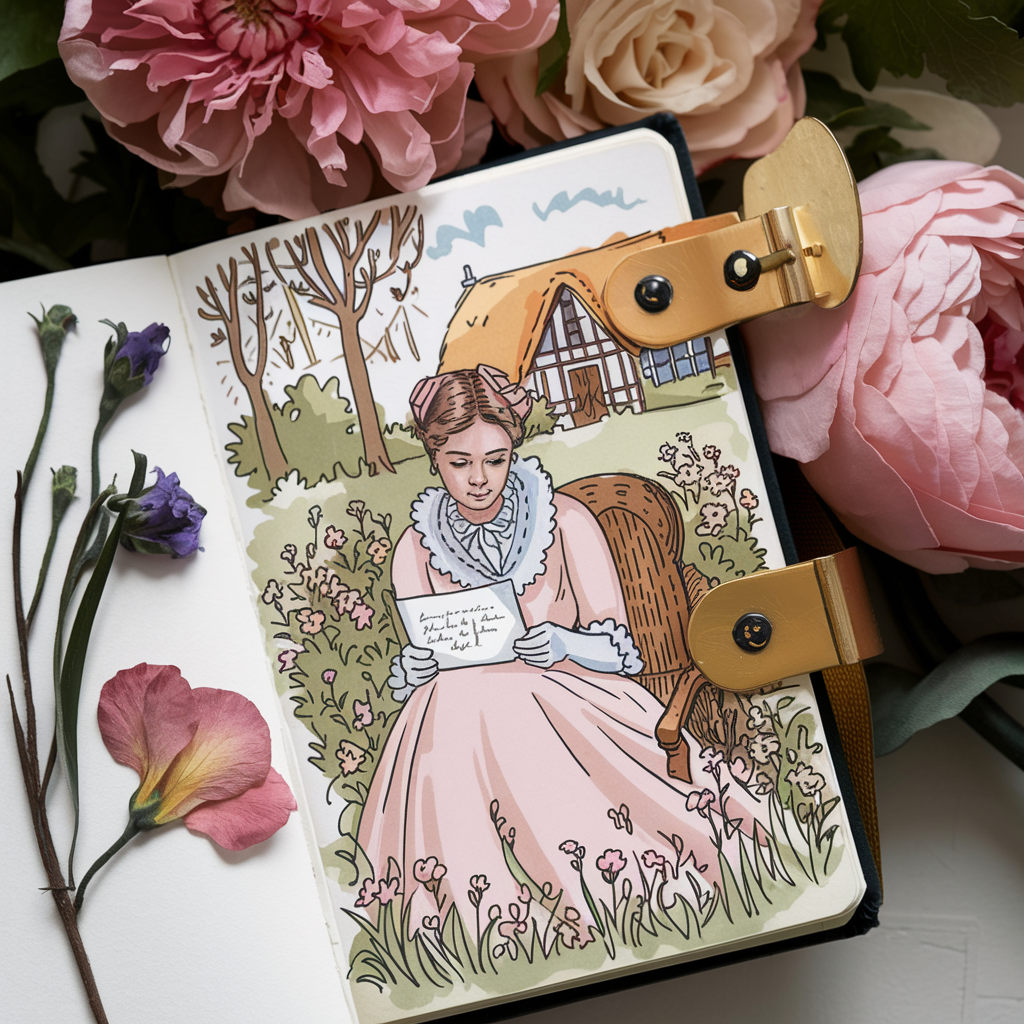
Think wax seals, ribbon-tied envelopes, and a little posy of pink ranunculus. A stack of letters is a lovely beginner subject because it’s mostly rectangles.
Sketching tip: Layer colored pencil lightly, at least three thin passes per color, instead of pressing hard once. Light pressure keeps the paper tooth open so the blush and rose tones can blend.
- Prismacolor colored pencils are soft and creamy, ideal for petals.
- Any cream sketchbook paper will warm up the whole page.
March: Wildflowers and Spring Rain
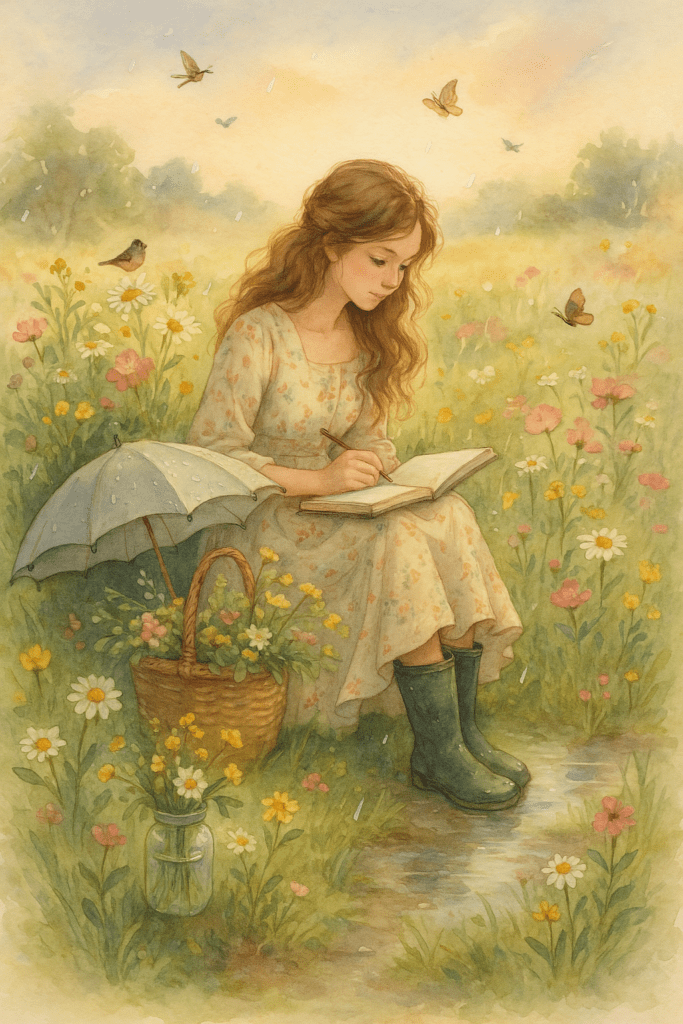
March is puddles, rubber boots, and the first tiny wildflowers poking through wet grass. Draw a single clump of violets with raindrops on the leaves.
Sketching tip: Let a pale sage wash dry fully, then drop in tiny dots of clean water with a brush tip. The “blooms” they make read as raindrops.
- A Winsor and Newton watercolor set gives you the soft greens and grays.
- A Pentel Aquash water brush means no water jar to knock over on the couch.
April: Garden Gates and Bunnies
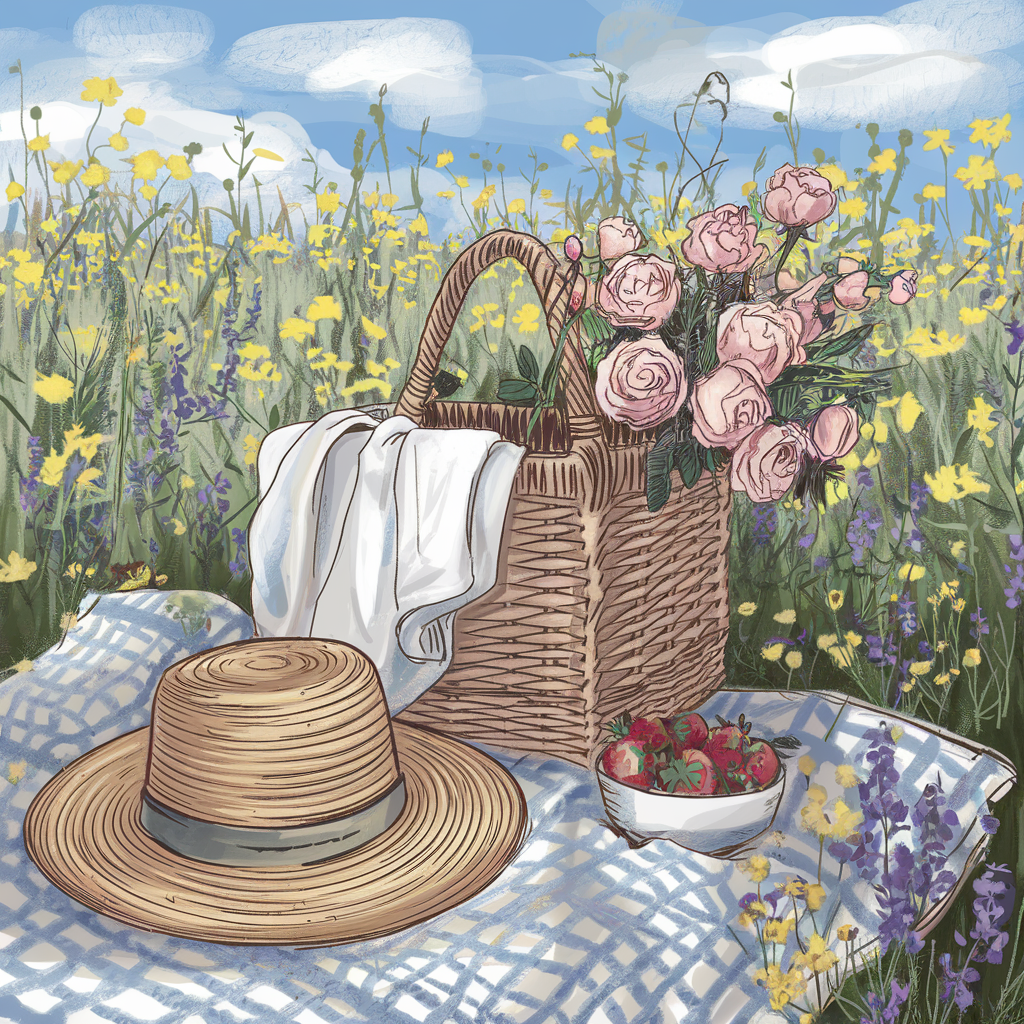
A weathered wooden gate, a climbing rose, and a rabbit peeking through the slats. This is a fun month to practice texture.
Sketching tip: Ink the wood grain with broken, wobbly lines that follow the board’s length. Perfectly straight lines make old wood look brand new.
- Sakura Pigma Micron pens in 01 and 05 handle fine fur and bold outlines.
- Derwent pastel pencils give bunny fur a soft, dusty look.
May: Picnics and Strawberries
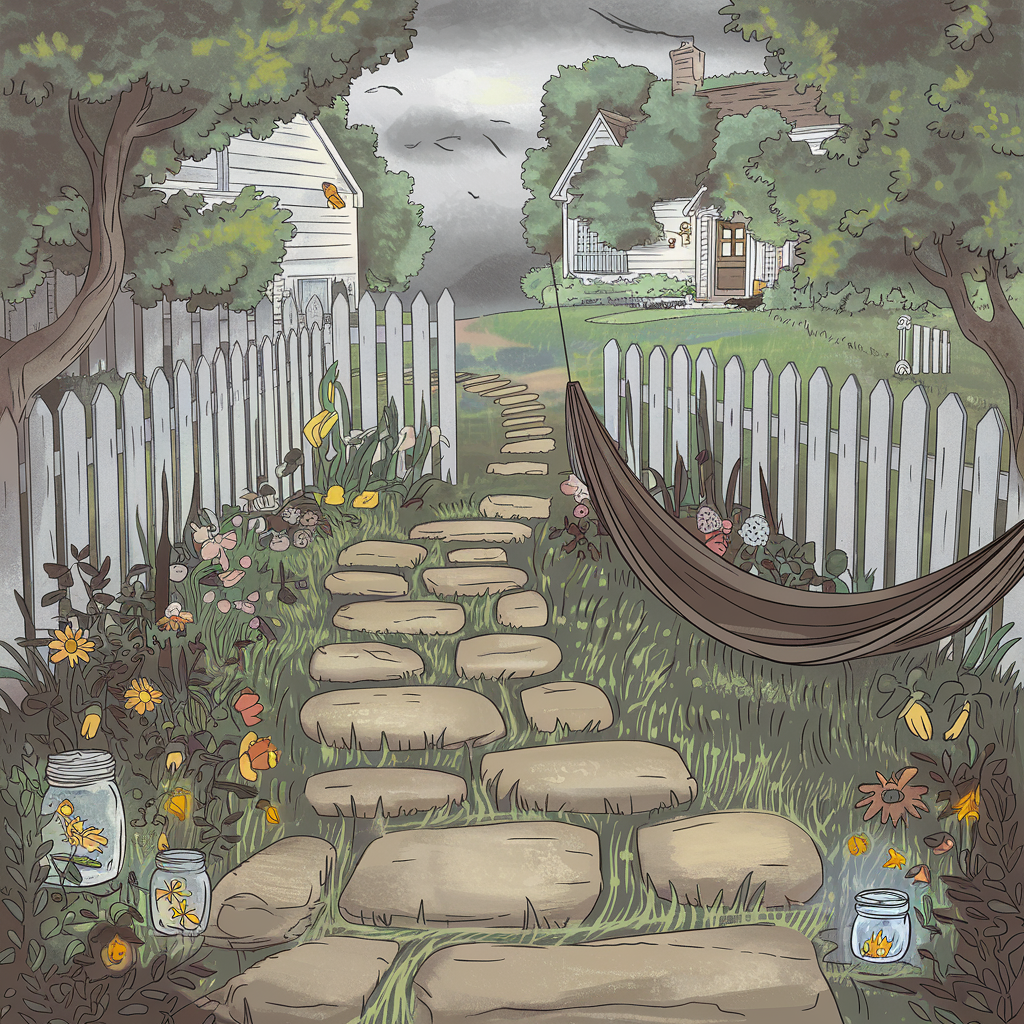
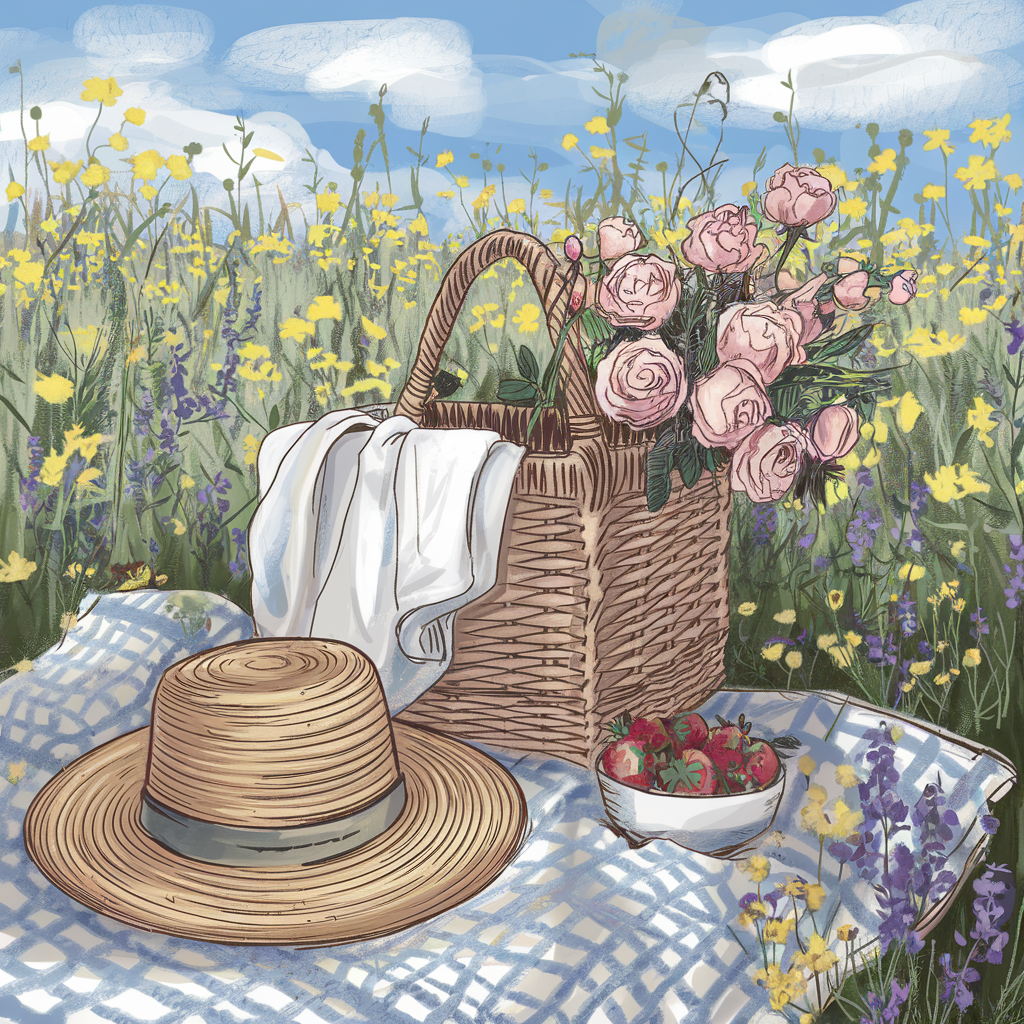
Gingham blankets, wicker baskets, a bowl of berries in the sun. May pages should feel bright and a little bit sticky with summer.
Sketching tip: Draw each strawberry’s seeds as tiny lighter dots, then put a small dark shadow under each one. That shadow is what makes them look pitted and real.
- Arteza watercolor pencils let you draw first and wash later.
- A Strathmore mixed media pad handles light water without buckling.
June: Secret Gardens and Fireflies
Overgrown paths, a moss-covered bench, and fireflies blinking at dusk. June is the month to play with deep greens and tiny points of light.
Sketching tip: Paint the dusk background darker than feels comfortable, let it dry, then add fireflies last with opaque paint pen dots. Light only glows against real darkness.
- Kuretake Gansai Tambi watercolors are rich and slightly opaque, great for layered greens.
- Posca paint pens in white and yellow make the fireflies pop.
July: Lavender Fields and Bicycles
A vintage bicycle with a basket full of lavender, leaning against a fence. July is breezy, purple, and full of long golden evenings.
Sketching tip: Draw lavender as a stem plus stacked little ovals that shrink toward the tip. Five or six stems in a bundle look far fuller than you’d expect.
- Tombow dual brush pens blend into soft lavender gradients with a little water.
- A Canson watercolor pad takes the brush pen washes without pilling.
August: Herb Bundles and Wash Lines
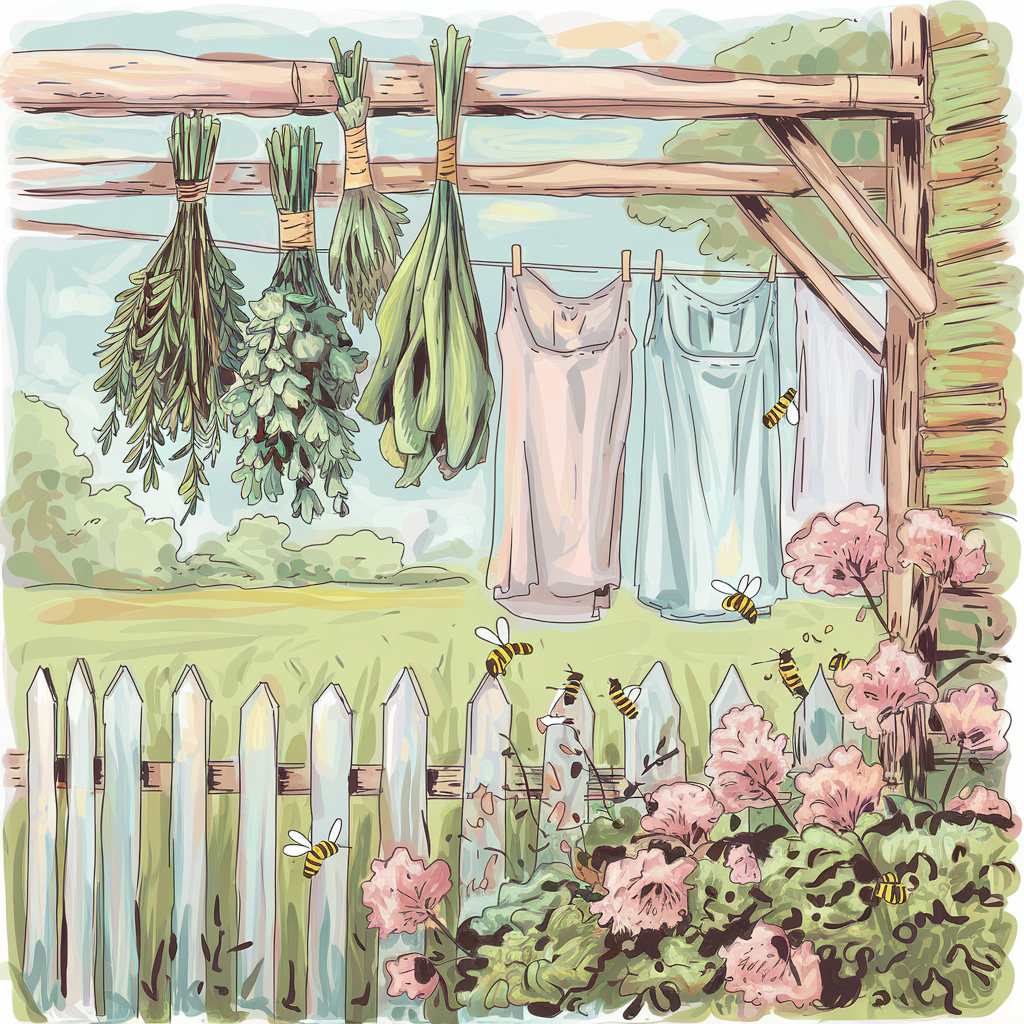
Rosemary and thyme drying upside down, linen sheets on a clothesline, a basket of clothespins. August pages are earthy and calm.
Sketching tip: Gouache covers well, so paint the linen in a mid tone first, then add folds with a slightly darker mix and highlights with a creamy white. Three values make fabric look like it’s moving.
- Holbein gouache in earth tones gives you the ochres and olives this month lives on.
- A small herb stamp or a pressed sprig can decorate the margin if you have one.
September: Cozy Libraries and Forest Walks
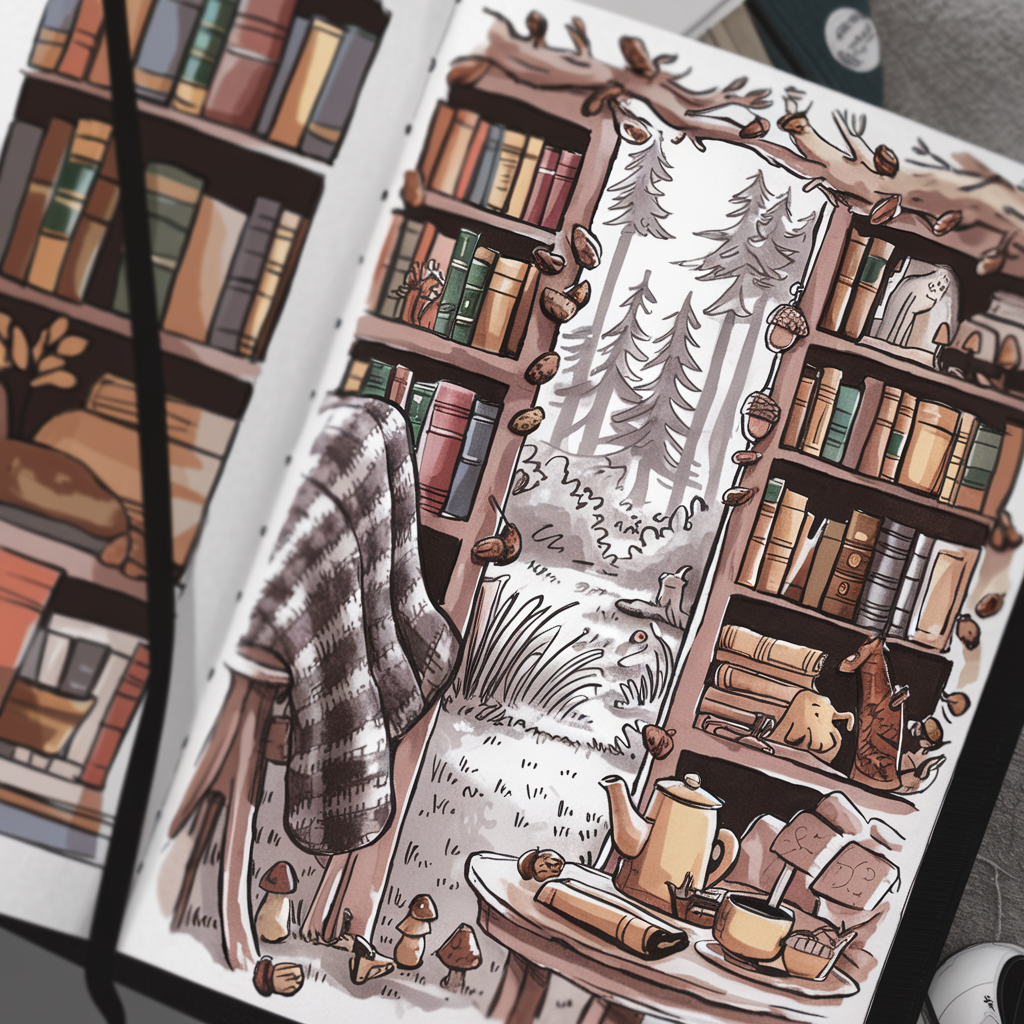
Stacked old books, a reading chair, a cup of tea going cold. Or a mossy forest path with the first yellow leaves. September is for warm browns.
Sketching tip: Draw book spines first as simple rectangles of different heights, then add only one or two titles. A suggestion of detail reads as more detailed than full lettering.
- A Pilot Kakuno fountain pen filled with brown ink gives lines an antique look.
- A kraft paper sketchbook makes every page look like an old journal.
October: Witches’ Cottages and Autumn Bakes
Crooked roofs, a black cat on the step, a pie cooling on the windowsill. October is the most fun month of the year to sketch, in my opinion.
Sketching tip: Lay down bold India ink shapes first (cat, roof, window frames), then add a thin pumpkin or rust wash around them. The black ink keeps the page graphic and spooky-cozy.
- Dr. Ph. Martin’s India ink is deep, waterproof black, so washes on top won’t smear it.
- Pair it with the watercolor set from March for the warm washes.
November: Woodland Cabins and Cinnamon

A log cabin with smoke curling from the chimney, cinnamon sticks tied with twine, a mug of cider. November pages are rich, dark and comforting.
Sketching tip: For log walls, draw the round log ends first, then connect them. Add a dark line under every log so the stack looks heavy.
- Faber-Castell Polychromos colored pencils layer beautifully for wood grain and bark.
- Woodland stickers are a sweet shortcut for decorating a page border on a busy night.
December: Garlands and Cozy Windows
Evergreen garlands, a wreath on the door, warm light spilling from frosted windows. December closes the year where January began, with candlelight.
Sketching tip: Color the window glow first with your lightest yellow, then build everything else around it. Leave a ring of untouched paper around the brightest spot so it glows.
- Copic markers in winter tones blend smoothly for snow shadows and pine.
- Reuse January’s white gel pen for snowflakes on the glass.
Love seasonal drawing? Sketching the seasons goes deeper on how light and color shift through the year.
Your 12-Week Start, October to December

Here’s how to turn the last three months of the year into a habit. One page a week, about 30 minutes each.
| Week | Page | Focus |
|---|---|---|
| 1 | Pumpkin on a step | ink shapes |
| 2 | Black cat in a window | negative space |
| 3 | Pie on a sill | warm washes |
| 4 | Witchy cottage | crooked lines |
| 5 | Cinnamon bundle | texture |
| 6 | Log cabin | heavy shadows |
| 7 | Cider mug | reflections |
| 8 | Mossy stump | layered greens |
| 9 | Wreath on a door | repeating shapes |
| 10 | Garland swag | depth |
| 11 | Frosted window | glow |
| 12 | Candle on a sill | full circle |
Make Your Pages Feel Cottagecore

A few small habits do most of the cozy work, whatever the month.
- Use cream or toned paper. Bright white reads modern. Cream reads handmade.
- Keep edges soft. Fade your washes out instead of filling every corner.
- Add one handwritten line. A date, a weather note, or the name of a flower.
- Repeat a border motif. A tiny vine or a row of dots along the bottom ties pages together.
- Leave white space. A small drawing in the middle of a big page feels calm and intentional.
If you want a cover that matches the inside, my unique sketchbook cover ideas post has easy ways to dress one up.
Investment Pieces Worth It
Everything above works with student supplies. But if cottagecore pages become your weekly ritual, these are the upgrades I’d consider. Prices are approximate at the time of writing.
Faber-Castell Polychromos 120 tin (around $295). Oil-based pencils that layer for days without wax bloom, and 120 colors means every month’s palette is already in the tin. If you draw weekly for three years, that’s about $1.90 a session. Worth it for: colored pencil lovers who already layer. Skip it if: you mostly paint, or the smaller Polychromos set from November still feels roomy.
Schmincke Horadam 24 half-pan metal box (around $157). Professional watercolors with soft, glowing pigments that rewet easily, perfect for March rain and June gardens. Worth it for: painters who are frustrated by chalky student paint. Skip it if: you paint less than a couple of times a month.
Daniel Smith 24 hand-poured half pans (around $128). Known for earthy granulating colors that settle into the paper texture, which looks wonderful on cabins, bark and stone walls. Worth it for: anyone who loves the August to November palettes. Skip it if: you prefer clean, flat color.
The Takeaway
A cottagecore sketchbook is easy to keep when the calendar picks the subject and a small palette picks the colors. Start with October, keep each page to about 30 minutes, and by the new year you’ll have a cozy little book that feels like a season in your hands.
Which month’s page are you starting with? Tell me in the comments, and save this post so your whole year of prompts is ready when you need it.
Keep Going
- Dreamy sketchbook ideas for ten more magical themes
- Dreamy spring sketchbook ideas for fresh pastel pages
- 10 aesthetic sketchbook layouts to arrange your cozy drawings on the page
- Botanical sketching 101 for better flowers and herbs
- Sketching the seasons for seasonal light and color