This post contains affiliate links. If you buy through them, I may earn a small commission at no extra cost to you.
Ever notice how a tree you walk past every day suddenly looks brand new the week it turns gold?
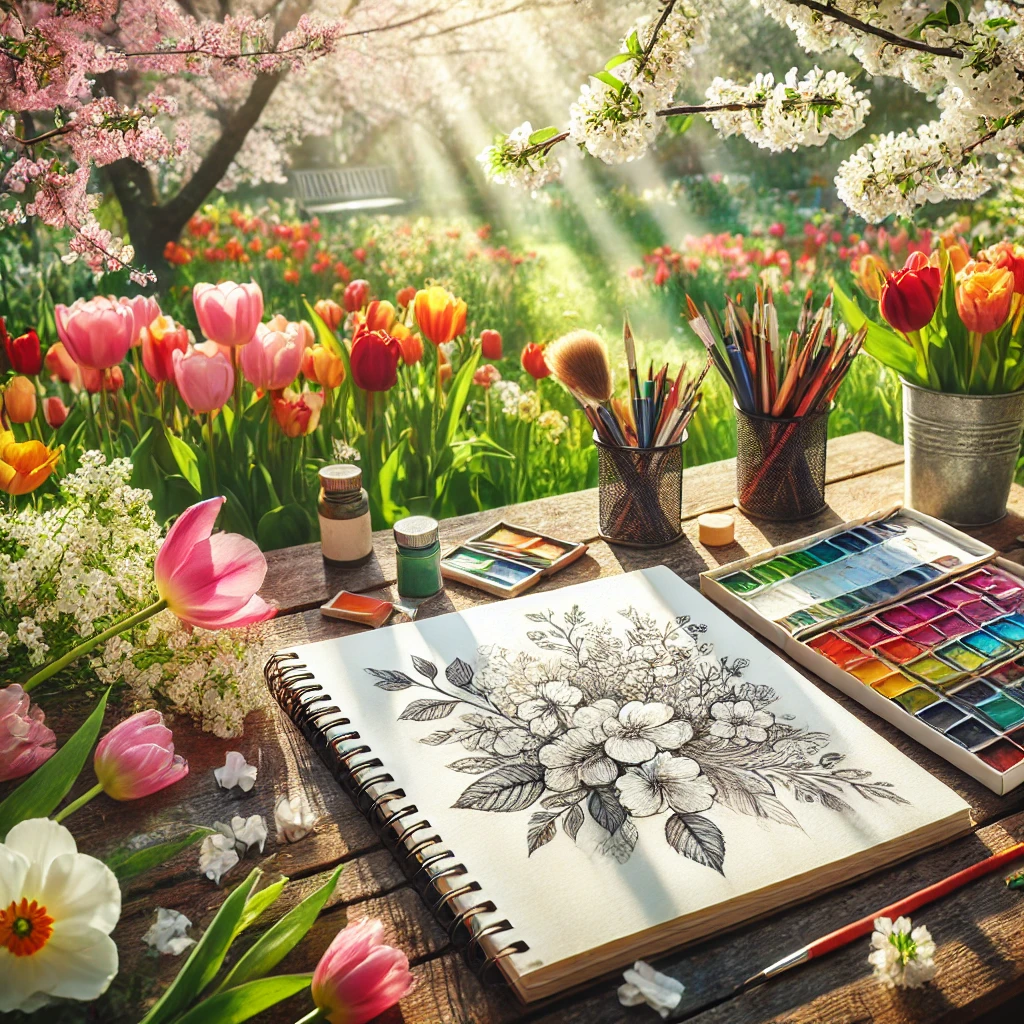
That’s the whole secret of seasonal sketching. Here’s my take: the best way to never run out of ideas is to draw the same few things all year and let the seasons change them for you. Each season also asks for a slightly different toolkit and technique. Blossoms want delicate lines. Snow wants you to leave the paper alone. Once you know that, you’ll stop fighting your materials.
If you only do one thing: choose one tree you can see from a window or on a walk, and sketch it once a month for a year. Twelve pages, one subject, and a sketchbook that tells a story.
The Seasons at a Glance

Bookmark this cheat sheet. It’s the short version of everything below.
| Season | Subject | Medium | Technique |
|---|---|---|---|
| Spring | blossoms, buds | fineliner + watercolor pencil | light, broken lines |
| Summer | sunsets, waves | soft graphite, markers | bold strokes, reflections |
| Autumn | leaves, fog | charcoal pencil | hatching, stippling |
| Winter | snow, bare trees | graphite range, white gel | value, negative space |
A Palette for Every Season
Before you pick up a pencil, it helps to know which colors each season leans on. Here are four colors per season. Use them to choose your pencils, or swatch them on the inside cover of your sketchbook.
Notice the pattern: spring and summer are light and saturated, autumn is warm and earthy, winter is almost all value with barely any color.
Spring: Delicate Lines and New Growth

Spring is about fresh, fragile things. Your lines should feel the same way: thin, light, and a little broken.
What to draw:
- Cherry, apple or magnolia blossoms on one branch
- A bud-to-bloom series: the same flower on three different days
- Raindrops on a window, or puddles reflecting sky
Tools that fit:
- Fine liners in 0.1 and 0.3 for petals and veins
- Watercolor pencils for soft pink and green washes
- A smooth sketchbook so fine lines stay crisp
Try this: Leave small gaps in your petal outlines. Broken lines read as light hitting the edge, which makes petals look thin and glowing.
Want more blossom ideas? See Dreamy Spring Sketchbook Ideas and Botanical Sketching 101.
Summer: Bold Strokes and Bright Light
Summer light is strong, so shadows are dark and sharp. Go bolder than you think you should.
What to draw:
- A sunset over water in under 15 minutes
- Palm fronds or big leafy trees against the sky
- Waves breaking, or a still lake with reflections
Tools that fit:
- Soft graphite pencils (4B to 8B) for dramatic darks
- Alcohol markers for fast, saturated sunset color
- A portable sketchbook small enough for a beach bag
Try this: Draw reflections with short, broken horizontal lines, never a mirror copy. Water breaks up the image, so your marks should too.
Bring water and a hat. Sketching in direct sun for 30 minutes is longer than it sounds, and white paper bounces glare right into your eyes. Sit in open shade if you can.
Autumn: Texture, Warm Tones and Fog

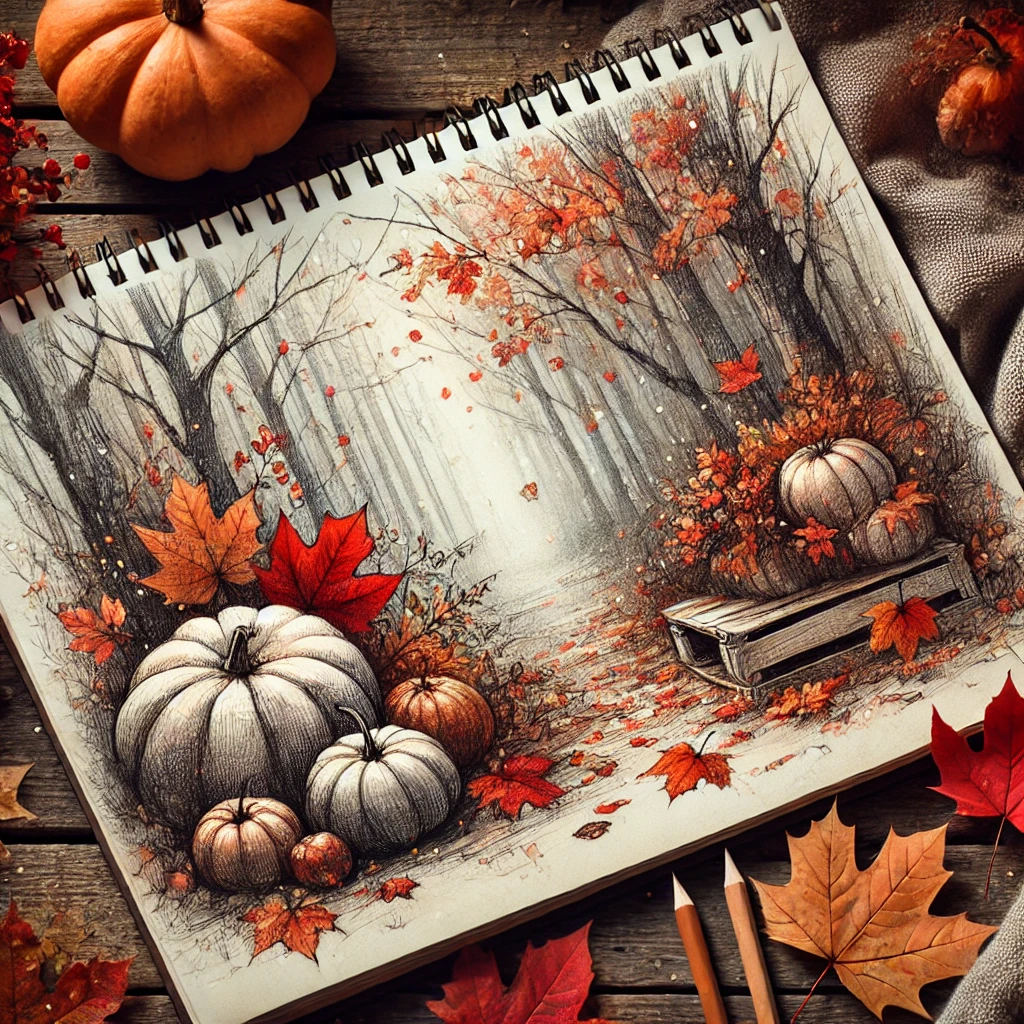
Autumn is my favorite sketching season because everything has texture: crunchy leaves, rough bark, lumpy pumpkins, misty mornings.
What to draw:
- A single fallen leaf, life size, with every vein
- A pile of pumpkins or gourds on a porch step
- A foggy forest where trees fade into the distance
Tools that fit:
- Charcoal pencils for rich, soft darks
- A textured sketchbook whose tooth grabs charcoal
- Warm-toned gel pens for gold and copper highlights on leaves
Try this: For fog, draw the nearest trees darkest and make each row behind them a step lighter. Three rows of value is enough to feel misty. Use hatching for bark and stippling for pumpkin skin, and lean on ochre, sienna and umber if you add color.
Blending charcoal fog is easier with a few tricks. See How to Blend Charcoal Like a Pro.
Winter: Let the Paper Be the Snow

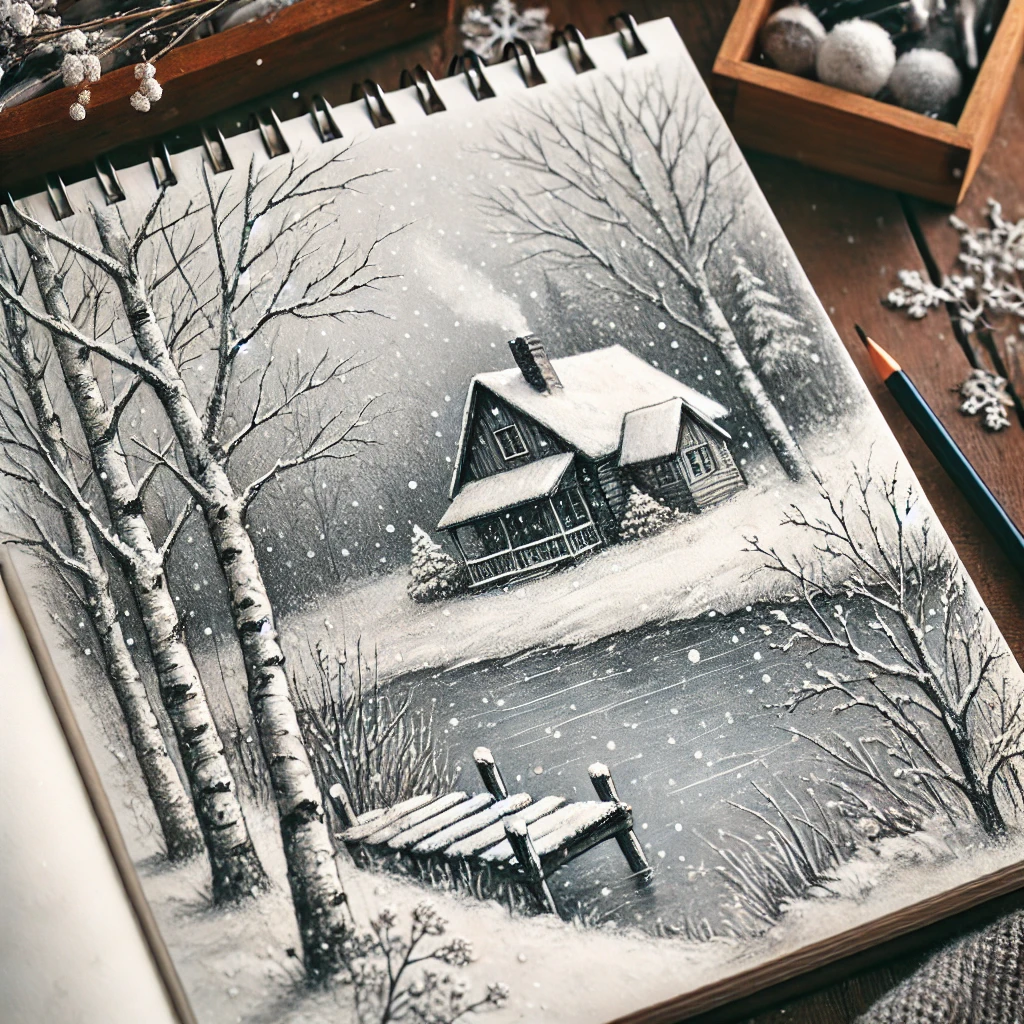
Winter is a value lesson in disguise. With color stripped away, you see light and shadow clearly.
What to draw:
- Bare branches against a gray sky
- Snow on a fence, roof or evergreen
- Footprints, icicles, or frost on glass
Tools that fit:
- Graphite pencils from 2H to 6B for the full value range
- White gel pens for snowflakes and sparkle
- Toned paper so white highlights pop
Try this: Don’t draw the snow. Shade the shadows around it and leave the paper white. For soft winter skies, dip a soft brush in powdered graphite and sweep it across the top of the page.
Winter is also the perfect season to sketch indoors through a window with a cup of tea nearby. That counts.
Project: The Same Tree, Four Seasons
This is the project I recommend most. It teaches observation, value and patience, and the finished spread looks amazing.
Use the same size page each time, or divide one spread into four boxes. Keep the trunk and horizon line in the same place so the changes jump out.
A Light Kit for Sketching Outdoors
You don’t need much. A small pouch should hold everything:
- 1 portable sketchbook (A5 or smaller)
- 3 pencils: HB, 2B, 6B
- 1 fine liner and 1 white gel pen
- A few watercolor pencils in your season’s palette
- A waterbrush and a paper towel
- A clip to hold pages in the wind
Weather checklist: water and a hat in summer, fingerless gloves in winter, a plastic bag to sit on after rain.
A 12-Month Prompt Calendar
Never wonder what to draw again. One prompt per month, starting in January. Do it once, or every week of that month.
| Month | Prompt |
|---|---|
| January | bare branches against sky |
| February | frost on a window |
| March | first buds on a twig |
| April | blossom branch, close up |
| May | bud to bloom, 3 days |
| June | a cloud study, 5 skies |
| July | sunset over water |
| August | a summer fruit, halved |
| September | one leaf, life size |
| October | pumpkins on a step |
| November | foggy tree line |
| December | snow on an evergreen |
Want a daily version? My 30-Day Sketching Challenge pairs well with any month on this list. And for figure ideas by season, see Seasonal Pose Inspiration for Artists.
Investment Pieces Worth It
Seasonal sketching is cheap at heart. But if you sketch outside often, a couple of upgrades make it easier and more fun.
A professional travel watercolor tin. The Winsor & Newton Professional Complete Travel Tin is around $143 at the time of writing and folds small enough for a pocket. Used weekly for three years, that’s under $1 a session. Worth it if you want real paint color in the field. Skip it if watercolor pencils already make you happy.
A top-tier half-pan set. The Schmincke Horadam 24 half-pan box runs about $157 and is known for bright, reliable pigments. Worth it if you love luminous spring and summer color. Skip it if most of your seasonal work is graphite and charcoal.
A quality portable sketchbook. A sturdy portable sketchbook costs more than a spiral pad but survives backpacks, wind and light washes, and it becomes a keepsake record of your year. Worth it if you’ll carry it monthly. Skip it if you mostly sketch indoors at a desk.
Year-Round Tips
- Date every page and jot the weather. A year from now, it reads like a diary.
- Take a reference photo before you start, in case light changes fast.
- Sketch in 10-minute bursts when it’s very hot or very cold.
- Swatch your palette inside the cover each season so you can see the shift.
- Pin your favorites to a mood board for next year’s ideas.
The Takeaway
Seasonal sketching works best when you keep subjects simple and let nature do the changing. Match your tools to the season, follow the monthly prompts, and by next year you’ll have a sketchbook that feels like a walk through all four seasons.
Which season do you love to draw most, and what’s your favorite subject in it? Tell me in the comments. And save this to your nature sketching board so the calendar is ready on the first of every month.