This post contains affiliate links. If you buy through them, I may earn a small commission at no extra cost to you.
Ever bought a cute storage piece, hauled it home, and realized it holds exactly nothing you use? Let’s make sure your next studio purchase earns its floor space.
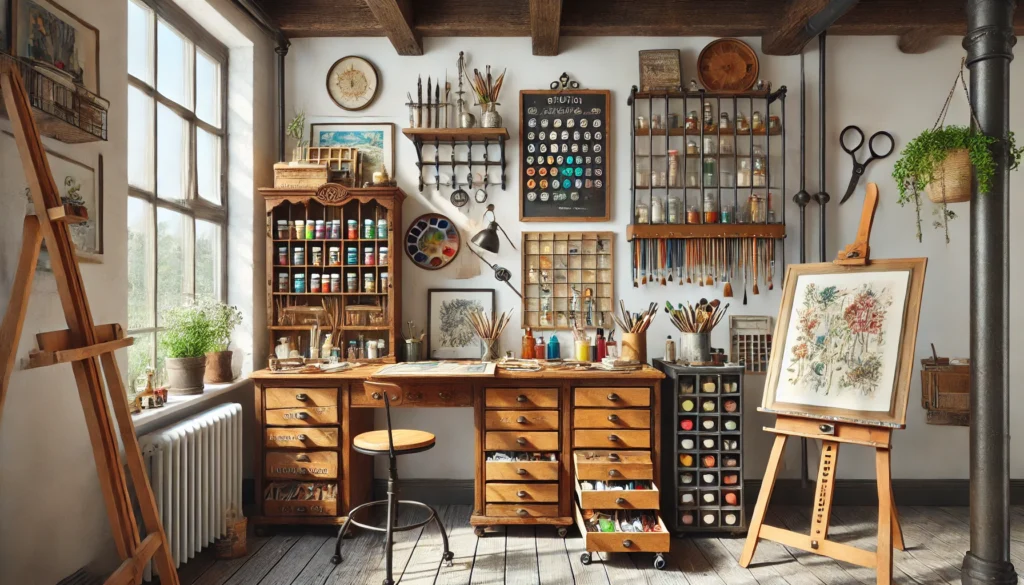
Here’s my take: an inspiring art studio starts with furniture, not decor. Pick the work surface first, then storage sorted by how often you reach for things, then display last. Paint colors and prints are easy to change. A 60-inch workbench in the wrong spot is not.
Below are 15 furniture ideas I like for artists, from a $25 rolling cart to a solid oak roll-top desk. Each one comes with its job, its footprint, and who should skip it.
Quick answer: if you only do one thing, measure your room and buy the work surface first (a desk, workbench or drafting table at least 24 inches deep). Every other piece should fit around it, within arm’s reach of the supplies you use daily.
Plan your studio furniture in 5 steps
Before you shop, take ten minutes with a tape measure and a notepad. This is the order I recommend, and it saves a lot of returns.
A few numbers to keep handy while you plan:
- Leave about 36 inches of clear walkway in front of a desk or bench so you can pull out a chair and step back.
- A standard desk height is around 29 to 30 inches. Standing work happens closer to 36 to 40 inches.
- Paint and wet media want a washable surface and a spot away from rugs and fabric chairs.
- Put your main work surface near the window, with the light coming from the side opposite your drawing hand so your hand doesn’t shadow the page.
Think in zones before pieces
Every studio, even a corner of a bedroom, works better with four simple zones. You don’t need walls between them, just a clear idea of what lives where.
At a glance: all 15 pieces
| Piece | Main job | Footprint | Tier |
|---|---|---|---|
| Apothecary chest | Small supplies | Medium | $$$ |
| Rotating bookshelf | Books, sketchbooks | Small | $$ |
| Pegboard kit | Wall tools | Wall only | $$ |
| Multi-drawer chest | Small supplies | Medium | $$$ |
| 3-tier rolling cart | Daily kit | Small | $ |
| Roll-top desk | Desk + storage | Medium | $$$ |
| 60-in workbench | Big work surface | Large | $$ |
| China cabinet | Display + storage | Large | $$$ |
| Barrister bookcase | Dust-free display | Medium | $$ |
| Pipe shelving | Open storage | Medium | $$ |
| Fold-out wall desk | Tiny-space desk | Wall only | $$ |
| Tilting drafting table | Drawing surface | Medium | $$ |
| Ladder shelf | Light display | Small | $ |
| Storage ottoman | Seat + hidden storage | Small | $$ |
| H-frame easel | Painting | Medium | $$ |
Tiers: $ under $75, $$ about $75 to $350, $$$ over $350.
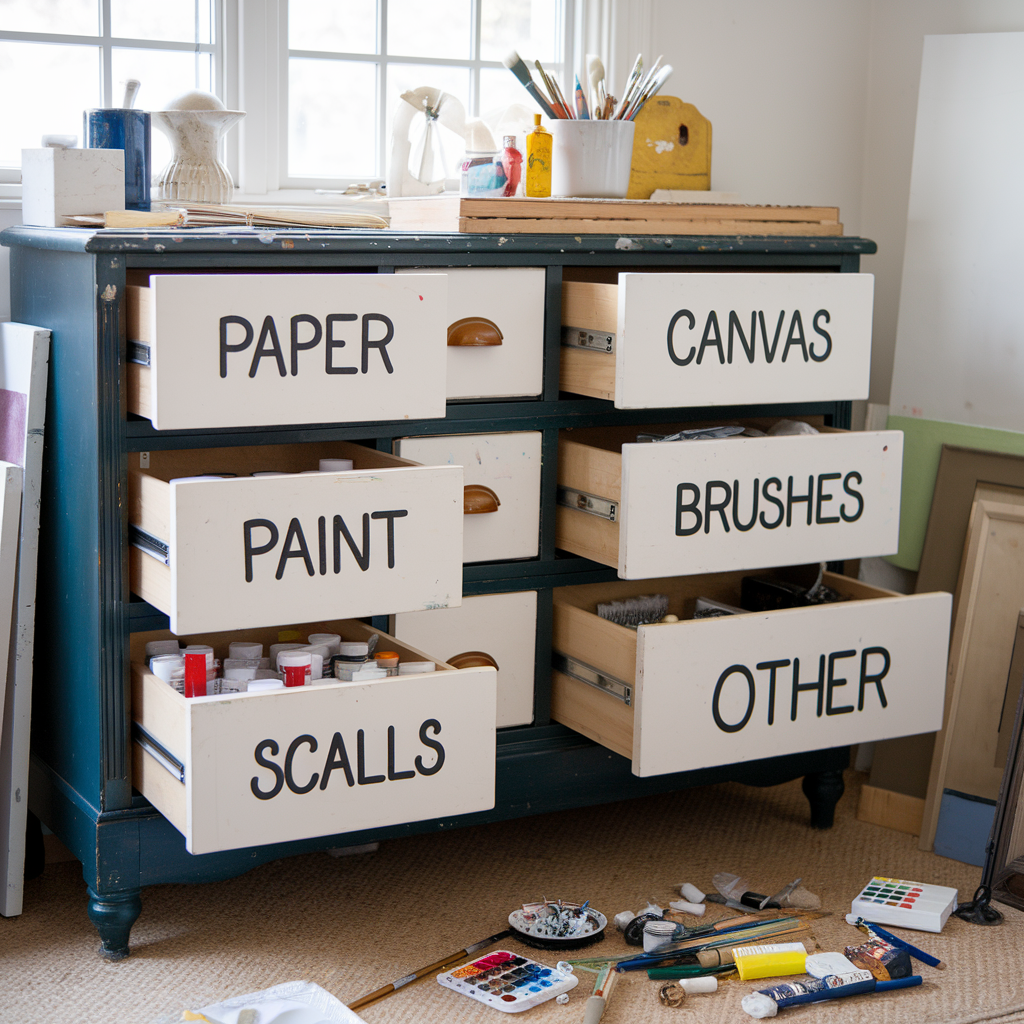
1. An apothecary chest for small supplies
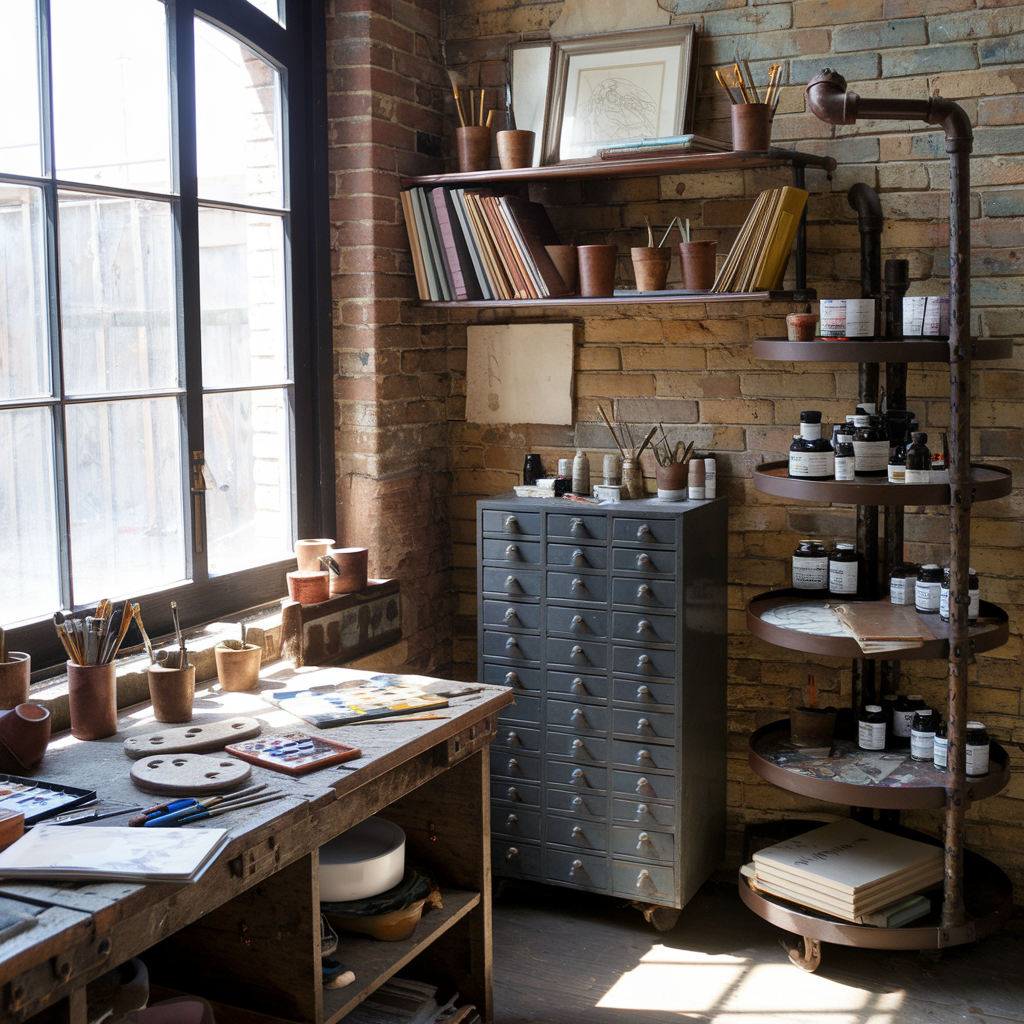
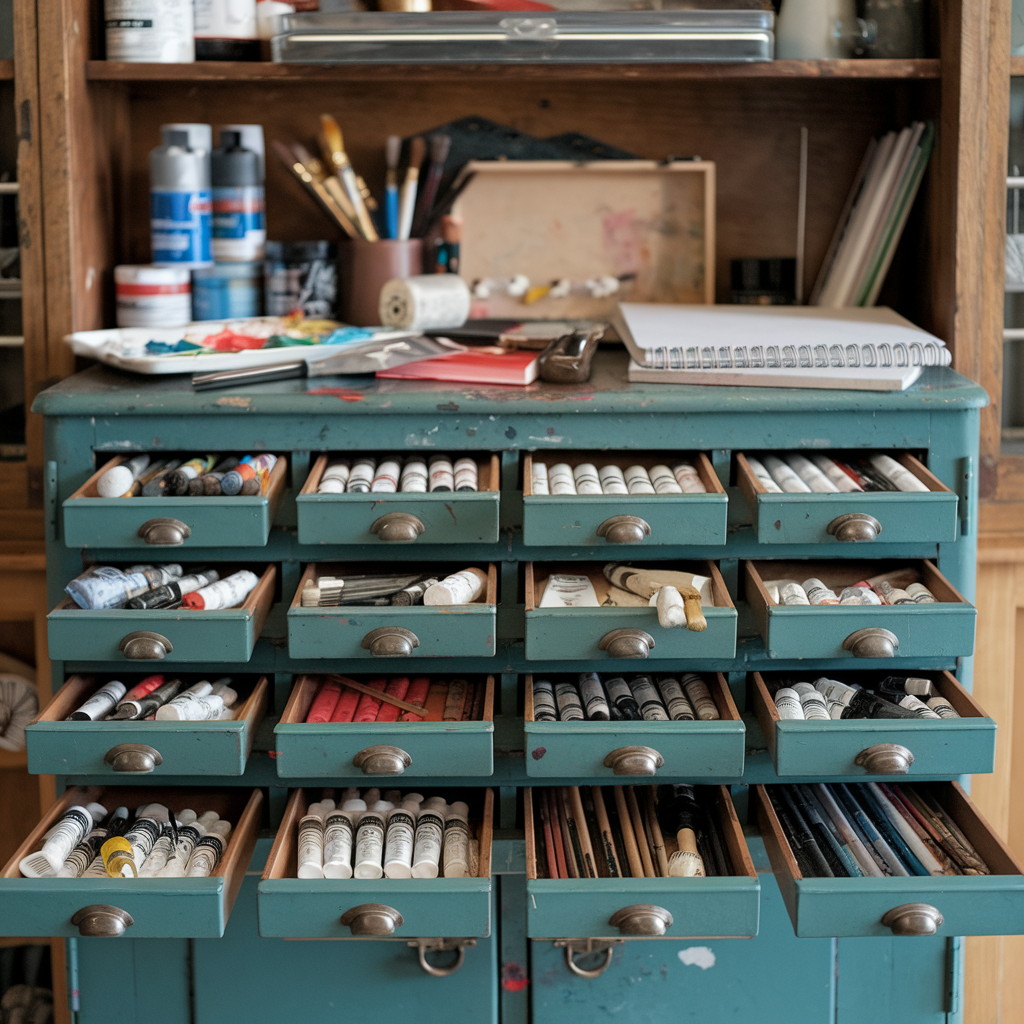
Lots of small drawers are the cure for the “where did I put the kneaded eraser” hunt. An apothecary chest gives every tiny thing its own address: charcoal sticks, blending stumps, ink cartridges, pen nibs.
What I look for: drawers at least 2 to 3 inches deep (tubes and pencils lie flat), smooth glides, and a top surface wide enough to work on or display a few jars.
Best for: drawing and mixed media artists with lots of small tools. Skip it if: you mostly paint large and need big flat storage instead.
2. A rotating bookshelf for sketchbooks and art books
A rotating shelf fits a corner and holds a surprising library in about a 16-inch-square footprint. Store sketchbooks upright like books, spine out, so they keep their shape and you can read the labels.

Best for: small studios and anyone with a growing pile of reference books. Skip it if: your books are oversized (11 x 14 inches and up), since the cubbies tend to run small.
3. A pegboard wall for tools you grab daily
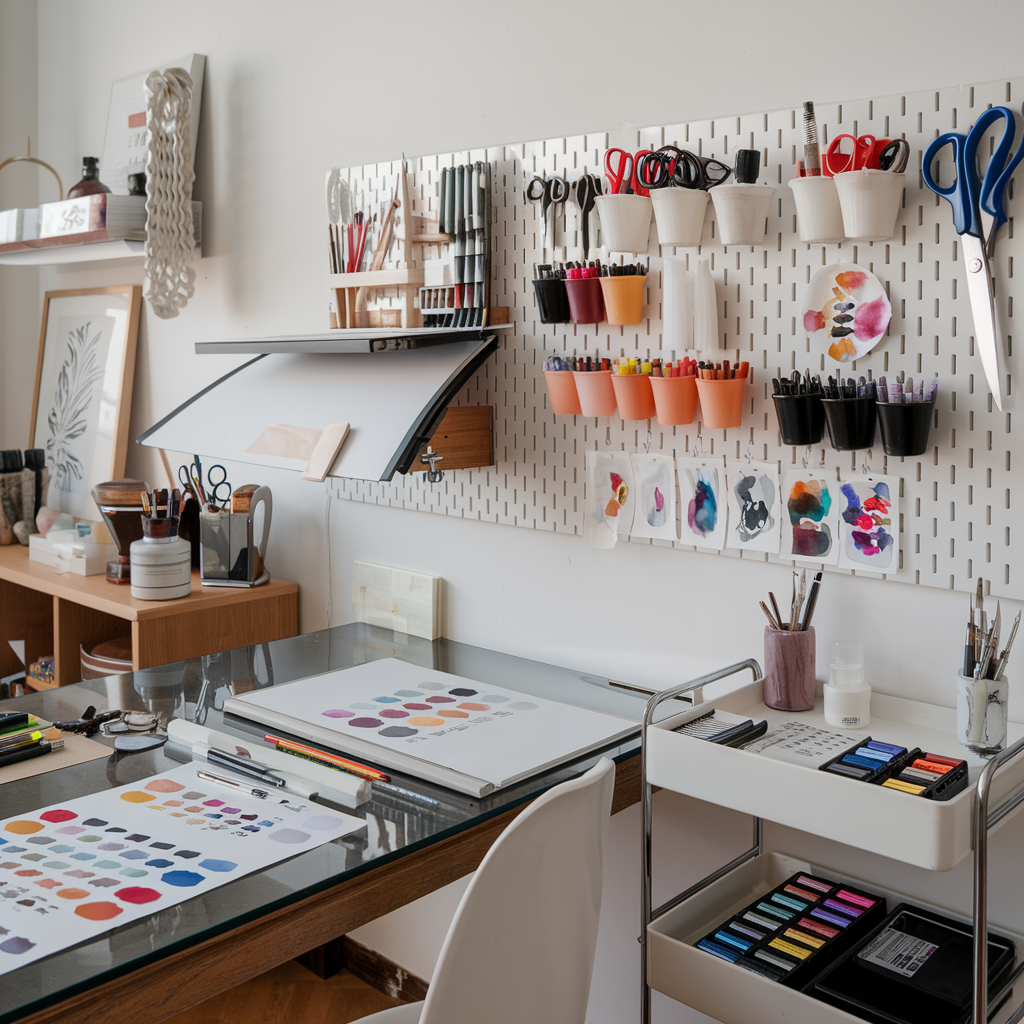
Pegboard turns blank wall into storage without using a single inch of floor. Hang scissors, rulers, tape, brush cups and small baskets at eye level so they’re visible and easy to put back.
A metal pegboard kit is sturdier than hardboard and the hooks stay put when you pull a tool off.

Best for: every studio size, especially tiny ones. Skip it if: you’re renting and can’t put anchors in the wall (try a freestanding cart instead).
For more wall ideas, see these wall-mounted organizers for art studios.
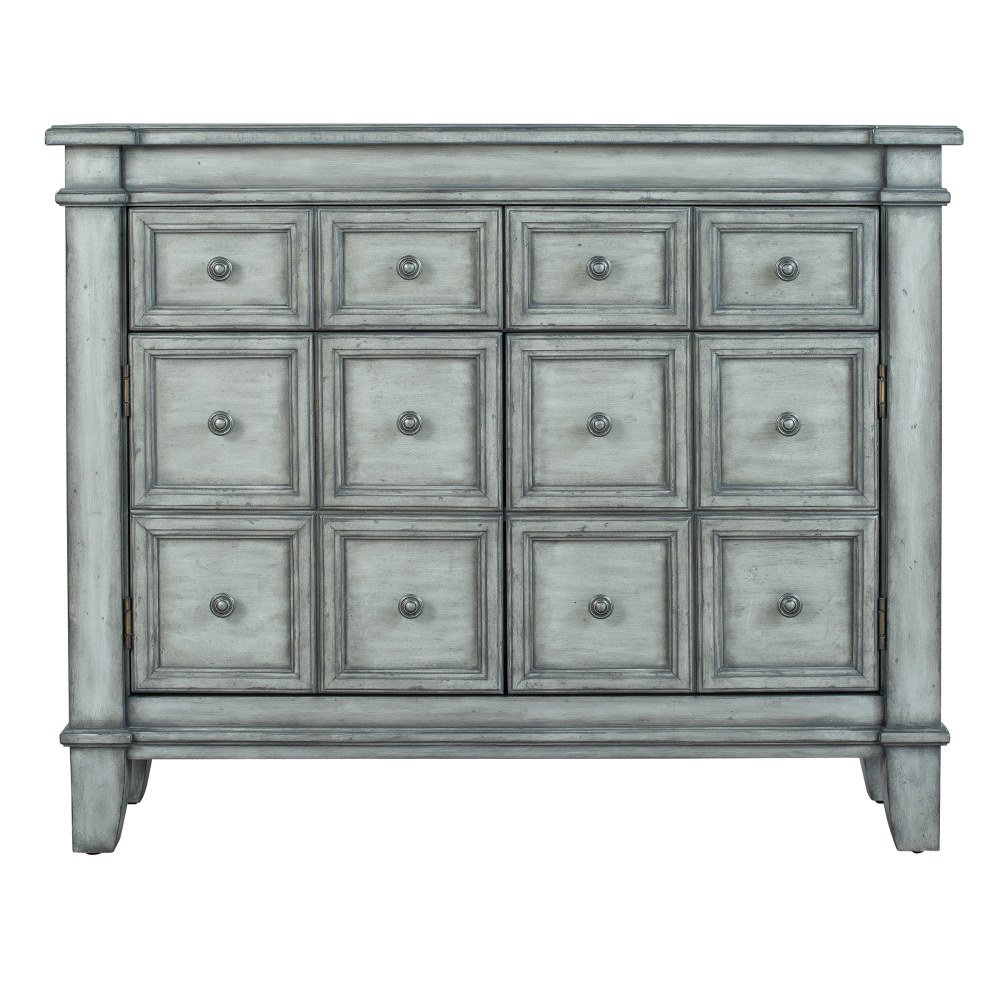
4. A vintage-style multi-drawer accent chest
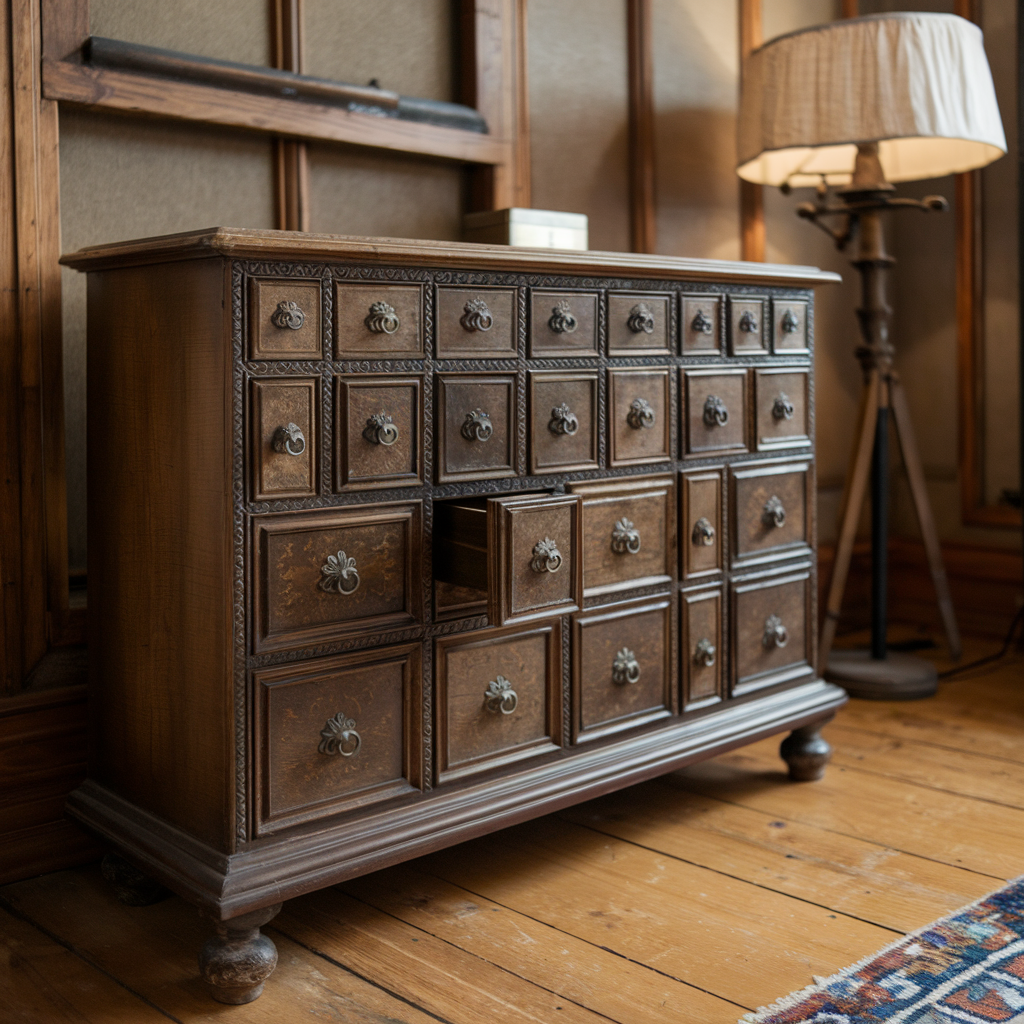
If you want storage that looks like furniture rather than a supply closet, a multi-drawer accent chest is the answer. It fits in a living room or bedroom studio without looking like an office.
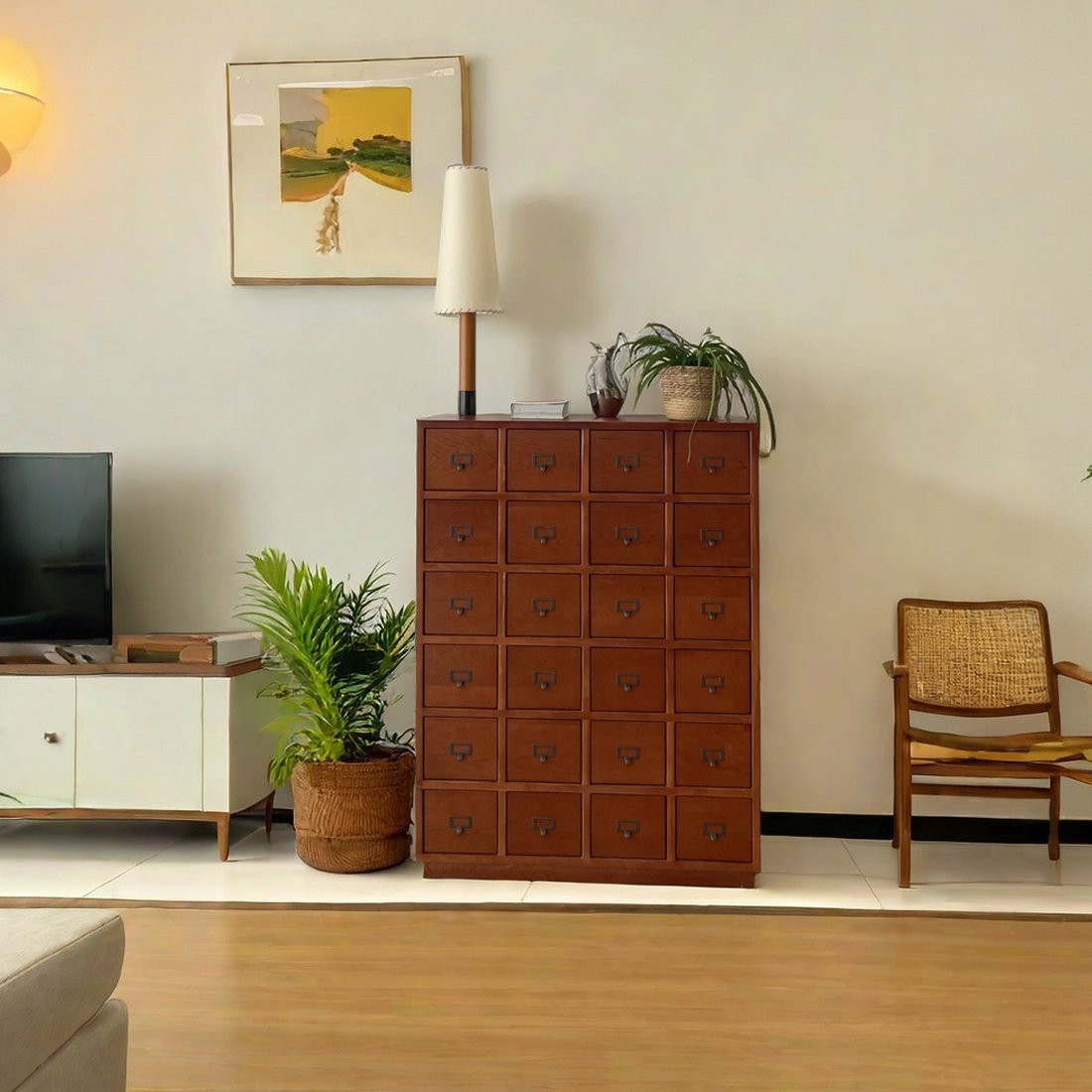
Sort drawers by medium (graphite, charcoal, watercolor, ink) and label the inside front edge with a small tag, so the front stays pretty.
Best for: shared rooms and studio corners in living spaces. Skip it if: you need drawers deep enough for paper pads larger than the drawer interior.
5. A 3-tier rolling cart for your daily kit
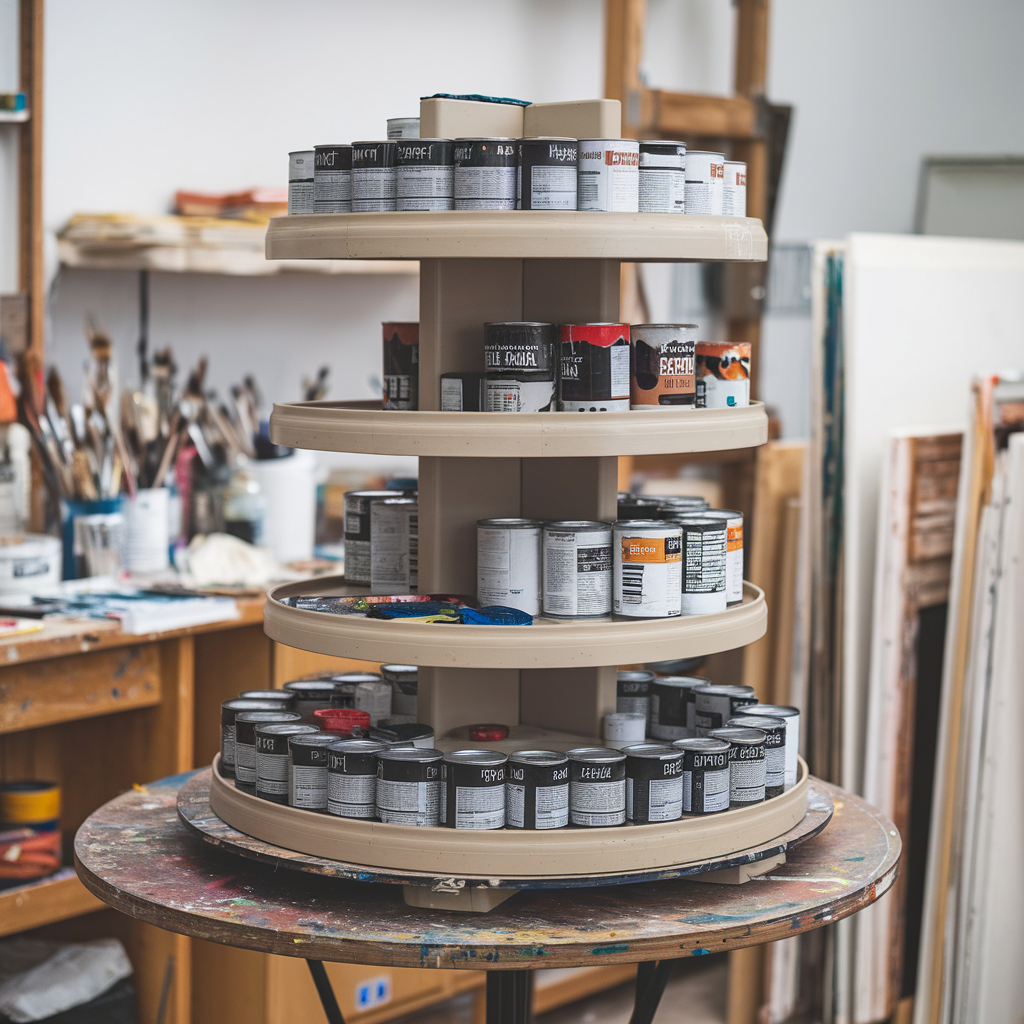
This is the best value in the whole list. A rolling cart holds today’s project, then rolls next to the easel, the desk or out of the way when guests come over.
My rule: top tier for what you’re using right now, middle for refills, bottom for paper towels, water cups and rags.

Best for: everyone, especially artists who work in more than one spot. Skip it if: you already have a cart. One is plenty, two becomes clutter on wheels.
Compare more options in my guide to the best rolling art carts.
6. A solid oak roll-top desk
A roll-top desk is a whole studio that closes. Pigeonholes keep pens, nibs and small sketchbooks sorted, and when you roll the top down, the mess disappears.

This is a true investment piece at around $1,200. Over 10 years of regular use, that works out to about $120 a year for a desk that will probably outlast you.
Best for: drawing, ink and journaling artists who love a classic look. Skip it if: you paint big or need a deep surface, since the writing area is smaller than a standard desk.
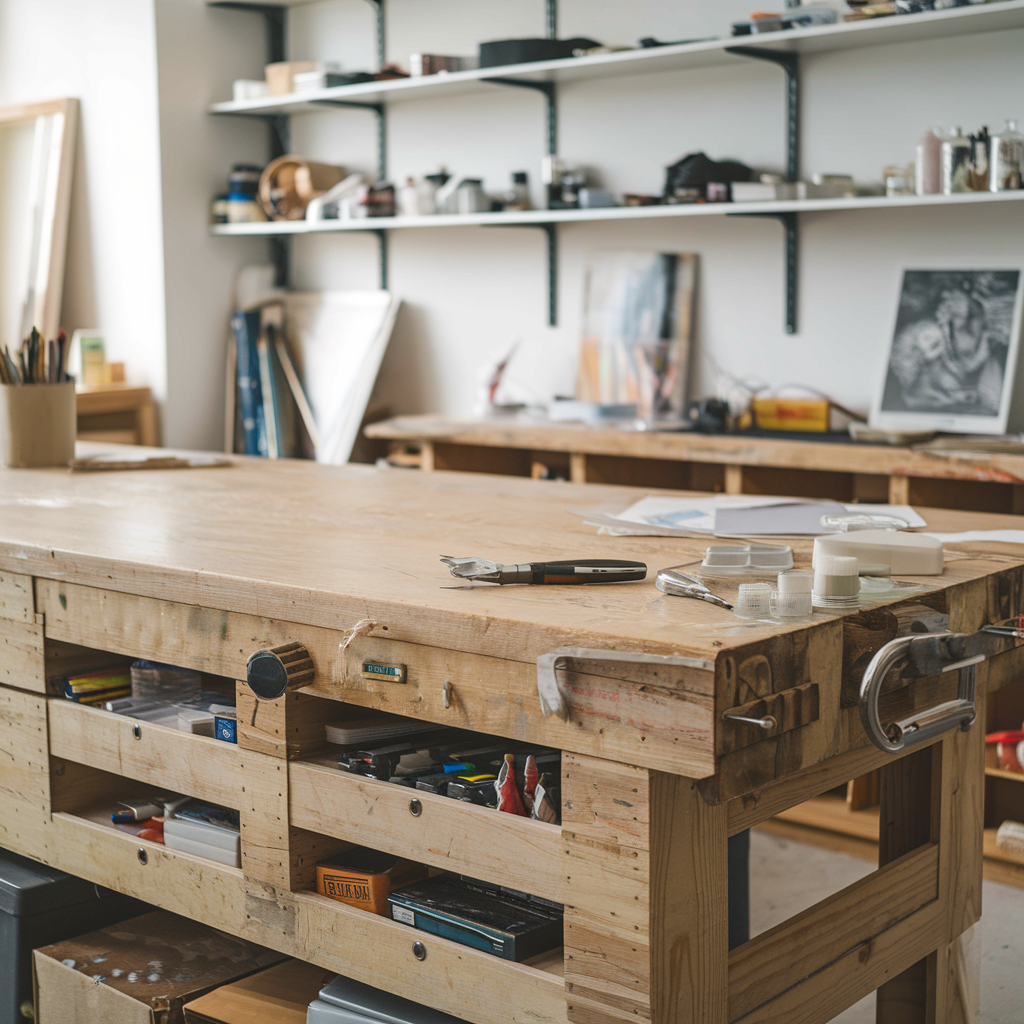
7. A 60-inch workbench with drawers
A long, sturdy workbench is my favorite work surface for mixed media. Sixty inches gives you room for a drying area on one end and active work on the other, and drawers keep tools right under your hands.

Seal a wood top with a couple of coats of water-based polyurethane if you’ll be using paint, so spills wipe off instead of soaking in.
Best for: medium to large studios, crafters, and anyone who works standing on a stool. Skip it if: your room is under about 8 x 10 feet. It will dominate the space.
Need more surface ideas? See the best art desks for every budget.
8. A china cabinet for display and storage
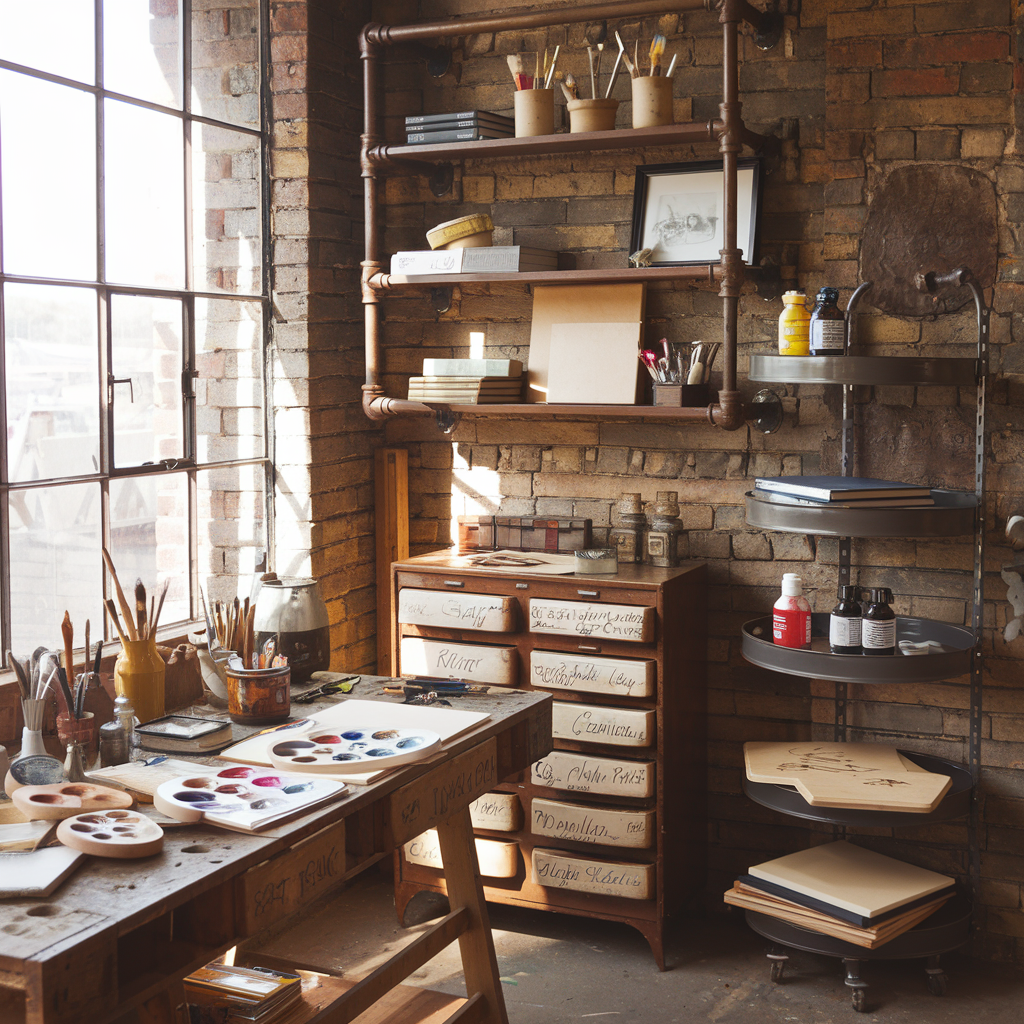
A glass-front china cabinet is a lovely way to show off finished work, pottery, vintage tins and jars of brushes while keeping dust off. Closed lower cabinets hide the less photogenic stuff.
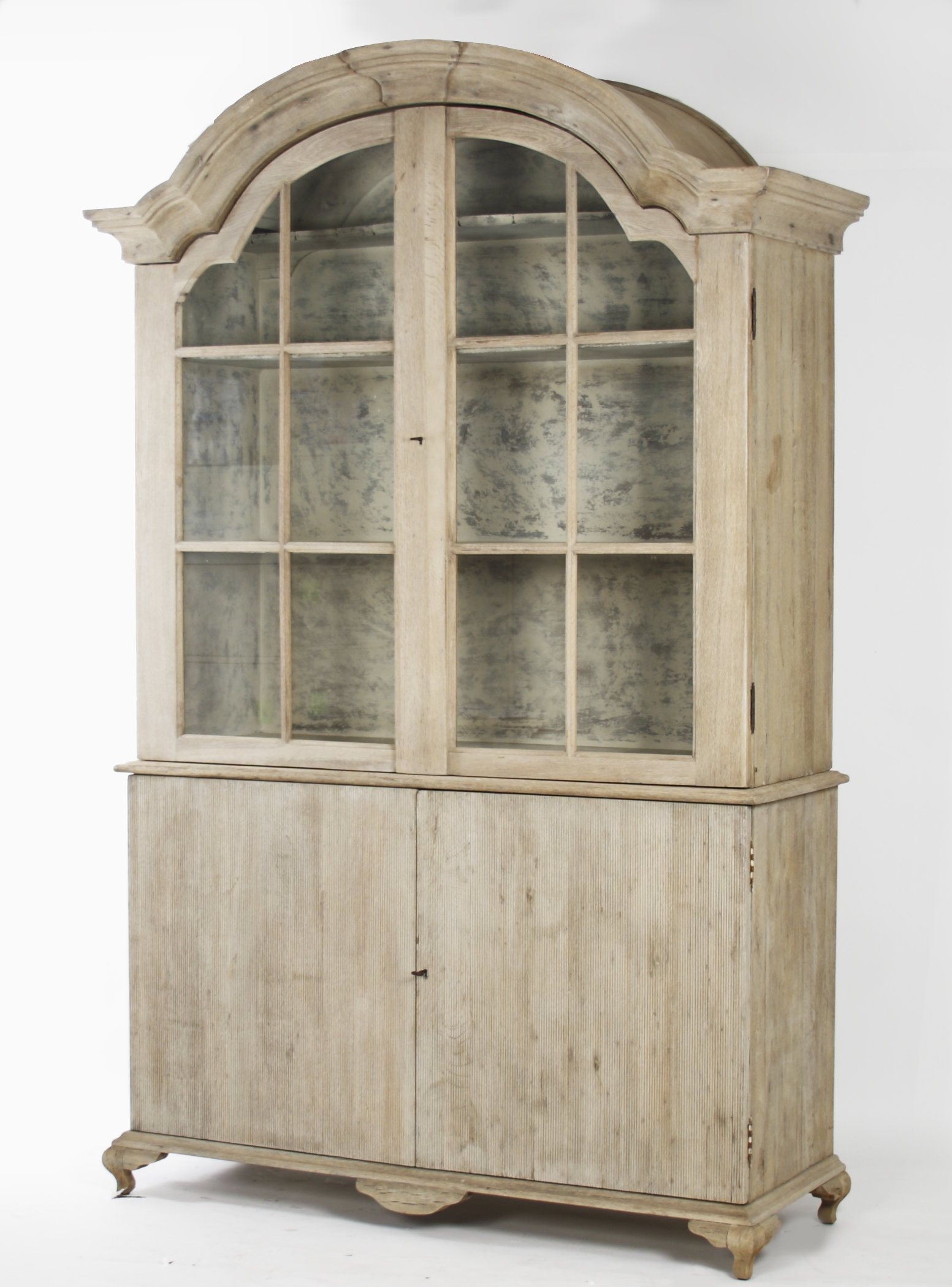
Best for: larger studios and anyone who wants the room to feel like a home, not a workshop. Skip it if: you need to store flat paper. Glass shelves aren’t built for heavy pads.
9. A barrister bookcase for dust-free shelves
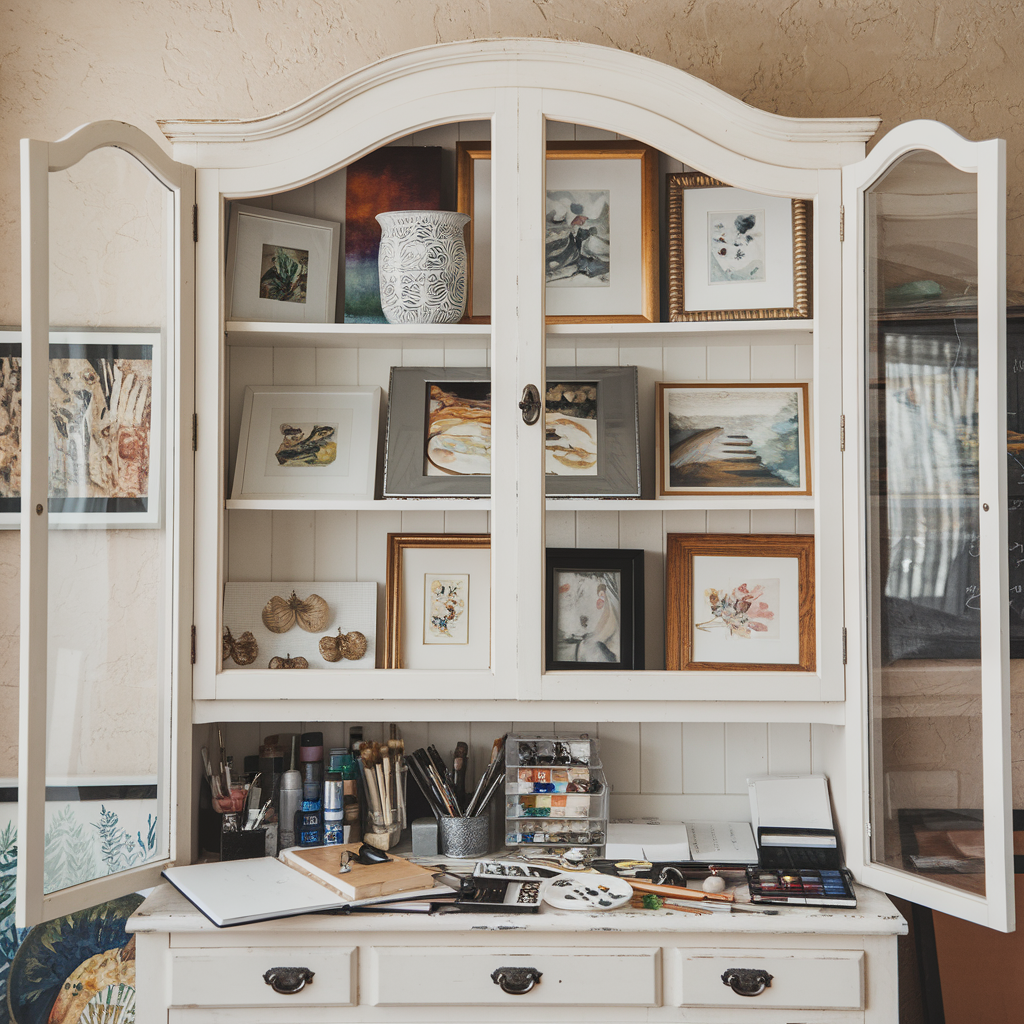
Barrister bookcases have glass doors that lift and slide back, so art books, finished sketchbooks and good paper stay clean. Charcoal and pastel dust gets everywhere, and doors make a real difference.

Best for: charcoal and pastel artists, and collectors of art books. Skip it if: you want grab-and-go access. Doors slow you down for daily supplies.
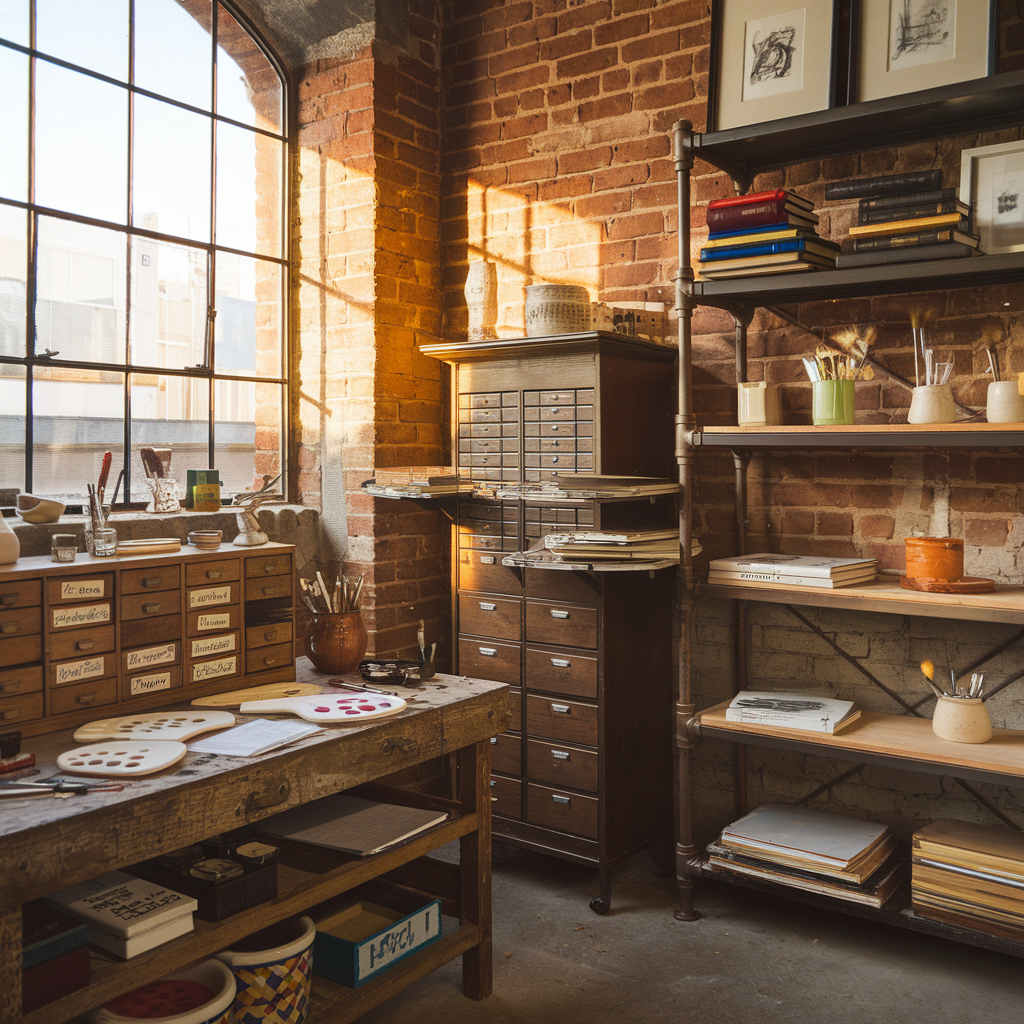
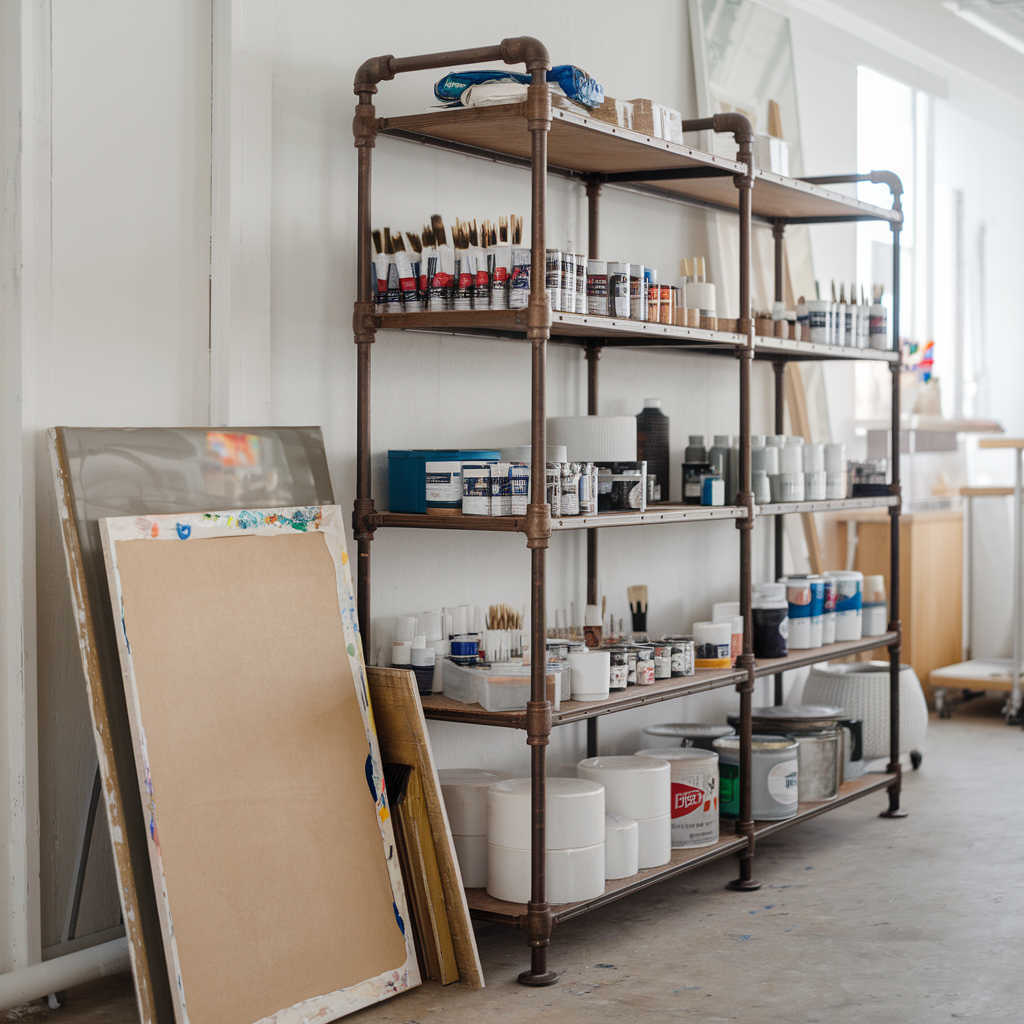
10. Industrial pipe shelving for open storage
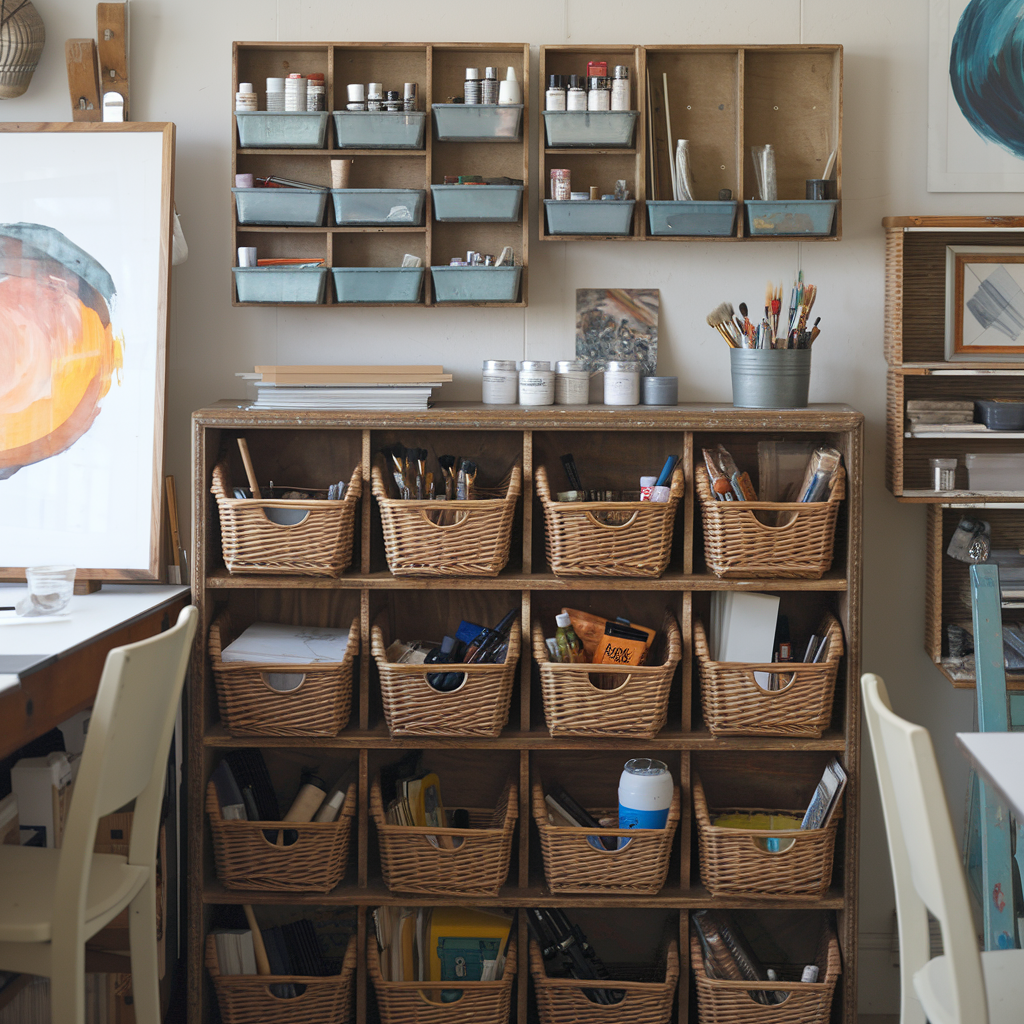
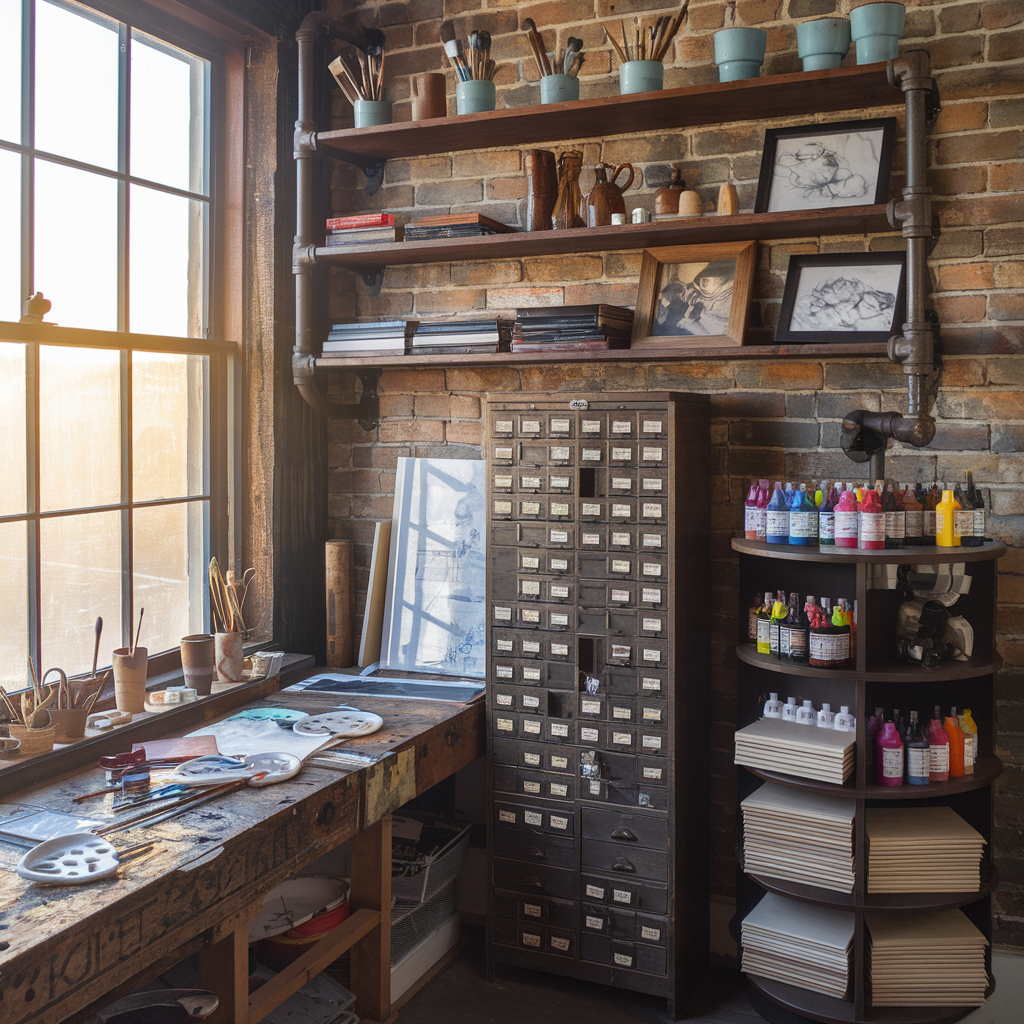
Pipe shelving is strong, simple and looks great with raw wood. Use the lower shelves for heavy items like paint bins and canvas stacks, and the upper shelves for lighter display.

Anchor any shelving over about 36 inches tall to the wall. Loaded shelves get top heavy fast.
Best for: industrial and loft-style studios with lots of supplies. Skip it if: you want a soft, cottage feel.
11. A wall-mounted fold-out desk
No room for a desk? A fold-out wall desk gives you a drawing surface that folds flat to a few inches deep when you’re done. It’s a smart fix for hallways, guest rooms and apartments.
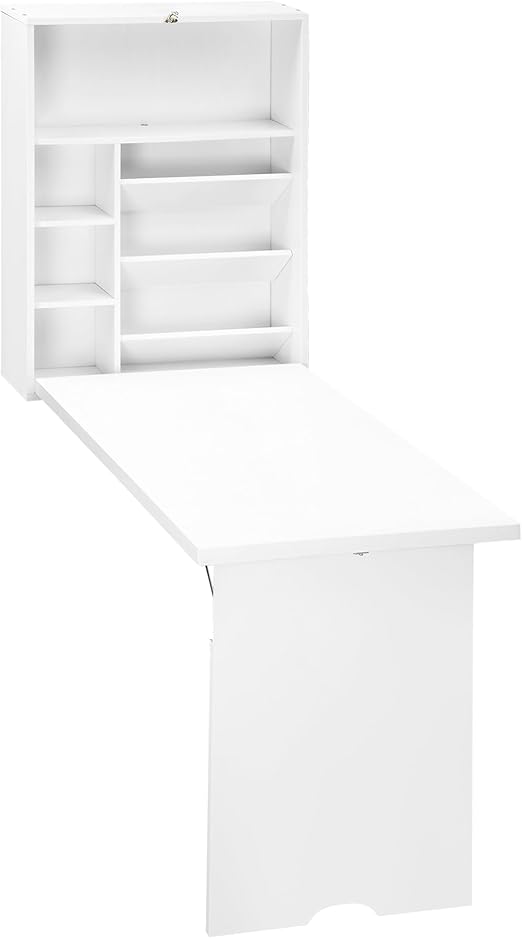
Mount it so the open surface sits around 29 to 30 inches off the floor, and screw into studs. Leaning on the edge while you draw adds real load.
Best for: tiny spaces and sketchers. Skip it if: you paint, since wet work needs a surface that can stay out while things dry.
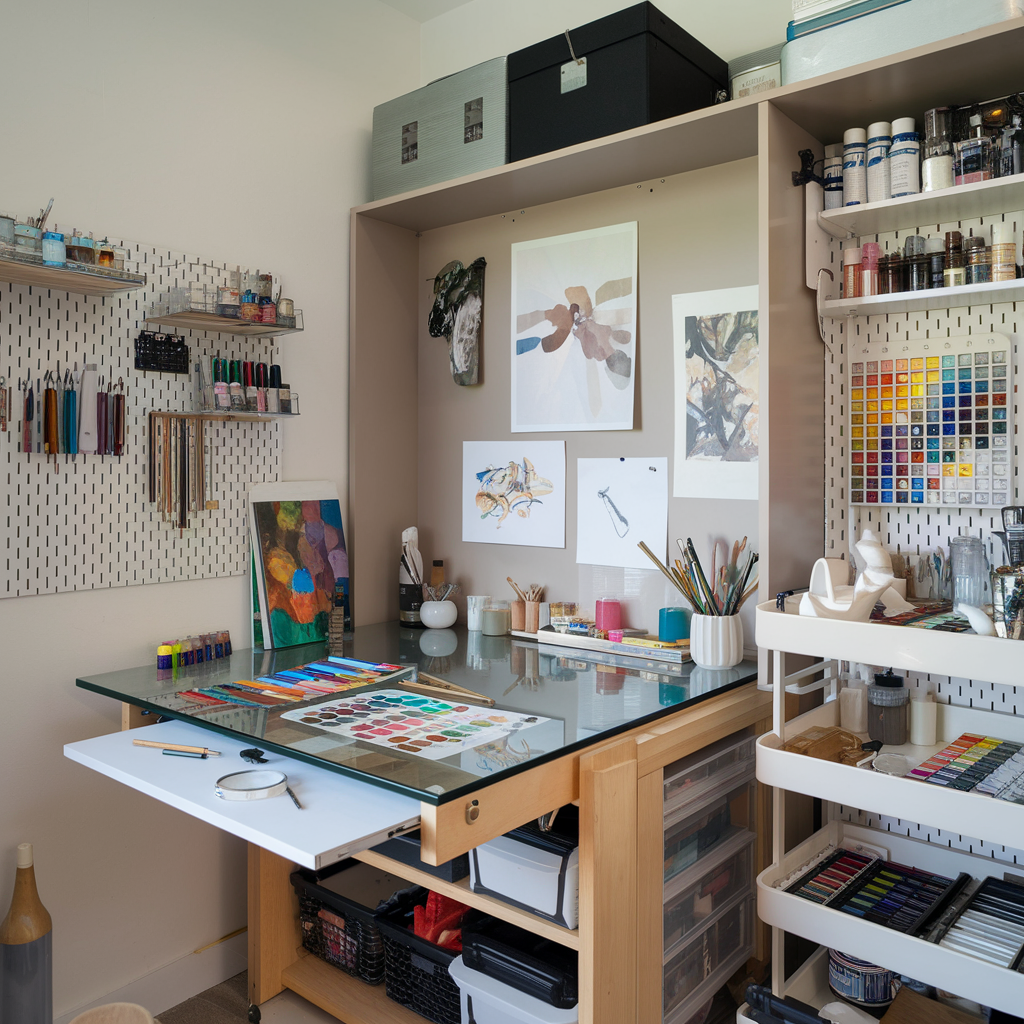
12. A tilting glass-top drafting table
A tilting top lets you angle the work toward you, so you see the page straight on instead of at a slant. That makes proportions easier to judge, which is the whole reason drafting tables exist.
A glass top also wipes clean in seconds and looks light in a small room.

Best for: drawing, illustration and anyone learning proportions. Skip it if: you work wet and heavy, like thick acrylic on board. A sturdy flat bench suits that better.
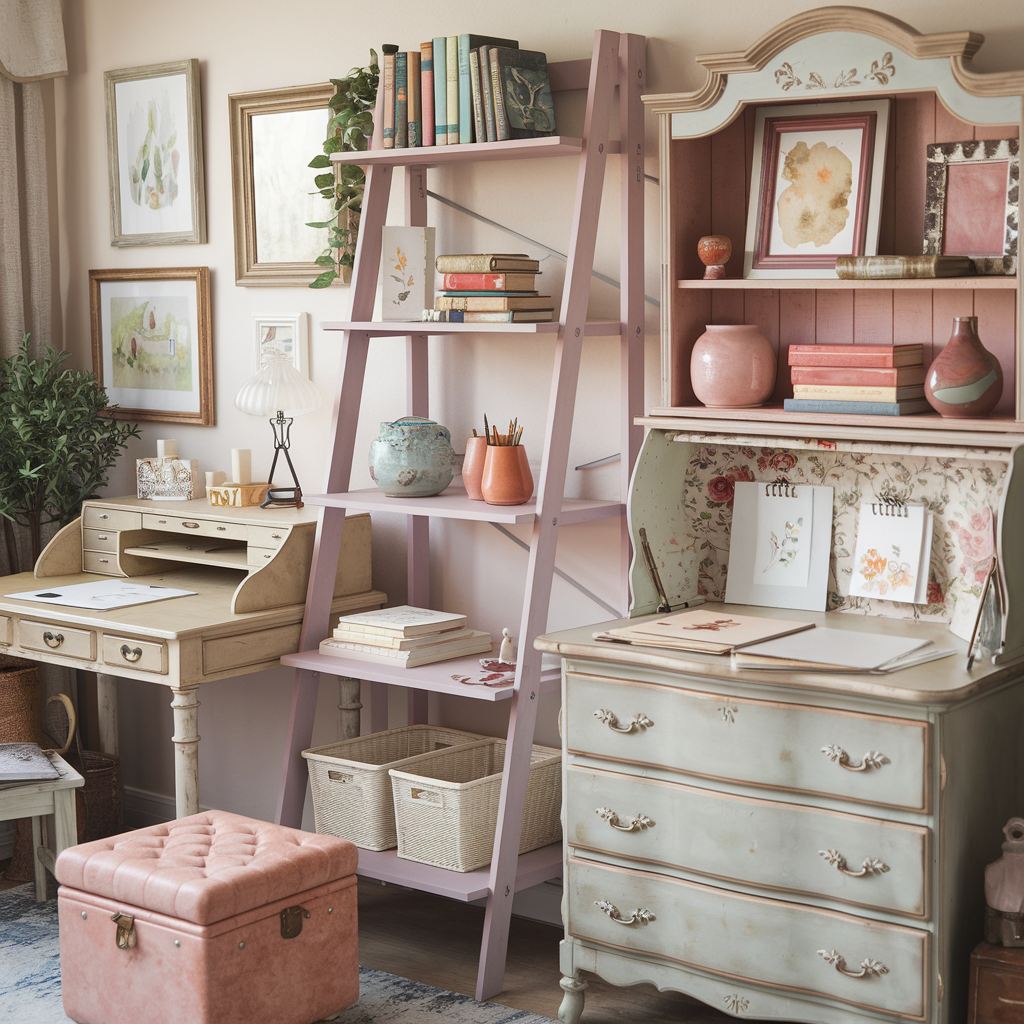
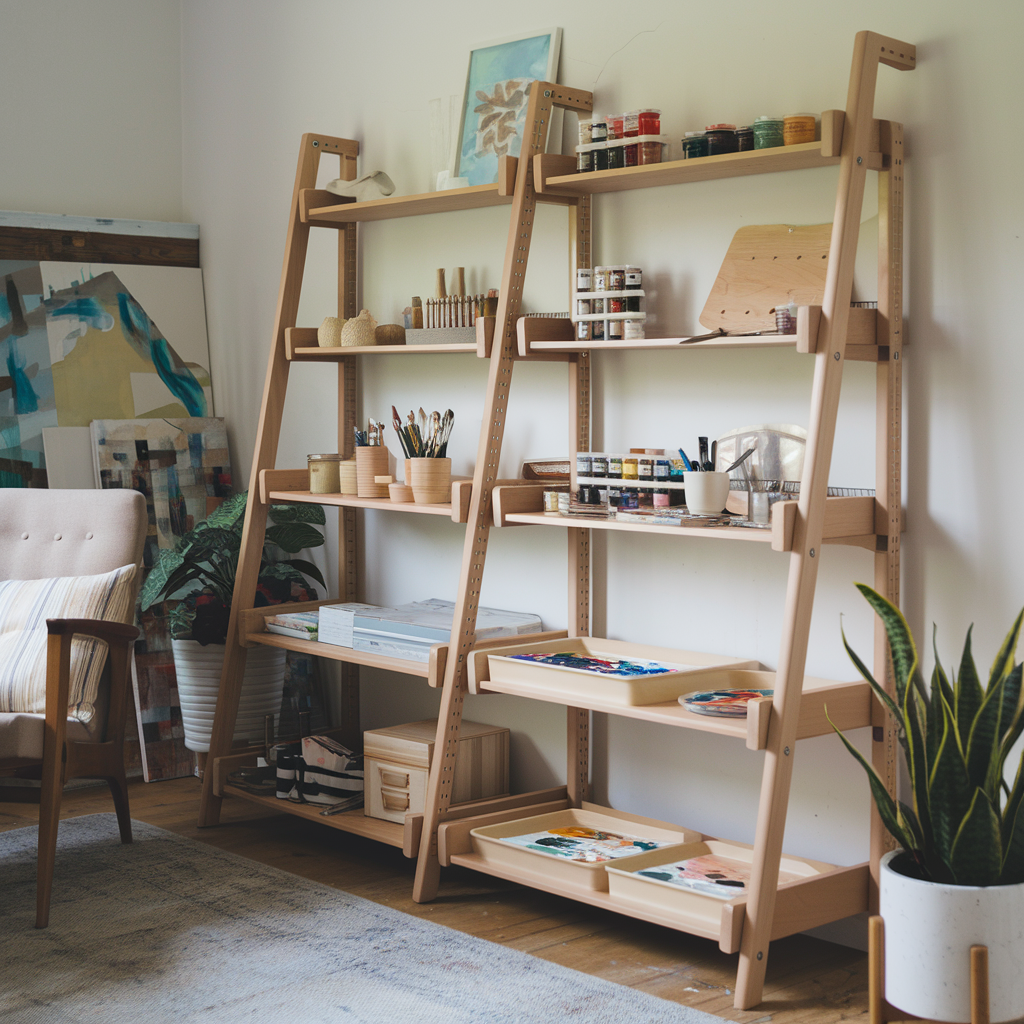
13. A ladder shelf for light display
A ladder shelf adds height without visual weight. It’s perfect for plants, a few framed sketches, a jar of brushes and a stack of favorite books.

Best for: small rooms and renters. Skip it if: you need serious storage. Each shelf holds a few items, not bins.
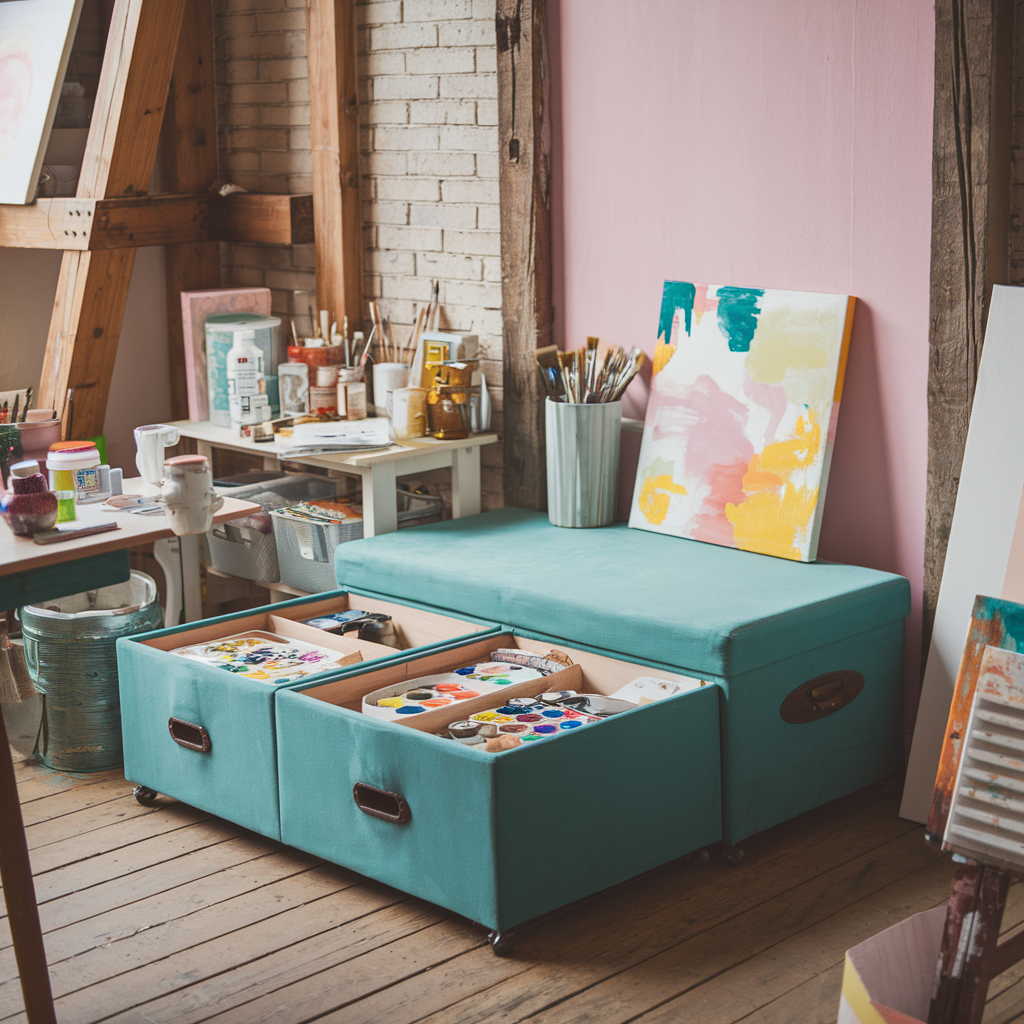
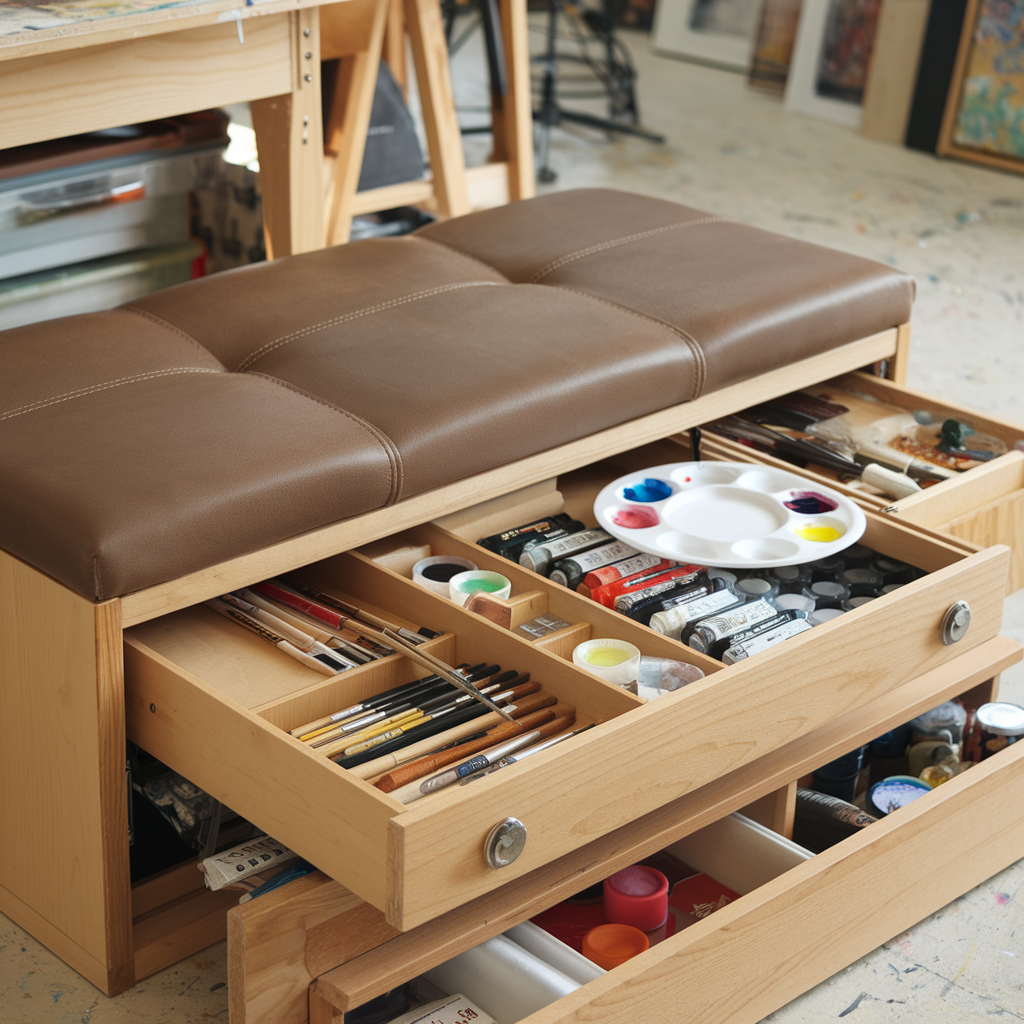
14. A storage ottoman for the rest zone
Every studio needs a spot to sit back and look at your work from a few feet away. A storage ottoman gives you that seat plus hidden space for fabric, yarn, spare canvases or extra sketchbooks.

Best for: studios that double as living space. Skip it if: you need a working chair. An ottoman is for stepping back, not for a three-hour session.
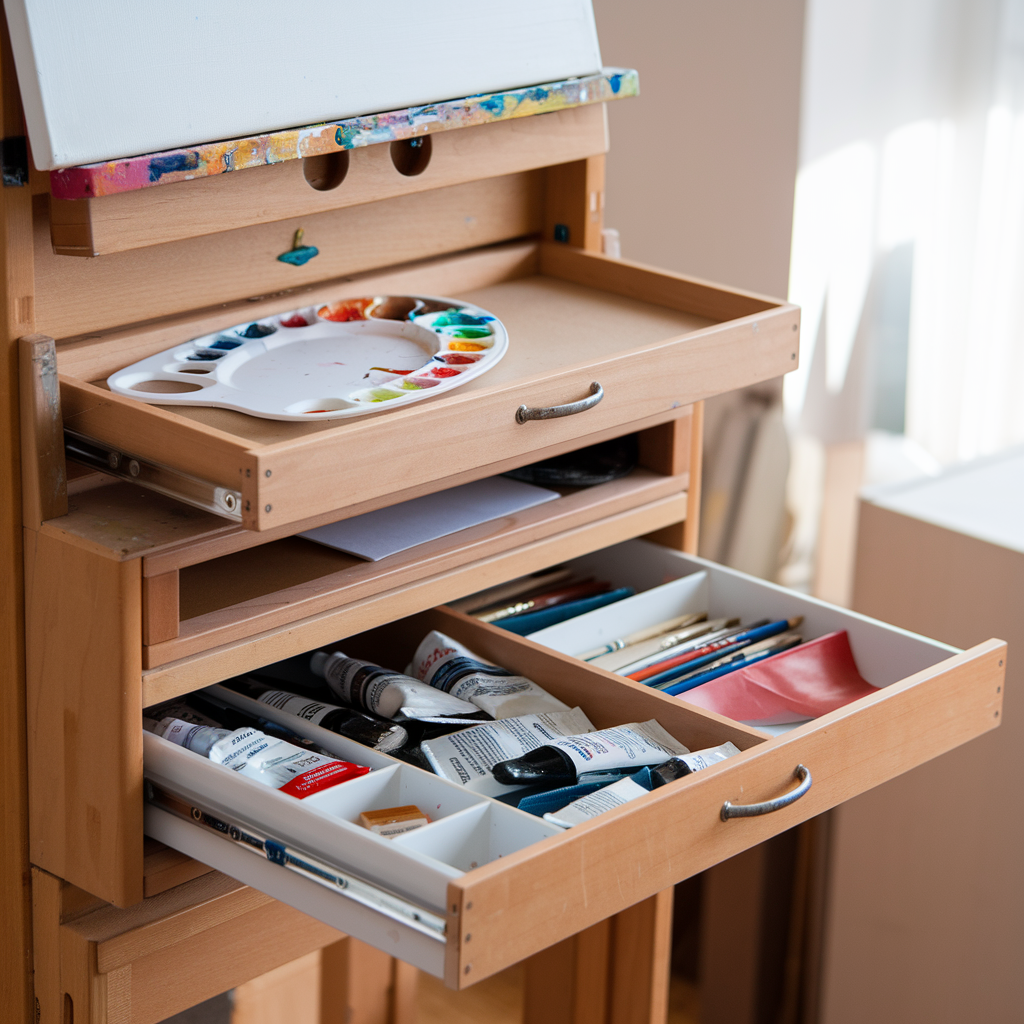
15. An H-frame easel with a storage drawer
An H-frame easel is the most stable style for painting, and the built-in drawer keeps brushes and tubes right where you stand. A sturdy easel stays put when you press hard with a palette knife.

Set the canvas so its center sits at about eye level, and stand roughly an arm’s length back.
Best for: acrylic and oil painters with a medium to large room. Skip it if: you only sketch. A tabletop easel will do.
Feeling handy? You can also build a vintage DIY easel.
Small studio vs large studio picks
Not every piece above fits every room. Here’s how I’d split them.
- fold-out wall desk
- rolling cart
- pegboard
- ladder shelf
- rotating bookshelf
- 60-in workbench
- china cabinet
- H-frame easel
- pipe shelving
- roll-top desk
Investment pieces worth it
Once the basics work, a few higher-ticket pieces can make a big difference. These are the ones I’d save for, and the people who should save their money instead.
A real flat file for paper. If you keep good watercolor or drawing paper, a flat file is the only storage that keeps it truly flat and clean. The AdirOffice 5-Drawer Flat File is around $735 and fits sheets up to 29 x 40 inches. Worth it for artists who buy full sheets and work on paper weekly. Skip it if you mostly use pads and sketchbooks.
A closing studio armoire. The Sauder Craft & Sewing Armoire runs around $420 and hides an entire small studio behind two doors. Over 5 years, that’s about $84 a year. Worth it for a studio in a bedroom or living room. Skip it if you have a dedicated room with open walls.
Steel design-studio drawers. The Bisley 6-Drawer Steel Cabinet is around $245. Shallow drawers mean nothing gets buried. Worth it if your supplies live in a pile of mismatched bins. Skip it if a $25 cart is already working for you.
Mistakes to avoid when furnishing a studio
| Do this | Not that |
|---|---|
| Measure before you shop | Buy first, measure later |
| Work surface first | Decor and shelves first |
| Daily items within arm’s reach | Daily items in a closet |
| Anchor tall shelves | Free-standing tall shelves |
| Washable top for paint | Raw wood under wet media |
For the full picture, including lighting and supplies, start with the complete art studio setup guide.
The takeaway
Choose your work surface first, put the things you use daily within arm’s reach, and add display pieces last. Get that order right and even a small room starts to feel like a real studio.
Which piece would make the biggest difference in your space right now: more surface, more storage, or a spot to step back? Tell me in the comments. And save this to your studio planning board for the next time you’re shopping.