This post contains affiliate links. If you buy through them, I may earn a small commission at no extra cost to you.
Ever bought a gorgeous storage unit, filled it up, and then watched your pastels crumble and your paper curl inside it?
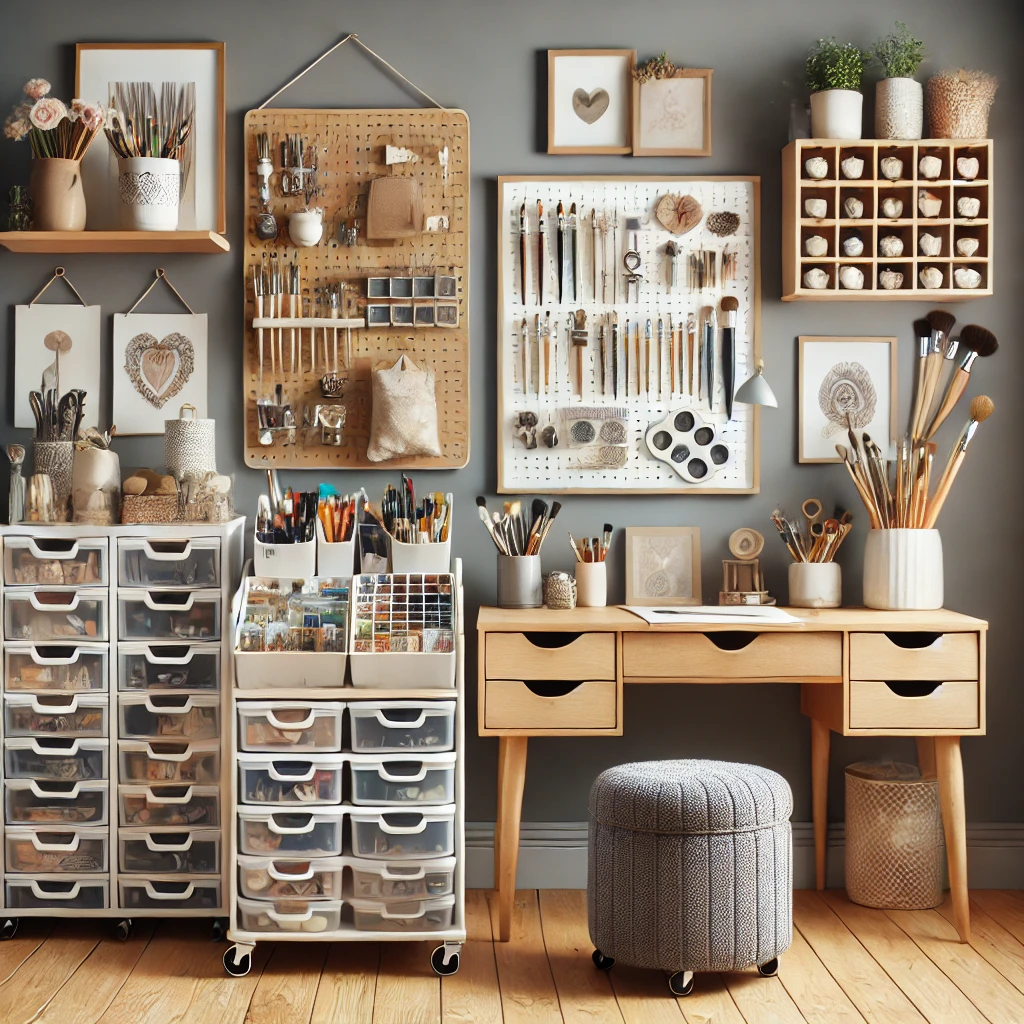
Here’s my point of view: storage fails when you shop for the room instead of the supply. Every material has a few simple needs: flat, upright, dry, dark or airtight. Match those needs first, and then pick the prettiest container that meets them.
This post works like a lookup. Find your supply, see what it needs, then jump to the storage solution that fits.
If you only do one thing: get your paper flat and your canvases upright. Those two fixes protect the most expensive things in most studios and cost under $40 with a bamboo rack and a few shallow bins.
The Lookup: What Each Supply Needs
Use this table first. It tells you where each supply should live and why.
| Supply | Store it | Why |
|---|---|---|
| Paper | flat, 40-50% humidity | stops curl and warping |
| Sketchbooks | upright, spine-down | like books on a shelf |
| Canvases | upright, face to face | no dents or scuffs |
| Paint tubes | shallow drawer, cool | caps stay clean, no drying |
| Soft pastels | flat, foam-lined tray | they snap and smudge |
| Charcoal | lidded box, shallow drawer | contains the dust |
| Brushes | bristles up when dry | keeps tips in shape |
| Alcohol markers | horizontal | both tips stay inked |
| Colored pencils | out of direct sun | some colors fade |
| Solvents | closed metal cabinet | away from heat and kids |
For the full system (sorting, zones and a weekend plan), see The Ultimate Guide to Organizing Your Art Supplies.
Open or Closed Storage?
This is the first decision for every supply. Open storage is faster. Closed storage is calmer and protects things from dust and light.
- daily tools
- brushes drying
- jars by color
- things you grab hourly
- paper and finished work
- pastels and charcoal
- backstock
- solvents
A good rule: if you use it every session, keep it open and in reach. If dust or sunlight can ruin it, close the door on it.
The Measurements That Matter
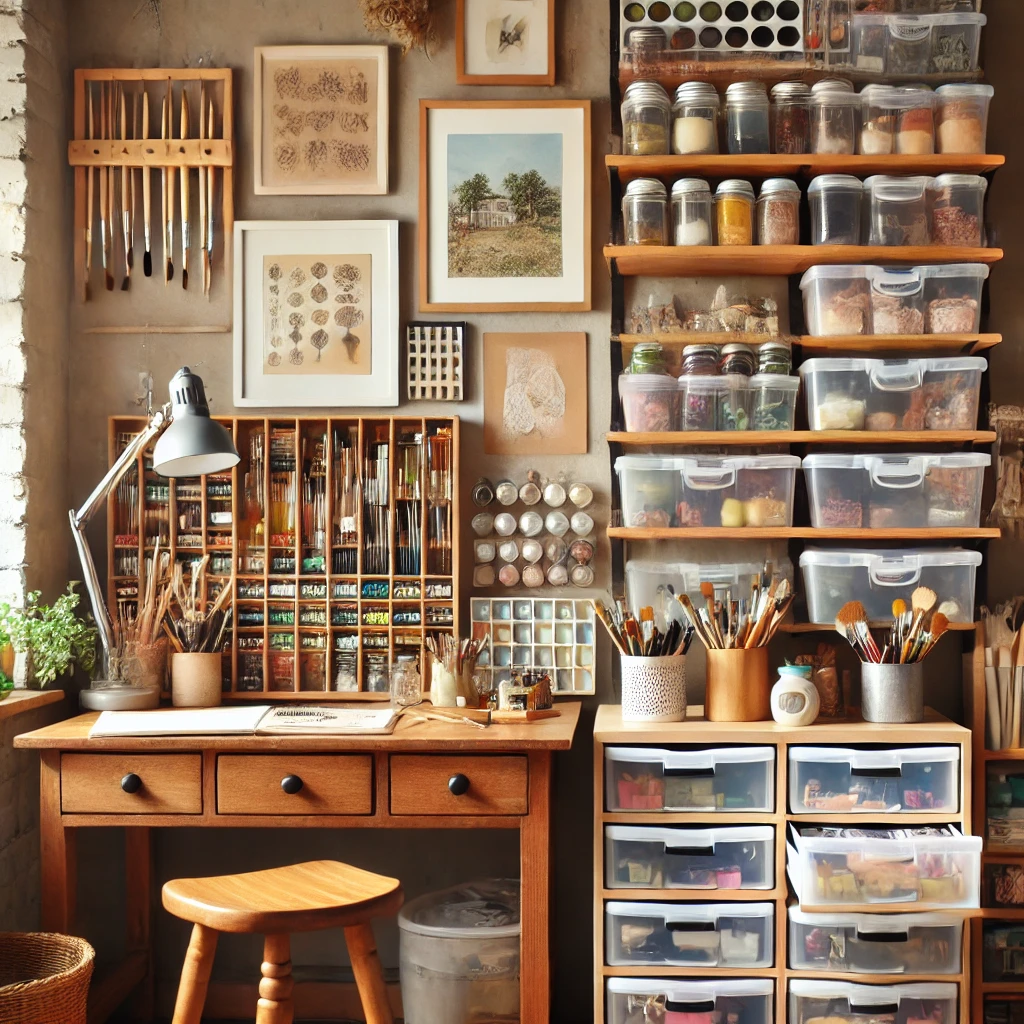
Most storage frustration comes down to the wrong depth or size. Check these before you buy.
| Item | Look for | Avoid |
|---|---|---|
| Paint tube drawers | 2-3 in deep | deep bins that bury tubes |
| Pastel drawers | 1-2 in deep | stacking sticks |
| Paper drawers | 2 in larger than paper | bending sheets to fit |
| Canvas rack slots | 1 in wider than canvas | leaning on the face |
| Shelf over desk | 12-16 in above surface | reaching over wet work |
10 Art Studio Storage Solutions (and What Each Is Best For)
Here’s the whole list at a glance, then the details.
1. Rolling Carts (Best for Your Daily Kit)
A cart holds what you use every session and rolls to wherever you’re working. Load the top with your current project and the drawers with tubes, pens and tape.

Compare options in Best Rolling Art Carts.
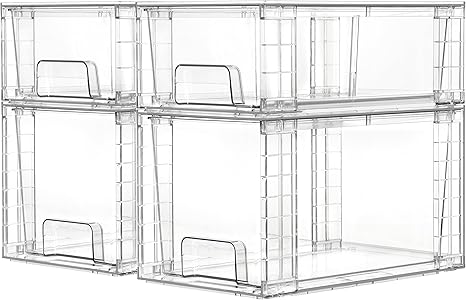
2. Stackable Clear Drawers (Best for Small Supplies You Need to Spot)
Clear drawers let you see the contents without opening anything. They’re perfect for washi tape, erasers, palette knives and spare nibs. Keep them out of direct sun if they hold colored pencils or markers.
3. Pegboard Wall (Best for Tools)

Scissors, rulers, tape, palette knives and brush holders all belong on a pegboard. It frees your desk completely and shows you at a glance when something is missing.

4. Clear Acrylic Organizers (Best for Pens and Small Palettes)
Acrylic drawers sit on the desk and hold fineliners, small watercolor palettes and pencil leads. Store alcohol markers lying flat in them so both tips stay inked.

5. Floating Shelves (Best for Jars, Books and Sketchbooks)
Shelves turn supplies into display. Keep sketchbooks upright and spine-down like books, and group jars by color. Hang the first shelf about 12-16 inches above your desk so you aren’t reaching over wet work.

6. Multi-Drawer Cabinets (Best for Tubes and Pastels)
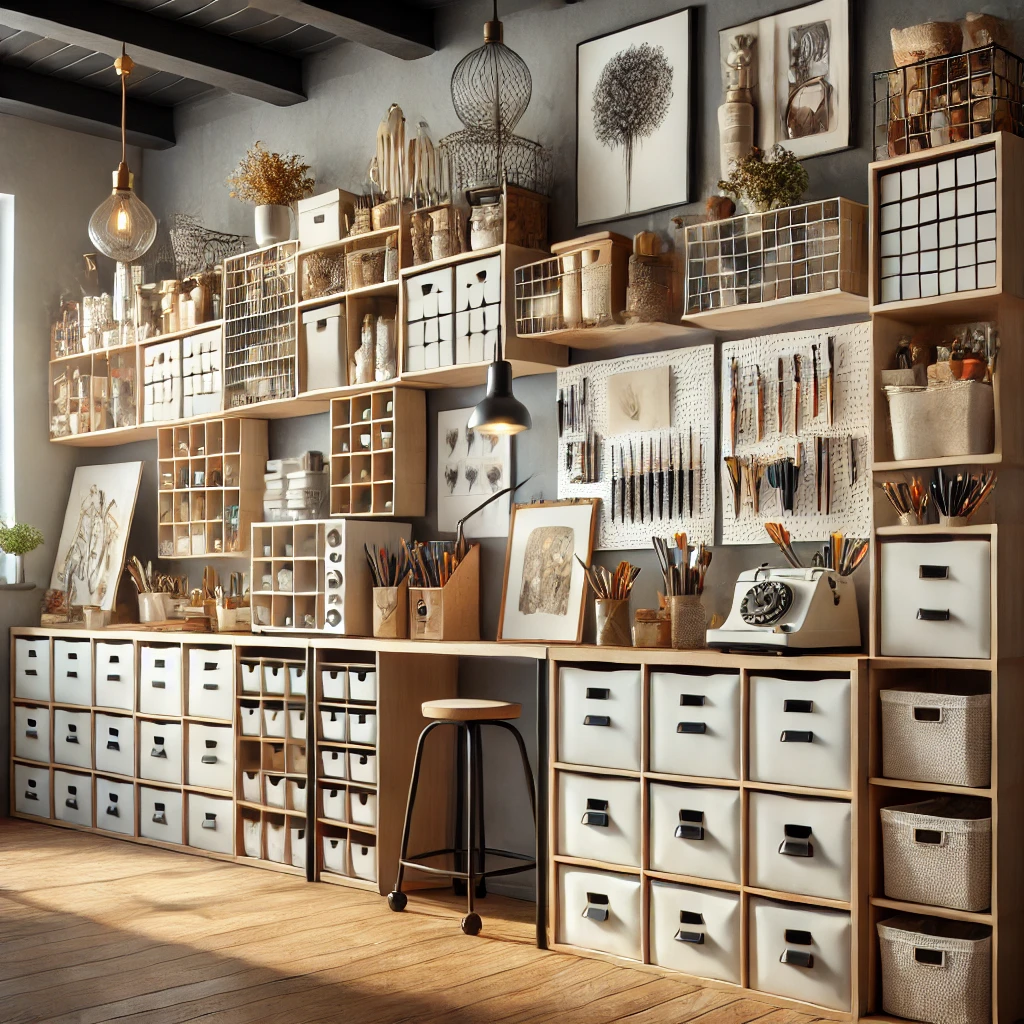
Shallow drawers are the secret here. Paint tubes lie in a single layer, pastels stay in their trays, and nothing gets buried.

See the top picks by drawer depth in Best Drawer Units for Artists.
7. Labeled Bins (Best for Backstock)
Spare canvas panels, refill tubes, clay and craft extras go into labeled bins on a high shelf or in a closet. Label the short end so you can read it when the bins are stacked.

8. Wall-Mounted Racks (Best for Canvases, Boards and Drying)
Canvases and drawing boards should stand upright, face to face or back to back, never leaning on a painted surface. A slim wall rack also doubles as a drying spot for wet work.

More on paper, canvas and sketchbook care in How to Store Canvas, Paper and Sketchbooks.
9. Rotating Desk Organizers (Best for Pencils You Grab Constantly)
A spinning holder keeps your ten most-used pencils and brushes within one turn. Store brushes bristles up once they’re fully dry, and lay them flat while they dry so water doesn’t run into the ferrule.

10. Storage Ottomans (Best for Hidden Bulk)
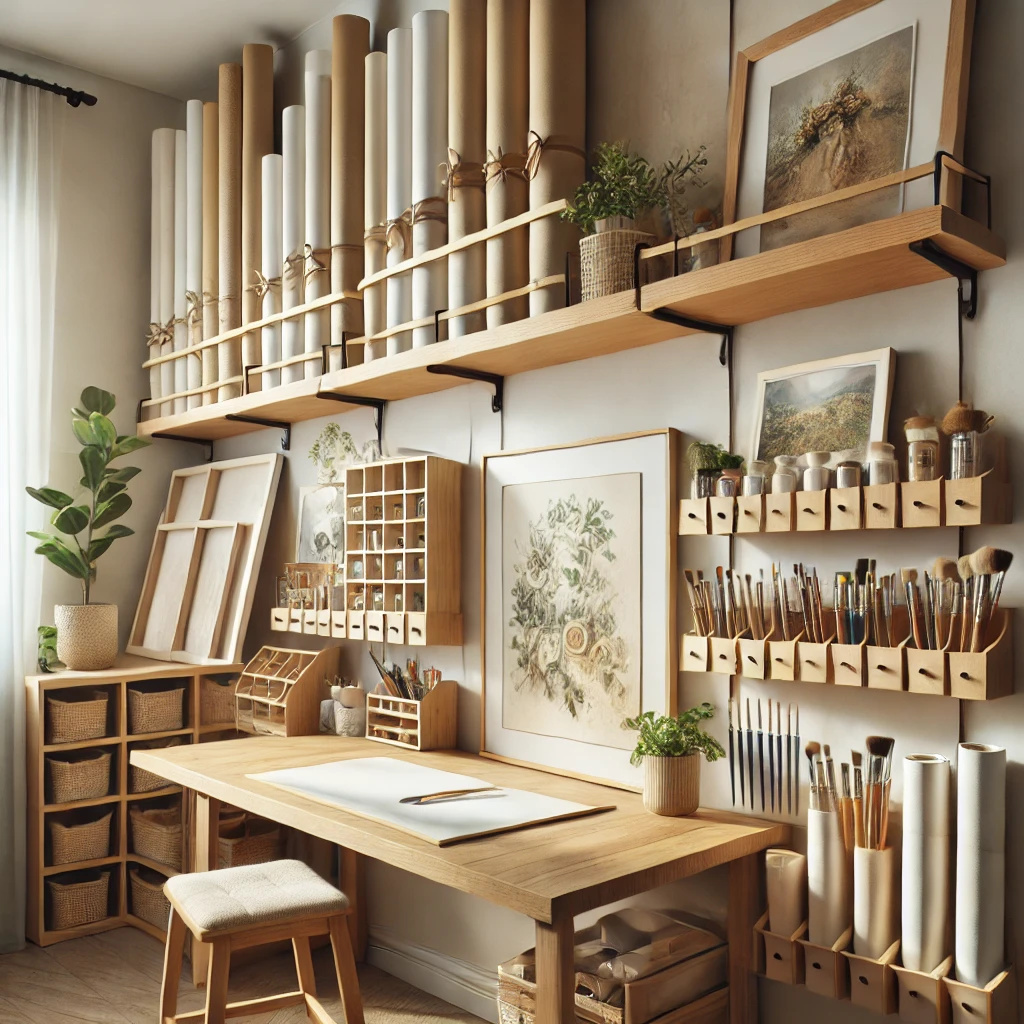
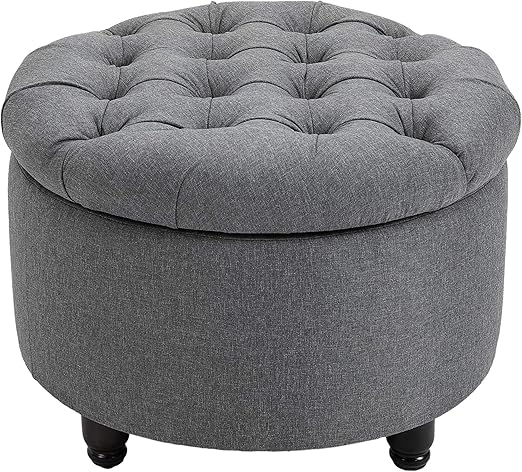
An ottoman hides fabric, yarn, sketchbook backstock or rolls of paper towels, and gives a visiting friend somewhere to sit. Keep messy wet supplies out of it.
Arrange It by Reach
Once everything has a home, place it by how often you use it. This one step saves more time than any new container.
Investment Pieces Worth It
If your supplies have outgrown bins and carts, these are the upgrades that last for decades. Pick the one that solves your biggest problem.
Bisley 6-Drawer Steel MultiDrawer Cabinet (around $245). Classic design-studio steel drawers with shallow-ish drawers that suit tubes, pastels and smaller paper. Over five years of use, that’s about $49 a year. Worth it if you want one tidy unit that looks good in any room. Skip it if your paper is larger than A4.
AdirOffice Flat File Cabinet, 5-Drawer (around $735). Holds sheets up to about 29×40 completely flat. Worth it if you work on full sheets of watercolor or printmaking paper and are tired of curled corners. Skip it if you mostly use sketchbooks and pads.
Sauder Craft and Sewing Armoire, Glacier White (around $420). Hides a whole studio behind two doors, which is perfect when your studio is also a living room or guest room. Worth it if you want closed storage that closes up at night. Skip it if your supplies need a lot of flat file space.
7 Elements 6-Drawer Beechwood Art Supply Storage Box. A wood tabletop chest with shallow drawers, lovely for pastels, pencils and small tubes. Worth it if you want something pretty enough to leave on the desk. Skip it if you need large-format storage.
Art Studio Storage FAQ
What’s the best way to store paper long term? Flat, in acid-free folders or a flat file, in a room around 40-50% humidity and out of direct sun.
Should canvases be stored flat or upright? Upright, face to face or back to back, with nothing pressing on the painted surface.
How deep should drawers be for paint tubes? About 2-3 inches, so the tubes lie in one layer and you can see every color.
Where should I keep solvents? In a closed metal cabinet, away from heat sources and out of reach of kids and pets, in a ventilated room.
The Takeaway
Good storage starts with the supply, not the shelf. Check what each material needs, choose the solution that meets it, and then arrange everything by how often you reach for it.
Which supply is giving you the most trouble right now: paper, paint or pastels? Tell me in the comments, and save this pin for your next studio reset.
Keep going: