This post contains affiliate links. If you buy through them, I may earn a small commission at no extra cost to you.
You own 40 tubes of paint and still buy a duplicate burnt sienna because you couldn’t find the first one. Sound familiar?
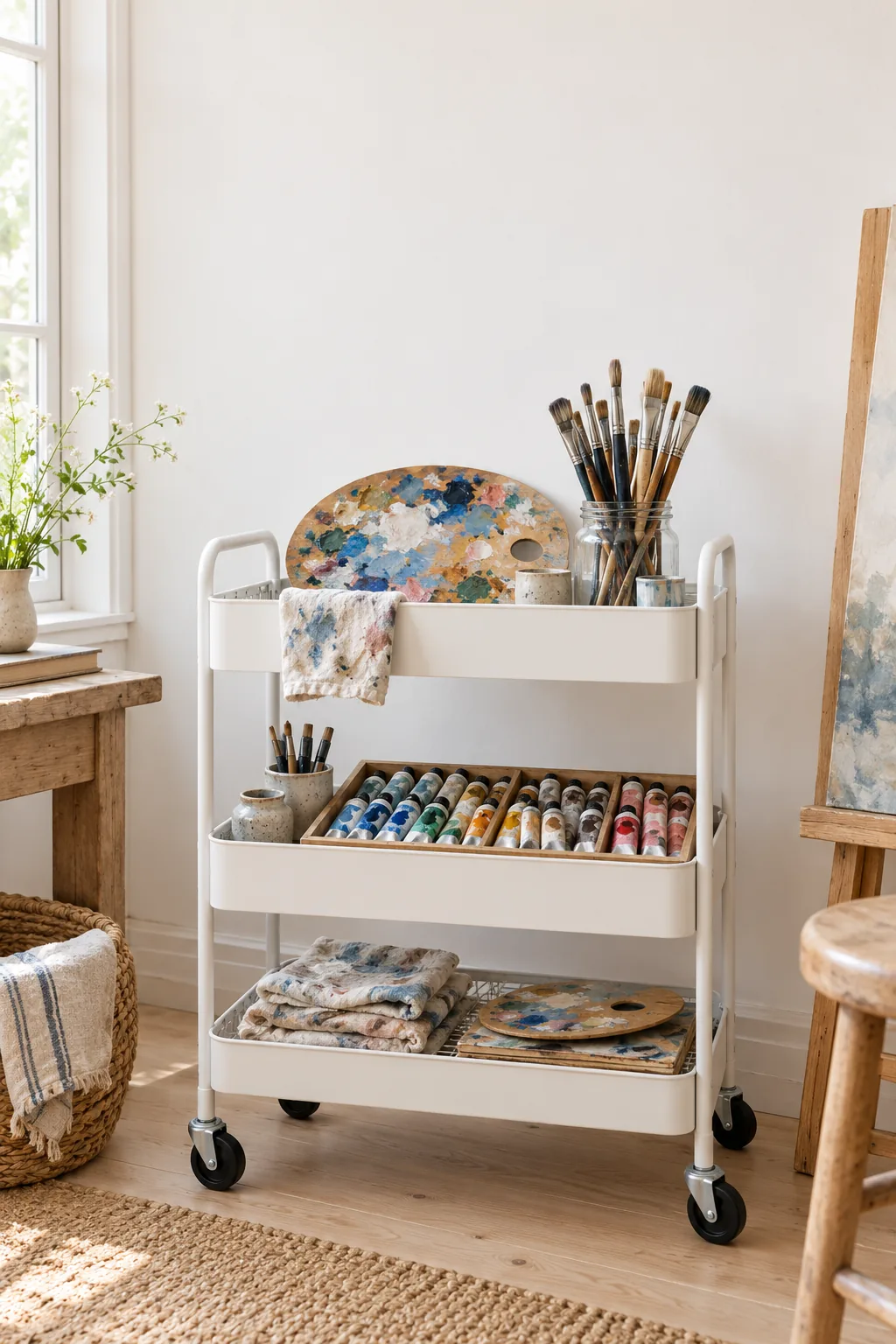
Here’s what I believe: paint should be stored so you can see every color without moving another one. If you have to dig, stack or unscrew a lid to know what you own, the system is costing you paint and money. Single layers, labels facing up, and storage matched to the medium. That’s the whole philosophy, and the 10 ideas below put it to work.
If you only do one thing: lay your tubes flat in a drawer 2 to 3 inches deep, labels up, sorted warm to cool. You’ll see your whole collection in one glance.
First, Store Each Medium the Way It Wants
Before containers, a few medium-specific rules. These protect your paint, which matters more than how pretty the shelf looks.
Acrylic Tubes and Bottles
- Tubes: store them flat or cap-up. Cap-down storage is a popular tip, but it lets binder and paint settle into the threads, and caps glue themselves shut.
- Bottles: store upright with caps tightly closed. Wipe the threads before closing so the lid comes off next time.
- Temperature: keep acrylics in a room that stays roughly 60 to 75 degrees. Freezing ruins acrylic paint, so skip the garage in winter.
Oil Paints and Solvents
- Keep oils away from heat: radiators, heating vents and sunny windowsills.
- Store solvents and mediums in a closed cabinet or metal container in a ventilated spot, never in a closed drawer next to your desk where fumes collect.
- Oily rags can self-heat as linseed oil dries. Keep used rags in a sealed metal can, or lay them flat outdoors to dry before tossing.
Watercolor Pans and Palettes
- Let your palette dry open for a few hours (overnight is better) before you close it. Closing a wet palette invites mold.
- Store palettes flat so pans don’t shift or pop out.
Gouache
- Traditional gouache rewets, so you can let leftover paint dry in the palette and reactivate it with a damp brush later.
- Acrylic gouache does not rewet. Squeeze out only what you’ll use in one session.
10 Genius Ways to Organize Your Paints
1. Shallow Drawers for Tubes
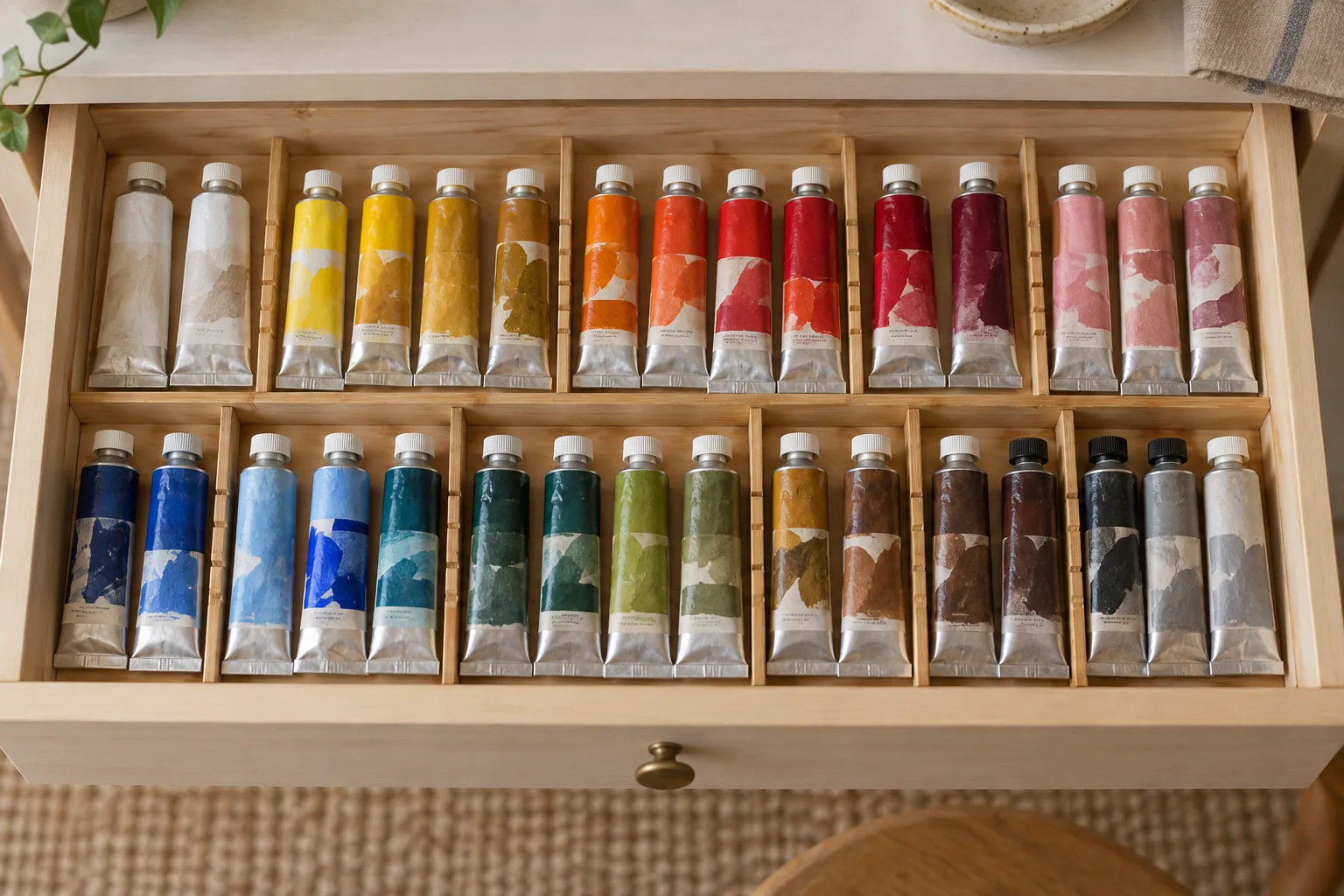
Shallow drawers are the best home for tubes, period. Aim for 2 to 3 inches of interior depth. Every tube lies in one layer, and the label is right there when you open the drawer. Deeper than about 4 inches and tubes start stacking, which is where colors go to hide.

For a desktop version, a wood artist’s chest keeps a curated working set within arm’s reach.
Natural Birch Finish, Foam-Lined Drawers for Brushes, Removable Dividers, Sturdy Wood Construction, Stackable Solution

Want the full drawer depth chart, supply by supply? See Best Drawer Units for Artists.
2. Tiered Risers for Bottled Paint
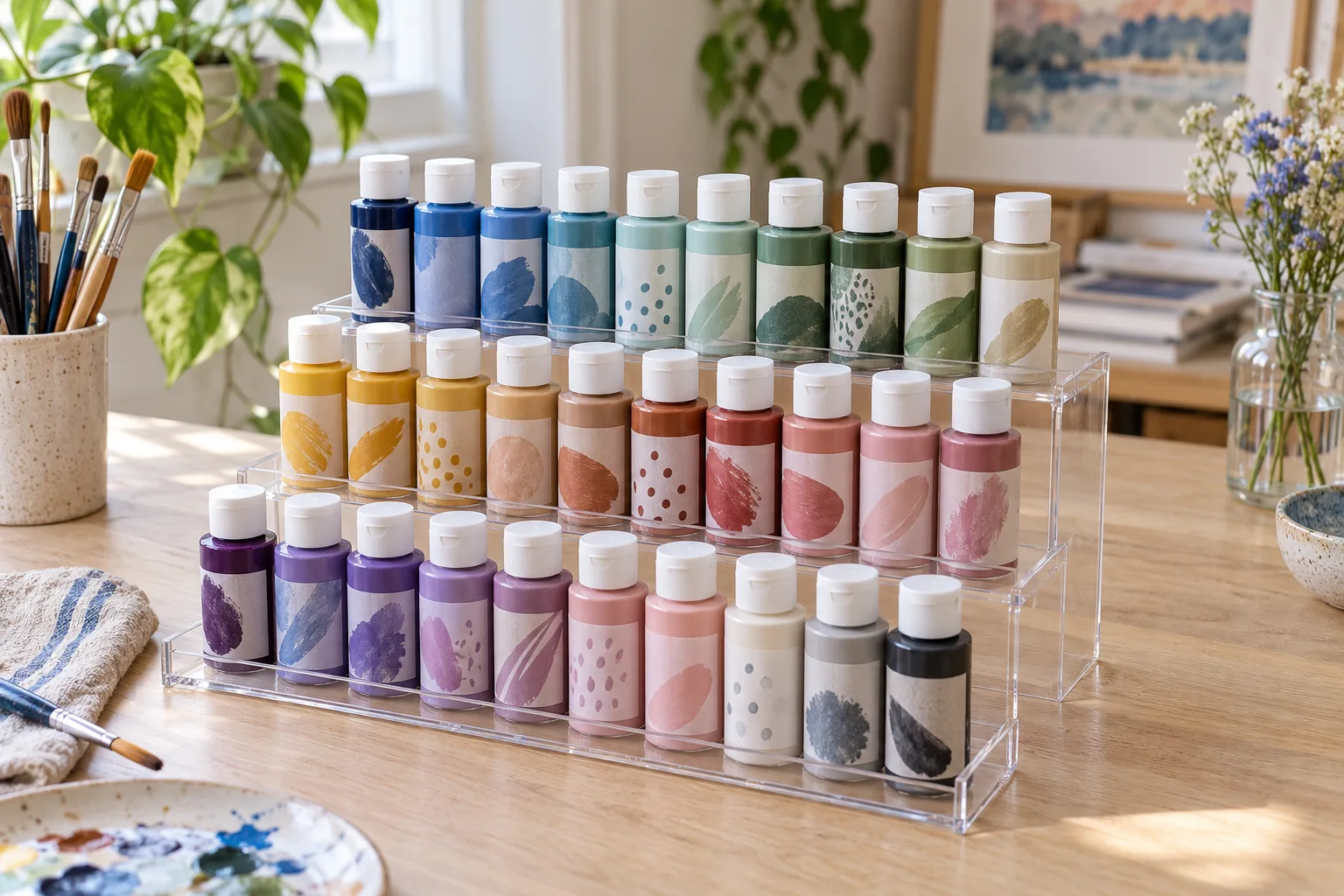
Acrylic craft bottles, inks and gouache jars line up beautifully on a tiered riser, the kind made for spices. Each row sits higher than the one in front, so every label shows. A 3-tier riser about 15 inches wide holds roughly 30 two-ounce bottles.
Sort left to right by color, and keep the riser out of direct sun so colors and plastic bottles don’t degrade.
3. Wall-Mounted Paint Racks
Walls are free storage. A shallow clear rack holds bottles at eye level and clears your desk completely. Racks sold for nail polish are the perfect depth for 2 oz paint bottles, often at a lower price than “art” versions.
6 Pack Organizer with Unique Wavy Lines,Nail Supplies for Techs,Great Display Salons Retailers

Mount it so the top shelf sits no higher than your eye line. Reaching overhead all session is hard on your shoulders.
4. See-Through or Labeled Drawers
If you can’t see inside a drawer, you’ll forget what’s in it. Clear drawers solve that instantly. For wood drawers, a simple label on each front (“Warm Tubes”, “Earths”, “Metallics”) does the same job.
A 10-drawer box gives you room to separate by medium and by color family.
Large Capacity Multi-Function Beech-Wood Pencil Box with Drawer & Compartments for Organizing Pastels, Pencils, Pens, Markers, Brushes & Stamp

5. A Rolling Paint Cart
A cart brings your paints to wherever you’re working, then rolls out of the way. This layout works for nearly every painter:
- Top tier: this week’s paints, your palette, brush jar.
- Middle tier: mediums, water cups, palette knives.
- Bottom tier: backup tubes, rags, spare palettes.
Heavy Duty Utility Cart with Lockable Wheels, Hanging Cups, Hooks, Mesh Rolling Storage Cart Craft Cart Organizer, Lightweight and Sturdy, White
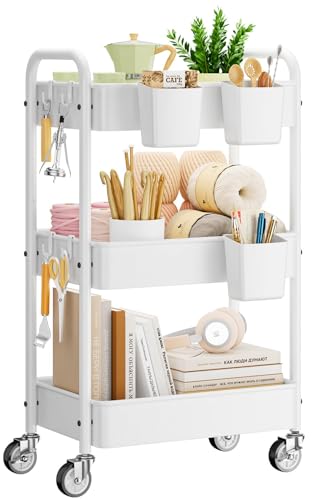
Keep the cart within one step of your easel or desk. If you have to walk to it, you’ll stop putting things back.
6. Drawer Inserts and Dividers
Dividers keep tubes in neat rows instead of a jumble. Adjustable bamboo dividers let you resize sections as your collection changes.

Small trays work well for loose pans, half-used tubes and palette knives.
For Bedroom Nightstand Drawer Dresser Bathroom Kitchen Drawer, Frosted

7. Vintage Trays and Shadow Boxes
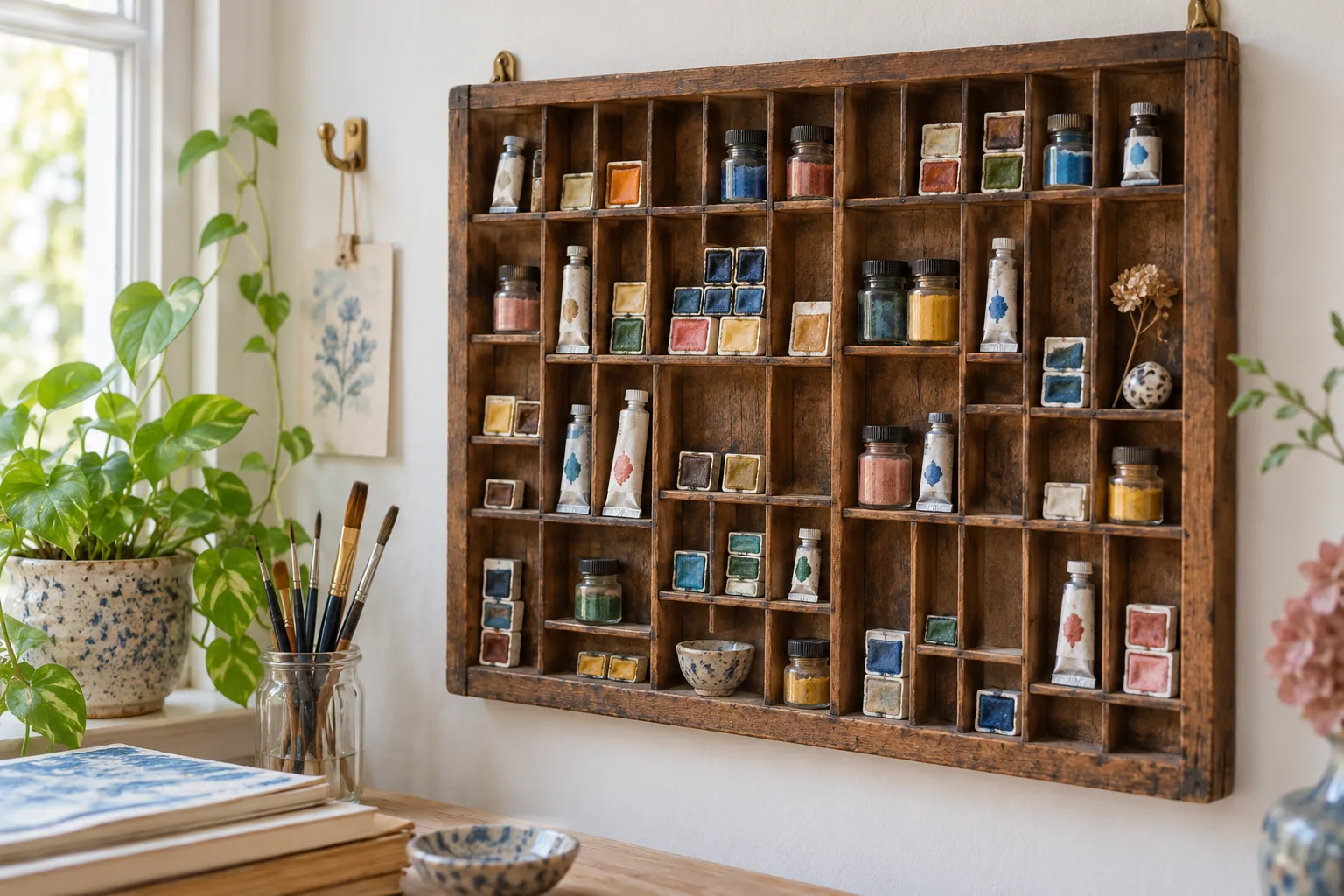
A wooden letterpress tray or shallow shadow box turns your paint collection into wall art. The small compartments are made for watercolor pans, small jars and mini tubes. Look for trays with compartments about 1 to 1.5 inches deep. Thrift stores and flea markets are full of them, and they cost far less than new organizers.
Hang it out of direct sunlight, and keep only paints you use often in it. This is display storage; your backup stock lives in drawers.
8. Desktop Paint Caddies
A caddy keeps your active paints and brushes together in one spot you can lift and carry. It’s ideal if you paint at the kitchen table and need to clear up in two minutes.
6 Support Bead Options. Thick, Durable, Crystal-Clear Acrylic with Diamond-Polish Finish. Paint Bottle Organizer & Painting Storage. SB

9. Color-Coded Storage
Sort by color family instead of brand. Most painters reach for a color first and think about the brand later. Five groups cover almost everything:
- Warms (reds, oranges, yellows)
- Cools (blues, greens, violets)
- Earths (ochres, siennas, umbers)
- Neutrals (whites, blacks, grays)
- Metallics and specialty colors
Inside each group, arrange light to dark. When a gap appears, you know exactly what to restock.
10. Magnetic Storage
A magnetic bar on the wall holds palette knives, small metal tins and, with one trick, paint tubes. Most tubes are aluminum and won’t stick on their own, so glue a small round magnet to each cap.
Knife Holder, Knife Strip, Magnetic Tool Organizer, Art Supply Organizer & Home Organizer

Mount it above your work surface at about shoulder height for easy reach.
Investment Pieces Worth It
Everything above can work on a small budget. If you paint several times a week and you’re ready to buy furniture and supplies that last for years, these are the upgrades I’d consider.
Cost-per-use check: a $158 cart used 3 times a week for 4 years is about 25 cents a session.
MEEDEN Rolling Art Supply Cart (Solid Beech)
This 3-tier solid beech cart works like a painter’s taboret: steady, warm-looking, and the right height to sit beside an easel. It costs around $158, compared with about $35 for a metal utility cart.
MEEDEN Rolling Art Supply Cart, Solid Beech
Worth it for: easel painters who want a cart that looks like furniture. Skip if: you paint at a desk; a drawer unit beside your chair is more useful.
Bisley Steel MultiDrawer Cabinet
Shallow steel drawers that are close to ideal for tubes, around $245 for the 6-drawer and $275 for the 8-drawer. Steel handles the weight of a full oil collection without sagging.
Worth it for: oil and acrylic painters with large tube collections. Skip if: you work mostly with bottled paint; it needs taller storage.
A Premium Watercolor Set Upgrade
A professional pan set is a paint upgrade and a storage upgrade in one: the colors live in a metal box that closes flat and stacks neatly.
- Schmincke Horadam 24 Half Pan Metal Box, around $157
- Winsor & Newton Professional Complete Travel Tin, around $143
Professional watercolors are more pigment-dense than student grades, so a pan goes further. Painting twice a week for 2 years, $157 works out to about $1.50 a session.
Worth it for: watercolorists who paint regularly and feel limited by student paint. Skip if: you’re still deciding whether watercolor is your medium. A student set will teach you the basics just as well, and you can upgrade one color at a time.
Habits That Keep Paint Organized
- Put caps back on immediately and wipe the threads first.
- Return paints to their home at the end of every session. It takes 2 minutes.
- Don’t overcrowd drawers. If tubes start stacking, split the category.
- Keep mediums next to the paints they go with.
- Audit every 2 to 3 months: toss dried-out paint, note what’s running low.
The Takeaway
Organized paint means you can see every color without moving another one. Lay tubes flat in shallow drawers, keep bottles upright on risers or wall racks, and store each medium the way it wants to be stored. Start with one idea from this list this week, and build from there.
Which paint do you always lose track of? Tell me in the comments.
Save this to your art studio board for the next time your paint drawer gets out of hand.
[…] 10 Genius Ways to Organize Your Paints […]