This post contains affiliate links. If you buy through them, I may earn a small commission at no extra cost to you.
Ever finished a painting with your palette balanced on your knee and your water jar on the floor? Your table wasn’t too messy. It was too small for the work you actually do.
Here’s my take, and I’ll say it plainly: the right worktable is sized to your biggest piece of paper, plus a landing zone for everything that piece needs. Room size matters less than you think. A 30-inch-deep table in a tiny room beats a pretty 20-inch-deep desk in a big one every single time.
So before the ten ideas, grab a tape measure. You’ll know exactly which setup fits you by the end of the next section.
If you only do one thing: measure your largest paper or canvas, add 8 to 12 inches on every side, and treat that as your minimum tabletop. Then pick the style you love from the ideas below.
The Paper-to-Table Size Chart
This is the chart I wish every furniture listing came with. Find the largest size you work on, then look across.
| Your largest work | Minimum tabletop | Comfortable tabletop |
|---|---|---|
| 9×12 sketchbook | 24×36 in | 30×48 in |
| 11×14 or 12×16 pad | 30×40 in | 30×60 in |
| 15×22 (half sheet watercolor) | 30×48 in | 36×60 in |
| 18×24 drawing pad | 30×48 in | 36×60 in |
| 22×30 (full sheet watercolor) | 36×48 in | 36×72 in |
| 24×36 canvas, flat | 36×60 in | 42×72 in |
Two numbers matter most here:
- Depth. Thirty inches is the floor for real art work. Go to 36 inches if you work on large paper, because your reach to the far edge is what tires you out.
- Landing zone. Your palette, water, rags and the tool in your hand all need a spot that isn’t on the art. Plan for about 12×18 inches of clear space on your dominant-hand side.
What Makes a Great Worktable
A worktable earns its place when it does four things well.
- It doesn’t wobble. Lean on one corner and press. If it moves, your ruled lines will too. Cross-bracing, a steel frame or thick solid legs fix this.
- It wipes clean. Paint, ink, glue and charcoal dust will land on it. Sealed wood, laminate, metal and glass all clean up with a damp cloth.
- It’s the right height for how you work. Seated work wants about 28-30 inches. Standing work wants a top 2 to 4 inches below your bent elbow, which lands around 34-38 inches for most people. Counter height is 36 inches; bar height is about 42.
- It has storage underneath or beside it. A shelf, drawers or a cart parked next to it keeps the top clear for the work.
10 Art Studio Worktable Ideas
1. The Big Craft Table (48 to 60 Inches and Up)
The classic. One long, flat surface where a project can stay out overnight. If you paint, cut, collage and sketch, a long table lets each activity claim its own end.
Look for 60 inches of width or more and at least 30 inches of depth. A long computer desk works beautifully here because it’s built for exactly this footprint.
2 Person Desk, Double Long Desk, Workstaion for Home Office

Industrial Home Office Computer Desk, Simple Long Writing Study Table Business Furniture (Light Brown/Black)

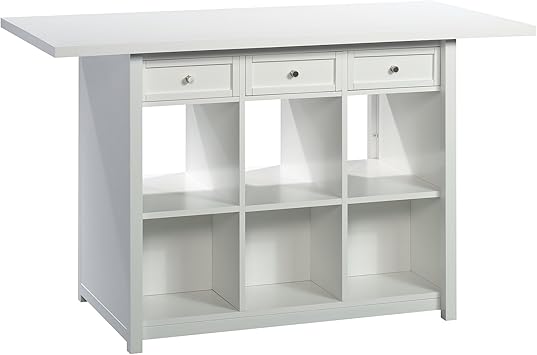
2. The Counter-Height Island
Standing to work changes everything about large pieces. You can step back, see the whole sheet, and move your arm from the shoulder for long, loose strokes. Counter height (about 36 inches) also makes overhead filming easy if you share process videos.
Pair it with a drafting stool or chair with a foot ring for the times you want to perch.
The Sauder Craft Pro Series Work Table is built for exactly this, with storage underneath.
Do the elbow check: stand relaxed, bend your elbow to 90 degrees, and measure from the floor to the underside of your forearm. Subtract 2 to 4 inches. That’s your ideal standing worktable height.
3. The Folding Table
For a studio that shares a room with a guest bed or a dining table, folding tables are the quiet heroes. They come out for a big project and disappear in under a minute.
The Cosco is small and handy for a side station. The Flash Furniture 5-foot table folds in half and gives you a full-size work surface.


4. The Modular Build (Top Across Two Drawer Units)
This is my favorite budget idea because you get storage and surface in one move. Set two drawer units or cube shelves about 40 to 48 inches apart, then lay a solid top across them. A 1-inch-thick tabletop or a sanded, sealed plywood sheet works well.
Check the math before you buy: drawer unit height plus top thickness should land around 28-30 inches for sitting, or around 36 for standing.
Want the best drawer units to build with? See my picks in Best Drawer Units for Artists.
5. The Industrial Workbench
Steel frame, butcher block or wood top, sometimes a pegboard back. A workbench shrugs off heavy tools, printmaking presses, clamps and resin projects. It also looks great in a studio with a vintage or loft feel.
Table w/Solid Wood Top, 1000 lbs. Weight Capacity Workstation for Garage, Warehouse, Workshop, Granite, 60" W x 24" D x 28.5" to 42" H...

A wood-top bench like the Shain Wood Top Workbench brings the same toughness with a warmer look.
6. The Drop-Leaf Table
Drop-leaf tables give you a small footprint most days and a big surface on project days. They’re perfect for apartments and multi-use rooms. Some craft versions add cabinets underneath, so your supplies live inside the table itself.
7. The Glass-Top Table
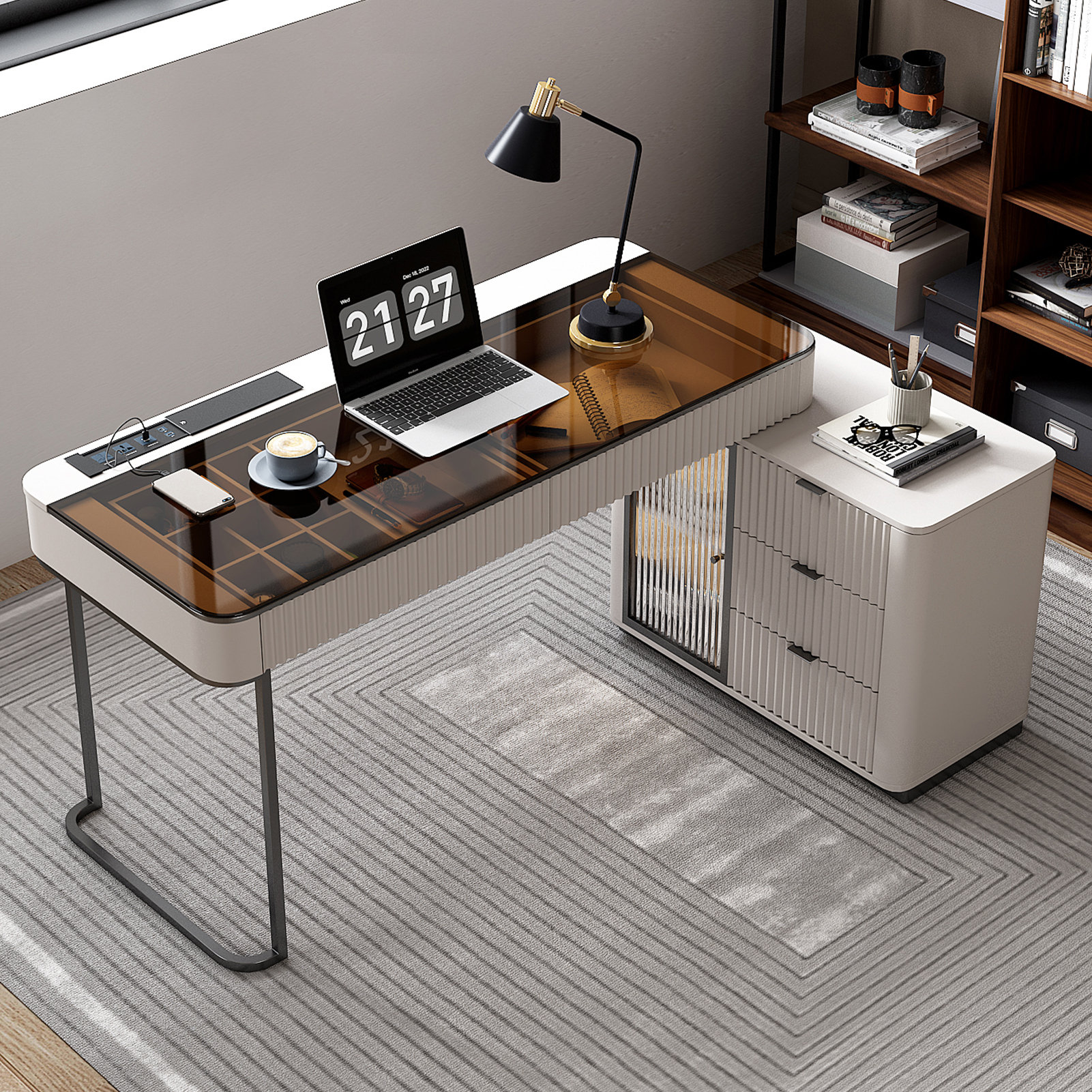
A glass top wipes clean in seconds and won’t stain from ink or acrylic. Slide a light pad underneath and you also get a tracing surface for transferring sketches to watercolor paper.
Home office Desk,L-Shaped Executive Desk,Power Outlet, Glass Top,Very easy to assemble & Reviews | Wayfair
8. The Expandable Project Table
Sewing and cutting tables are secretly perfect for artists. They fold out to a huge surface for layout, collage, bookbinding and matting, then fold back to a narrow console.
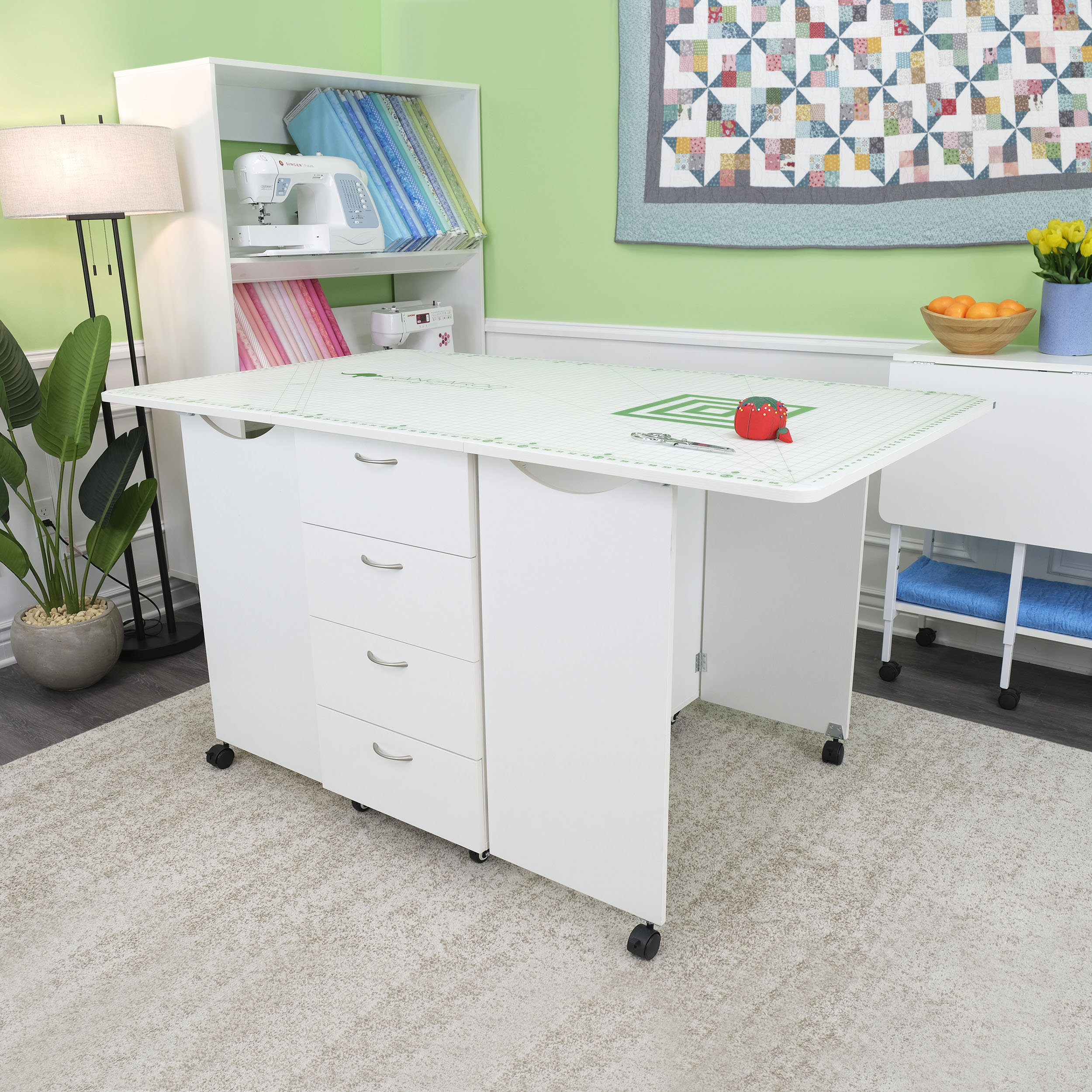
Storage Drawers and Scratchproof Surface, Pure White

9. The Table + Rolling Cart Combo
This is the setup I recommend most often. Keep the table top clear and park a cart beside your dominant hand. Your active supplies ride on the cart; when you switch projects, you swap what’s on the cart, not what’s on the table.
- A drawer cart holds pencils, pens and small tubes.
- An open three-tier cart holds jars, water containers and paper towels.
- A beech wood cart like the MEEDEN Rolling Art Supply Cart (around $158) works like a painter’s taboret and looks lovely doing it.


For more drawers, the Kingrack 12-Drawer Rolling Utility Cart gives every medium its own slot.
10. The Dual-Zone Table
One end wet, one end dry. Keep paint and water on your dominant-hand side so you never reach across a painting to rinse a brush. The other end holds your laptop, tablet or sketchbook.
You need about 60 inches of width for two real zones. A long desk with a standing option lets the digital end rise when you’re editing photos or working on a tablet.
48 24 Inches Electric Height Adjustable, Sit and Stand Up, Computer Office Desk with Splice Board, White Frame/Maple TOP

63 inch Large Office Desk Computer Table Study Writing Desk Workstation for Home Office, Rustic Brown

Choosing a Surface
Each top has a personality. Here’s how they behave in real use.
- Laminate: cheap, smooth, easy to clean. Can chip at the edges. Great for most beginners.
- Butcher block: warm and tough. Seal it with a food-safe or polyurethane finish so paint and water don’t soak in. Expect small dents, which add character.
- Glass: the easiest to clean and great for tracing with a light underneath. Use tempered glass at least 1/4 inch thick, and put a mat down for heavy tools.
- Metal and wood combo: the most durable choice. Steel frames handle weight; the wood top keeps it from feeling cold.
Whatever your surface, a self-healing cutting mat protects it. An 18×24 mat fits most tables; a 24×36 mat covers a full working zone for large paper.
Styling Your Worktable So You Want to Sit Down
A table you love looking at is a table you’ll use. Keep it simple:
- One good lamp clamped to the back edge, with a 5000K bulb and 90+ CRI so your colors look true.
- Glass jars for brushes and pencils, handles down for pencils and bristles up for brushes.
- A pegboard on the wall behind the table for rulers, scissors and tape.
- A clear rectangle in the middle that stays empty between sessions. This is the most important styling choice on the list.
- A small plant at the far corner, away from the water jar.
- Baskets underneath for paper scraps and works in progress.
Three Ready-Made Setups
Clean & Minimal. A 60-inch white or oak table, one lamp, one jar of tools and a single drawer cart. Nothing else on top. Great for drawing, ink and watercolor.
Mixed-Media Powerhouse. An industrial workbench or counter-height work table, a pegboard wall, two carts (one wet, one dry) and a large cutting mat. Built for collage, printmaking and acrylics.
Small-Space Creator. A drop-leaf or folding table, a slim three-tier cart and wall shelves above. Everything folds or rolls away in five minutes.
Investment Pieces Worth It
If your worktable gets used most days, these are worth a look. Here’s who each one suits and who should skip it.
Sauder Craft Pro Series Work Table (around $520). Counter height, a big surface and storage underneath in one piece. Used three times a week for three years, that’s about $1.10 a session. Worth it if you like to stand for big work or crafts. Skip it if you mostly sit for small sketchbook pieces; a standard-height table will serve you better.
Shain Wood Top Workbench. A heavy-duty bench for messy, tool-heavy work. Worth it for printmakers, woodworkers and resin artists. Skip it if your studio doubles as a living room and needs to look soft.
Artograph LightPad 950 LX (around $280). A 24×17 inch light pad that turns any table into a tracing station for transferring sketches to watercolor paper. Worth it if you do a lot of finished work from preliminary drawings. Skip it if you mostly work directly or digitally.
Daylight Artist Studio Lamp (around $275). 95+ CRI and up to 6,000 lux of task light over the table. Worth it if you paint in the evenings and need to trust your colors. Skip it if your table sits by a big north-facing window and you only work in daylight.
The Takeaway
Measure your biggest paper, add a landing zone, and buy the table that fits that number at the right height for how you like to work. Then keep the middle clear and let a cart do the carrying. Your worktable should feel like an invitation every time you walk past it.
Which worktable idea fits your space best: the big craft table, the counter-height island or the table and cart combo? Tell me in the comments, and save this pin for your next studio refresh.
Keep going:
[…] Art Studio Worktable Ideas […]