This post contains affiliate links. If you buy through them, I may earn a small commission at no extra cost to you.
Why do some boho studios look like a warm, sunlit dream while others just look like a lot of stuff?
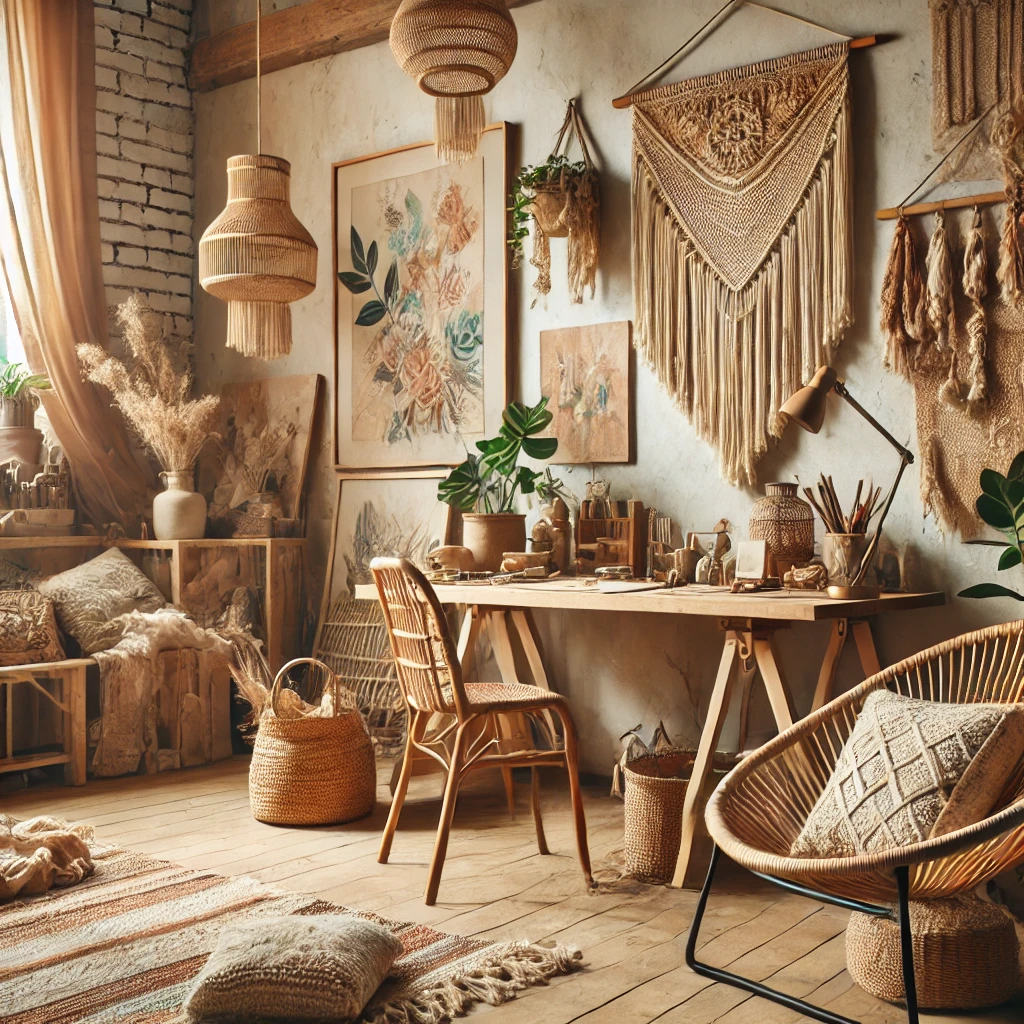
Here’s my take: boho works in an art studio when the base is calm and the layers are earned. Pick a short earthy palette, let natural materials do the heavy lifting, and give every basket and shelf a real job. Do that and you get all the warmth of the look with none of the “where did I put my brushes” chaos.
The good news is that boho is one of the friendliest styles for artists. It loves handmade things, imperfect shapes and visible creativity, which describes most of our studios already.
If you only do one thing: choose two or three earthy main tones plus one accent, then swap any glossy plastic storage in sight for woven baskets or wood boxes. Those two moves alone make a room read boho.
What Makes a Studio Feel Boho
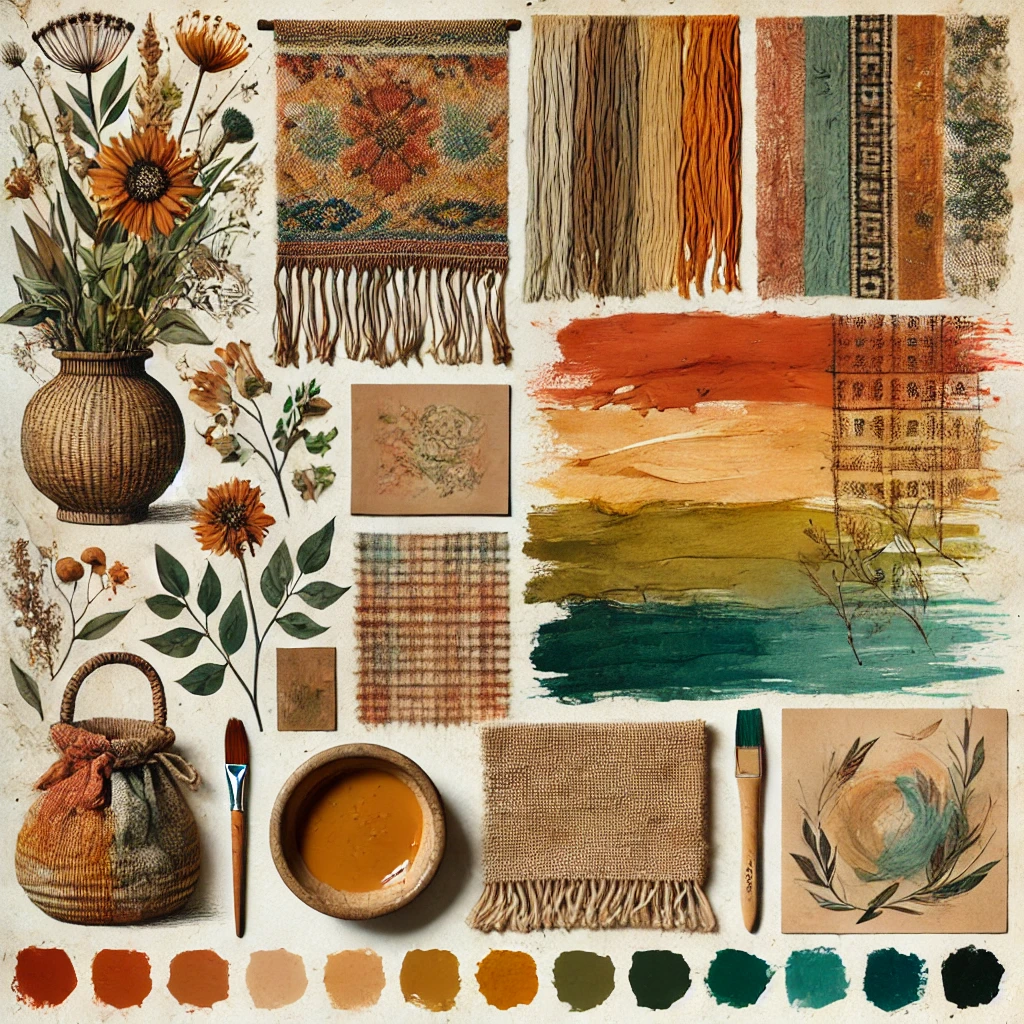
Boho is a mix of a few ingredients used together. Miss one and the room drifts toward rustic, farmhouse or just busy.
- Natural materials: wood, rattan, wicker, linen, jute, clay.
- Earthy colors: terracotta, olive, rust, sand, warm beige.
- Layered textiles: rugs, throws, cushions and woven hangings.
- Organic shapes: rounded mirrors, arches, curvy vases, handmade pottery.
- A collected feel: pieces that look gathered over time, not bought in one cart.
That last point matters most. A boho room should tell people who works there. Your own sketches, a bowl you threw at a pottery class, a thrifted frame: these are the soul of it.
- 3 to 4 main colors
- natural textures
- every basket has a job
- clear desk surface
- plants with breathing room
- a dozen colors
- plastic mixed with rattan
- baskets of random stuff
- decor on the work surface
- plants crammed together
1. Start With an Earthy Palette
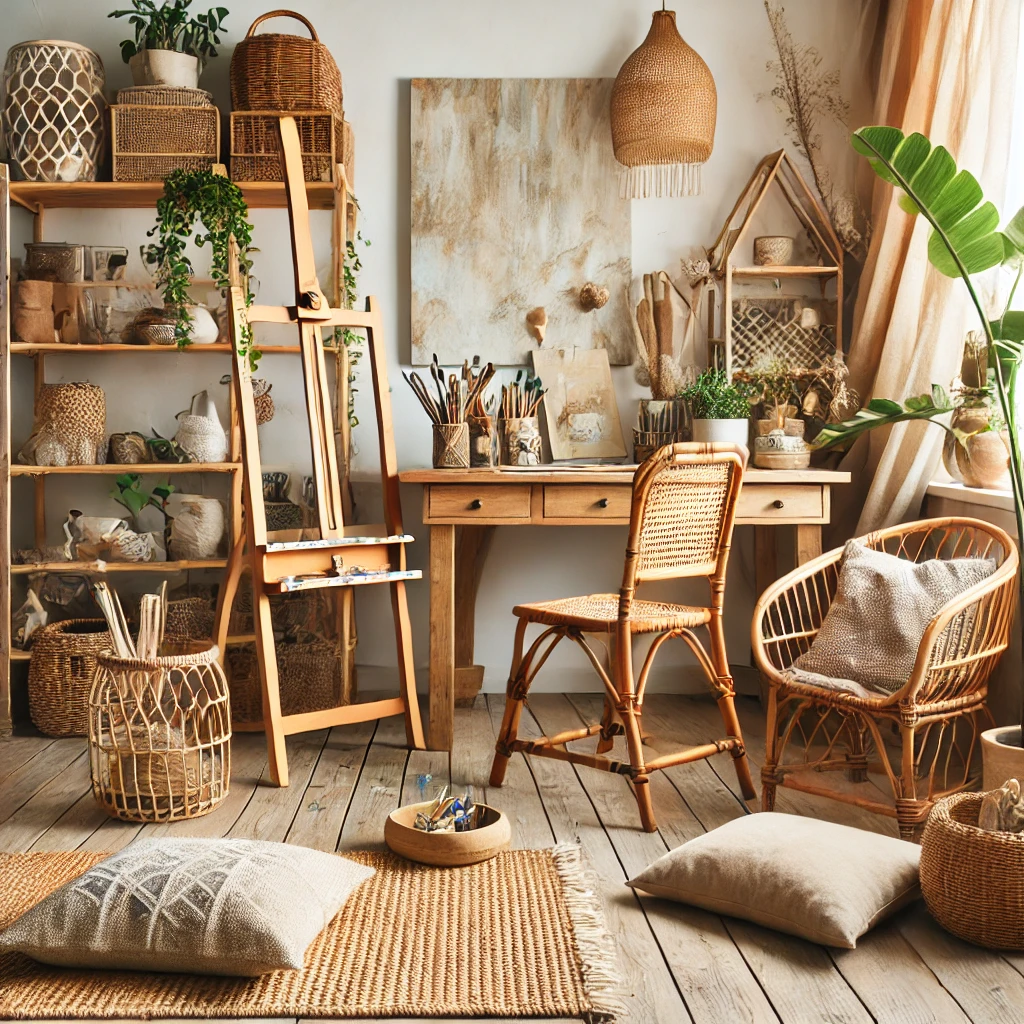
A boho palette needs 2-3 main tones and 1 accent. More than that and the layers start fighting each other.
Here are two palettes that work beautifully in a studio. Hex codes are approximate screen matches, so use them to shop textiles, bins and prints, and test real paint samples on your walls.
Use the top three for a light, desert-sunset studio. Use olive, rust and warm beige with a splash of deep turquoise for a moodier, jewel-toned feel.
Other combinations that work:
| Main tones | Accent | Mood |
|---|---|---|
| Terracotta, sand, soft white | olive | sunny and airy |
| Olive, warm brown, cream | rust | grounded and calm |
| Burnt orange, warm beige | deep turquoise | bold and cheerful |
| Dusty rose, cream, sand | emerald | soft and romantic |
The 60-30-10 rule keeps it calm
Boho gets messy when every color shows up in equal amounts. Give each one a share of the room instead.
For an art studio, I lean the base a little lighter than a living room would. Pale walls bounce more light onto your work and won’t tint how you see color on the page.
Want to go deeper on undertones and harmony? The Ultimate Color Palette Guide for Artists walks through it.
2. Lean on Natural Materials
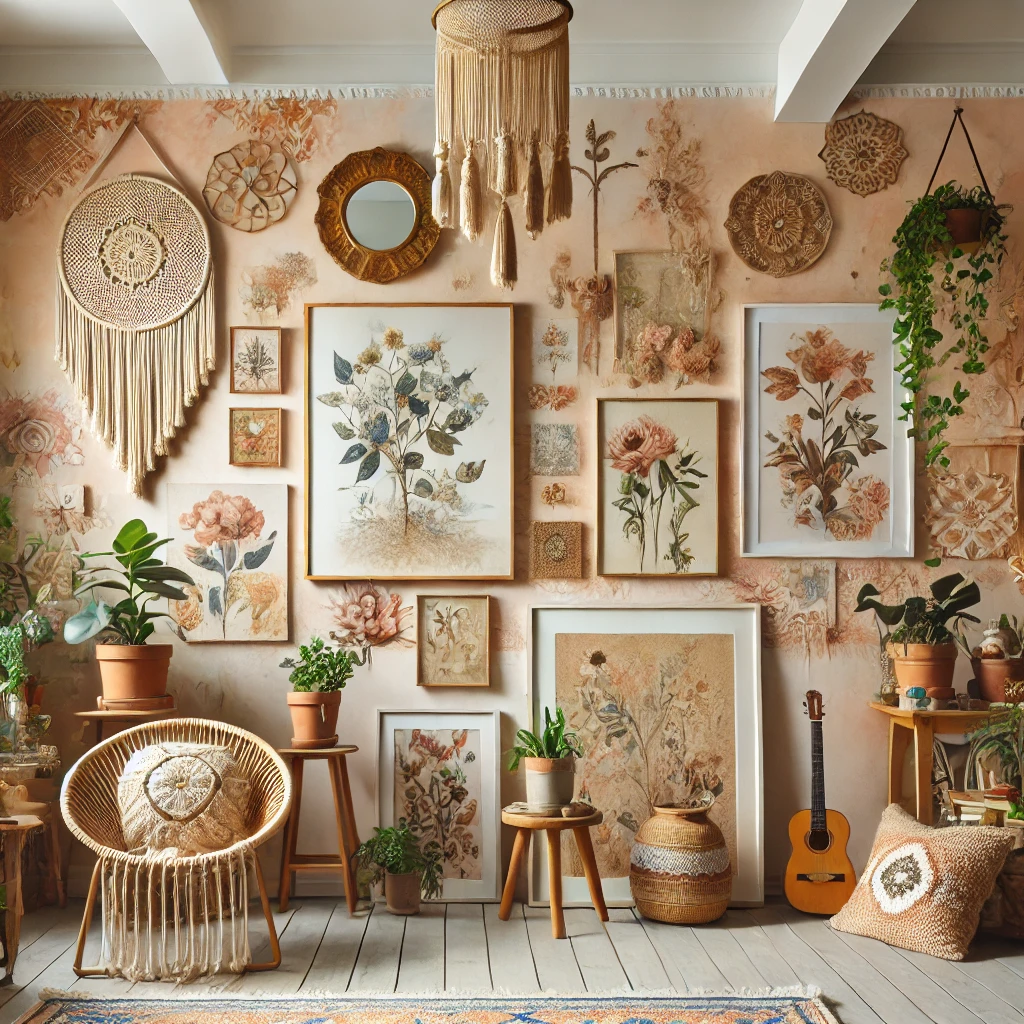
Natural materials are what make boho feel warm instead of themed. Wood, rattan, jute and clay have texture you can see from across the room.
Do: wood desks and shelves, rattan or wicker side tables, linen curtains, jute rugs, ceramic vases and jars.
Skip: glossy plastic, cool gray laminate and chrome. They read cold next to rattan and pull the whole room toward “office.”
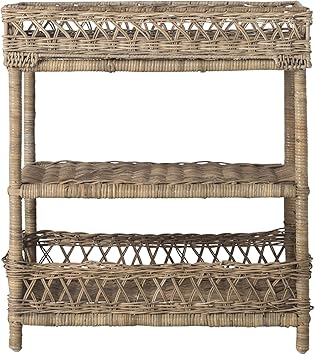
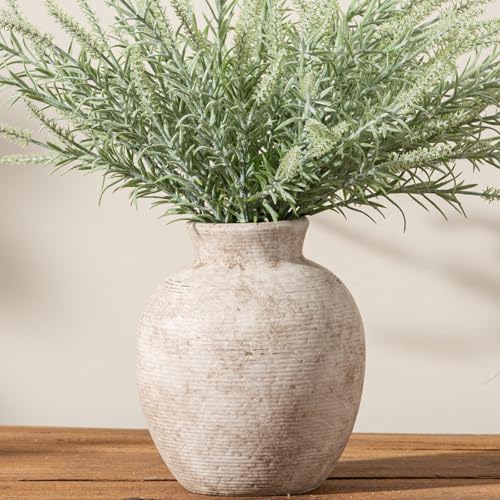
A wicker side table next to your chair, linen panels at the window and one textured ceramic vase are an easy starting trio.
| 
| 
| 
|
$179.41
| $25.95
| $28.99
| $44.99
|
Linen curtains do double duty in a studio. They soften harsh midday sun into an even glow, which is much kinder for judging color than direct beams across your paper.
3. Give the Walls Some Personality
Walls are where boho really shows up. Pick one statement and let it breathe.
- Macrame or a woven tapestry above a reading chair or daybed.
- A gallery wall of your own sketches in mixed wood and rattan frames.
- A painted arch behind your desk in terracotta or sand. All it takes is a quart of paint, a pencil on a string and some painter’s tape.
- A botanical mural if you’re feeling brave. Peel-and-stick wallpaper works well for renters.
Hang art so its center sits around 57 to 60 inches from the floor. That’s roughly eye level and keeps a gallery wall from floating too high.
For a framing project with a natural look, try this DIY natural picture frame.
4. Layer Your Textiles
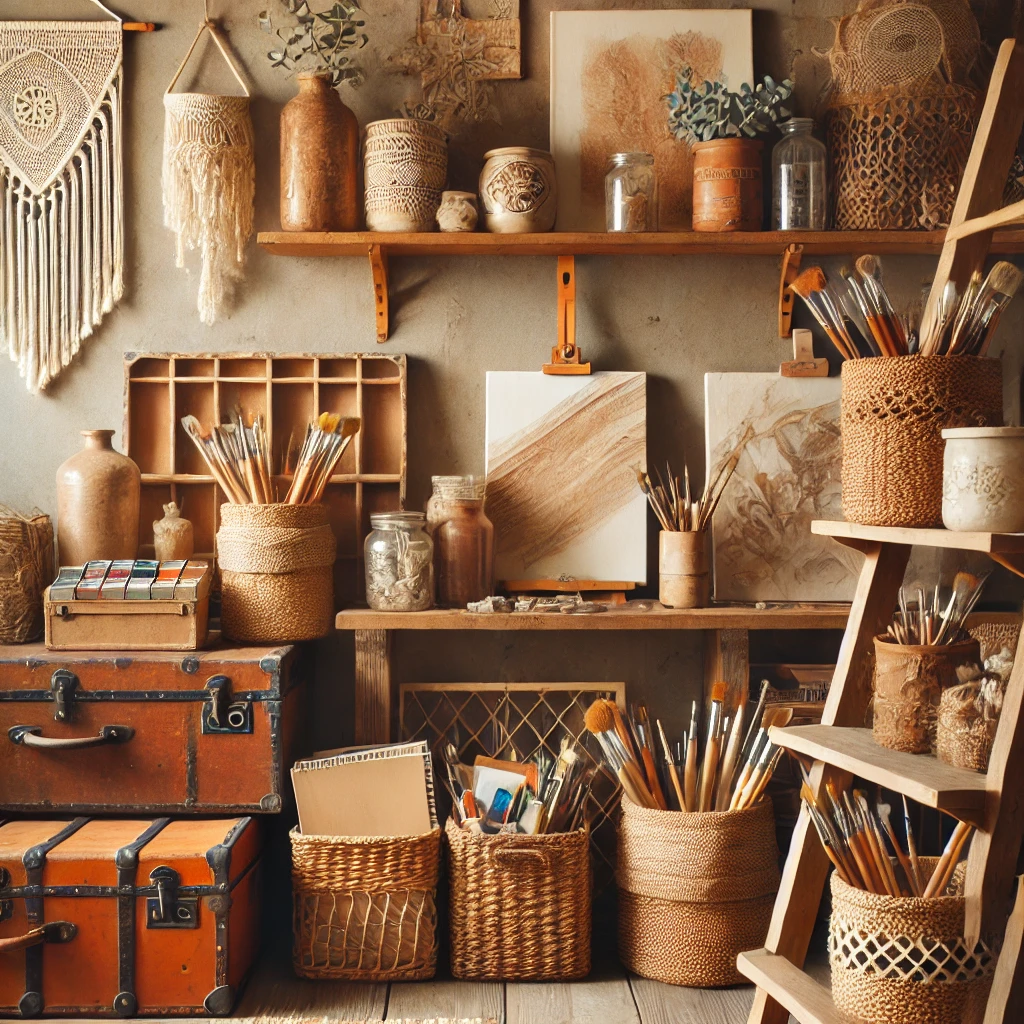
Layering is the heart of boho. Think in threes: something underfoot, something on the seating, something on the wall or window.
- A jute rug with a smaller patterned rug on top.
- A chunky knit or woven throw on your chair.
- Two or three cushions in different textures from the same palette.
Keep fabrics away from wet media. A washable cotton rug under the easel and the pretty wool one by the reading chair is a smart split. Textiles also absorb sound, which makes a studio feel quieter and more focused.
5. Bring In Plants
Nothing says boho like greenery. Pick plants that forgive a busy artist.
| Plant | Light | Water | Why it fits |
|---|---|---|---|
| Snake plant | low to bright | every 2-3 weeks | almost impossible to kill |
| Pothos | low to medium | when top inch is dry | trails beautifully from shelves |
| ZZ plant | low | every 2-3 weeks | glossy and tidy |
| Faux eucalyptus | any | never | great near solvents or no sun |
Hanging planters free up shelf space and pull the eye up, which makes small rooms feel taller. Keep real plants a few feet from your paper storage, since watering and paper don’t mix.

| 
| 
|
$13.13
| $46.99
| $89.99
|
6. Make Storage Part of the Decor
Here’s where boho studios succeed or fail. Storage needs to look good enough to stay out, and it needs to actually hold your supplies.
- Woven baskets for paper pads, fabric scraps and yarn. Label the inside of the rim with a tag so you can find things fast.
- Wood drawers for small tools, pencils and tubes.
- A ladder shelf for sketchbooks and plants.
- Ceramic jars for brushes and pens, bristles up.
- Wooden crates stacked on their sides as open cubbies.
Give every container one category. “Charcoal” is a job. “Misc” is how clutter starts.

| 
| 
|
$27.99
| $359.99
| $34.99
|
For more ideas in this style, see aesthetic art supply storage ideas and how to organize your brushes, pens and tools.
7. Use Soft, Warm Light (Plus One Honest Work Light)
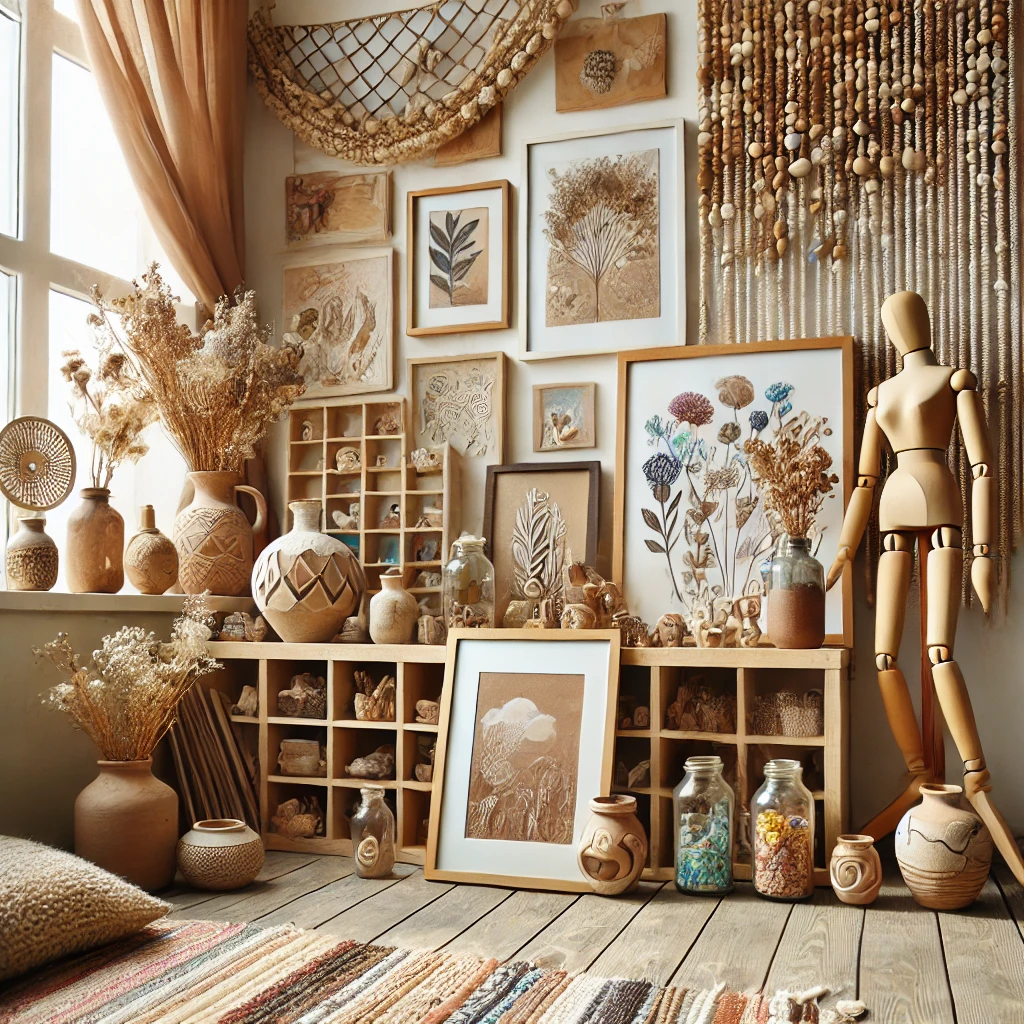
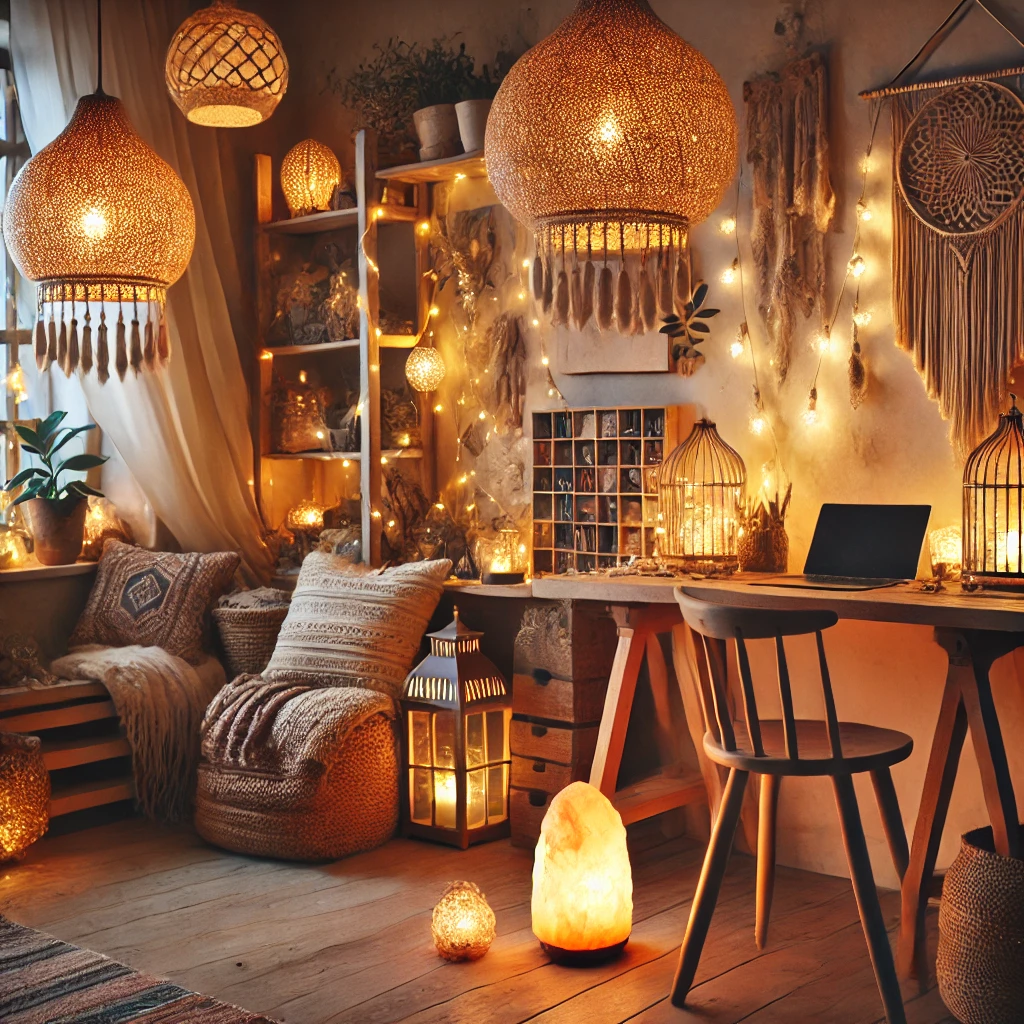
Boho lighting is warm and glowy: paper lanterns, a woven pendant, rattan table lamps and a string of fairy lights. Use 2700K bulbs for all of these.
But warm light shifts how you see color. For painting and drawing, you also need one daylight lamp at your work surface: around 5000K with a CRI of 90 or higher. Turn it on when you mix and judge color, then switch back to the glow when you sketch or relax.
More on bulbs and placement in The Best Lighting for Art Studios.
8. Add Collected, Personal Decor
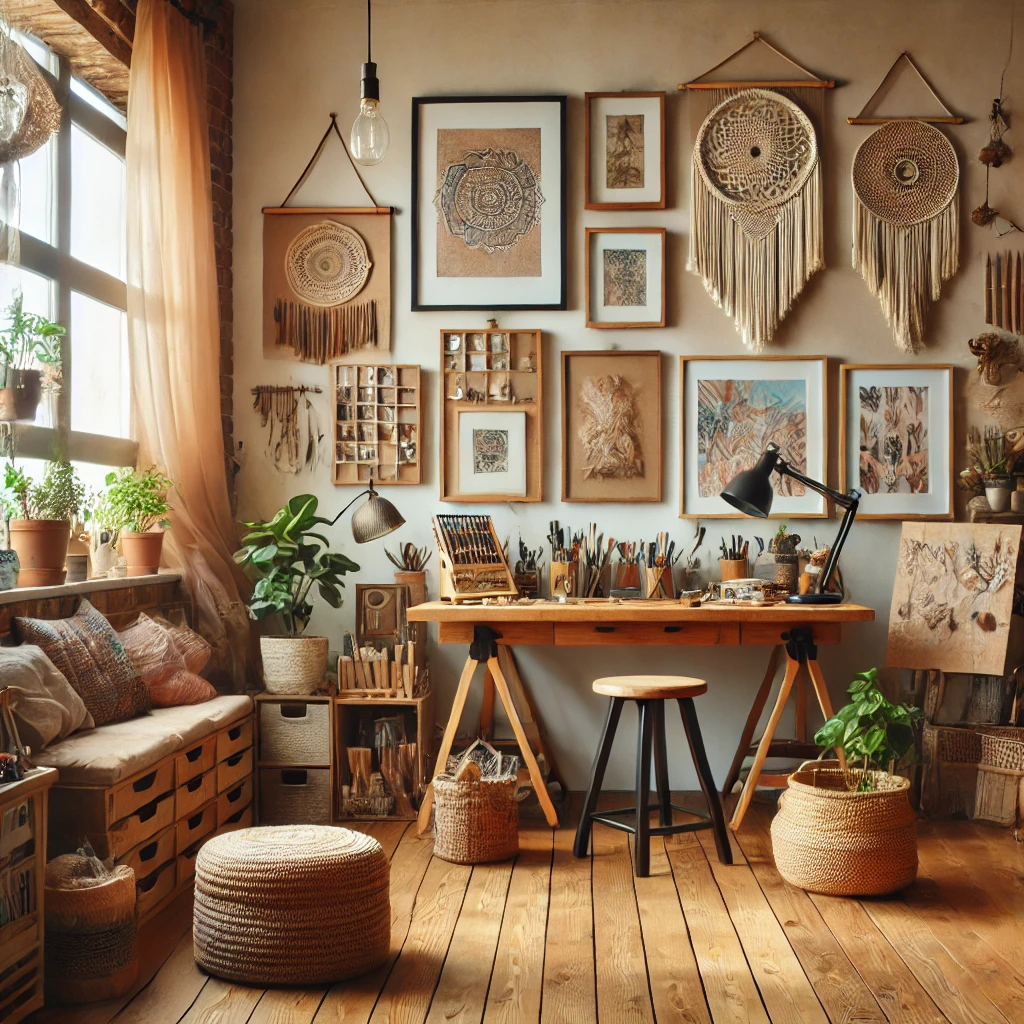
The finishing layer is the fun one. Look for pieces with a story:
- Handmade pottery or a hand-thrown mug for rinse water.
- Thrifted frames, which you can stain to match your wood tones.
- A vintage window frame as a display piece (here’s a DIY vintage window frame tutorial).
- Dried flowers, pampas grass or a bowl of found stones.
Edit every few months. If something hasn’t made you smile in a while, rotate it out.
Investment Pieces Worth It
Most boho decor is affordable on purpose. These three are worth a bigger spend because you’ll use them every single day.
Daylight Company Anita Floor Lamp (around $245). A tall floor lamp with 95+ CRI light, so the colors you mix at night match what you’ll see by day. Worth it if you paint after dark or your studio has a small window. Skip it if you mostly work in daytime by a big window; a clamp lamp with a 5000K bulb gets you most of the way. Over 3 years of 3 evening sessions a week, it’s about $0.50 a session.
MEEDEN Solid Beech 3-Tier Rolling Art Cart (around $158). Warm beech wood fits the boho palette, and a rolling cart keeps your active supplies right beside you, then tucks away. Worth it if your work surface is always buried. Skip it if you already have a cart that works; a woven basket on wheels is a cheaper look-alike.
7 Elements 6-Drawer Beechwood Art Supply Storage Box. Shallow wood drawers for pencils, pastels and tubes, and pretty enough to sit out on a desk. Worth it if your small supplies live in a jumble of cups. Skip it if you need to store large paper; that calls for a flat file.
Boho in a Small Studio
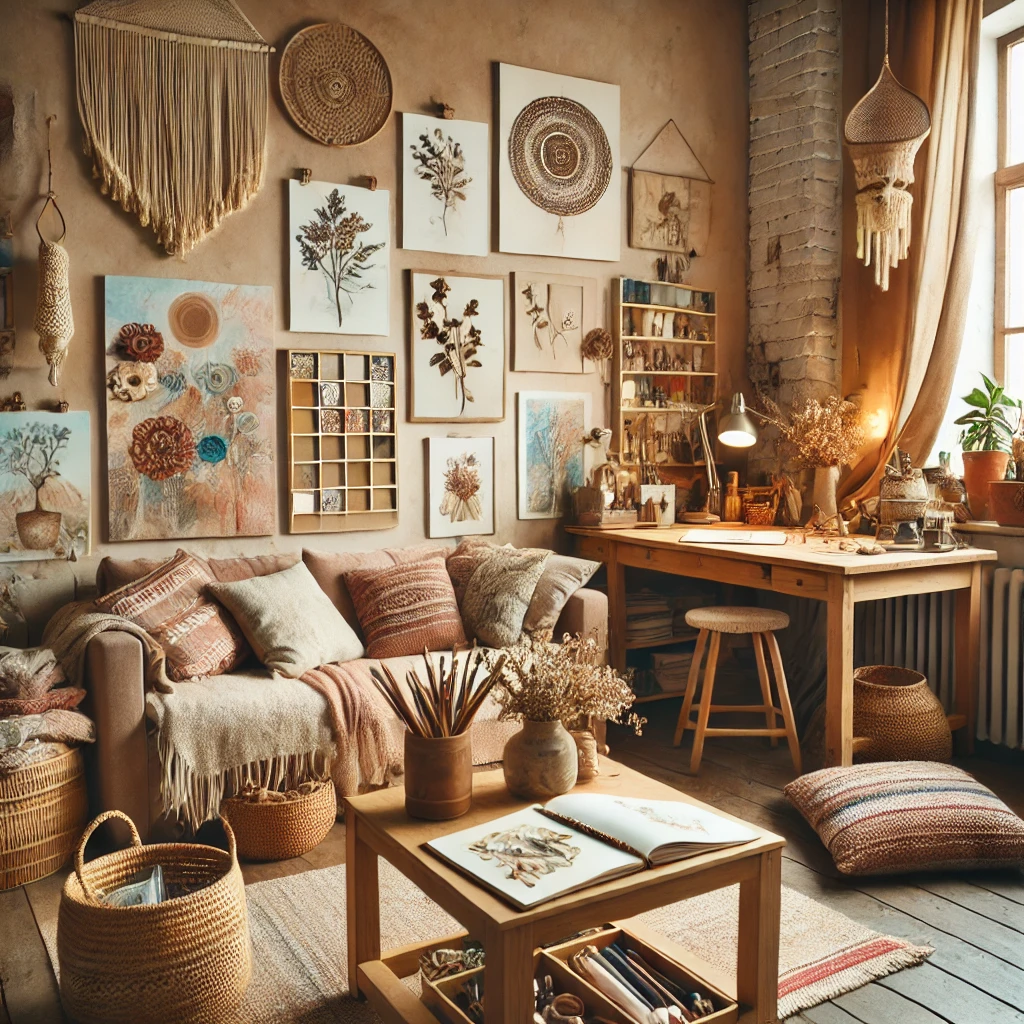
A tiny room or a bedroom corner can still feel boho. The trick is fewer, bigger moves.
- Use one rug to define the studio zone.
- Go vertical with a ladder shelf and one hanging plant.
- Keep the desk clear and put the boho layers around it.
- Pick a lighter palette, like terracotta, sand and soft white.
More space-saving ideas live in small art studio organization ideas.
Boho Art Studio FAQ
What colors are boho? Earthy, warm tones like terracotta, sand, olive, rust and warm beige, often with one bold accent such as deep turquoise or emerald.
Can a boho studio work for oil painting? Yes. Keep wool rugs and throws away from the easel, use a washable rug underneath it, and store solvents in a closed metal container away from textiles.
How do I keep boho from looking cluttered? Stick to the 60-30-10 color split, give each basket one category, and keep your main work surface clear.
Are faux plants okay? Absolutely. They’re a smart pick for rooms with little sun or near solvents and paper.
The Takeaway
A boho studio comes together with a calm, earthy base, natural materials and storage that pulls its weight. Layer slowly, keep one honest daylight lamp at your desk, and let your own art be the best decor in the room.
Which boho palette would you pick for your studio: the sunny terracotta mix or the moody olive and turquoise? Tell me in the comments.