This post contains affiliate links. If you buy through them, I may earn a small commission at no extra cost to you.
Ever bought a gorgeous sketchbook, drawn one careful page, and then let it sit on a shelf for a year because it felt too nice to mess up? The binding might be the real culprit.
Here’s my take: the best sketchbook is the one whose binding matches how you draw, and most people choose by cover instead. Paper matters, size matters, but binding decides whether the book lies flat on your desk, rides along in your bag, or lets you tear out a page for the fridge. Get that right and the book gets filled.
Quick answer: drawing at a desk and want a keepsake? Hardcover. Drawing across two pages, using wet media, or tearing pages out? Spiral. Drawing on the go and want it light? Softcover. If you only do one thing, do the lay-flat test below before you buy.
The three bindings at a glance
Every sketchbook on the shelf falls into one of three camps. Here’s how they stack up on the things that change your drawing day.
| Binding | Lays flat? | Travel | Remove pages? | Best for |
|---|---|---|---|---|
| Hardcover | Mostly, not fully | Sturdy, heavier | Not cleanly | Keepsake journals, studies |
| Spiral | Fully, even folds back | Coil can snag | Yes, easily | Wet media, practice, class |
| Softcover | Opens well, flexes | Lightest | Not cleanly | Pocket sketching, travel |
None of these is “best” on its own. A hardcover is lovely for a year of botanical studies. A spiral is the workhorse you aren’t afraid to ruin. A softcover is the one that’s actually with you when the light hits the café table just right.
Hardcover sketchbooks: the keepsake
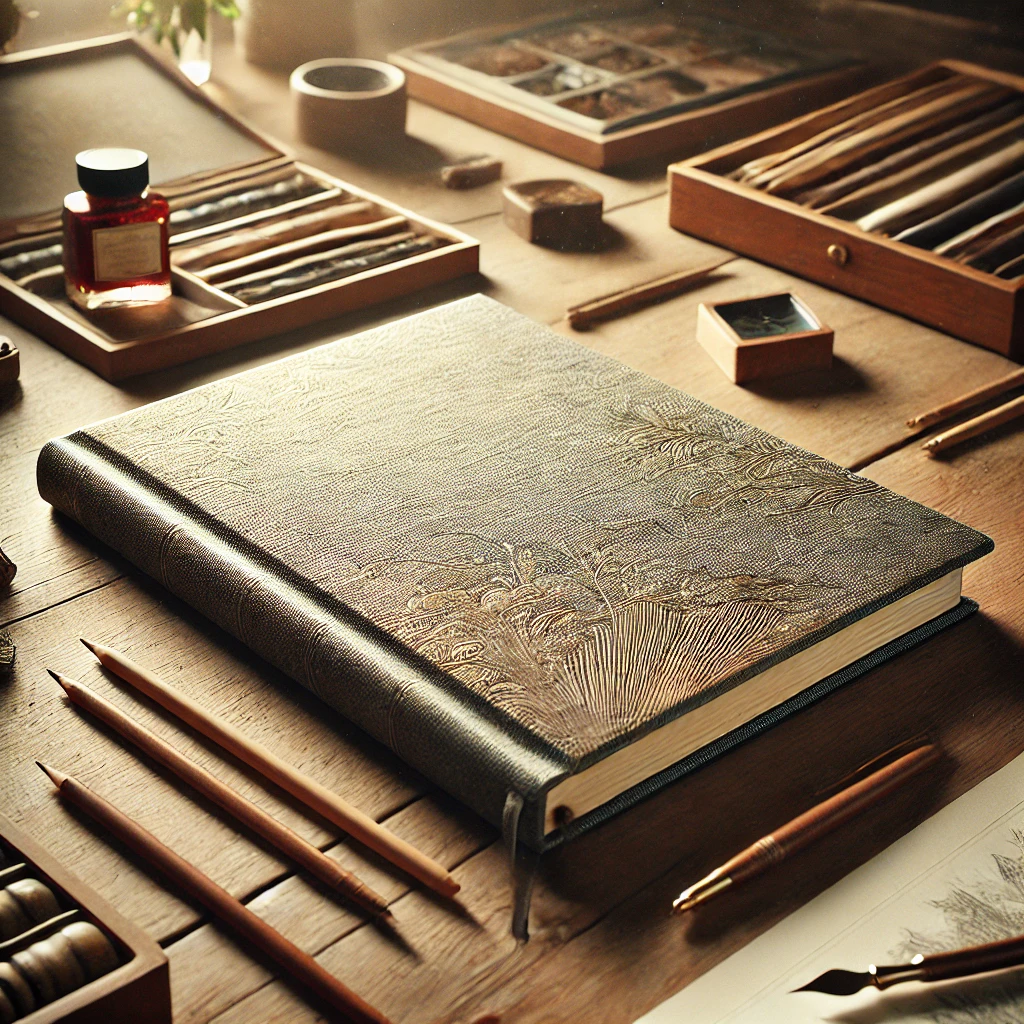
A hardcover is a sewn or glued book block wrapped in stiff boards. It feels like a real book, protects your pages from bent corners, and gives you a built-in drawing surface when there’s no table around.
Why artists love them:
- The rigid cover works as a lap desk on a park bench
- Pages stay in order, so the book becomes a record of your progress
- They look beautiful on a shelf, spine out like a little library
What to know:
- Most won’t lie completely flat, so drawings across the center gutter get a dip
- Removing a page leaves a ragged stub and can loosen its partner page
- Heavier in a tote, especially at A4 size
My pick for most people is the Strathmore 400 Series hardcover sketchbook. It’s sturdy, takes graphite and charcoal nicely, and costs little enough that you’ll actually use it. If paper texture is your thing, my sketchbook paper texture guide goes deep on tooth and finish.
Spiral sketchbooks: the workhorse
A spiral (or wire-bound) sketchbook has a metal or plastic coil along one edge. That coil is its superpower and its one weak spot.
Why artists love them:
- Opens truly flat, and folds all the way back on itself
- Pages tear out cleanly along a perforation or the coil
- Great for wet media, since you can lay a page flat to dry
What to know:
- The coil can catch on bags and get bent out of shape
- Spreads across two pages are interrupted by the wire
- They look less finished on a shelf (do you care? many people don’t)
For a spiral that handles almost anything, I recommend the Canson XL Mix Media spiral pad. It’s heavy enough for light washes and markers, and affordable enough that you’ll try the wild idea instead of saving the page.
Softcover sketchbooks: the travel buddy
A softcover is sewn or glued pages inside a flexible card or leather-look cover. It’s the lightest of the three and slips into a jacket pocket or a small crossbody bag.
Why artists love them:
- Feather-light, so you’ll carry it every day
- Flexes open nicely, often flatter than a hardcover of the same size
- Feels casual, which takes the pressure off
What to know:
- No rigid backing, so you need a table, a clipboard or your knee
- Corners scuff and curl faster
- Heavy wet media can make the thin cover buckle
The Moleskine Art sketchbook is a classic for pocket sketching, with smooth, thick pages that love pens and pencil. Check the listing for the exact format, since Moleskine sells hard and soft covers in several sizes.
The lay-flat test (do this in the store or the minute it arrives)
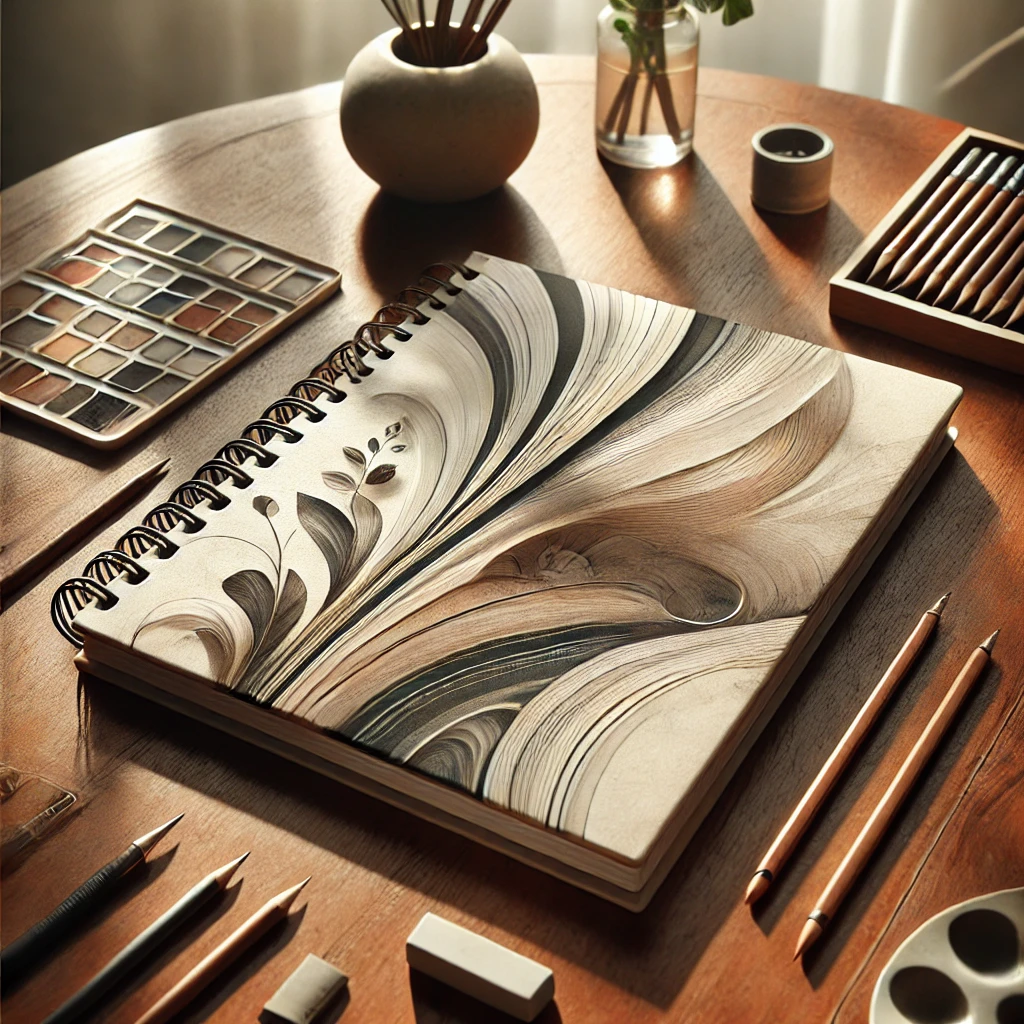
If the book snaps halfway shut when you let go, plan on single-page drawings or a binder clip to hold it open. If it relaxes flat, two-page landscapes are fair game. Spiral books pass every time. Hardcovers and softcovers vary a lot by brand, which is why this ten-second test is worth more than any product photo.
- sturdy cover
- keepsake feel
- protected pages
- slight gutter dip
- fully flat
- pages tear out
- wet media friendly
- coil can snag
Paper weight: match it to your medium
Binding is half the decision. The other half is paper weight, measured in grams per square meter (gsm). The heavier the number, the thicker the sheet and the more water it can take before it buckles.
- Graphite, charcoal, colored pencil: around 90 to 120 gsm is plenty, and you’ll get more pages per book.
- Ink, markers, gouache, light washes: step up to 150 to 200 gsm so nothing ghosts through.
- Watercolor: look for about 300 gsm (often labeled 140 lb) and 100% cotton if you can.
Charcoal lovers, the surface matters even more than the weight. See the best paper for charcoal drawings before you buy a book for it.
Size and orientation: pick the shape of your ideas
Size decides whether the sketchbook comes with you. Orientation decides what you naturally draw in it. Here are approximate sizes (brands vary slightly, so check the listing).
| Size | Approx. inches | Good for | Carry it? |
|---|---|---|---|
| A6 | 4 x 6 | Thumbnails, daily doodles | |
| A5 | 6 x 8 | All-round sketching | Small bag |
| A4 | 8 x 11.5 | Studies, portraits, botanicals | Tote |
| 9 x 12 | 9 x 12 | Classes, big gestures | Desk mostly |
Portrait (tall) is the default and suits figures, portraits and single botanical stems. Landscape (wide) is wonderful for scenery, café scenes and two-page panoramas, especially in a spiral. Square feels modern and is a dream for patterns, mandalas and anything you plan to share on Pinterest or Instagram.
If you can only buy one, an A5 portrait book is the safest bet. It’s big enough to draw a hand or a flower at a satisfying scale and small enough that it leaves the house with you.
Quick quiz: which sketchbook are you?
Answer in your head and count your letters.
- Where do you draw most? (a) at my desk (b) anywhere with a table (c) on the go
- What’s in your hand? (a) pencil or charcoal (b) paint, ink or markers (c) a pen and whatever’s nearby
- What happens to finished pages? (a) they stay in the book (b) some get torn out or framed (c) who has time, next page
- How do you feel about mistakes? (a) I like a tidy record (b) mess is how I learn (c) I barely notice
Mostly a: Hardcover. You like a book that becomes a body of work. Mostly b: Spiral. You need a flat, forgiving surface and freedom to experiment. Mostly c: Softcover. Lightness wins, because the sketchbook you carry is the one you fill.
A mix? Lots of artists keep two: a spiral at the desk for practice and a small softcover in the bag. That combo covers almost every situation.
Investment pieces worth it
A sketchbook itself rarely needs to cost much. The splurge usually goes into what you put on the page. If you’re filling a book a month, these are the upgrades I’d consider.
A premium heavyweight hardcover (Stillman and Birn style). Books with 150 to 270 gsm paper and sewn bindings run about $20 to $35 each. Worth it if you sketch in mixed media and keep your books as a record. Skip it if blank-page nerves stop you from drawing; a cheap spiral removes that pressure.
Faber-Castell Polychromos 120 tin, around $295. Oil-based pencils that layer beautifully and don’t smudge in a closed book. Spread over three years of weekly sketching, that’s about $1.90 a session. Worth it if colored pencil is your main medium. Skip it if you mostly sketch in graphite; a 24 set will do.
Daniel Smith 24 hand-poured half pans, around $128. A compact, rich palette that pairs perfectly with a 300 gsm watercolor sketchbook. Worth it if you paint in your sketchbook weekly. Skip it if you’re still testing whether watercolor is for you.
How to make any sketchbook last (and get filled)
- Store them upright like books, spine down, never stacked under heavy objects. My guide to storing canvas, paper and sketchbooks covers humidity and shelving.
- Spray fixative on charcoal pages or slip a sheet of tracing paper between them to stop transfer.
- Ruin page one on purpose. A quick scribble, a color swatch, the date. The pressure disappears.
- Number your books and date the spine. Future you will love flipping back.
- Give it a challenge. The 30-day sketching challenge is a fun way to fill pages fast.
Want your book to look as good as what’s inside it? Try one of these unique sketchbook cover ideas.
The takeaway
Choose the binding for how you draw, the paper for what you draw with, and the size for where you draw. A spiral at home and a softcover in your bag will take you a very long way, and a hardcover is the treat for the projects you want to keep.
So, which camp are you in: hardcover keeper, spiral experimenter or softcover wanderer? Tell me in the comments, and save this cheat sheet for your next art supply run.