This post contains affiliate links. If you buy through them, I may earn a small commission at no extra cost to you.
Ever had a watercolor wash turn into a buckled, blotchy mess, or a pencil drawing that refused to get dark? Odds are the paper’s surface was fighting your medium.
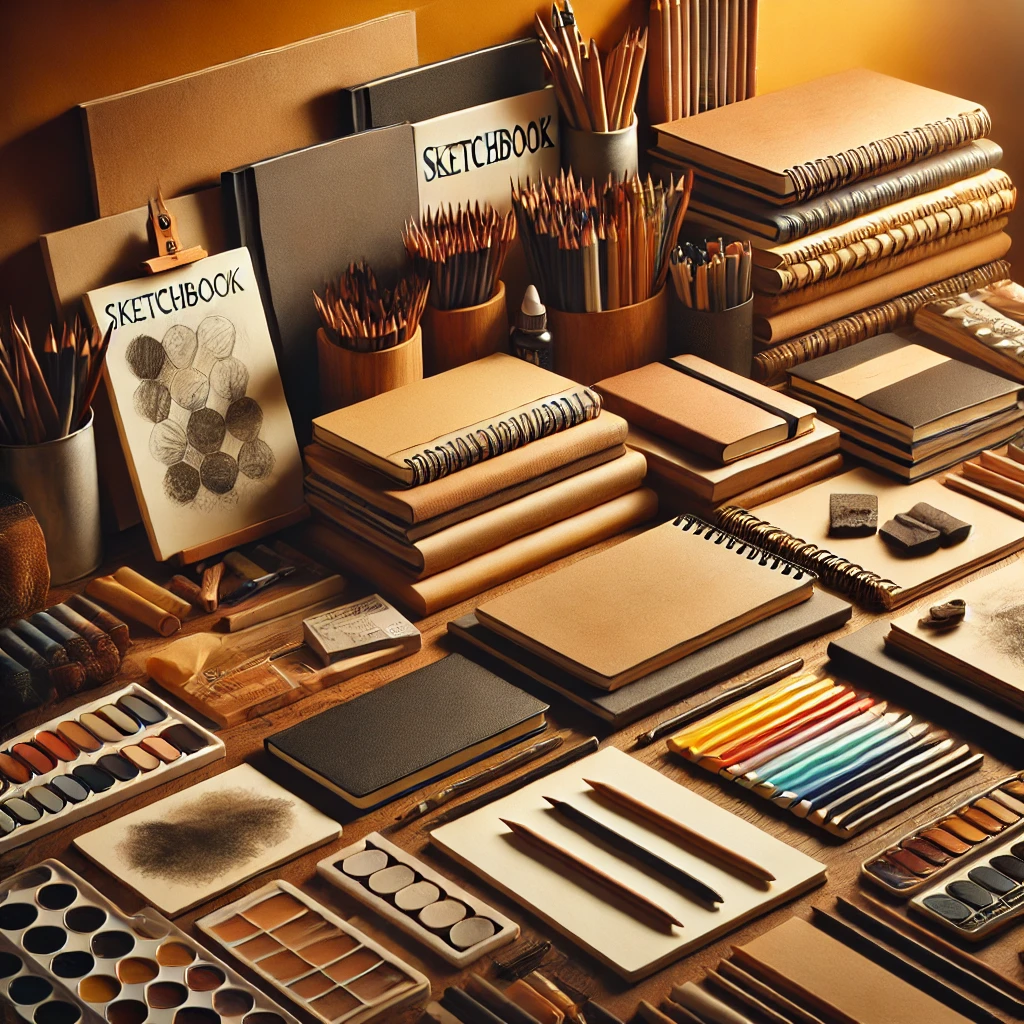
Here’s my take: paper texture matters more than the brand on the cover, and most frustrating sketchbook pages are a surface mismatch, not a skill problem. Smooth paper loves detail and ink. Toothy paper loves charcoal, pastel and water. Choose the surface first, the weight second, and the brand last.
Quick answer: graphite and colored pencil, choose a smooth to medium (vellum) surface. Ink and markers, choose smooth (plate Bristol or hot press). Charcoal and pastel, choose medium to rough tooth. Watercolor, choose cold press, about 300 gsm, cotton if you can. If you only do one thing, run the three quick tests below on any new paper.
What “texture” (tooth) actually means
Tooth is the tiny hills and valleys on a paper’s surface. Dry media like graphite and charcoal break off as they drag over those hills, so more tooth grabs more pigment and gives darker, grainier marks. Less tooth means smoother lines, finer detail and cleaner ink.
Paper makers name surfaces a little differently depending on the paper type, which is where the confusion starts. Drawing and Bristol papers use plate (smooth) and vellum (light tooth). Watercolor papers use hot press (smooth), cold press (medium) and rough.
Match the surface to your medium
This is the cheat sheet worth saving. Weights are typical starting points, not hard rules.
| Medium | Surface | Weight (approx.) | My pick |
|---|---|---|---|
| Graphite | Smooth to vellum | 90 to 130 gsm | Strathmore 400 |
| Colored pencil | Vellum | 120 to 180 gsm | Strathmore 400 |
| Charcoal, pastel | Medium to rough | 100 to 160 gsm | Charcoal paper |
| Ink, markers | Smooth, plate | 150 gsm and up | Mixed media |
| Mixed media | Medium | 160 to 250 gsm | Canson XL |
| Watercolor | Cold or hot press | About 300 gsm | Fabriano Artistico |
A few notes on why:
- Graphite gets shiny and fills up fast on very smooth paper, and looks grainy on rough paper. A light vellum tooth sits right in the middle.
- Colored pencil needs enough tooth to hold eight or ten layers. Too smooth and the surface seals after three.
- Charcoal needs real tooth, or the powder just slides around. My guide to the best paper for charcoal drawings covers laid and textured sheets in detail.
- Ink and markers bleed and feather on toothy paper. Smooth and heavier keeps lines crisp and stops ghosting.
- Watercolor needs weight and sizing so the paper doesn’t buckle and the paint doesn’t sink in like a paper towel.
The papers I recommend (and who each one suits)
Strathmore 400 Series: graphite and colored pencil
The Strathmore 400 Series drawing pad has a medium tooth that takes graphite layers well and lets colored pencil build without sealing too soon. It’s my go-to for realistic pencil studies. Skip it for watercolor; it isn’t made for wet washes.
Canson XL Mixed Media: the versatile one
The Canson XL Mix Media pad is heavy enough for markers, ink, gouache and light watercolor washes, and affordable enough for daily practice. If you want one pad that does a little of everything, start here. Expect some buckling under heavy, wet watercolor.
Fabriano Artistico: real watercolor paper
Fabriano Artistico is 100% cotton and comes in hot press, cold press and rough surfaces. Washes stay wet longer, colors settle evenly, and you can lift and rework an area without tearing it up. It’s the one to reach for when a painting matters.
Stillman and Birn Beta: ink and wet media in a sketchbook
The Stillman and Birn Beta series is a heavyweight sketchbook (around 270 gsm) with a cold press style surface. It handles ink washes, gouache and watercolor in a bound book better than most. Look for it at art supply stores.
Moleskine Art: the travel companion
The Moleskine Art sketchbook has smooth, fairly thick pages (around 165 gsm) that are lovely with pens, fine liners and pencil. It’s compact and sturdy for travel. It won’t love heavy watercolor, so keep washes light.
Not sure which binding to pair with your paper? My sketchbook showdown compares hardcover, spiral and softcover side by side.
Paper weight, decoded: gsm vs lb
Weight tells you thickness and how much water a sheet can take. You’ll see two systems:
- gsm (grams per square meter) is the same for every type of paper, so it’s the easiest to compare.
- lb (pounds) is the weight of a ream of a paper type’s standard size sheet. Text, cover and watercolor paper all use different standard sizes, so the same lb number can mean very different thicknesses.
That’s why I compare in gsm whenever I can. Here are rough equivalents, and please treat them as approximate, since brands round differently:
| gsm (approx.) | lb (approx.) | Feels like | Good for |
|---|---|---|---|
| 90 gsm | About 60 lb text | Thin drawing | Sketching, practice |
| 150 gsm | About 100 lb text | Sturdy | Markers, mixed media |
| 300 gsm | About 140 lb watercolor | Thick, stiff | Watercolor washes |
| 640 gsm | About 300 lb watercolor | Board-like | Heavy wet work, no stretching |
Rule of thumb: under about 200 gsm, keep it dry or lightly damp. At about 300 gsm, most washes behave without taping. Heavier than that, you can soak the sheet and it stays flat.
Cotton vs cellulose: why the fiber matters
Watercolor and premium drawing papers are made from cotton, wood pulp (cellulose), or a blend. You’ll feel the difference the moment water hits the page.
- even washes
- stays wet longer
- survives lifting
- costs more
- dries fast
- blotchier blends
- scuffs when scrubbed
- budget friendly
Cellulose paper is perfect for practice, color swatches and testing ideas. Save cotton for the paintings you want to keep. If you’re working on soft, layered washes, my watercolor techniques for ethereal paintings guide shows why cotton makes those effects easier.
Either way, look for acid-free on the label so your pages don’t yellow over time.
Three quick tests before you commit to a paper
Product photos can’t show you texture. Five minutes with a scrap sheet or the first page of a new sketchbook will.
- Tooth test. Shade a small square with a 4B pencil, light pressure then heavy. Grainy and dark means good tooth. Smooth and shiny means detail paper.
- Erase test. Erase half the square. Does it come back to near white, or does the surface pill and scuff?
- Wash test. Brush on a stripe of water and paint. Watch for buckling, blooms and how long it stays wet, then flip the page to check for bleed through.
Write the results right on the page with the date. That one test sheet becomes your personal paper library.
Investment pieces worth it
Good paper is a consumable, so the bigger splurges are the tools that let you use it well and keep it safe. If you work on loose sheets often, these are worth a look.
Artograph LightPad 950 LX, around $280. A large, slim light box lets you sketch freely on cheap paper, then trace only the final lines onto your good cotton sheet. Over three years of weekly use, that’s about $1.80 a session, and it saves a lot of ruined expensive paper. Worth it if you paint finished pieces on premium paper. Skip it if you mostly sketch straight into a sketchbook; the Lightmaster 17×24 at around $130 does the job for occasional tracing.
AdirOffice 5-drawer flat file, around $735. Paper stored flat, dark and dust-free stays crisp for years. Worth it if you buy full sheets of watercolor or Bristol and keep finished work. Skip it if you mostly use pads and bound books; a shelf with books stored spine-down works fine (see how to store canvas, paper and sketchbooks).
Schmincke Horadam 24 half-pan metal box, around $157. Professional pigments on cotton paper are where watercolor really glows. Worth it if you paint weekly and already love your paper. Skip it if you’re still finding your surface; buy the paper first.
The takeaway
Choose the surface for your medium first, then the weight, then the brand. Smooth for ink and detail, medium tooth for pencil, real tooth for charcoal, and about 300 gsm cold press for watercolor will cover nearly everything you draw or paint.
What’s your favorite paper surface right now, smooth, toothy or somewhere in between? Tell me in the comments, and save this cheat sheet for your next paper run.
[…] 4. Paper: Texture Matters […]