This post contains affiliate links. If you buy through them, I may earn a small commission at no extra cost to you.
Ever bought a pretty shelf, loaded it up, and watched your sketchbooks hang off the front edge like diving boards? That shelf was the wrong depth, and that’s the most common shelf mistake I see.
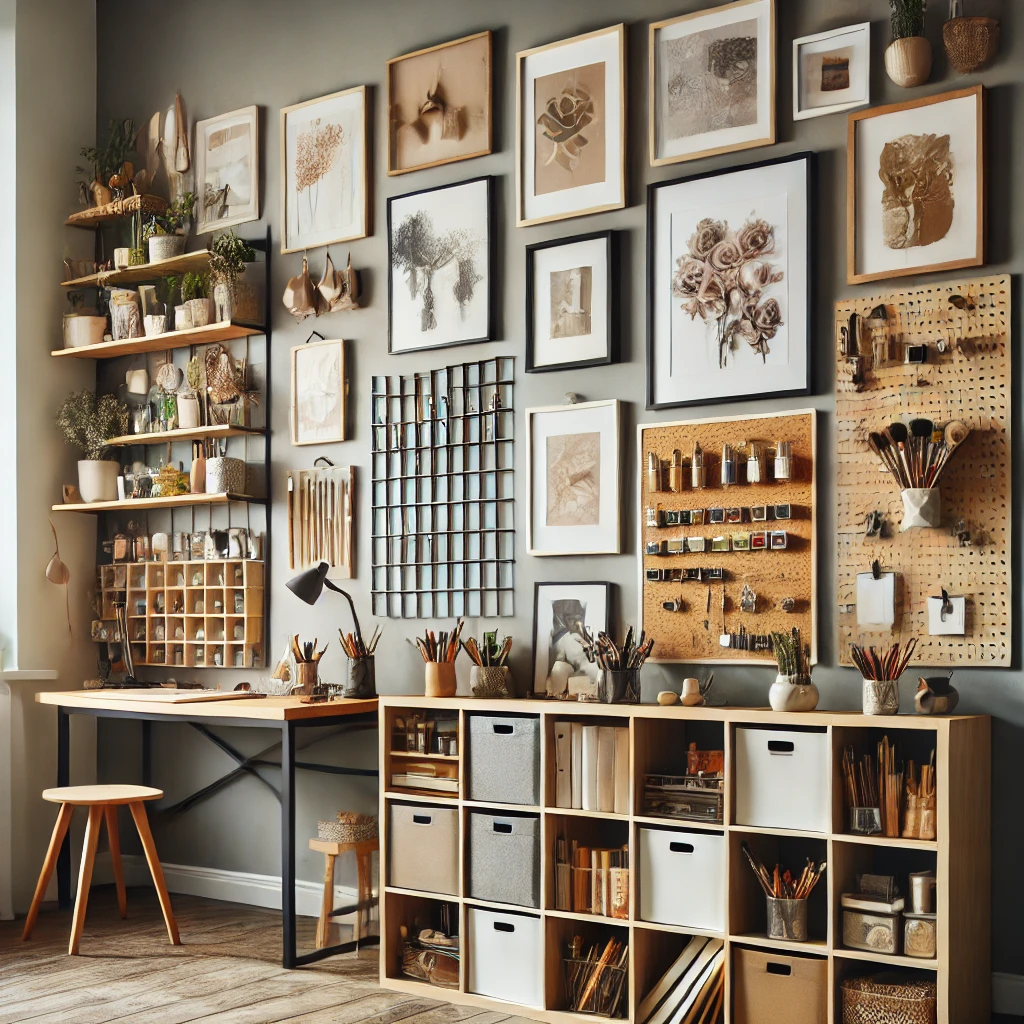
Here’s my take: most studio shelf problems are depth problems. Pick the depth that fits the thing you’re storing, hang it at the height you’ll reach for it, and almost any style will work. Get the depth wrong and even an expensive shelf turns into a clutter ledge.
So let’s start with numbers, then get to the fun part: nine shelf styles and the studios they suit best.
If you only do one thing: sort your supplies into three piles (jars and tubes, books and pads, canvases and boards). Each pile needs a different shelf depth: about 4 to 6 inches, 10 to 12 inches, and 12 to 16 inches.
The Shelf Depth Cheat Sheet
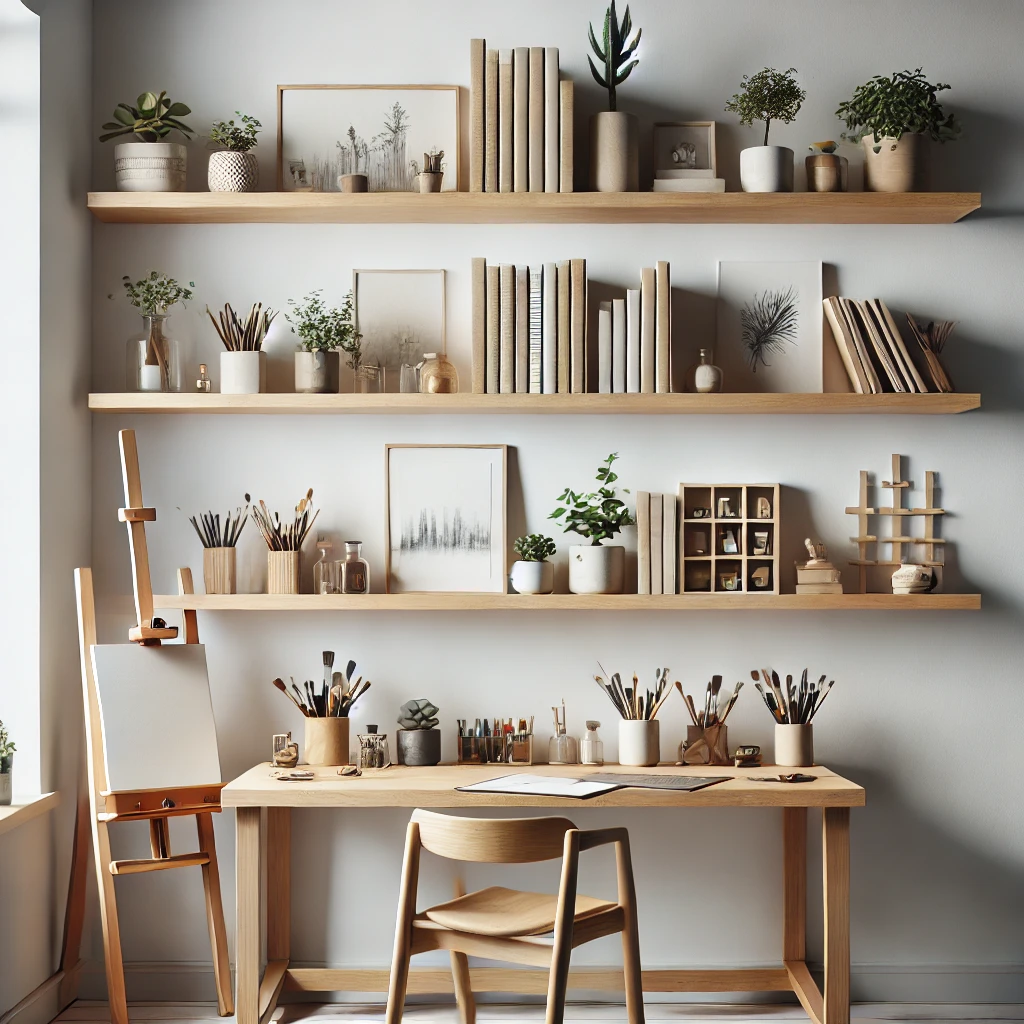
Shelf listings love to show styling photos and hide the depth. Check it before you buy.
| What you store | Shelf depth | Space between shelves |
|---|---|---|
| Paint tubes, ink, small jars | 4 to 6 in | 8 to 10 in |
| Brush jars, mason jars | 6 to 8 in | 12 to 14 in |
| Sketchbooks, art books | 10 to 12 in | 10 to 12 in |
| Fabric bins, paper pads | 11 to 13 in | 12 to 14 in |
| Small canvases, panels | 12 to 16 in | 14 to 18 in |
A shallow shelf is your friend for small items. On a 5-inch shelf, every jar sits in the front row where you can see it. On a 12-inch shelf, jars hide behind each other and you buy duplicates.
Where to Hang Them: Height Rules
Heights matter as much as depth, especially above a desk.
- Bottom shelf above a desk: about 15 to 18 inches over the desktop. That clears a lamp head, a monitor or a tall water jar.
- Daily-use shelf: 54 to 60 inches from the floor. Most people can grab from this zone without stretching or a step stool.
- Top shelf: backstock only. Extra paper, spare canvases and the supplies you reach for once a month.
- Floor level: heavy stuff. Gallon gesso, stacked boards and boxes of paper live low, where a drop won’t hurt anyone.
Want the bigger picture on studio layout? See The Complete Art Studio Setup Guide for Creatives.
Safety First: Anchoring and Weight
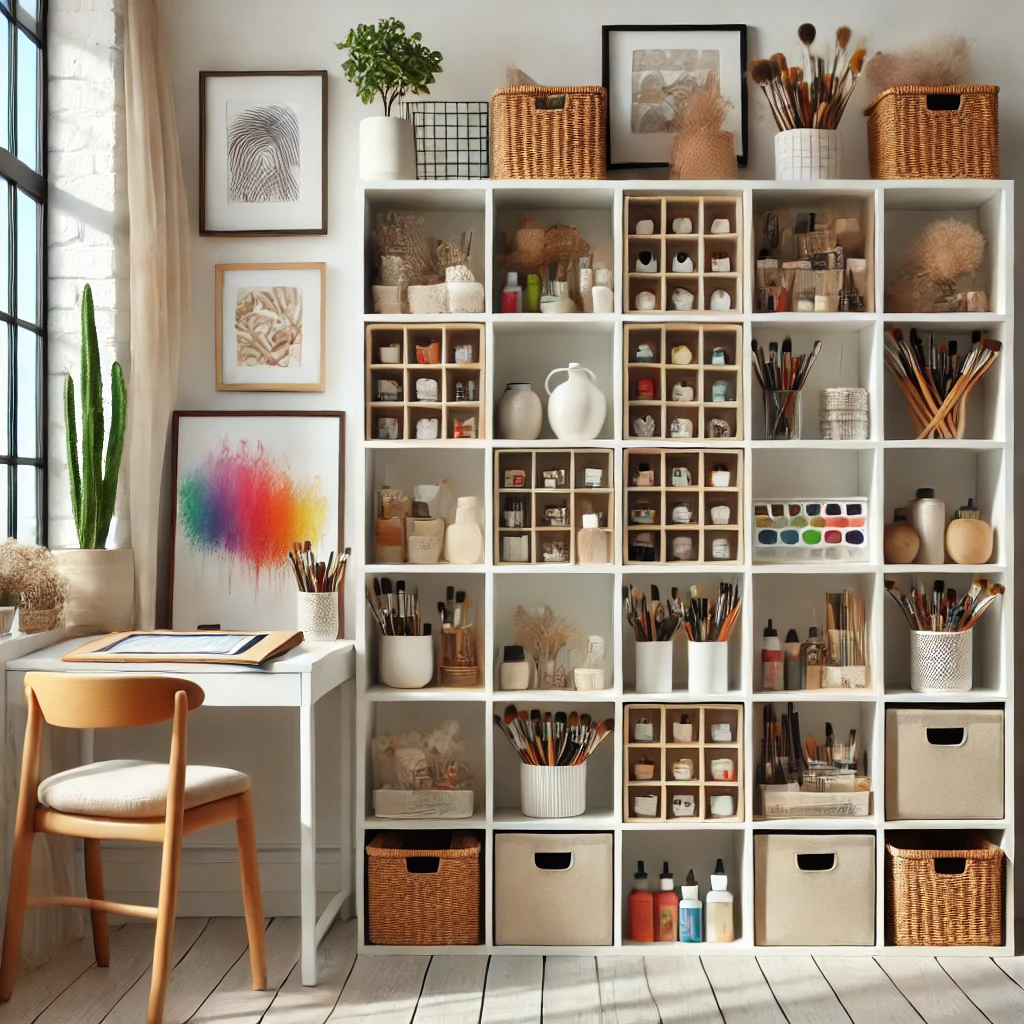
A full shelf of paint and paper is heavier than it looks. A 36-inch shelf of art books can top 40 pounds.
- Screw into studs whenever you can. Studs usually sit 16 inches apart. A cheap stud finder pays for itself on the first shelf.
- Drywall anchors hold far less. Fine for a ledge of small frames or light jars. Not fine for books or paint.
- Anchor every tall bookcase or shelving tower to the wall. Use the anti-tip strap that comes in the box. A loaded 70-inch unit can tip if someone pulls on an upper shelf, and that’s a real danger around kids and pets.
- Heaviest items go lowest. Always.
9 Shelf Styles for Art Studios
1. Floating Shelves (Best Above a Desk)
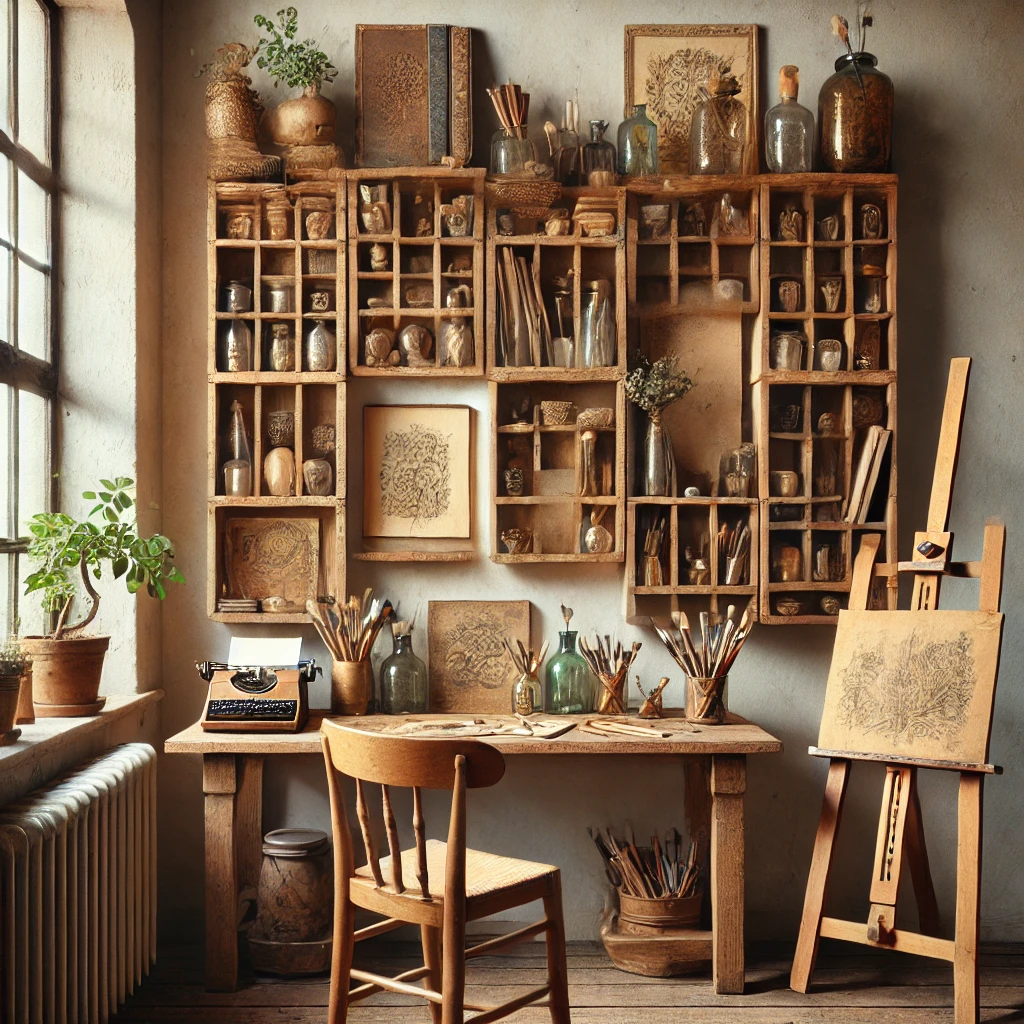
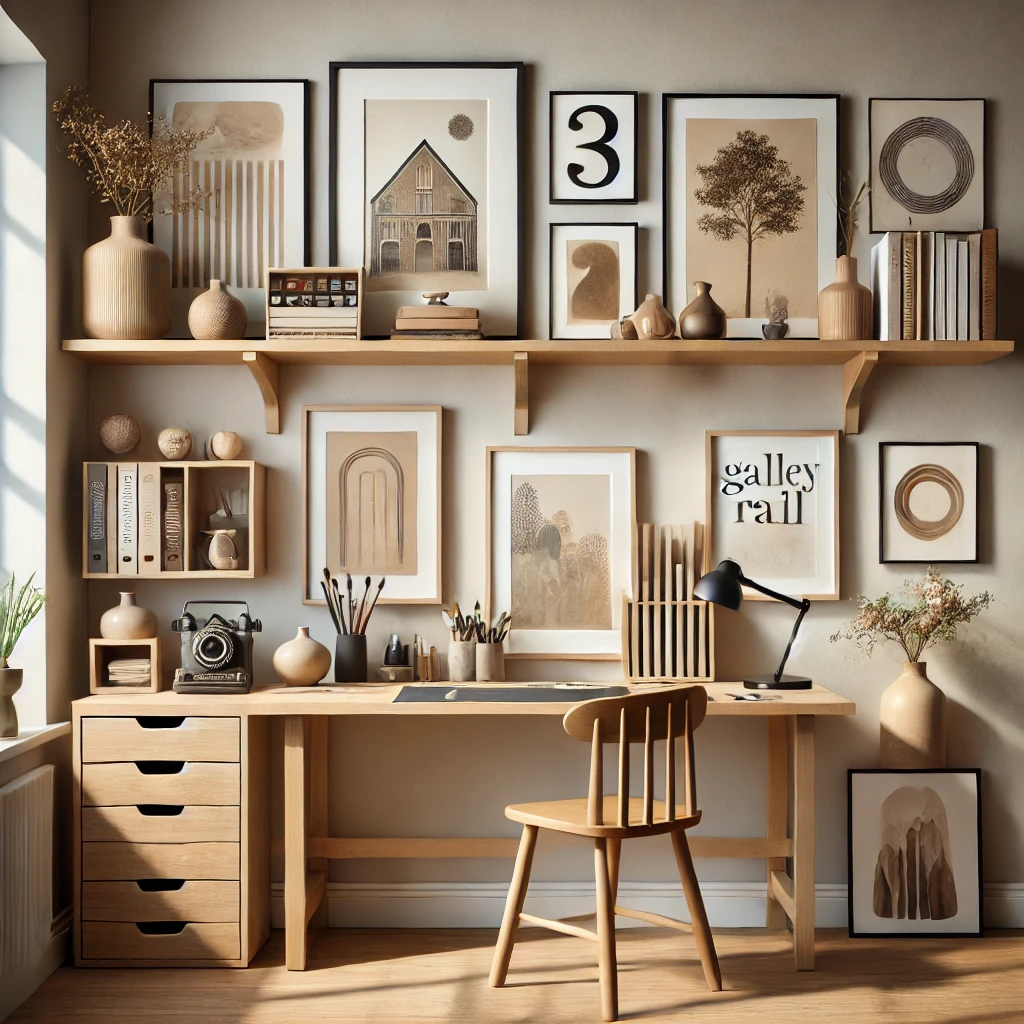
Floating shelves keep supplies in sight without eating floor space. Stagger two or three above your desk for a gallery feel, or line them up for a clean, library look.
For heavier loads, pick thicker shelves with a steel rod bracket that slides into the wall. Heavy duty invisible shelf brackets let you build your own from a board cut to length.
22.5 inches Black Wall Shelves for Bathroom, Bedroom, Living Room, Kitchen & Book, Hanging Display Decor Organizer Shelf with 22 lbs Capacity

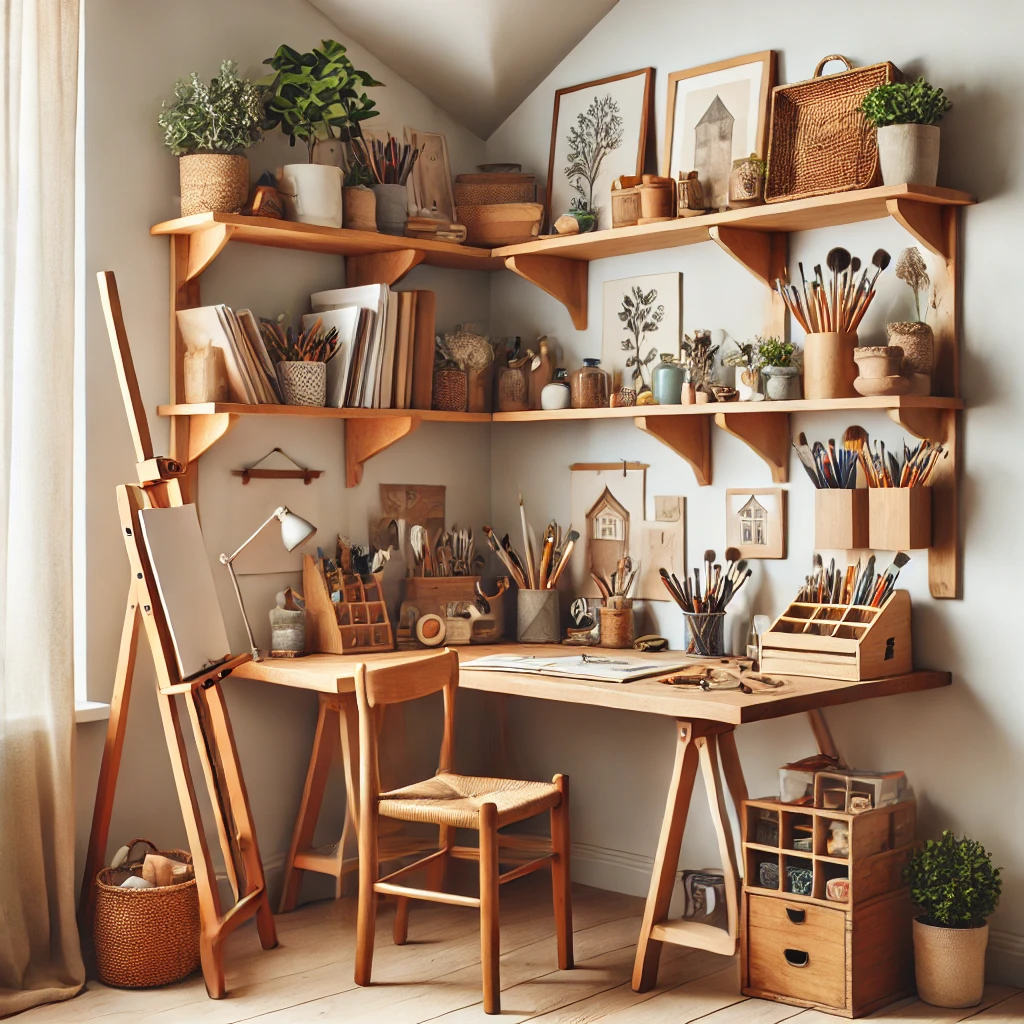
Corner floating shelves turn a dead corner into a spot for brush jars and small plants. A 4-shelf set stacked up the corner holds a surprising amount.

2. Cube Shelves (Best for Hiding the Mess)
Cube units are the workhorse of a studio. A 2×2 fits under a window, a 3×3 makes a room divider, and a 4×4 can hold a whole studio’s supplies.
The cubes are usually about 11 to 13 inches deep, which is perfect for fabric bins full of pastels, yarn, clay tools or paper scraps. Add chalkboard labels so you can change them as your projects change.
11in Shelf Opening, Bookcase, Display Shelf, Customizable w/ 3 Removable Back Panels White


3. Ladder Shelves (Best for Display)
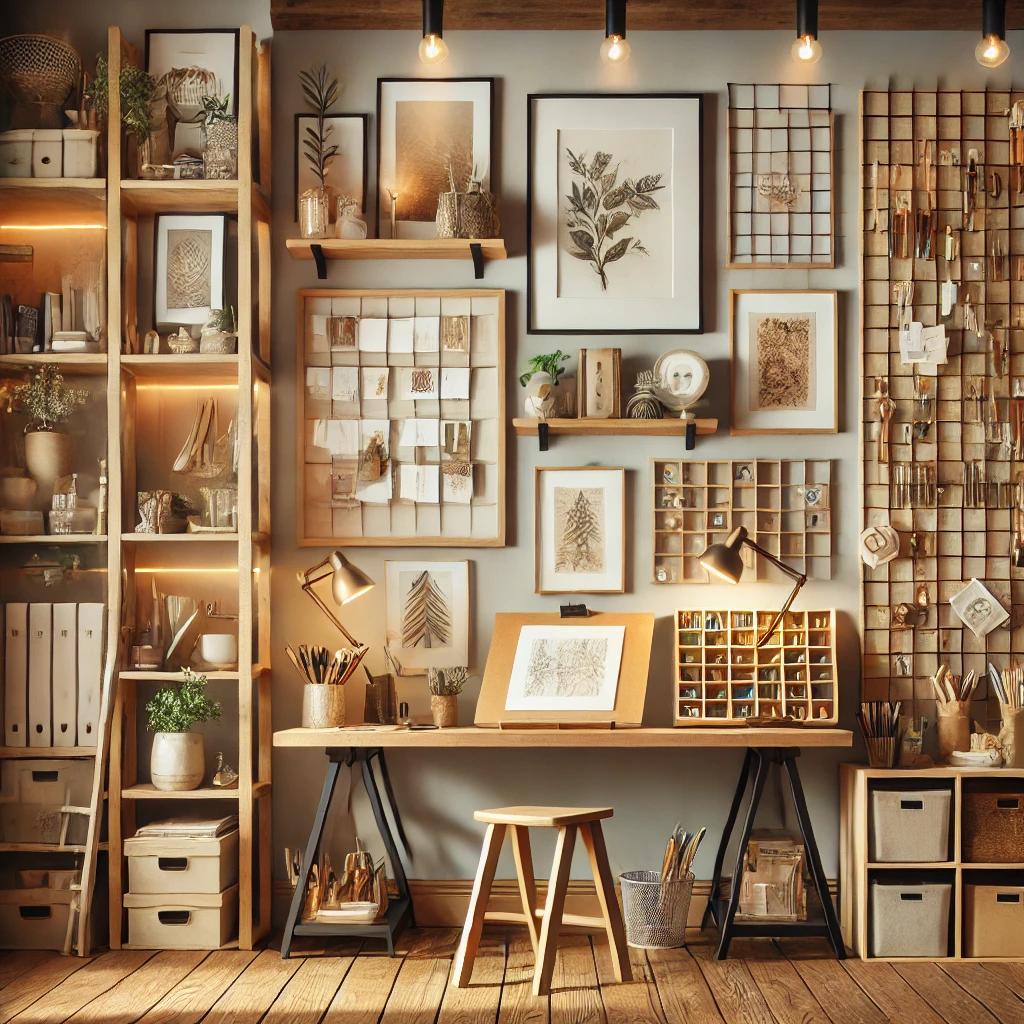
Ladder shelves lean against the wall and get narrower at the top. Put your heavy, bulky things on the wide bottom shelf and your favorite little pieces up high. They look relaxed and lovely in a cozy or vintage studio.
Because they lean, check that yours can be secured to the wall with a bracket at the top.
5-Tier Modern Leaning Bookshelf Ladder Stylish Space-Saving Bookcase for Living Room, Bedroom & Home Office

4. Pegboard Systems (Best for Tools You Grab All Day)
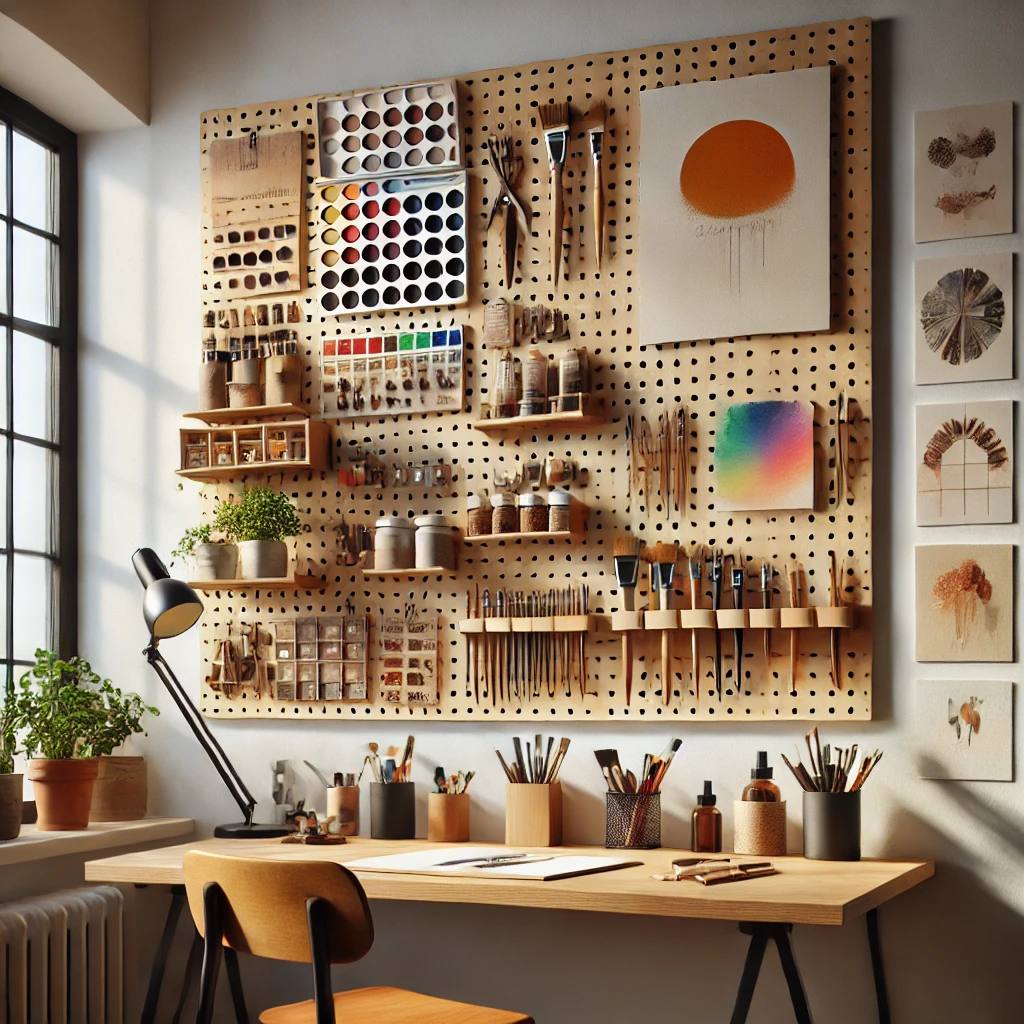
Pegboard is the most flexible storage you can hang. Scissors, rulers, tape, palette knives and brush cups all go on the wall, and you can rearrange in seconds.
Paint the board a bold accent color and it becomes part of the decor. Leave about 1/2 inch of space behind it so the hooks can seat properly (most kits include spacers).
4 ft. Metal Pegboard Standard Tool Storage Kit with White Toolboard and White Accessories

Peg Board Hooks Assortment Organizer Accessory, Various Tools Storage Arrange System Kit for Garage Craft Workshop Workbench Hobby

5. Grid Wall Panels (Best for Inspiration)
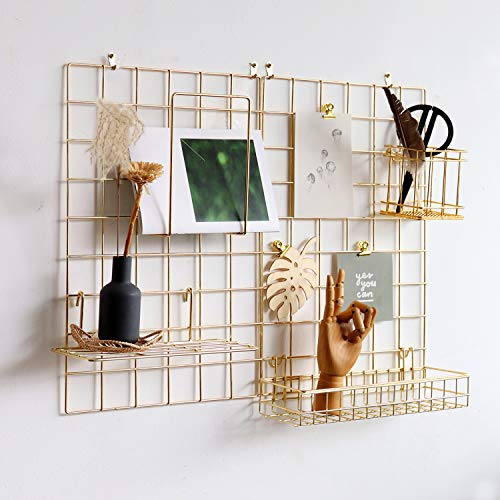
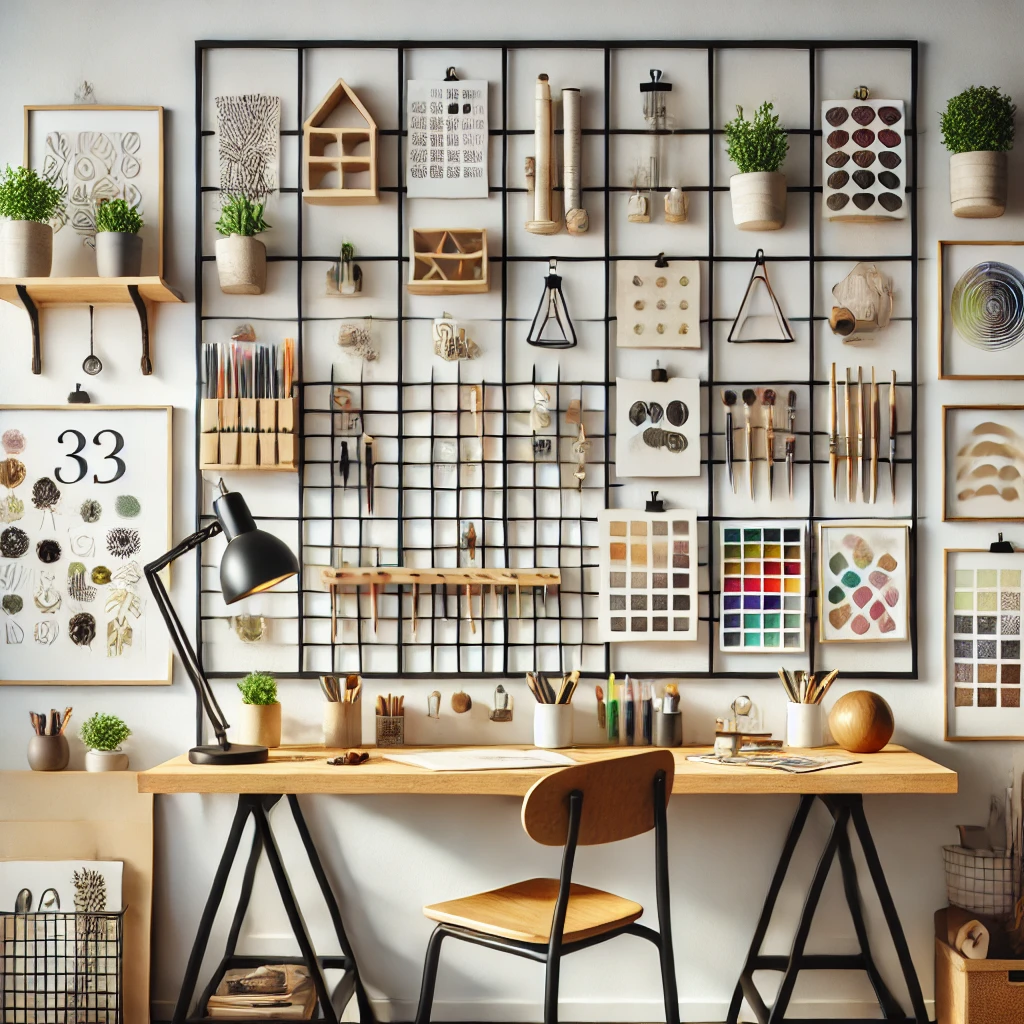
A wire grid panel is a mood board, a shelf and a hanging rack in one. Clip up reference photos and color swatches, hang small baskets for markers, and weave in a strand of fairy lights.
Wall Storage Organizer,5 Metal Clips & 3 S Hooks & 4 Nails & 4 Plastic Hanging Buckles and 4 Screws Offered,Size 17.5" x 11.8",2 Pack(Gol...
6. Picture Ledges (Best for Rotating Your Own Work)
A picture ledge has a small lip, so framed work and finished pieces lean safely. Rotate what’s up every month or two and your wall becomes a living gallery of your progress. A battery picture light above it makes the whole thing glow in the evening.


7. Wall-Mounted Cubes and Desk Hutches
Wall cubes give you small, shadow-box-style spots for a sculpture, a favorite brush jar or a stack of sketchbooks. A desk with a hutch does the same job in one piece and keeps your most-used supplies right at eye level.
8. Metal Shelving Units (Best for Bulk Supplies)
For paper reams, canvas packs and bins of backstock, a steel unit wins. It holds more weight per shelf than most wood furniture, and it doesn’t mind a paint drip. Anchor it to the wall.
5 Tier Folding Shelf on Wheels, Heavy Duty, No Assembly, Rolling, Collapsible Rack Unit for Kitchen, Basement, Pantry (White,1 Pack)

9. Tall Open Bookcases (Best for Books and Pads)
A tall bookcase stores art books, sketchbooks and pads upright like a library. Store sketchbooks spine-out and upright, never stacked in tall piles, so the bottom ones don’t warp. Anchor it, every time.
Modern Display Bookshelf with Top Edge and Solid Wood Frame for Home and Office, Storage Cabinet, Warm White

Which Shelf for Which Studio?
| Studio type | Best shelf mix | Why it works |
|---|---|---|
| Small corner | Floating + pegboard | Zero floor space |
| Painting studio | Metal unit + ledge | Holds weight, shows work |
| Drawing and sketching | Bookcase + floating | Books upright, tools close |
| Mixed media | Cubes + grid panel | Hides mess, shows ideas |
| Cozy or vintage | Ladder + ledge | Soft, styled look |
Styling Tips That Keep Shelves Useful
- Group by color or by medium. Pick one system and stick with it.
- Use matching containers. Six identical jars look calm. Six random ones look like clutter, even when they’re tidy.
- Leave 20 to 30 percent of each shelf empty. Breathing room makes the whole wall feel lighter and gives new supplies a home.
- Mix in one living thing. A pothos or a small succulent softens a wall of tools.
More wall ideas: Wall-Mounted Organizers for Art Studios.
Investment Pieces Worth It
These cost more, and they last. Here’s who each one suits and who should skip it.
Homeforia 60″ Solid Oak Floating Shelf (around $230). One long, thick slab of real oak with a hidden bracket. It holds books and jars across a whole desk wall and looks like custom carpentry. Worth it if you want one anchor shelf you’ll keep for years. Skip it if you can’t hit studs on that wall.
Loon Peak Ilkan Solid Wood Floating Shelf. Solid wood with a rustic, chunky profile. Worth it for a cozy or vintage studio that wants warmth on the walls. Skip it if your style leans bright and minimal.
Wall Control Metal Pegboard (around $40 to $60 per panel). Steel panels don’t sag or tear out the way hardboard does, and the hooks lock in. Worth it for anyone who reaches for tools all day. Skip it if you only need a few hooks; a small kit will do.
Diversified Spaces Large Format File Cabinet (around $1,340). Shelves can’t store large paper flat, and this can. Wide, shallow wooden drawers keep finished drawings and full sheets of watercolor paper perfectly flat, and the top doubles as a display surface. Used weekly for ten years, that’s about $2.60 a week. Worth it if you work big and have a stack of art you care about. Skip it if you mostly work in sketchbooks.
The Takeaway
Choose shelves by depth first, height second and style third. Shallow shelves for jars, book-depth shelves for pads, deep shelves for canvases, all screwed into studs and anchored when they’re tall. Get those numbers right and every shelf you add will pull its weight.
Which shelf style is going up in your studio first: floating, cube, pegboard or ladder? Tell me in the comments, and save this pin for your next shelf shopping trip.
Keep going:
[…] Best Shelves for Art Studios […]