This post contains affiliate links. If you buy through them, I may earn a small commission at no extra cost to you.
Do you swoon over a cluttered old atelier with paint-crusted tables, then catch yourself pinning a white, airy studio with nothing on the counters?
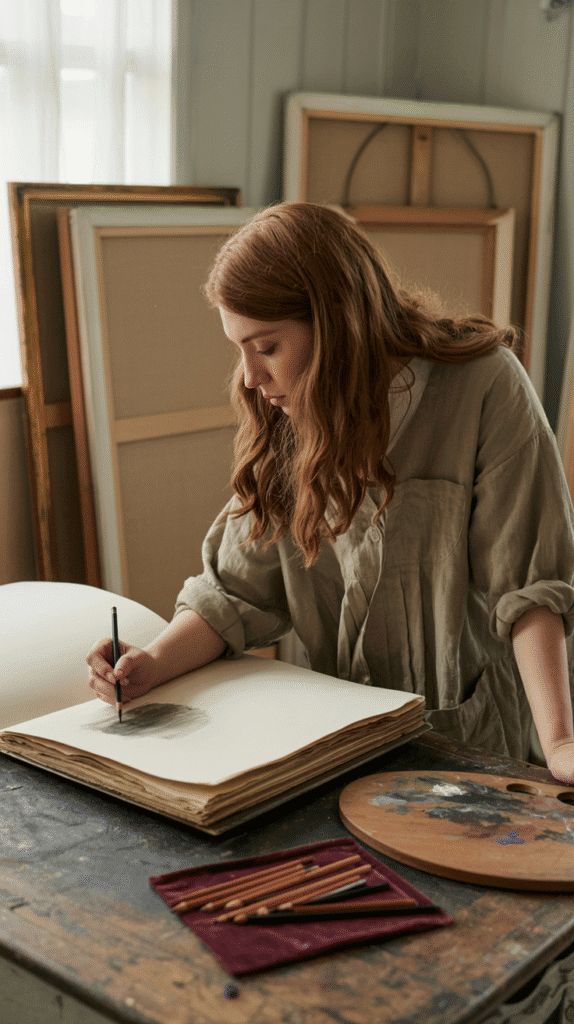
Good news: you don’t have to pick a team based on which photo is prettier. My take is simple. Choose your studio style by how you work, not by how the room looks in a photo. A messy oil painter and a tidy pencil illustrator need different rooms, and the right style is the one that makes your process easier on an ordinary Tuesday.
Below you’ll find a side by side comparison, five questions that point you to a style, and my favorite option for most artists: modern bones with vintage soul.
If you only do one thing: whatever style you choose, put a neutral 5000K lamp with 90+ CRI right over your work surface. Warm vintage bulbs and cool modern ones both shift how you see color. One honest task lamp keeps every painting true.
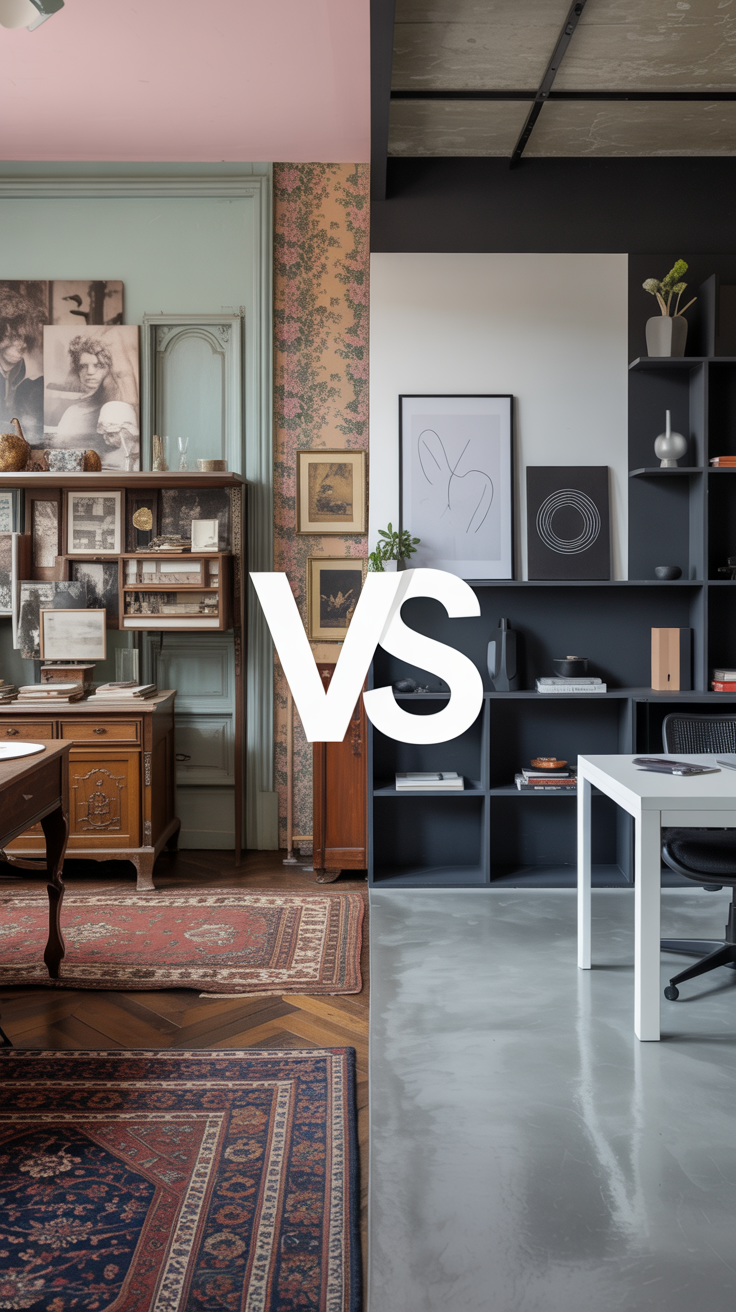
Vintage vs Modern at a Glance
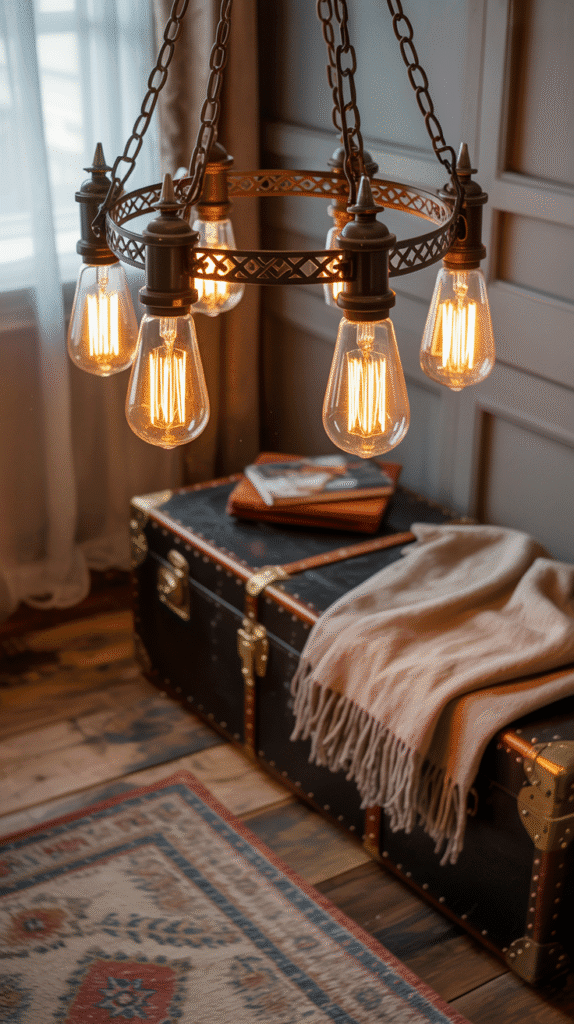
Here’s the short version before we get into the details.
- warm woods
- collected objects
- layered texture
- soft amber light
- clean lines
- hidden storage
- neutral walls
- bright even light
Both styles can be beautiful. Both can be miserable to work in if they fight your habits. The trick is matching the room to the way your hands and supplies actually move.
The Side by Side Comparison
| Feature | Vintage | Modern |
|---|---|---|
| Furniture | solid wood, drafting tables | sleek desks, metal, laminate |
| Palette | ochre, sage, brown, cream | white, gray, black, pale wood |
| Light | warm 2200 to 3000K glow | cool 4000 to 5000K, bright |
| Storage | open shelves, jars, crates | closed drawers, cabinets |
| Upkeep | hides wear and paint drips | shows every smudge |
| Cost | thrifting keeps it cheap | new pieces add up fast |
| Best for | oils, mixed media, collectors | digital, ink, small spaces |
Look at the “upkeep” row twice. A vintage worktable with a few honest dings looks better with every paint splatter. A glossy white desk looks worse. That one detail decides the style for a lot of painters.
What a Vintage Art Studio Feels Like
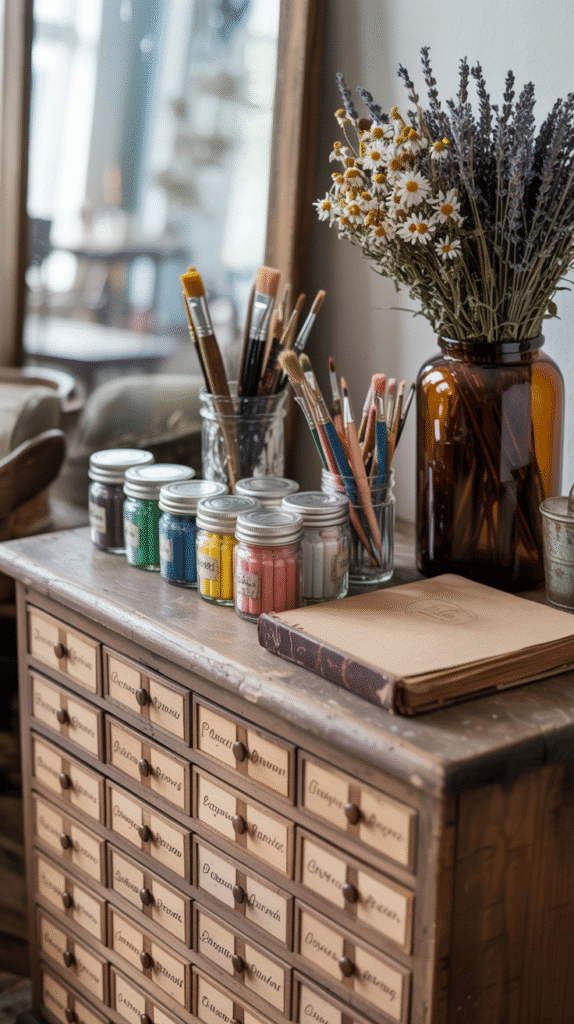
A vintage studio feels collected over time. Think worn wood, brass hardware, mismatched jars of brushes, framed sketches leaning on a shelf, and a lamp that glows amber in the evening.
Signature pieces:
- A wood drafting table with a tilting top
- Open shelving stacked with sketchbooks, spines out like a library
- An Edison-style chandelier for ambient glow
- Vintage botanical or travel prints, like this vintage poster set
- Crates, tins and old drawers repurposed for supplies
Where it shines: vintage rooms forgive mess. If you work wet, splatter, or keep a dozen projects going at once, visible supplies feel like inspiration instead of chaos.
Where it struggles: dust. Open shelves and jars collect it, and dust on drying paintings is no fun. Plan a 10 minute wipe-down once a week.
For more ideas in this direction, browse my vintage art studio ideas and this tour of a vintage artist loft.
What a Modern Art Studio Feels Like
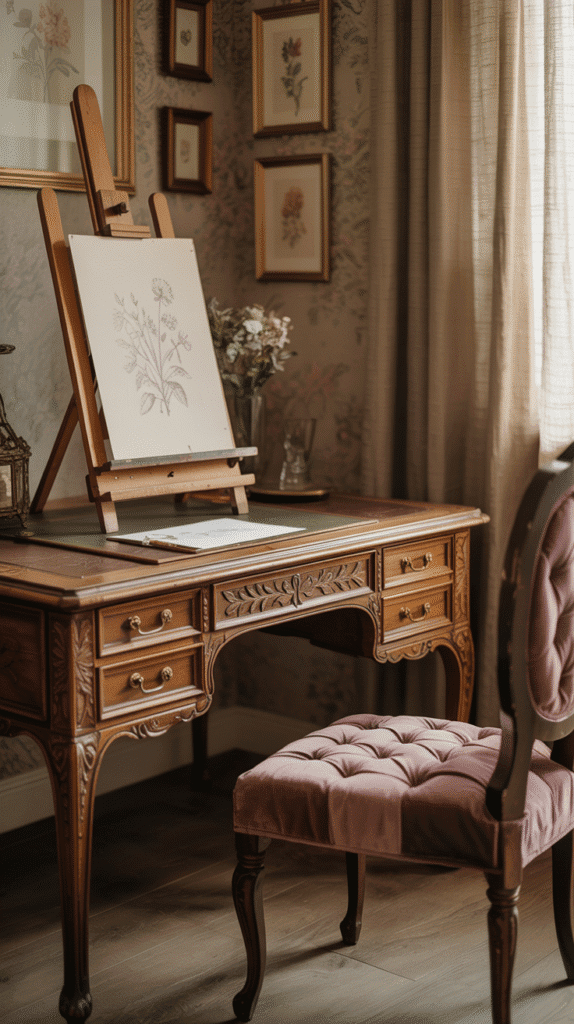
A modern studio feels calm and quiet. Clean surfaces, closed storage, a neutral palette and bright, even light that makes the room feel bigger than it is.
Signature pieces:
- A simple desk or standing desk with a clear top
- Closed drawer units so supplies disappear at the end of the day
- A modular bookshelf you can reconfigure as your needs change
- A smart light you can dim or shift warmer at night
- One or two large pieces of art instead of a crowded wall
Where it shines: small rooms, shared spaces and digital work. When a studio doubles as a guest room or office, closed storage lets you reset the space in five minutes.
Where it struggles: white surfaces show every pigment stain, and an all-white room can feel a bit like a waiting room. Add one warm texture, like a wool rug or a wood stool, so it feels lived in.
If you lean this way, start with my modern minimalist art studio inspiration and the list of minimalist art studio must-haves.
5 Questions to Find Your Style
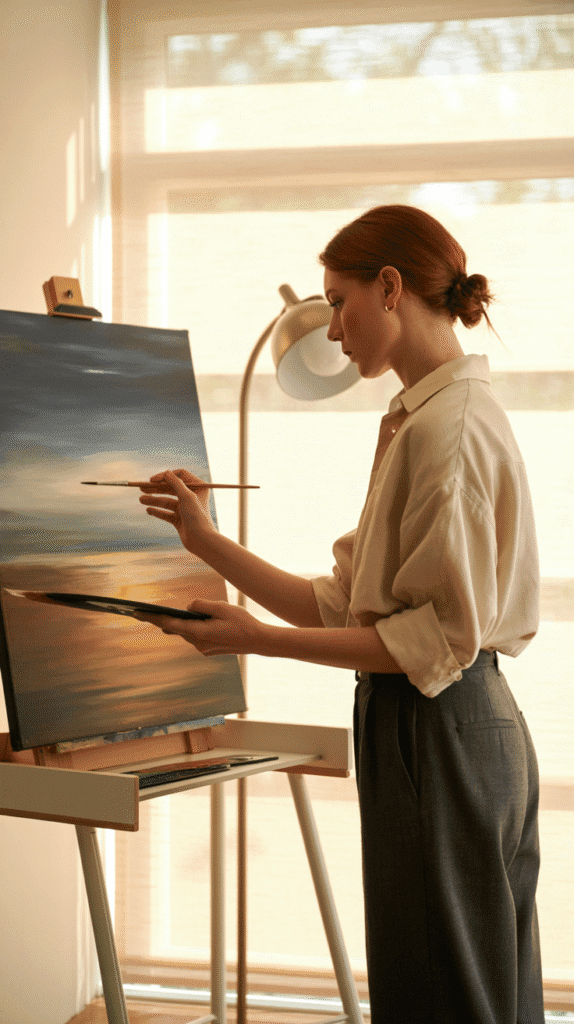
Answer these quickly and keep a tally. Mostly V means vintage, mostly M means modern, and a tie means you’re a blender (more on that below).
A few notes on the answers:
- Medium matters most. Oil and acrylic painters usually do better with surfaces that can take a beating. Digital artists and pen-and-ink illustrators rarely need that.
- Room size counts double. Vintage clutter in a 9 by 10 foot room gets heavy fast. If your space is tight, my small art studio organization ideas will help either way.
- Budget surprises people. A thrifted oak table for around $60 can outlast a $300 flat-pack desk. Vintage is often the cheaper route if you’re willing to hunt.
The Blend: Modern Bones, Vintage Soul
This is my favorite answer for most artists. Use modern pieces for the things that need to work hard every day, and vintage pieces for the things you look at.
The rule of thumb is 70/30: about 70% modern function, 30% vintage character.
| Element | Go modern | Go vintage |
|---|---|---|
| Walls | warm white or soft gray | one framed gallery wall |
| Main storage | closed drawer cabinet | one open shelf for display |
| Work surface | easy-clean top | wood drafting table |
| Lighting | 5000K task lamp | warm chandelier or sconce |
| Decor | one large canvas | jars, tins, old brushes |
Here’s why it works: the modern 70% keeps the room easy to clean and easy to reset. The vintage 30% gives your eye somewhere warm to rest between brushstrokes. You get a studio that photographs well and works hard.
Keep the vintage pieces off your main work zone if they’re delicate. A brass tray on a shelf looks lovely. A brass tray bouncing a hot spot onto your paper does not.
If you like a grittier version of the blend, with metal, concrete and old wood, peek at industrial chic studio design.
Get the Color Right in Either Style
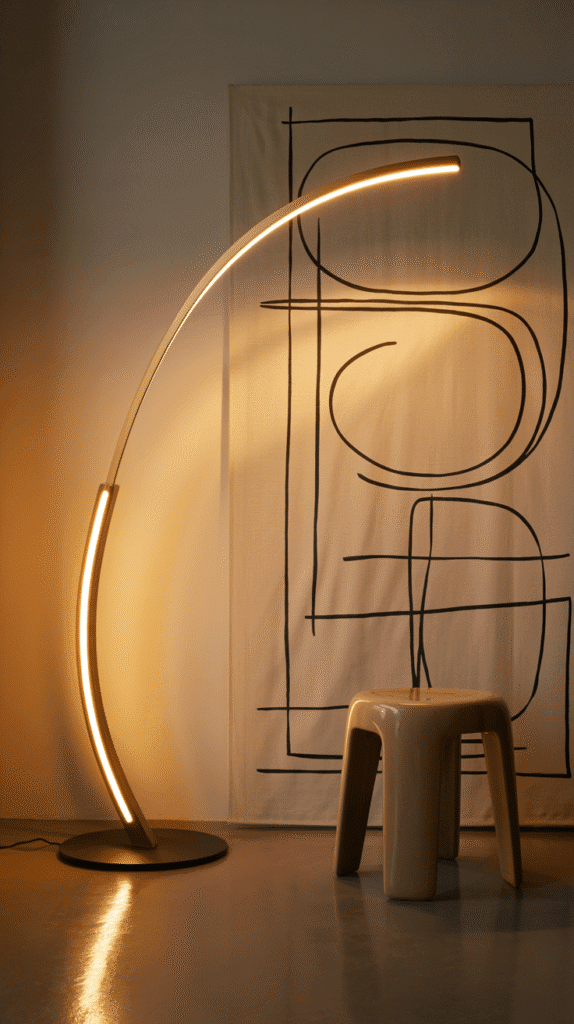
Style is mostly color, and color is where people overcommit. Two quick guidelines:
- Vintage: pick one warm earthy wall color (sage, ochre, dusty blue or cream) and repeat it in two small places, like a pillow and a frame mat.
- Modern: pick one neutral and one accent. White plus black hardware plus a single green plant is plenty.
Muted walls are kinder to color mixing than saturated ones, in both styles. For full palettes with wood and metal pairings, see my vintage art room color scheme guide.
Investment Pieces Worth It
Once you know your style, a few higher-ticket pieces do most of the heavy lifting. These work in vintage, modern or blended rooms.
Daylight Artist Studio Lamp (around $275). A 95+ CRI lamp that reaches up to 6,000 lux at the work surface. Worth it if you paint in the evenings or in a room with weak window light. Used three times a week for three years, that’s under $0.60 a session. Skip it if you mostly work digitally or by a big north-facing window.
Studio Designs Vintage Drafting Table (around $270). Solid wood with a tilting top, so it carries the vintage look and does real work. Worth it if you draw, ink or paint watercolor and want a slanted surface. Skip it if you paint large canvases on an easel; put that money into a sturdy H-frame instead.
Bisley 6-Drawer Steel Cabinet (around $245). Classic design-studio steel drawers, shallow enough that pens, tubes and pencils don’t get buried. Worth it if you’re going modern or blended and want closed storage that lasts decades. Skip it if you prefer open, visible supplies or a thrifted wood dresser.
Vintage vs Modern FAQ
Can a small studio be vintage? Yes. Keep it to one wall of vintage character and keep the floor clear. A single wood table and a gallery wall read as vintage without crowding you.
Which style is easier to keep clean? Modern, by a mile, because closed storage hides dust. Vintage hides paint stains better, though, so painters often find it less stressful.
Is a blended studio just “no style”? Not if you follow a ratio. 70/30 gives the room a clear lead style with a supporting accent, which is how most well-loved studios end up anyway.
The Takeaway
Vintage studios forgive mess and reward collecting. Modern studios reset fast and suit small or shared rooms. If you can’t decide, build modern bones and add 30% vintage soul, then put a neutral daylight lamp where you actually make art.
Which way are you leaning, team vintage, team modern, or happily blended? Tell me in the comments, and save this pin for when you’re ready to rearrange.