This post contains affiliate links. If you buy through them, I may earn a small commission at no extra cost to you.
Some studios look lovely in photos and still feel like a waiting room. A dreamy studio is the one you wander into on a Tuesday night just to sit there, and that feeling comes from ten specific things.

Here’s my take: “dreamy” is a comfort problem first and a decor problem second. If your back aches, your light is flat and you spend ten minutes hunting for a brush, no amount of fairy lights will fix it. Get the body, the light and the flow right, then add the joy on top.
If you only do one thing: fix your light before you buy anything pretty. A 5000K bulb with a CRI of 90 or higher costs about $20 and makes every color, every page and every corner of the room look better.
This post is about the feel of a studio. If you want the full build order (what to buy first, second and third) and layouts by room size, the complete art studio setup guide covers that. Here we’re picking the ten pieces that turn a functional room into one you love.
The 10 essentials at a glance
I group them into four feelings. Comfort keeps you there. Light lets you see. Flow keeps you working. Joy makes you come back.
And here’s the order I’d put money into them if you’re starting from an empty room.
Comfort: the pieces that keep you in the room
1. A work surface that fits how you make art
Your table decides your posture for the whole session. For drawing, a tilting top at 15 to 30 degrees keeps your work facing you, so you’re not hunching over a flat page. For painting, a flat surface around 28 to 30 inches high works for most people when seated, with elbows near 90 degrees.
If you trace, transfer sketches or work in layers, a light table with a tilting top does two jobs at once. It’s a drafting surface by day and a light box when you need it.

Comparing table styles? My art desks for every budget guide breaks down drafting, flat and storage desks.
2. A chair you forget you’re sitting in

The best studio chair is the one you stop noticing. What I look for:
- Seat height that lets your feet rest flat with thighs roughly level
- Lumbar support that meets your lower back without a pillow
- Armrests that drop low or flip up so they don’t block your elbows at the table
- A foot ring if your table sits at counter or drafting height (36 inches and up)
Sit for 45 to 60 minutes, then stand and stretch for a few. Your neck will thank you.

3. A cozy nook for thinking time
This is the essential people skip, and it’s the one that makes a studio feel dreamy. A soft chair a few feet from the work table gives you somewhere to sit with a sketchbook, flip through references or just look at a painting from a distance. Stepping back is how you spot problems in a piece.
Add a small side table, a throw and a lamp with a warm 2700K bulb. That warm pocket next to your cool daylight work zone is what makes the room feel layered.

Light: the essential that changes everything
4. Bright, color-true task lighting
Overhead room light is rarely enough. You want a dedicated task light over your work surface with:
- 5000K color temperature for neutral daylight color
- CRI of 90 or higher so reds and skin tones read true
- An adjustable arm so you can angle light from the side opposite your drawing hand (left side if you’re right-handed) and avoid hand shadows

Use warm light where you rest and daylight where you work. That one contrast does more for the mood of a room than any decor purchase. More on bulbs and placement in the best lighting for art studios.
Flow: the pieces that keep you working

5. Storage you can reach without getting up
Dreamy studios look calm because the clutter has a home. The trick is depth: shallow drawers (2 to 3 inches) for pens, tubes and pencils, deeper ones (4 to 6 inches) for jars and sprays. A rolling cart parked within arm’s reach of your chair holds your current project, then rolls into a corner when you’re done.
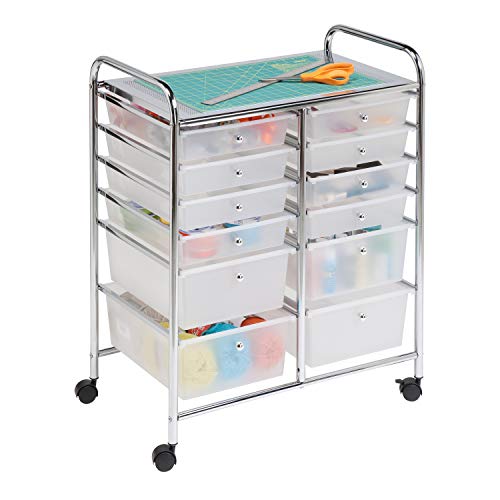
Want more options? See best rolling art carts and art studio storage solutions.
6. An easel that adjusts to you
A tabletop easel is the easiest way to get your canvas or sketchbook upright without giving up floor space. Set it so the center of your work sits at about eye level. If you’re looking down at a steep angle, your proportions drift and your neck complains.
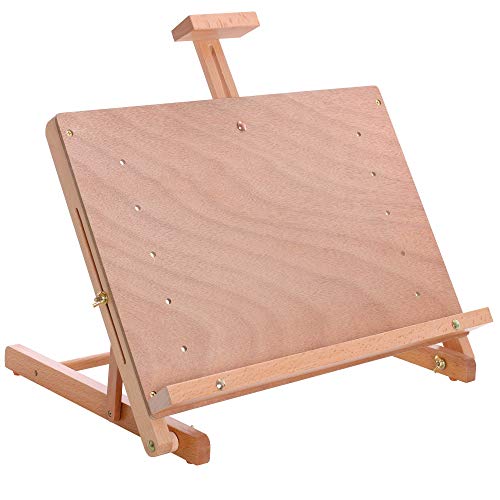
If you paint large, a floor H-frame makes more sense. My guide to H-frame vs A-frame easels explains the difference.
7. A cleanup station
Nothing kills a dreamy mood faster than crusty palettes and a sink full of brushes. Give cleanup its own spot: a jar for dirty water, a jar for clean, a rag, brush soap and a lidded palette.
A stay-wet palette keeps acrylics workable between sessions, so you can stop mid-painting without scraping dried paint into the trash. That’s less waste and less dread when you sit back down.

How the room should flow

Think of your studio in four zones, arranged in the order you use them.
Keep Work and Store touching. Put Clean between Work and the door, so mess leaves the room on its way out. Tuck Rest into the softest corner, ideally near a window.
Joy: the pieces that make you come back
8. Supplies that feel good to use
You don’t need every color ever made. You need a few tools that behave well, because good pigment and smooth leads make practice feel rewarding instead of frustrating. A mid-size set of quality colored pencils covers a lot of ground for sketching, botanical studies and mixed media.

Store pencils point-up in cups or flat in a shallow drawer, never loose in a deep bin where they bounce and the cores crack.
9. Walls that inspire you
Your walls are free display space. Hang works in progress at eye level (about 57 to 60 inches to the center), keep a strip of corkboard or a pegboard for references, and add hanging shelves for plants, jars of brushes or small finished pieces.

For more wall ideas, see wall-mounted organizers for art studios and mood boards for artists.
10. Sound

Music or a good audiobook turns a 20-minute session into an hour without you noticing. A 360-degree speaker fills the room evenly, so it sounds the same from your table and your nook chair.

Budget tiers for every essential
You don’t have to buy all ten at the high end. Here’s what each essential looks like at three budgets.
| Essential | $ (start) | $$ (upgrade) | $$$ (dream) |
|---|---|---|---|
| Work surface | Tabletop drawing board | Wood drafting table | Light tracing table |
| Chair | Cushion + lumbar pillow | Adjustable task chair | Full ergonomic chair |
| Cozy nook | Floor pillow | Thrifted armchair | Velvet accent chair |
| Task light | Daylight bulb in a lamp | Clamp LED lamp | Pro artist floor lamp |
| Storage | Jars and trays | Rolling drawer cart | Steel drawer cabinet |
| Easel | Book stand | Tabletop easel | Floor H-frame |
| Cleanup | Two jars + rag | Stay-wet palette | Sink-side station |
| Supplies | Student 24-set | Artist 72-set | Artist 120-set |
| Walls | Washi tape gallery | Hanging shelves | Pegboard system |
| Sound | Phone in a cup | Small speaker | 360 speaker |
Investment pieces worth it
These are the splurges I’d consider once the basics are in place. Each one is worth it for some people and a waste for others.
Light tracing table (#1 above): Worth it if you trace, transfer sketches, do lettering or animation and want one surface for drafting and lighting. Skip it if you mostly paint on canvas; a regular drafting table plus a $130 light pad covers the occasional transfer.
Ergonomic chair: A chair like the Steelcase Series 1 runs around $500. Spread over five years of four sessions a week, that’s under 50 cents a session. Worth it if you work two or more hours at a time. Skip it if your sessions are short and you already have a chair that fits. The ergonomic chair in #2 is a lower-cost step in the same direction.
Artist floor lamp: The Daylight Artist Studio Lamp is around $275, rated 95+ CRI with up to 6,000 lux. Worth it if you paint in color in the evenings or in a room with poor windows. Skip it if you draw mostly in graphite or charcoal; a clamp lamp is plenty for value work.
The speaker (#10 above): Around $270 is a lot for a nice-to-have. Worth it if music is what gets you into the chair in the first place. Skip it if a phone speaker already does the job for you.
Common mistakes that make a studio feel less dreamy
| Do this | Not that |
|---|---|
| Daylight where you work, warm where you rest | One cold overhead light everywhere |
| Rolling cart at arm’s reach | Supplies on a shelf across the room |
| Easel at eye level | Canvas flat while you lean over it |
| A few quality tools you love | Bins of supplies you never open |
| Cleanup spot by the door | Brushes soaking in the kitchen sink |
The takeaway
A dreamy art studio starts with comfort and light, gets organized with flow and finishes with joy. Buy in that order, pick the budget tier that fits today, and upgrade one essential at a time.
Which of the ten is missing from your space right now? Tell me in the comments. And save this pin for the next time you rearrange your studio.